
Canada teaches Australia how to fix housing crisis
Like Australia, Canada experienced a record surge of immigration once borders opened following the Covid-19 pandemic, with the nation adding around 1.2 million people in 2023 alone.
This record spike in immigration caused a slew of problems for Canada, including severe housing shortages, skyrocketing rents, productivity and infrastructure stress, services inflation, and rising youth unemployment.
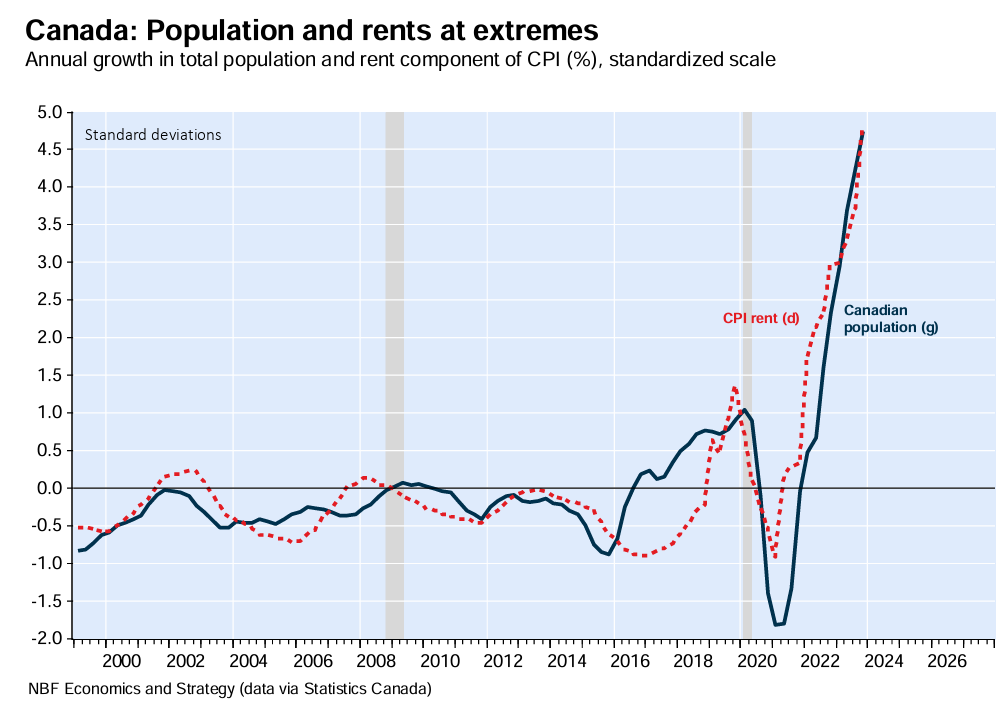
Like in Australia, temporary residents drove Canada’s population surge. According to StatCan, the number of non-permanent residents increased from 1.36 million in Q2 2021 to 3.15 million in Q3 2024.
Non-permanent residents (NPRs) accounted for a record 7.6% of Canada’s total population at its height.
The left-leaning Canadian government acknowledged its error and announced massive immigration curbs last year in an effort to stabilise the population.
The measures include lowering annual permanent resident targets, limiting international student and temporary worker admissions, and strengthening asylum and border policies.
Canada’s permanent residency targets were reduced from 500,000 to 365,000 by 2027.
Canada has established restricted targets for temporary residents, such as international students (the most significant reductions) and temporary foreign workers.
By the end of 2027, temporary visa holders will account for 5% of the Canadian population, down from 7.5% at the peak.
Canada’s immigration reforms have been highly effective.
The Canadian population fell by 76,000 in the third quarter of 2025, the first reduction in its history (excluding the pandemic).
The reduction in population was caused by a 176,000 decrease in the number of NPR’s throughout the quarter. After peaking at 7.6% in Q3 2024, the share of NPRs decreased to 7.3% in Q2 2025 and 6.8% in Q3 2025.
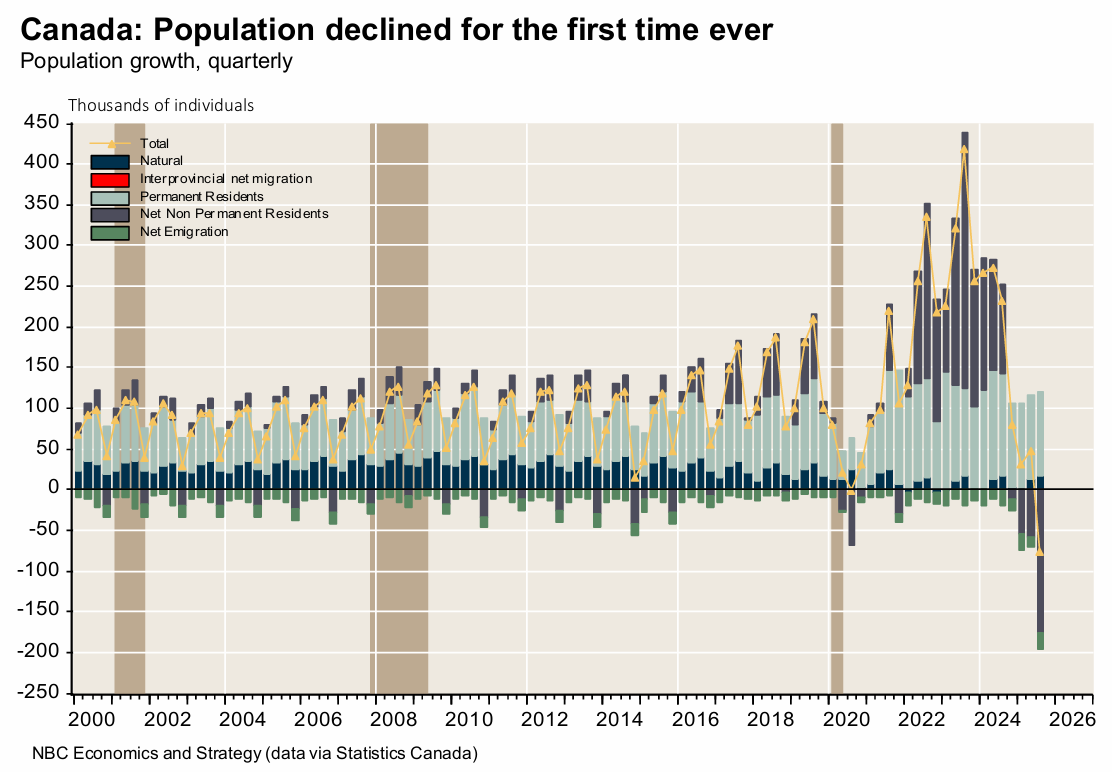
The impact of the population decline is being felt most acutely in Canada’s rental market.
Major Canadian bank BMO noted that NPRs comprised 6.9% of the population in the third quarter of 2025, still well above the 5% target.
“A major population adjustment is well underway, and it remains one of the biggest economic stories in Canada”, noted BMO. “In order to hit the NPR target share, we’ll need to see population growth run barely above zero through 2028 (births and permanent immigration flows held constant), before settling back into a longer-term run rate of just under 1%”.
“That implies further net outflows ahead, likely right through 2027”.
“Among the impacts we’re tracking are a significant weakening of the rental market, especially with the pipeline chock-full of supply; less pressure on services inflation; easing slack in the youth job market; and a likely pickup in productivity and growth in real GDP per capita”, BMO noted.
Indeed, Canada’s housing crisis continues to unwind following the government’s immigration curbs.
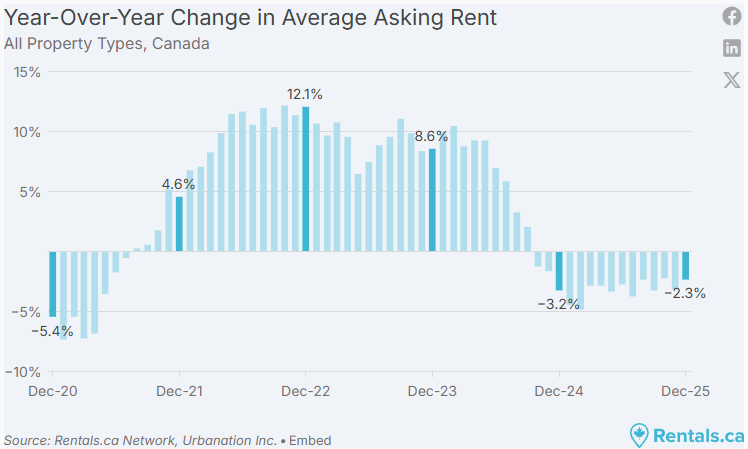
Advertised rents have fallen across Canada for 15 consecutive months, according to Rentals.ca:
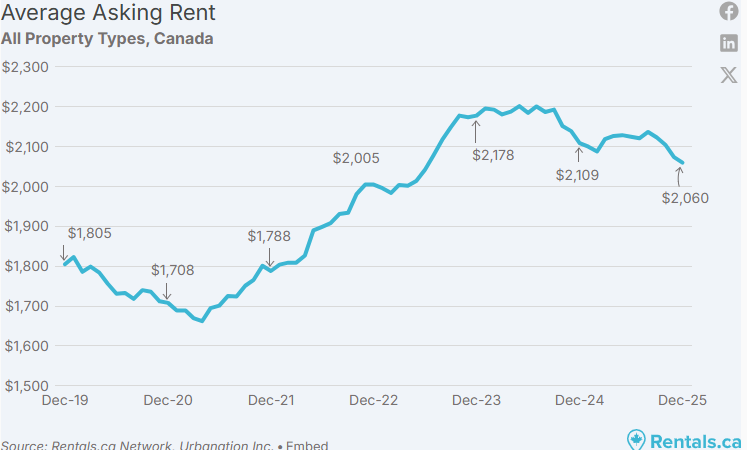
Average asking rents in Canada fell to $2,060 in December, down $142 (6.4%) from the peak to the lowest level in two and a half years:
Australia has sadly taken the opposite path by maintaining a historically strong immigration program, which the Centre for Population projects will continue indefinitely.
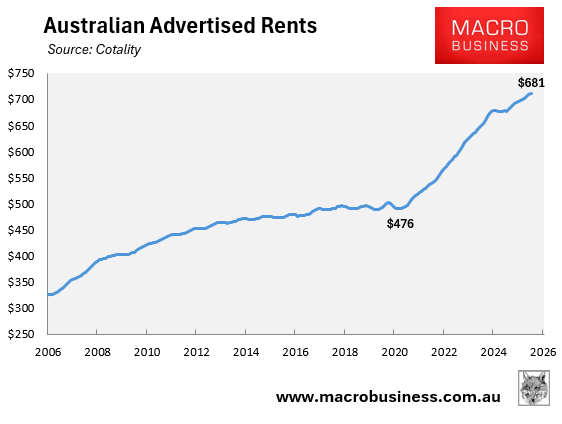
As a result, advertised rents continue to climb in Australia, rising by 43% over the five years to December 2025, adding $10,650 to the annual rental bill of a typical tenant:
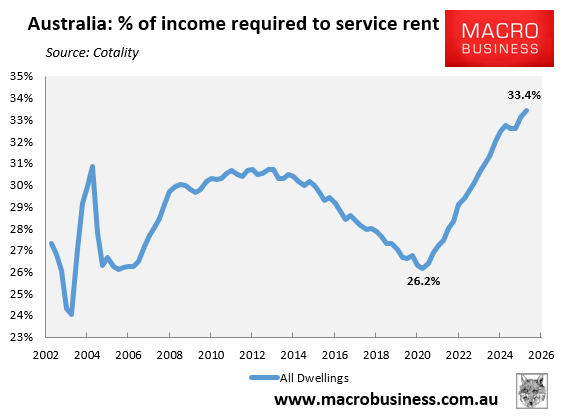
As a result, rental affordability relative to household incomes has never been poorer in Australia.
Unlike Canada, Australia’s volume of temporary migrants (NPRs) continues to rise, tracking around 500,000 above the pre-pandemic peak:
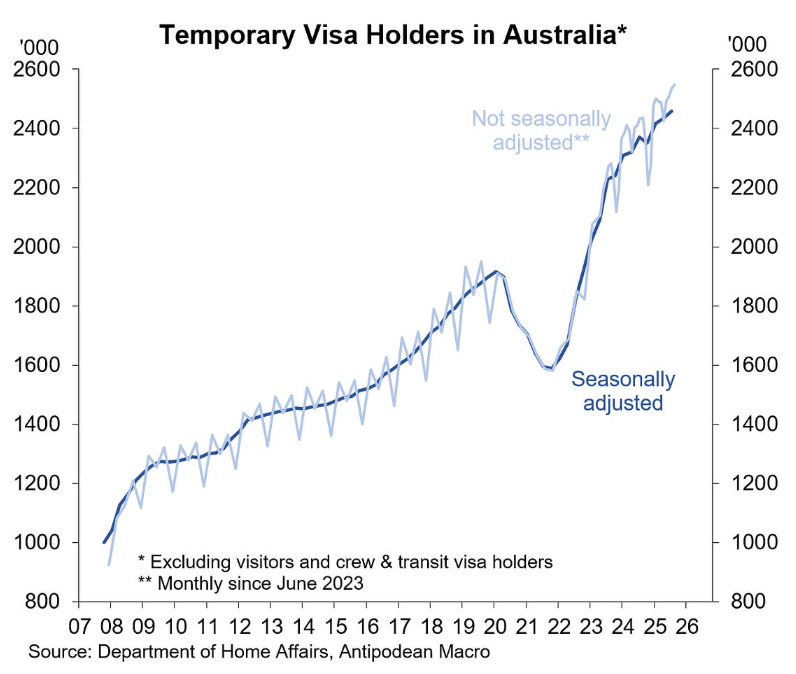
Chart by Justin Fabo at Antipodean Macro
As a result, the share of temporary visa holders relative to the population is tracking at an all-time high.
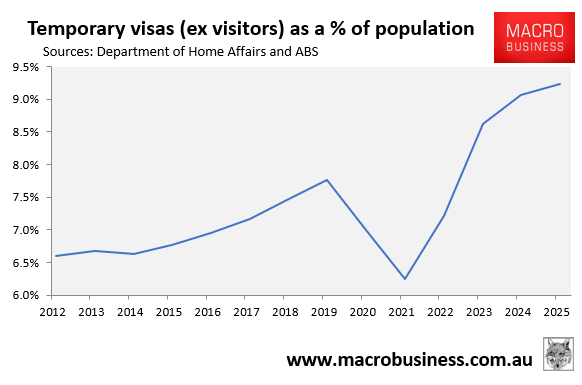
This rapid increase of temporary migrants into a supply-restricted market is the primary cause of Australia’s extreme rental inflation.
The question one must ask is why Australia’s left-leaning government won’t consider emulating the immigration reforms implemented by the left-leaning Canadian government.
All opinion polls show that Australian voters overwhelmingly support lower immigration.
Without significant cuts to Australia’s immigration intake, the housing shortage will worsen, the rental crisis will intensify, and overall living standards will decline.
