
How to invest for the coming Labor Government
Ellerston Capital is asking the right question at the AFR:
“When you think about the negative gearing on existing properties [a Labor government] could be the game changer for the housing market,” Mr Gillespie said, pointing out that the last time a government tried to remove negative gearing, “it lasted nine months until they put it back in place.”
“I think it will have a very big impact on the housing market if Labor stop negative gearing, which is in their policy platform on housing. So basically it will be very exposed,” he said.
…”It’s a game changer for the whole equity space, the tax cuts aren’t there, negative gearing won’t be there, they’ll be changing the capital gains rules.”
At the same time, Labor is planning a fiscal stimulus, he noted. “It will be targeted to the low income earners – they’ve got a higher capacity to spend, so consumption will go up and retailers will like that.
That sounds about right to me. The housing correction will get worse with negative gearing reform. Especially so since PM Dutton is going to cut immigration before losing the election. Which is more impactful is really now an academic question, also at the AFR:
Peter Dutton’s tough stance on migration and borders and its effect on property were tested in May this year when he delivered a key-note speech to Australia’s property industry leaders in Canberra about how big Australia should be.
…The chief executive of Australia’s largest property manager JLL’s Stephen Conry, who was also in attendance at the leaders dinner seems to clarify Dutton’s position.
“The government upholding its laws around boarder protection and immigration are understood and have had no negative bearing on investment attitudes and outcomes,” Mr Conry said.
“The prospect of changes to negative gearing laws however would remain of considerable concern to the property sector and investor confidence.”
Put both together and you get the picture.
Labor may resort to first home buyer stimulus (and higher immigration though that’s politically very dangerous now) but it won’t work very well nor for very long. Houses are just too expensive and lending standards too tight to support valuations. As well, if anything, having delivered the royal commission it will be up to Labor to legislate remedies and if it is not tough then the political optic will be poor.
Then there are the other five shocks underway: funding costs, interest-only loans, withdrawing Chinese capital, the election itself and end-of-cycle dynamics.
So, the base case for a new Labor Government is an accelerating house price correction. How do you want to invest into that?
There are various tactical decisions to draw. Avoid banks, property firms and consumer stocks, for instance. The key strategic conclusion is that interest rates will be cut, despite what Phil Lowe says, and the Australian dollar get pounded. Once the shock begins to lift unemployment this is certain. Next year is odds-on for two rate cuts now. That will mean a crashing yield spread to the world and an inexorable slide in the Australian dollar:
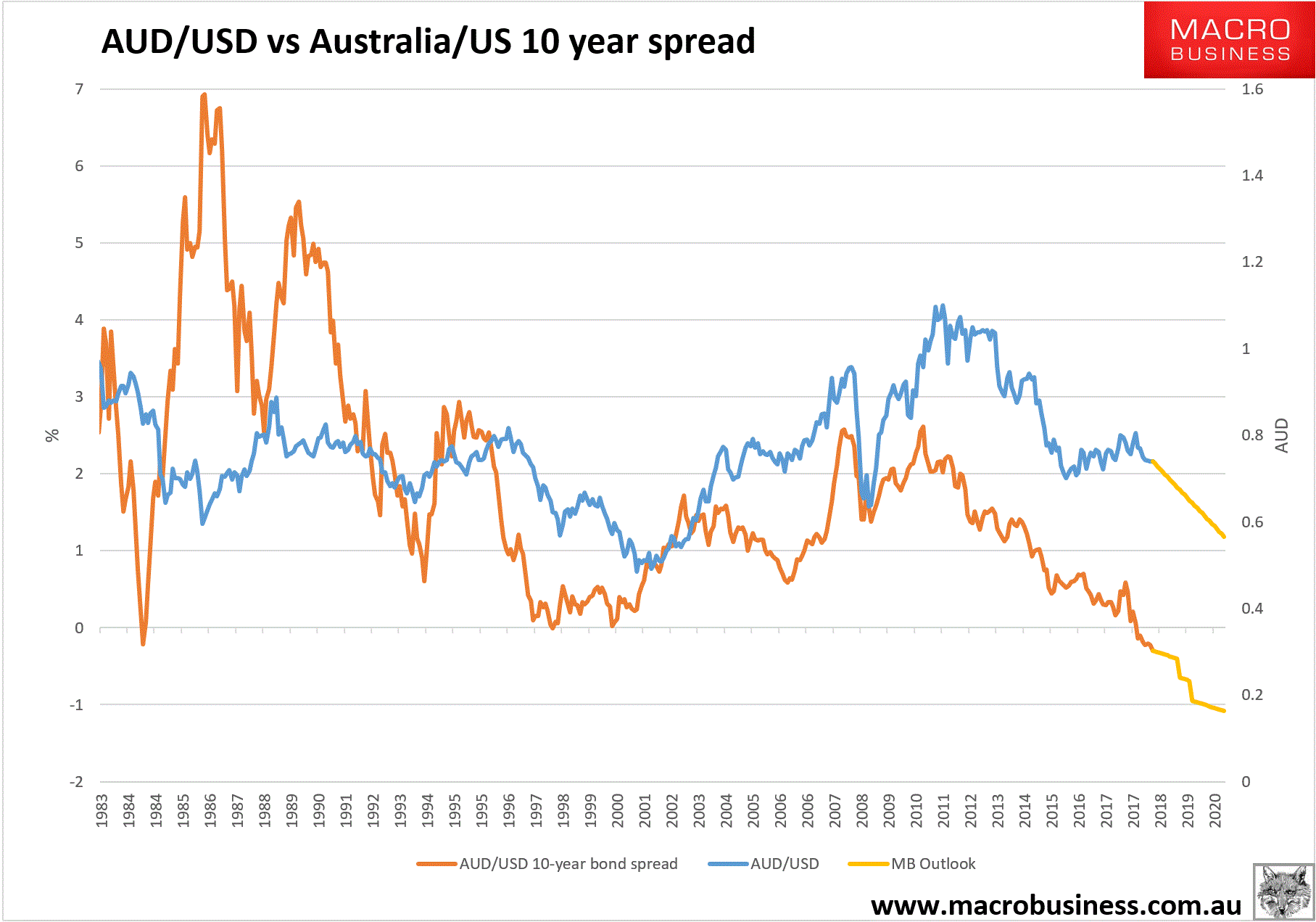
That will be enough to stabilise property in the short term but not for very long as the above forces keep the pressure on.
So, that presents a range of investment options. Bonds present as an excellent investment because their prices will rise as interest rates fall, especially at the long end of the curve. Dollar-exposed industrial equities are also in the frame though they are very richly valued already after many years in a bull market (MB has pushed that barrow since 2012). Defensive yield stocks (though nothing property-related) are also an option.
The best idea in my view is get your money out of Australia. It is simply unclear how bad the property correction will get. The base case is it will be the worst since 1990. The risk case is that it gets far worse if the external environment turns hostile at the wrong moment. That will mean an historic crisis and reset of Australian asset values.
The Australian dollar is your best friend now.
David Llewellyn-Smith is chief strategist at the MB Fund which is long US equities that will benefit from a falling Australian dollar so he is definitely talking his book (or ANZ is!). Below is the performance of the MB Fund since inception:
The information on this blog contains general information and does not take into account your personal objectives, financial situation or needs. Past performance is not an indication of future performance. Damien Klassen is an authorised representative of Nucleus Wealth Management, a Corporate Authorised Representative of Integrity Private Wealth Pty Ltd, AFSL 436298.
