
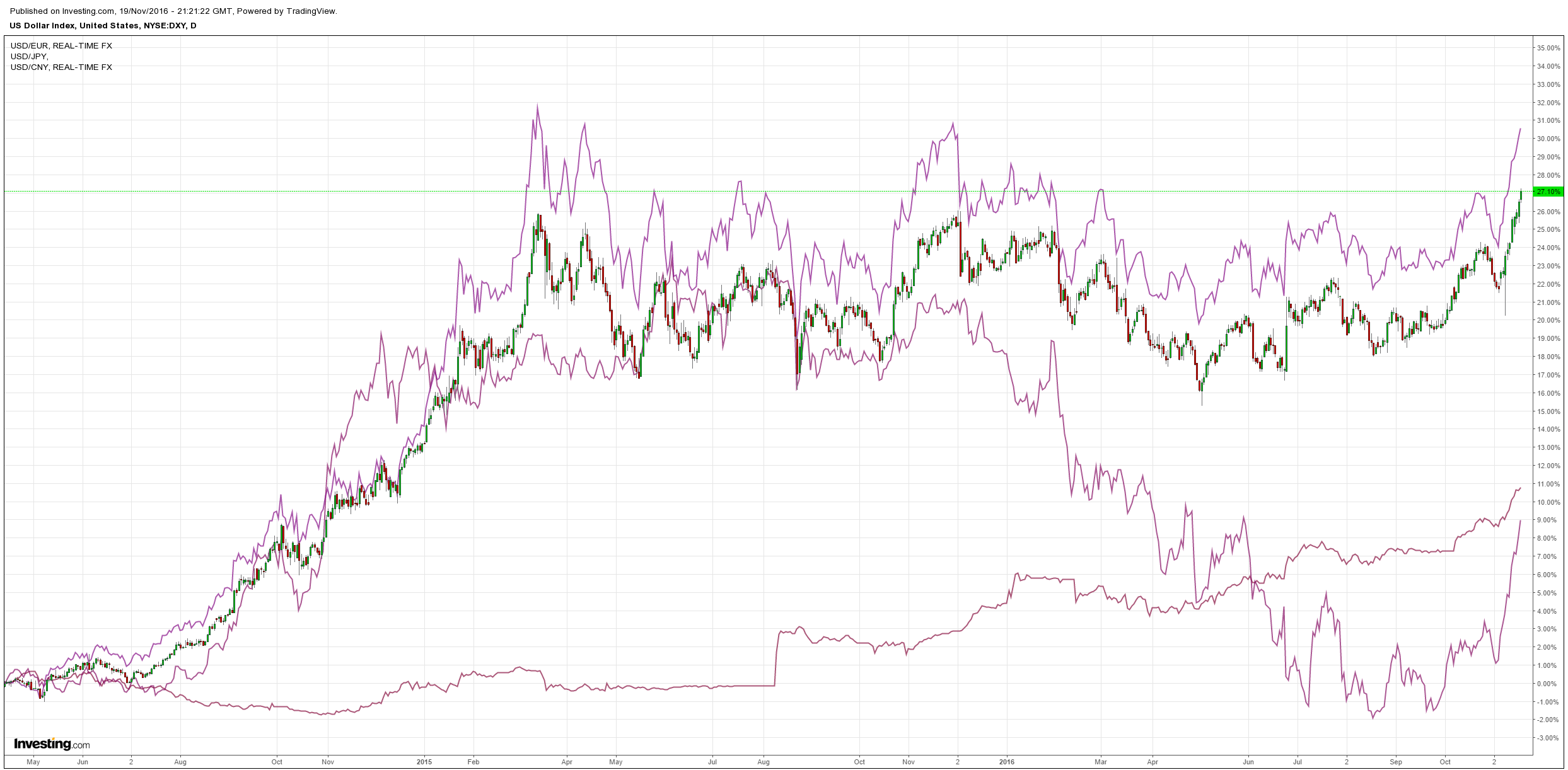
It’s unstoppable. All other majors fell. Euro is going to break:
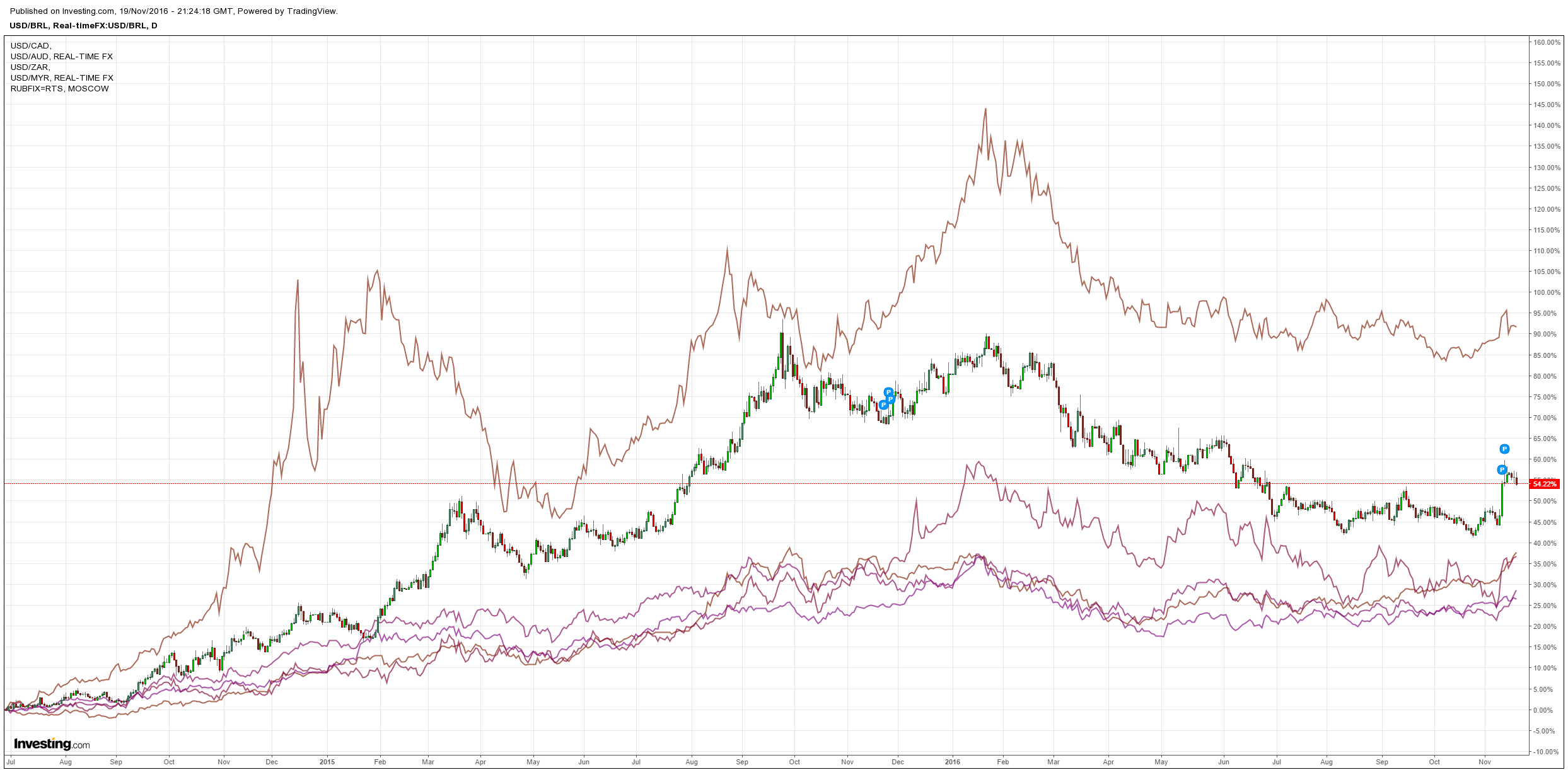
Commodity currencies were mixed but the Aussie was very weak:
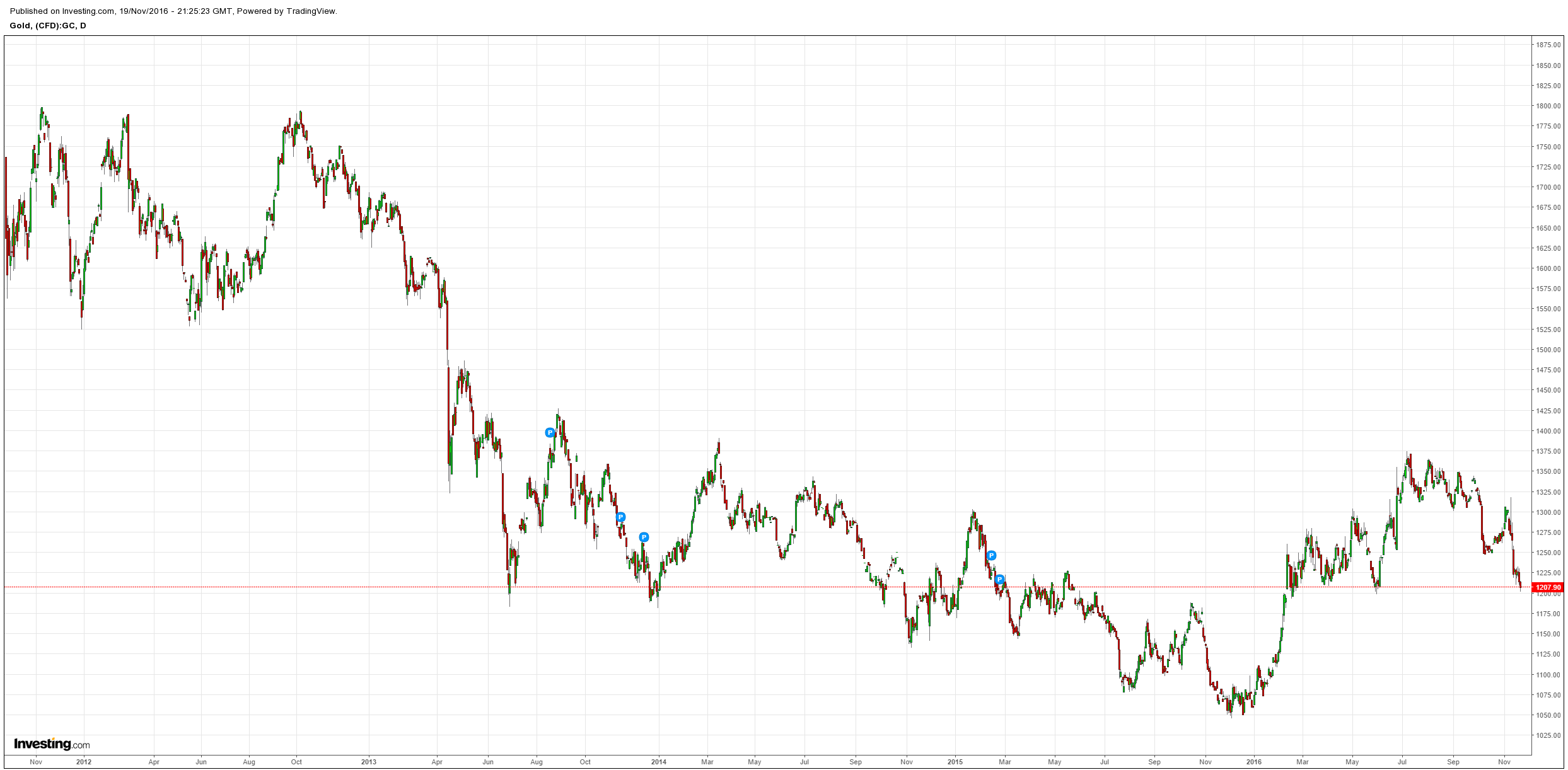
Gold appears headed back to the lows:
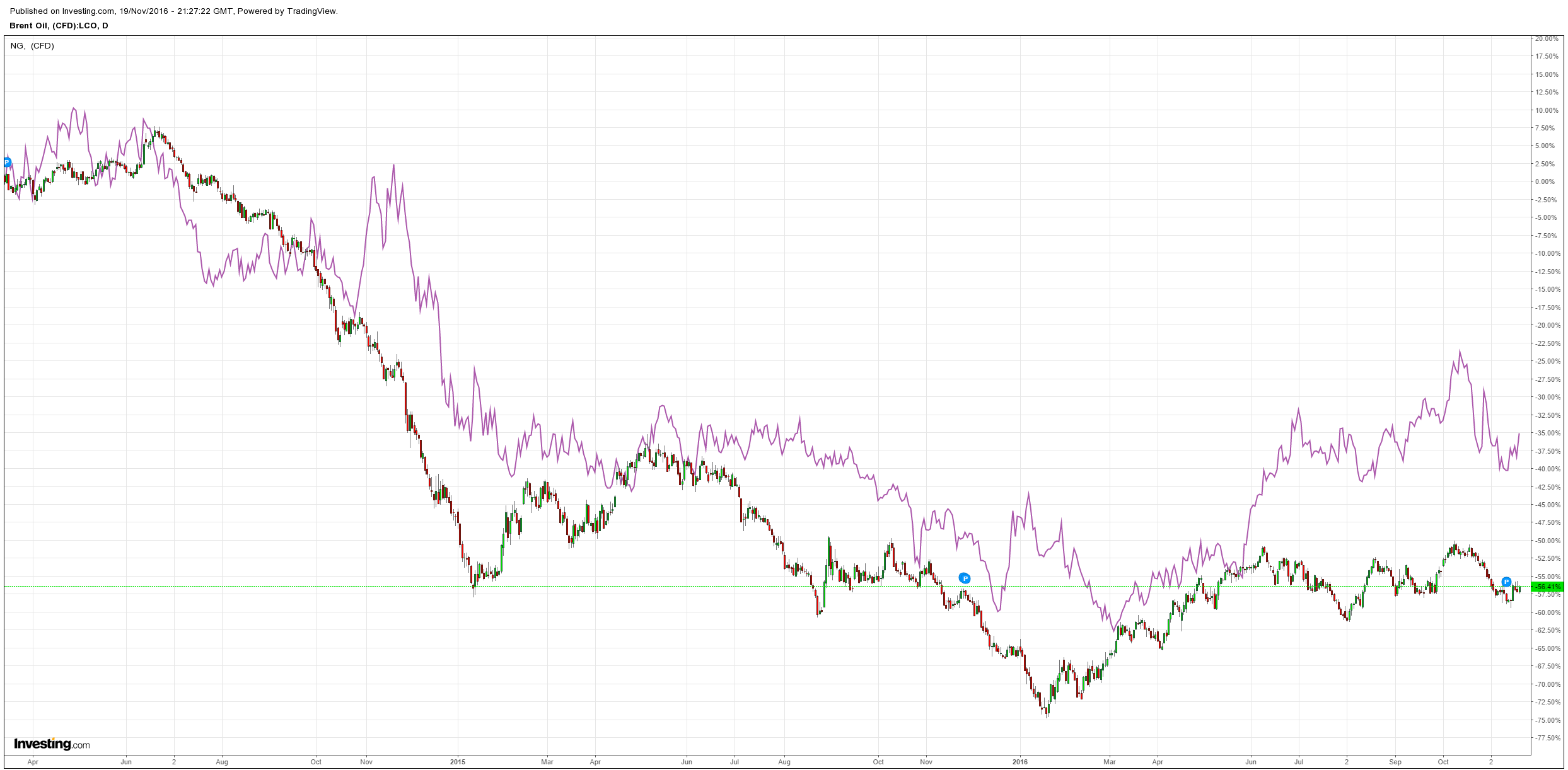
Brent rose:
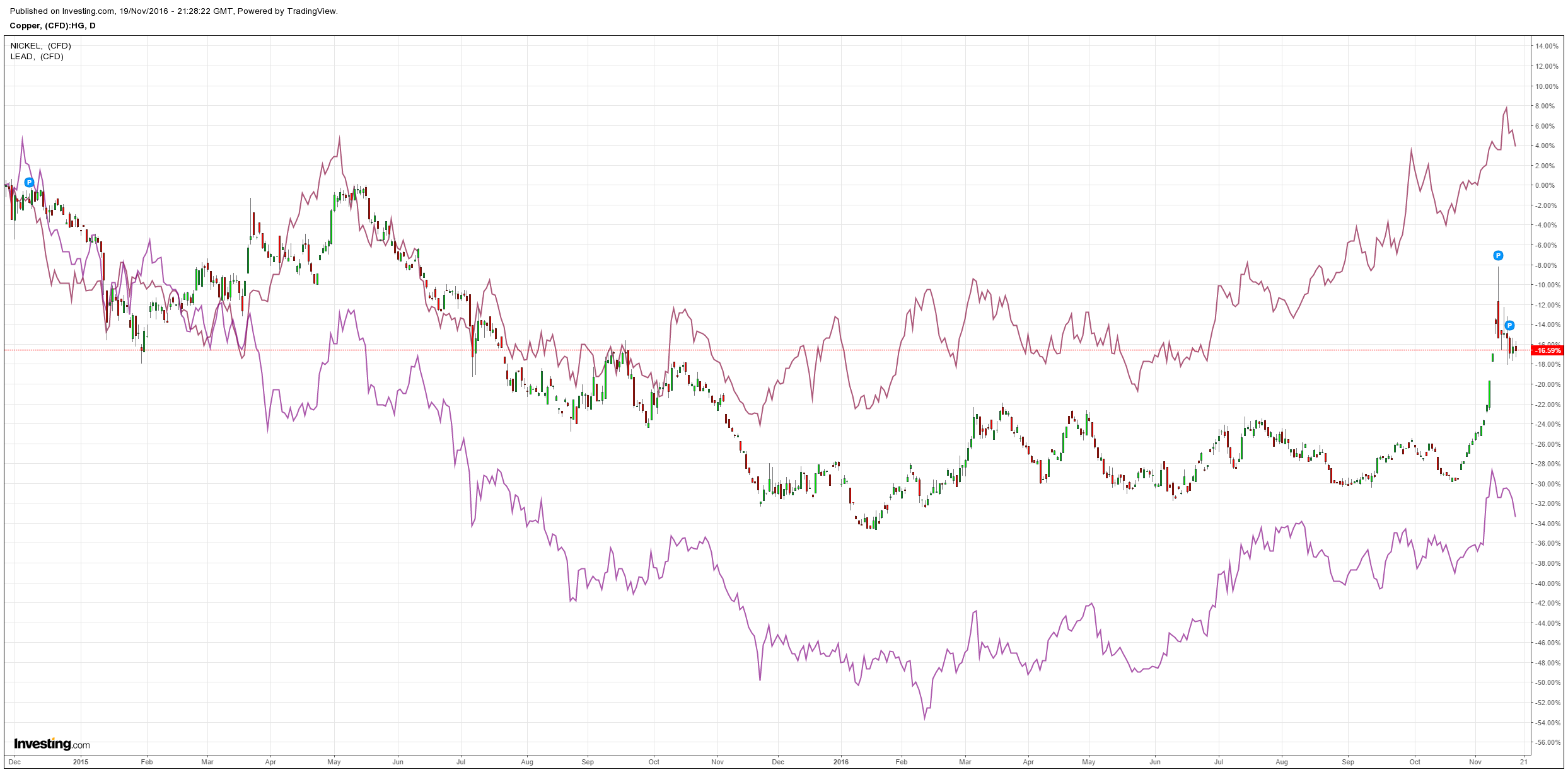
Base metals slumped:
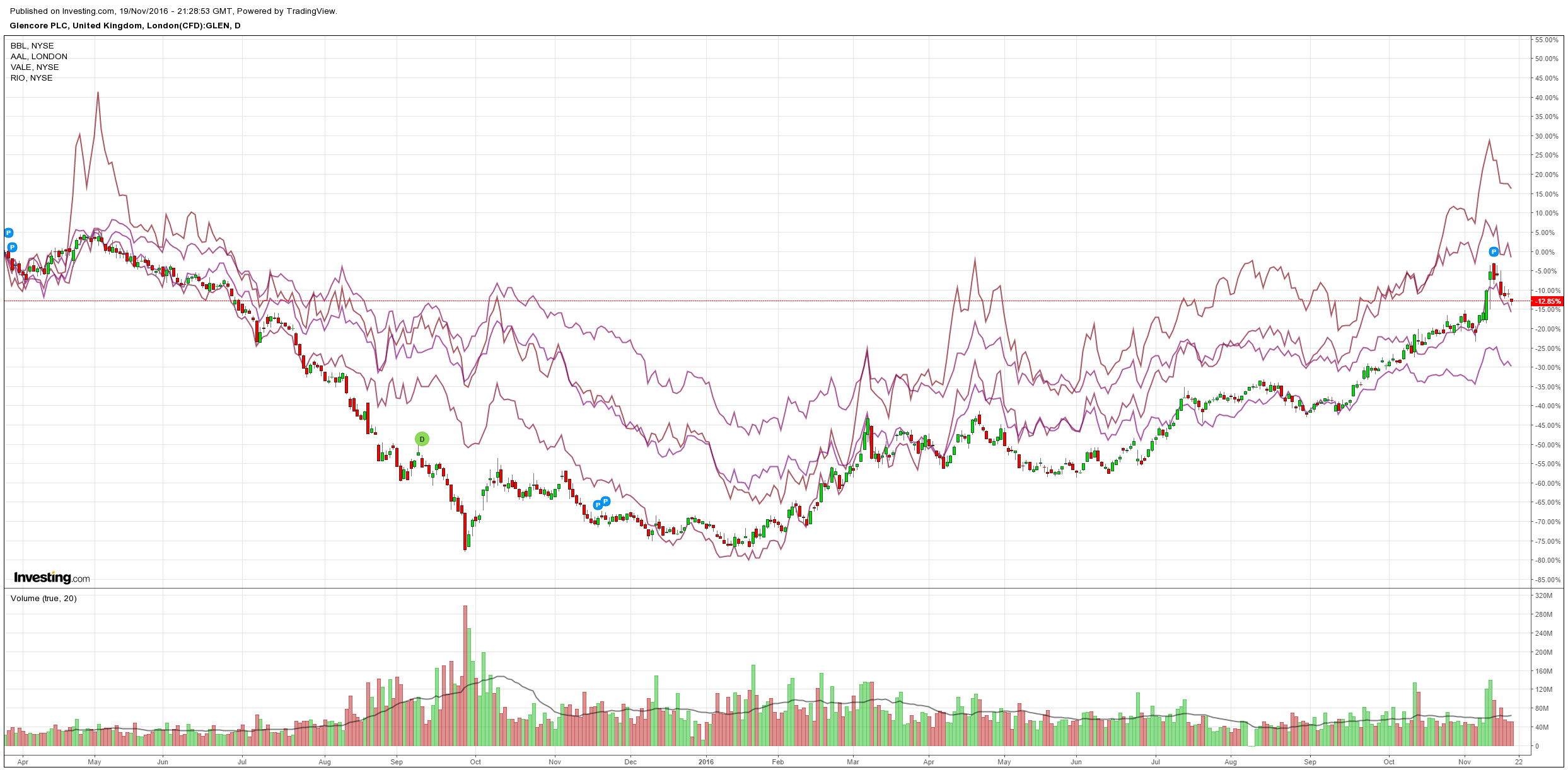
Miners too:
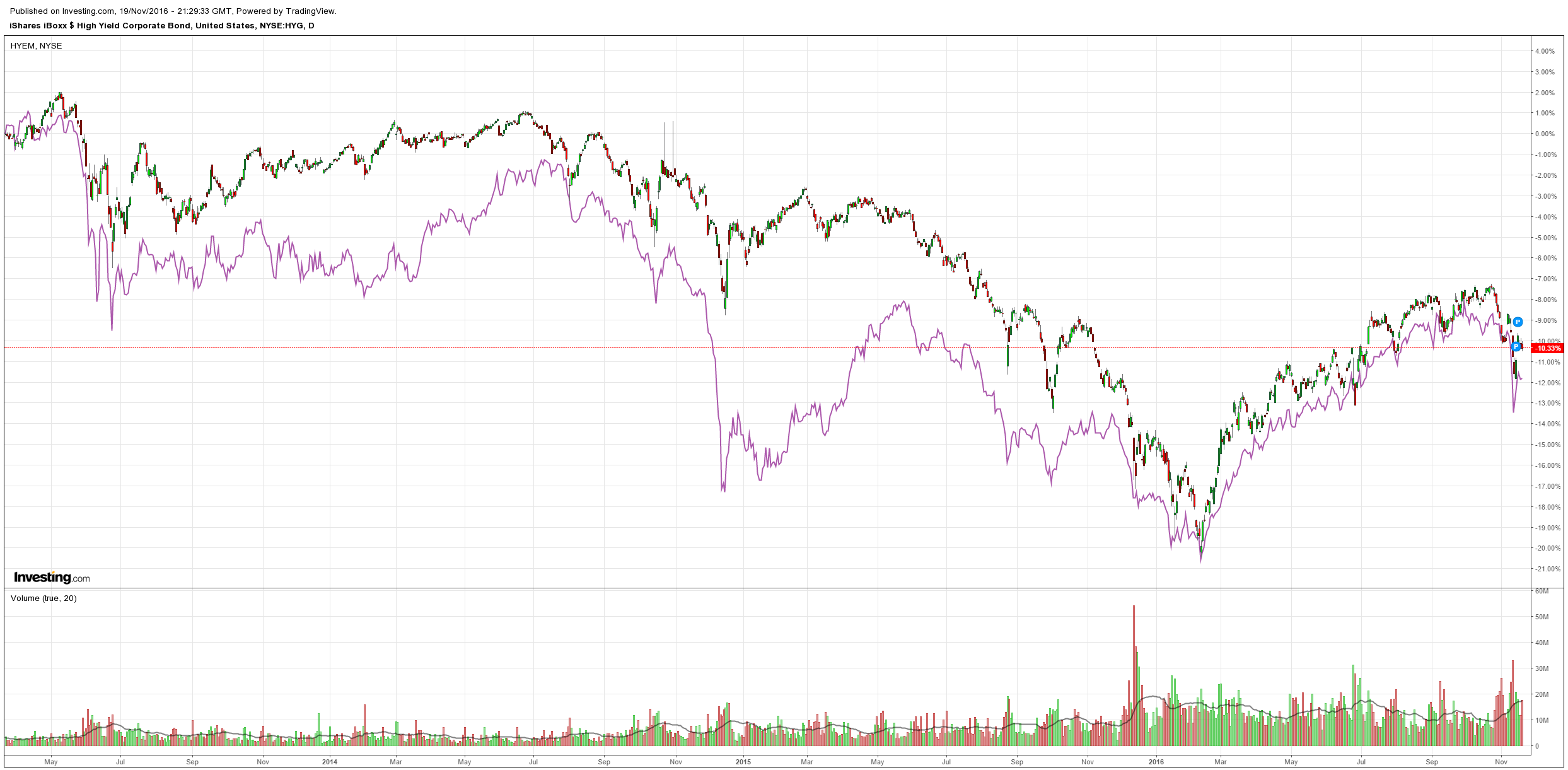
EM and US high yield held on:
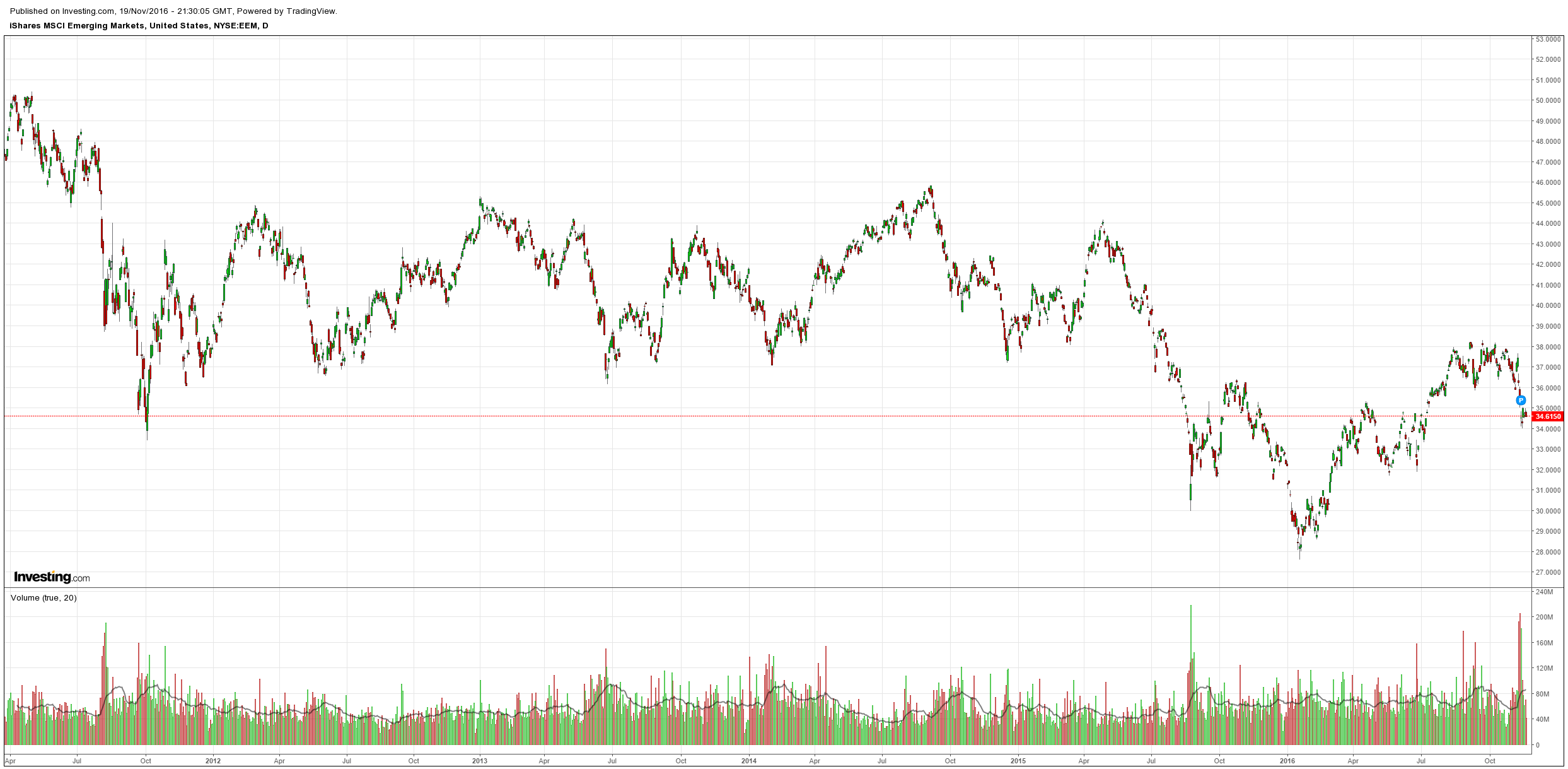
EM stocks fell:
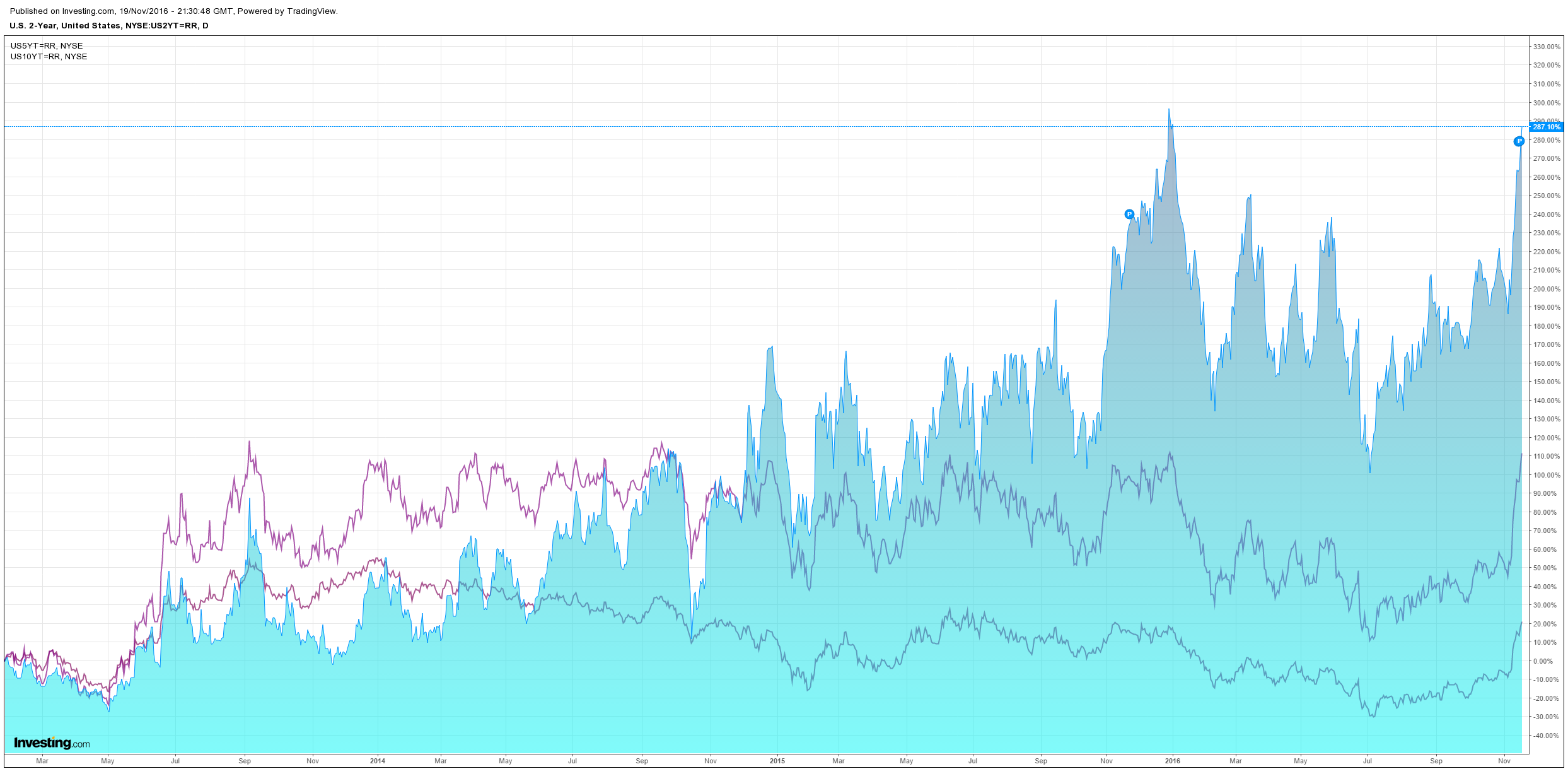
US bonds got creamed:
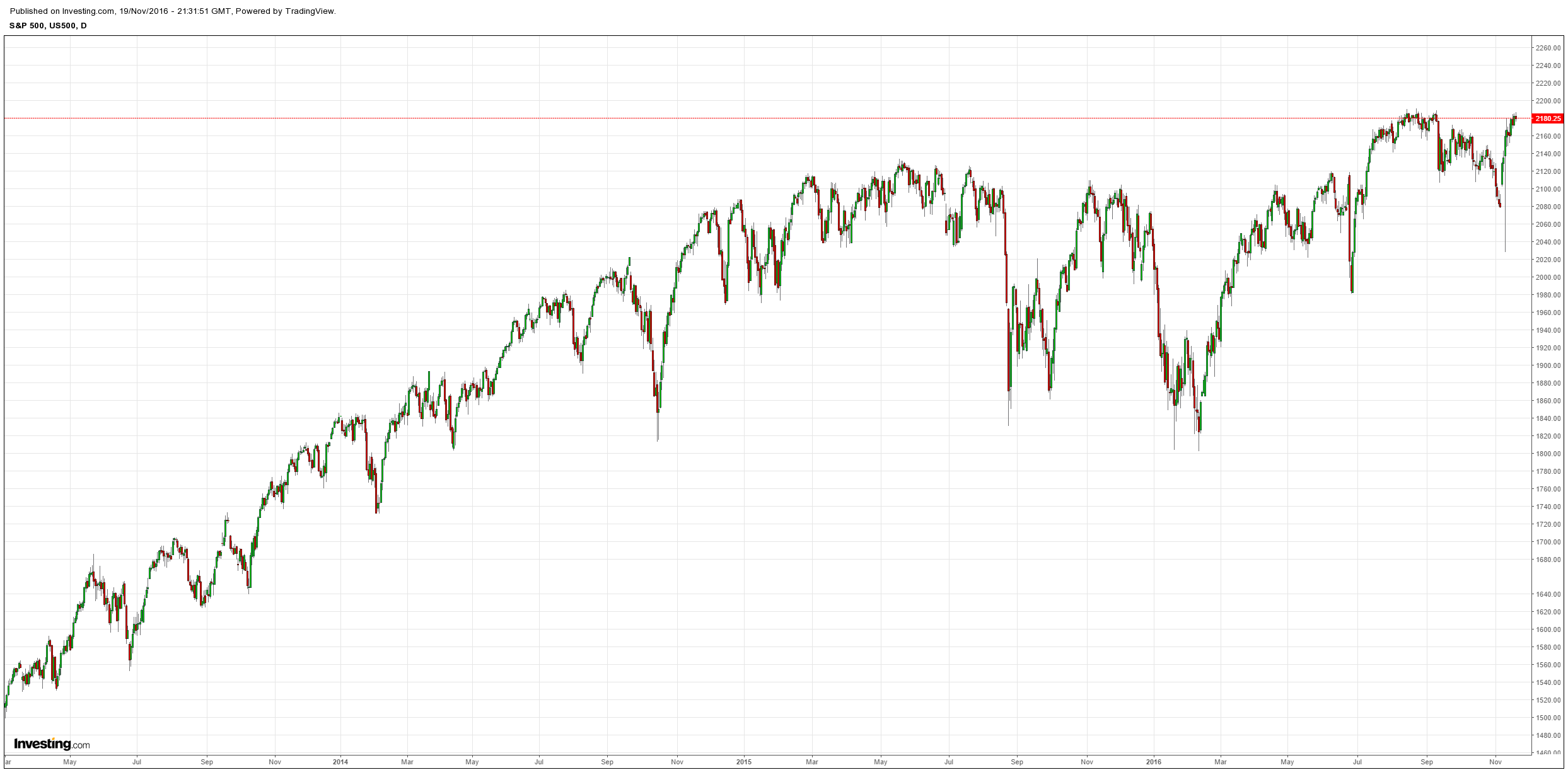
And stocks eased a touch:
Uber-bear Albert Edwards appeared with dire forecasts:
Was it really only one month ago that I reviewed our secular bullish call on long-term government bonds? A sell-off that was already underway since July has turned into a rout since Donald Trump’s election. Most commentators now believe the 35 year secular downtrend in bond yields is over and that US yields will rise further, causing havoc in financial markets. This is already apparent with the dollar’s surge and resultant weakness in emerging market currencies, most particularly the renminbi. At some point very soon the bond sell-off will even adversely impact equity markets!
In the very near term a fragile, highly indebted US economy will suffer a traditional end of cycle acceleration in consumer prices, and more importantly wages, which the Fed simply cannot ignore. I think it is entirely plausible that bond vigilantes could force them into two rate hikes in the first half of next year, with more being quickly discounted. Even if the Fed refuses to tighten, monetary conditions will tighten dramatically anyway as bond yields and the dollar surge, exacerbating the profits recession. This very long economic recovery will then suffer a very traditional death.
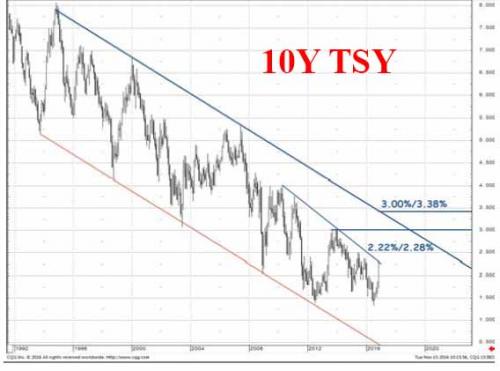
Over the next 12 months little will happen on the fiscal side in the US as any stimulus is slated for 2018/19. Meanwhile in the near term the oil price will drive a pick-up in headline US CPI inflation into the 2½-3% range, forcing wage inflation decisively higher. Bond vigilantes could easily decide the Fed is way behind the tightening curve and the current bond rout could then extend all the way to the long-term trend line.
A move in US 10y yields to 3¼% is entirely plausible and would still not negate the long-term bullish trend. Indeed in the next recession I still expect 10y yields to ultimately fall to minus 1% as helicopter money is adopted to finance Trump’s double-digit fiscal deficits.
Versus Goldman:
Tax reform has political momentum, which is likely to increase the budget deficit… In light of the election result, we assume that the deficit will increase by more than previously expected. Specifically, we assume that fiscal policy choices under the next Congress will increase the budget deficit by around 0.75% of GDP, or around $150bn, in 2018, and similar amounts over the next few years.
… but the market is more focused on fiscal “stimulus” than Congress is. There are risks in both directions to our fiscal assumptions, but we note that financial markets appear to be more focused on fiscal “stimulus” than lawmakers are. …
Both sides support some type of infrastructure program, but neither side seems enthusiastic. Although President-elect Trump has highlighted infrastructure among the priorities he hopes to address, the reaction from Congressional Republicans has been tepid. While some believe the inclusion of an infrastructure plan in the tax legislation that Congress is expected to consider in 2017 could increase Democratic support for the combined package, others are wary of proposals to use the proceeds from taxing the unrepatriated profits of US multinationals to pay for it. Instead, Republican lawmakers appear more inclined to use the bulk of the proceeds from taxing those overseas earnings to offset the budgetary effects of reducing statutory tax rates.
Obamacare “repeal” seems unlikely to change the fiscal picture for 2017 or even 2018. Congress will face a number of challenges in reforming the ACA in 2017, and we would expect that the process to devise a replacement plan will take until late 2017, if not 2018. We would also expect whatever replaces the current system to take effect after the midterm congressional elections, in 2019. This could lead to uncertainty regarding the changes that might be made, but we expect that whatever changes to the ACA might ultimately occur, they would probably not take effect until 2018 at the earliest and more likely 2019.
I have no doubt that Edwards is right in the medium term but my guess is he is too hawkish for 2017. It will take time to roll out US stimulus next year so the bond selloff will slow as a cautious Fed reigns. We’ve already seen just how gun-shy it is early this year when it turned tail on hikes and unleashed this year’s commodity bear market rally. I expect OPEC to cut oil production so oil can hold up, but a rampaging USD is still a very heavy headwind for commodities and the bear market will return to hold down inflation. Then there are next year’s European risks.
So, my allocations are unchanged:
- long USD, short Aussie dollar;
- buy the dips in bonds (going lower yet is my view);
- buy gold on the dips (going lower yet is my view);
- long cash;
- sell the rallies in equities;
- sell property.
