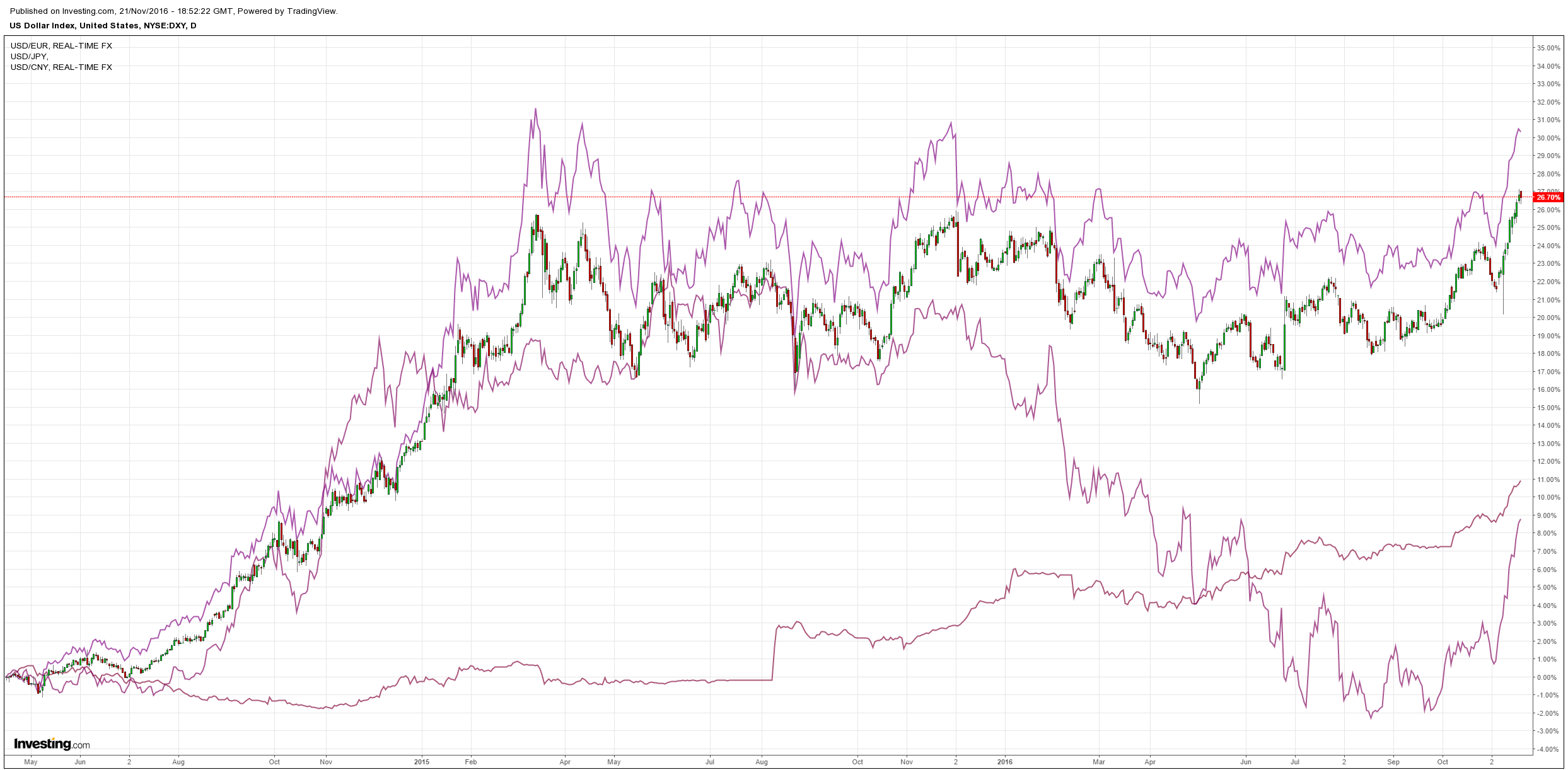
The USD finally took a little breather and EUR bounced. But CNY and JPY are in free fall:
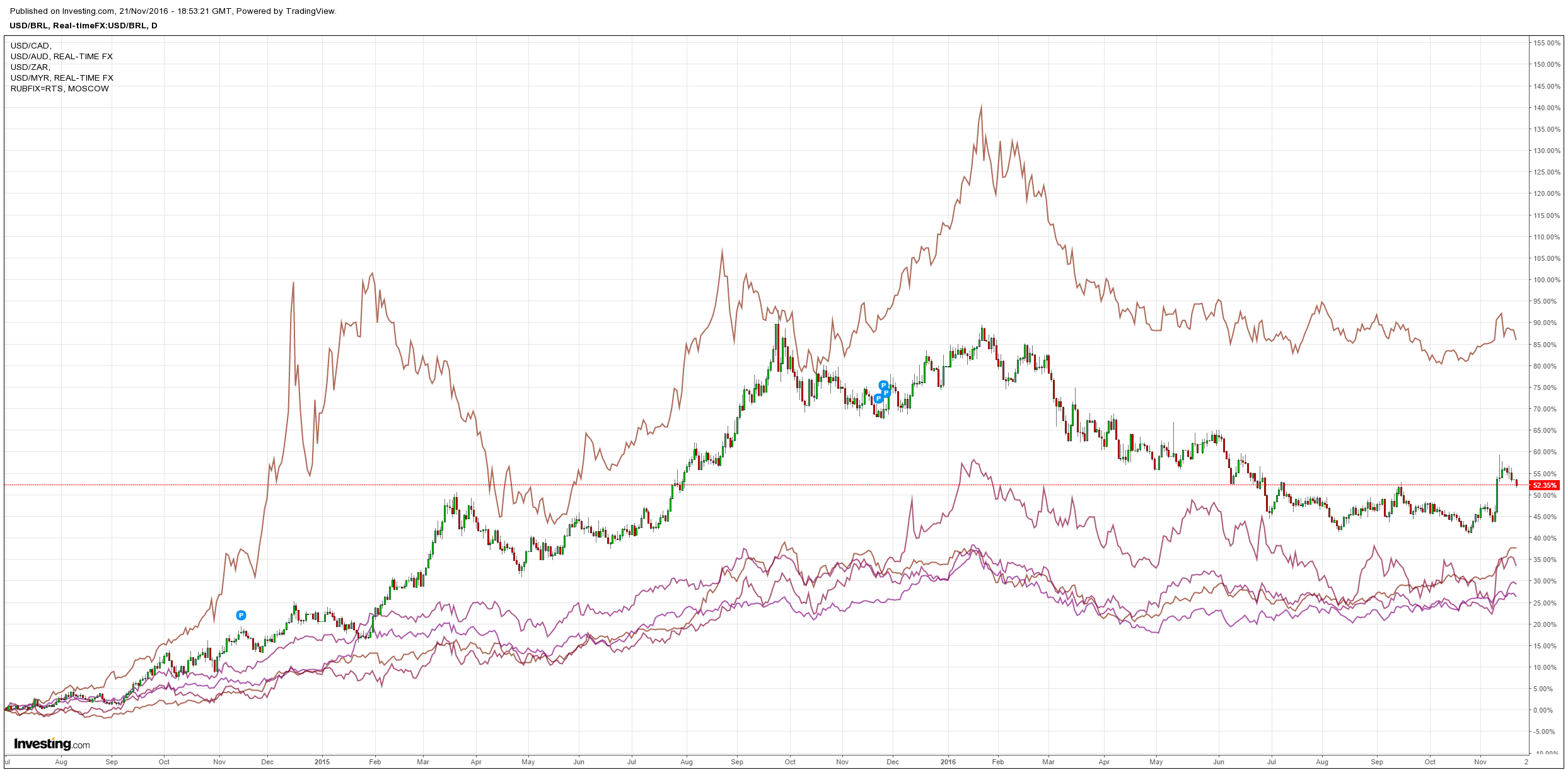
Commodity currencies rebounded:
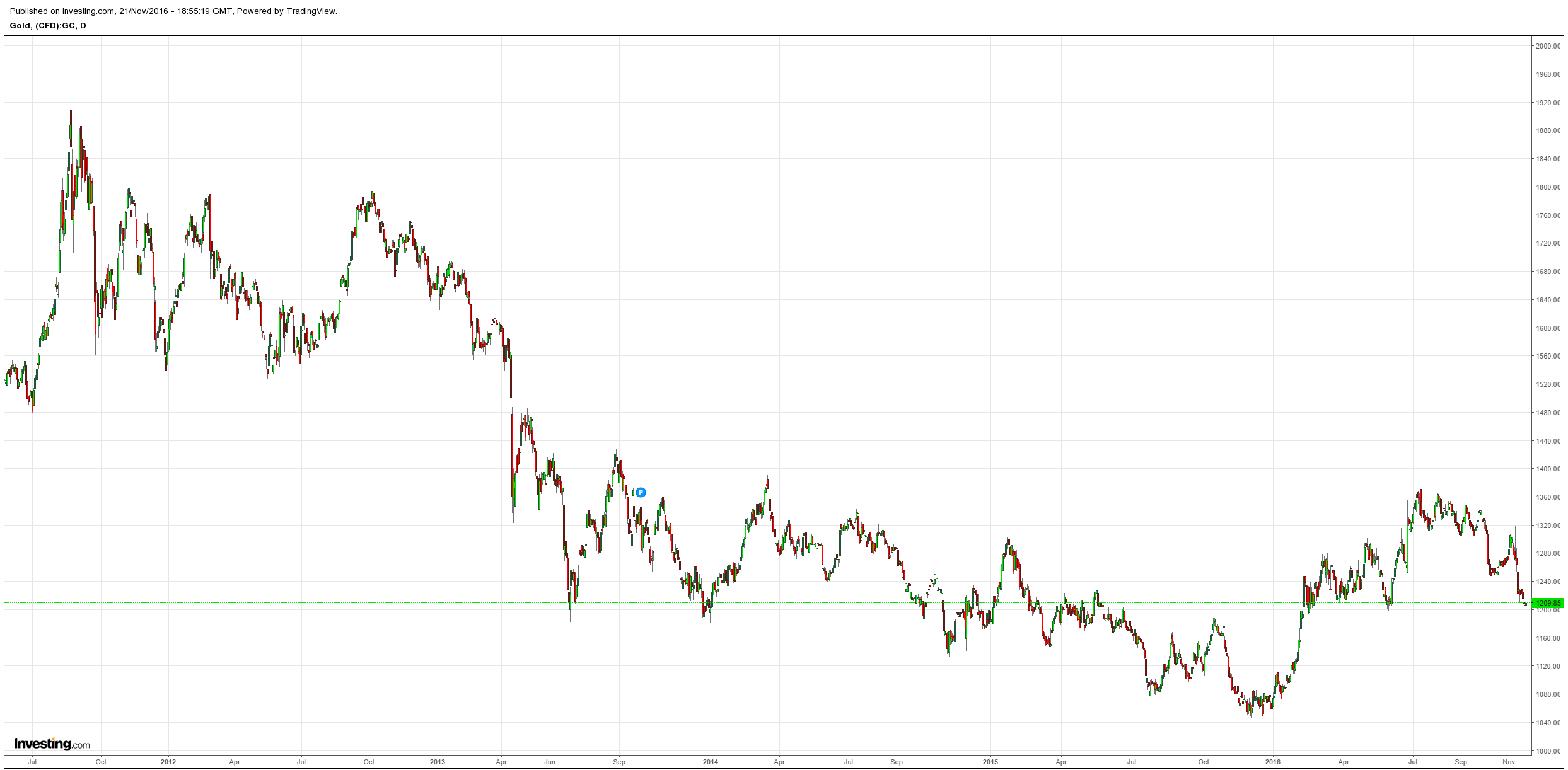
Gold tried and failed to rally:
Advertisement
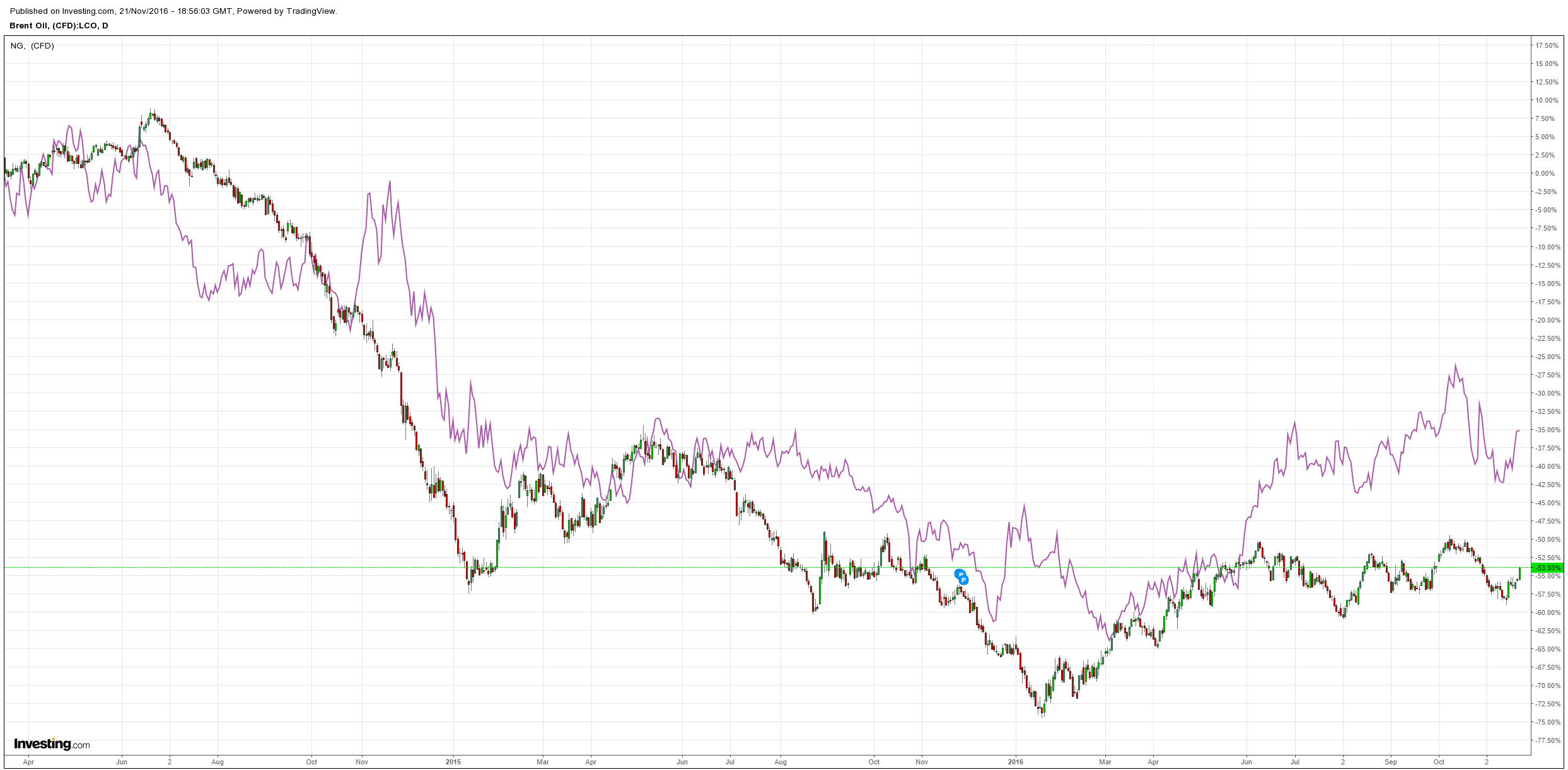
Oil rocketed as the OPEC deal is imminent:
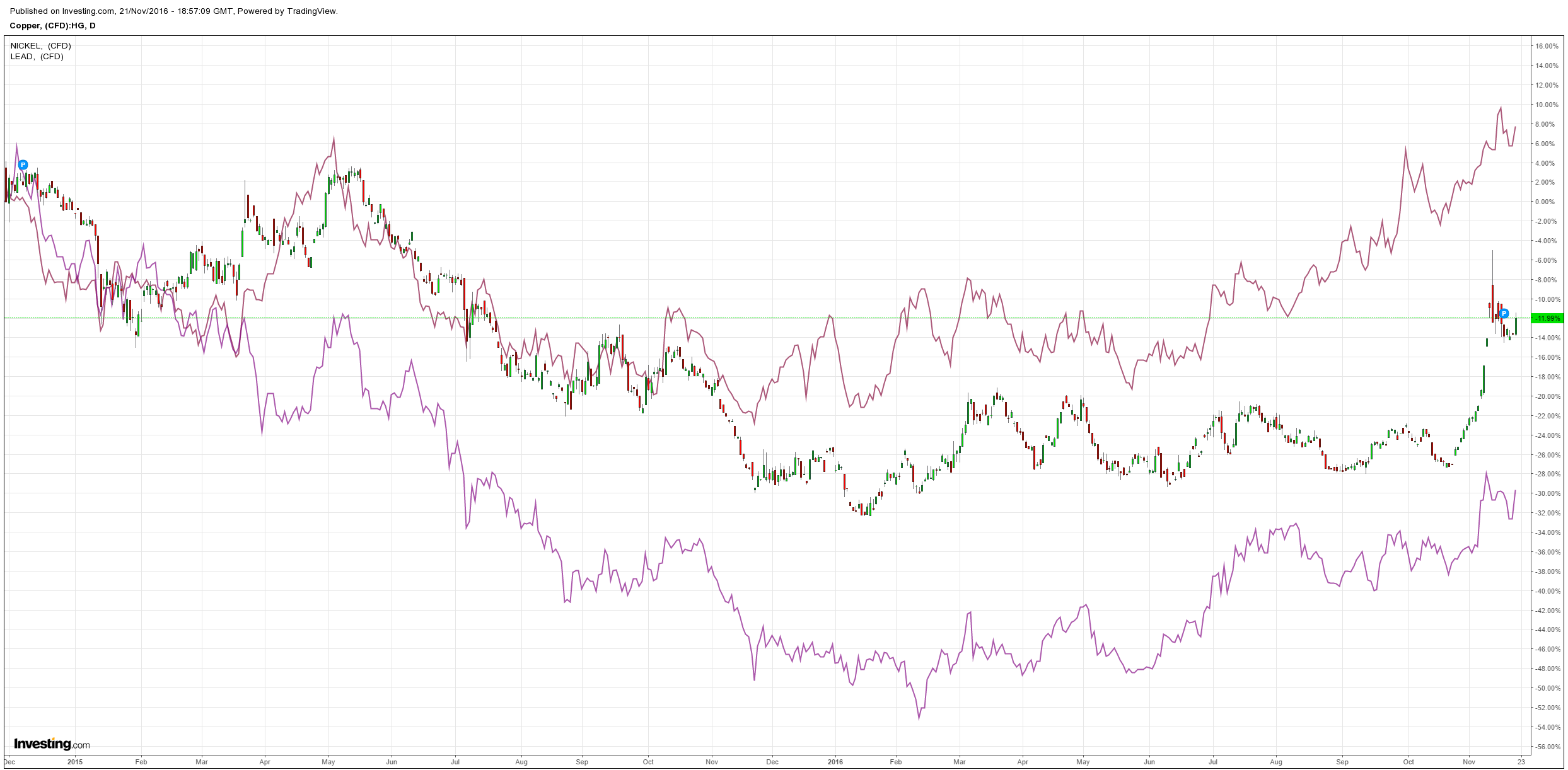
Base metals rose just because:
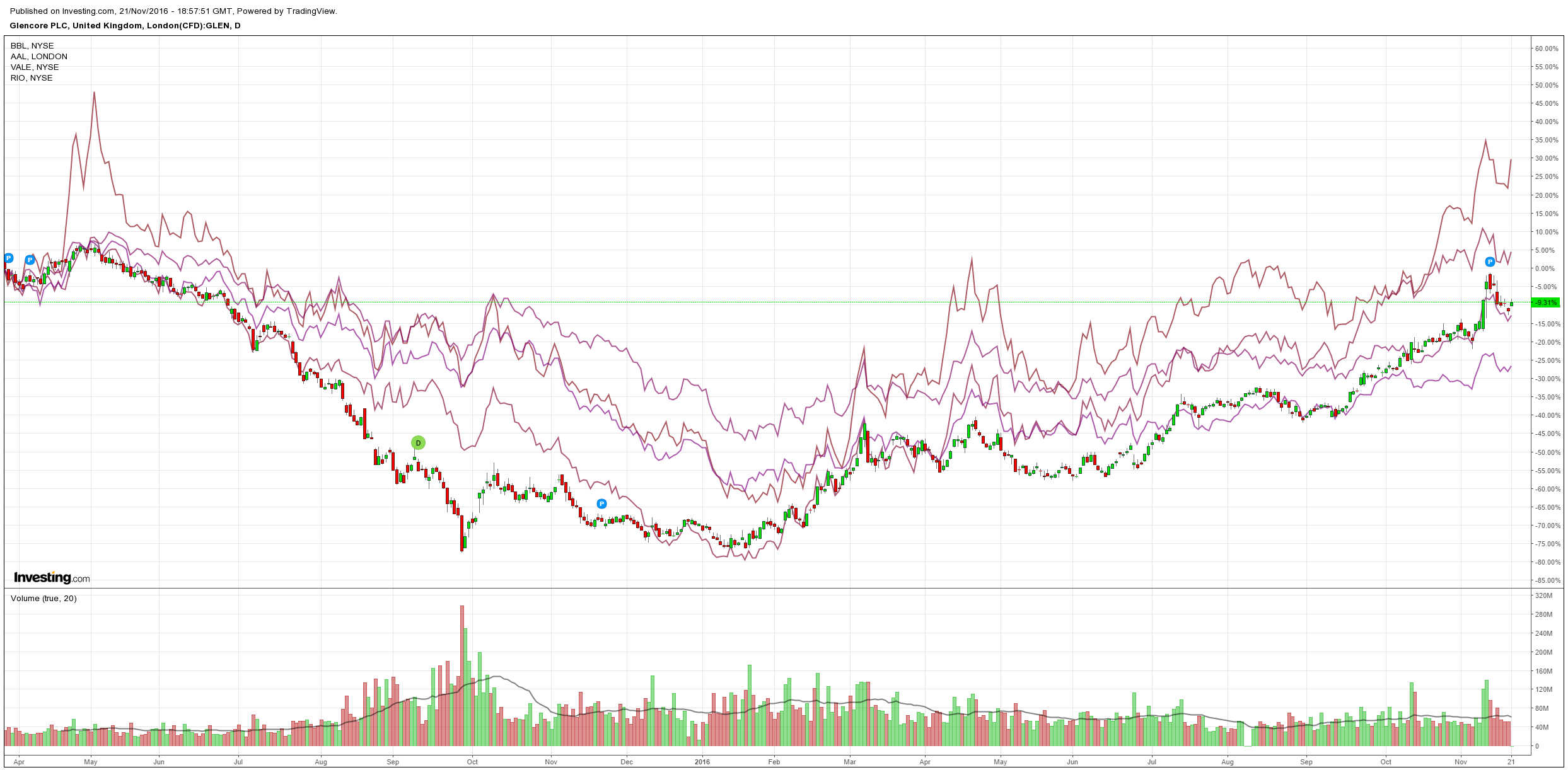
Miners too:
Advertisement
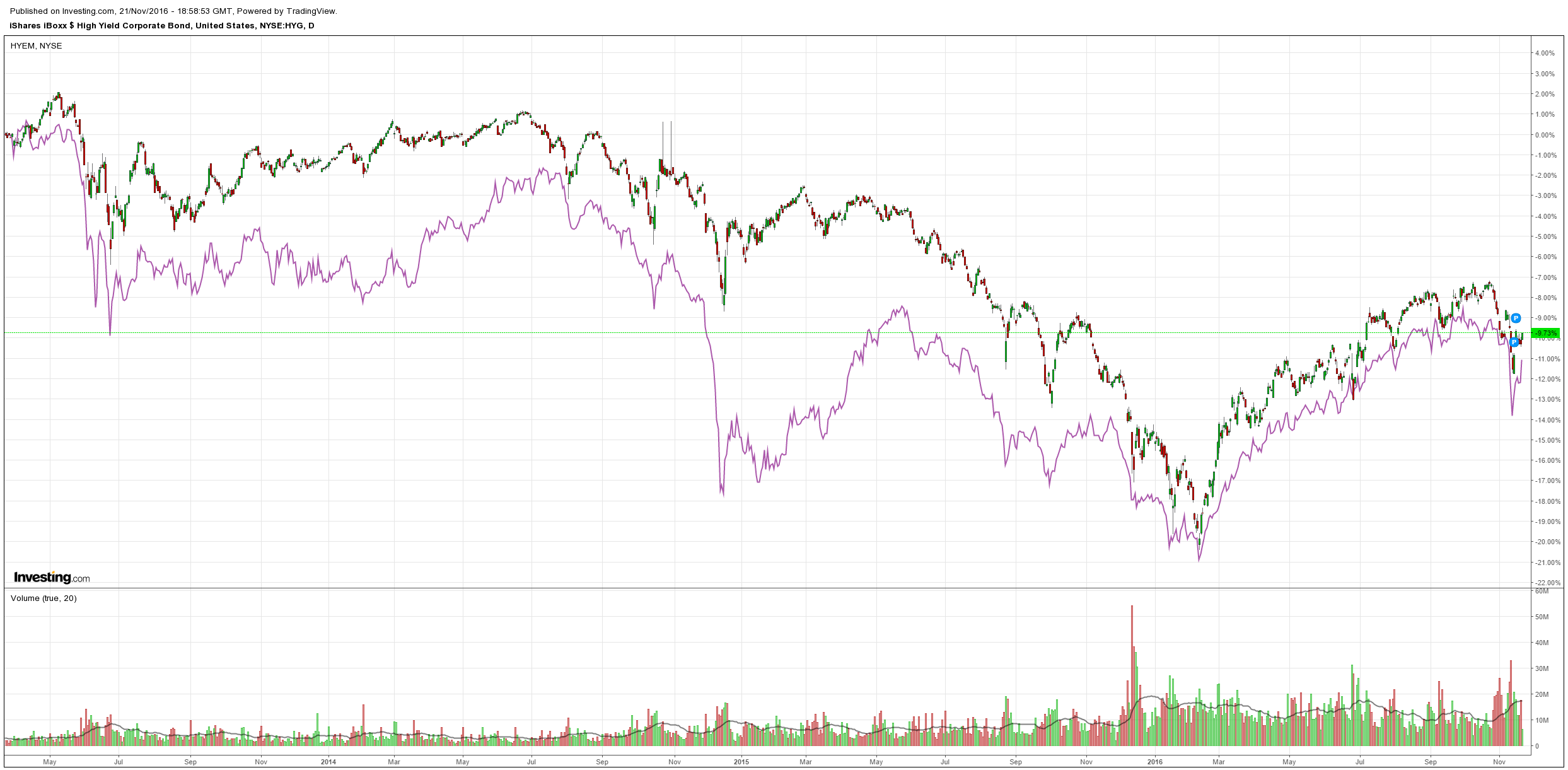
US and EM high yield lifted with oil:
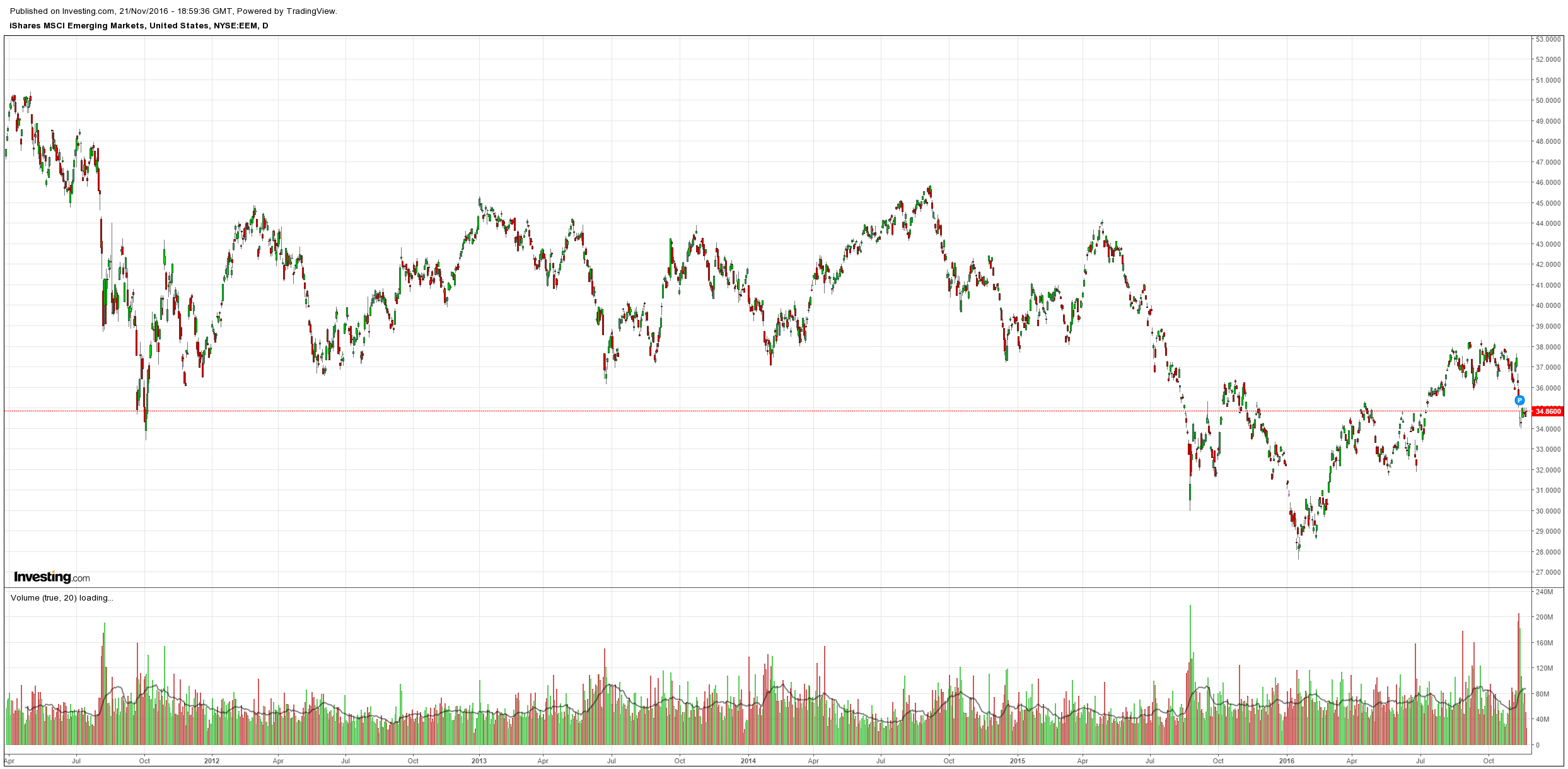
But not EM stocks:
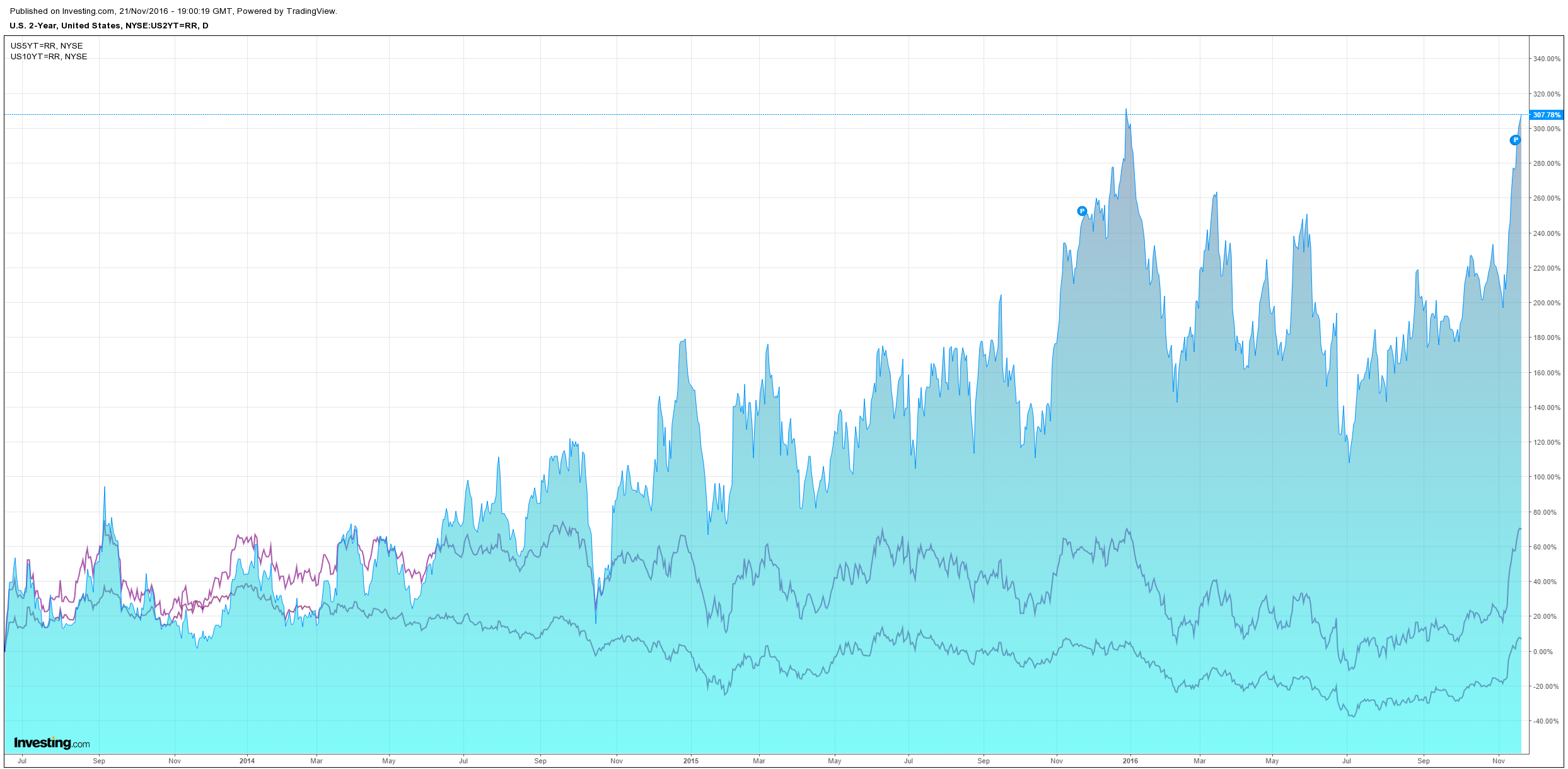
As US bonds got caned at the short end but the curve flattened again:
Advertisement
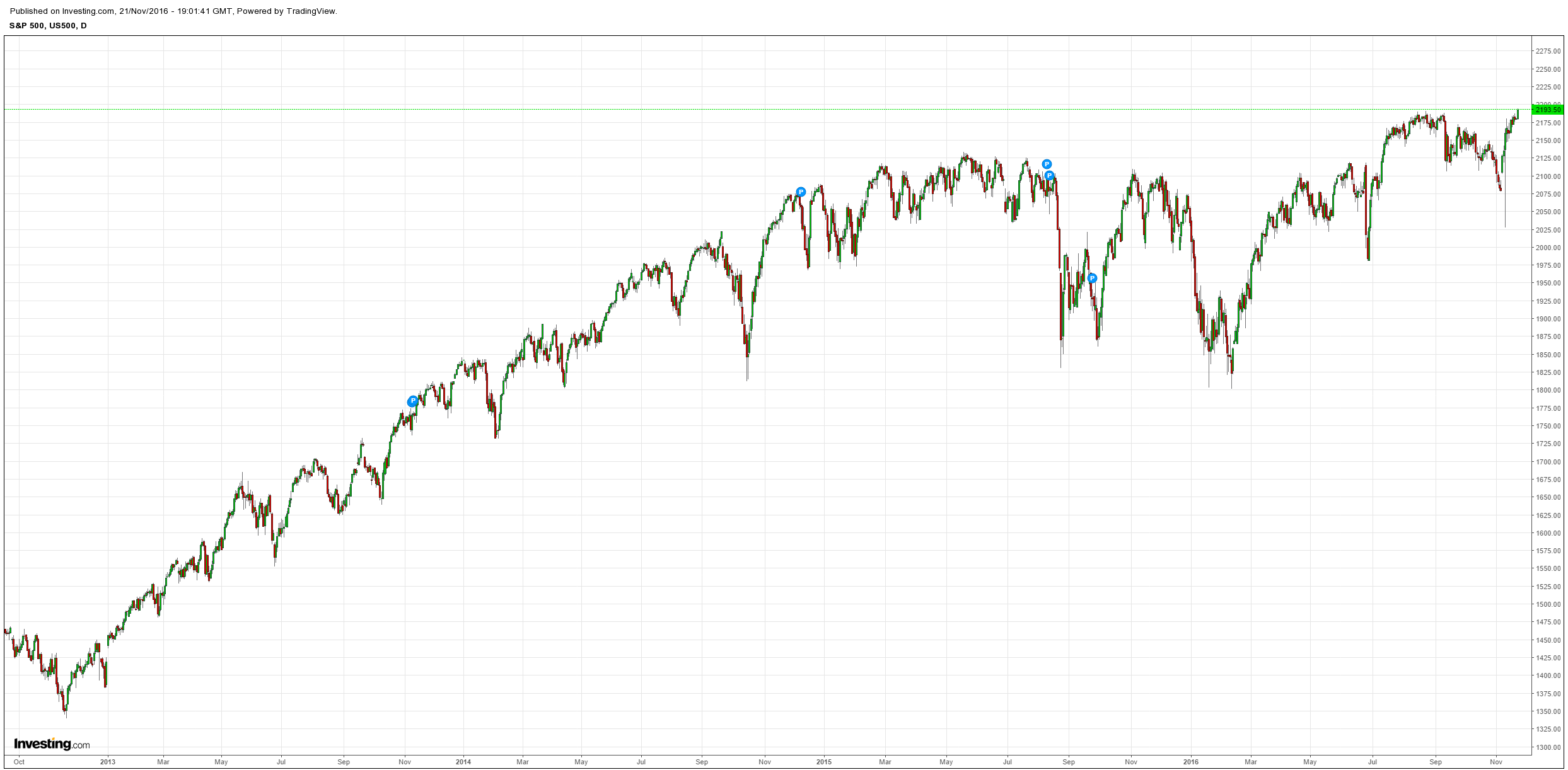
And stocks partied like it was 1999!
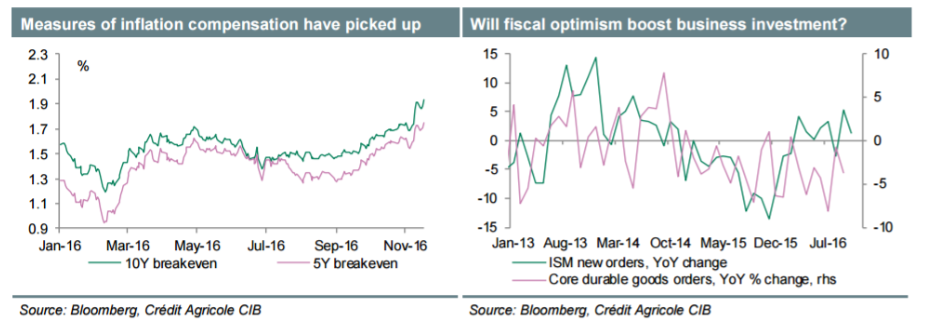
The Trump reflation basically caught a new thermal with the OPEC deal. With oil secured in some range around $50, the US shale recovery can add to stimulus, as well as keep inflation intact. Thus I expect the market to keep buying any dips in the USD. Credit Agricole agrees:
Advertisement
The USD continues to ride the momentum in bonds yields, but there has been an important shift in the underlying driver of the yield curve.
President-elect Trump has proposed an ambitious fiscal stimulus agenda, including USD1trn in infrastructure spending, cuts in personal and corporate taxes, and incentives to bring back corporate earnings retained abroad. While this agenda is likely to be significantly restrained by the fiscal hawks in Congress, even a moderate fiscal stimulus with an economy near full employment could generate inflationary pressures. These expectations are increasingly reflected in the US 10Y breakevens that are up some 20bp since the election. The tightening in financial conditions via higher bond yields should be of some concern for the Fed but in our view it will not deter the FOMC from hiking in December, especially as the move is more than 90% priced in. The Fed is likely to stick to its game plan of only very gradual rate increases thereafter as the fiscal outlook remains unclear for now. The USD may thus be reliant on the details of President Trump’s cabinet, fiscal signals from recently re-nominated House Speaker Paul Ryan’s and incoming inflation data to continue its uptrend.’
This week is shortened by the Thanksgiving holiday and probably does not lend itself to fresh USD highs but we suspect markets will continue buying into any corrective USD weakness.
On the economic calendar next week are October durable goods orders and the minutes from the November FOMC meeting, which should highlight that the Fed was in a wait-and-see mode ahead of the elections.
And Goldman:
In our last FX Views, we argued that the US election represents a “reset” for two reasons.
First, the possibility of meaningful fiscal stimulus in an economy where slack is close to zero raises upward pressure on inflation, as Chair Yellen and NY Fed President Dudley acknowledged this week.
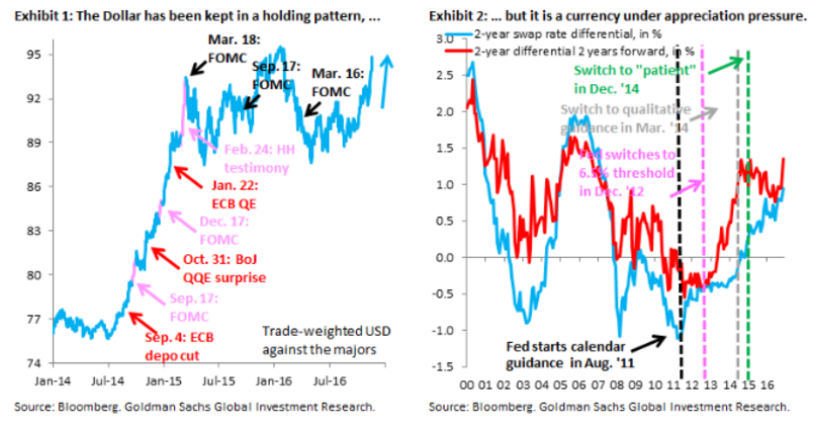
Second, President-elect Trump can make a number of appointments to the Fed in fairly short order, which could shift the reaction function hawkish. Both things have pushed front-end interest rates up (Exhibit 2), and the Dollar is now near the top of the range it has traded in since March 2015
As in 2014, when the Dollar was on the move, the question is now how much further it can go in the near term. Federal funds futures are one lens through which to look at this. They have obviously moved a lot, but the market in our view is still catching up to the changed landscape. The market is pricing 64 bps in tightening through 2017, well below our US team’s forecast of 100 bps. More importantly, through end-2019 the market is pricing 130 bps, or just over five hikes.This strikes us as low and points to further upside for the Dollar, including in the near term.
We are through our year-end targets for EUR/$ (1.08) and $/JPY (108), which were controversial just a short time ago, and the risk to our 12-month forecasts – 1.00 for EUR/$ and 115 for $/JPY – is now firmly in the direction of more Dollar strength.
Sterling downside has fallen out of favor, but we think remains one of the most actionable themes. This is why we went short Sterling and the Euro against the Dollar as one of our Top Trades for 2017.
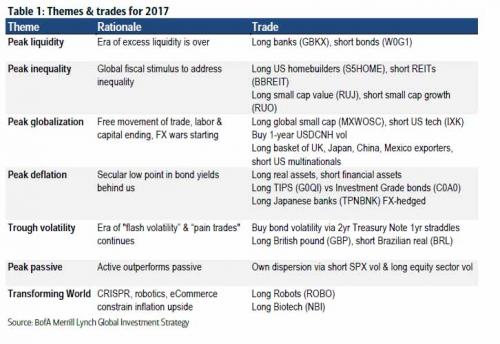
BofAML has a useful take on the implications for wider asset markets:
Advertisement
Global interest rates fell to 5,000-year lows; central bank purchases of financial assets topped $25tn (i.e. >GDP of US & Japan); the stock of negatively-yielding global bonds surged to $13.3tn.
Quantitative Failure, BREXIT, US election caused policy leadership flip from monetary to fiscal stimulus.
A flash EPS recession in H1 was followed by acceleration in wage inflation in H2 (to 7-year highs in US).
The greatest bull market in bonds ever likely ended on July 11, 2016 with a 30-year Treasury yield of 2.088%.
We believe that for first time since 2006, there will be no big easing of monetary policy in the G7, and that interest rates & inflation will surprise to the upside.
We forecast acceleration in nominal global growth: BofAML Economics forecast US nominal GDP up from 3% to 4%, non-US up from 6% to 7%.
We believe fiscal stimulus accelerates, trade and immigration policies tighten, and wage growth picks up, boosting domestic demand across the G7, and hardening our “buy Main Street, sell Wall Street” theme.
Bond losses likely will constrain gains in commodity and stock markets unless Japan, Europe, China GDP/EPS surprises meaningfully to the upside or US productivity surges.
We nonetheless expect strong returns from assets tied to inflation, Main Street, fiscal and real assets, despite losses from assets tied to deflation, Wall Street, “ZIRP” winners, financial assets (Table 4).
Finally, disruptive technology and aging demographics remain powerful secular forces; they won’t likely prevent a cyclical pick-up in inflation; but they are likely to constrain the magnitude of the rise in rates and inflation.
I’ll add my own two cents worth:
this is another cyclical rebound not a secular shift so bonds are not at the bottom even if they’ll keep pricing Fed hikes for the time being (ie the secular drivers of deflation are fully intact);
stocks look on a hiding to nothing with extended valuations, a rising share of profits going to labour, bonds to keep selling off and a currency earnings headwind;
if one digs into BofAML’s commodity long they are bullish precious metals and energy and short industrial metals so they basically agree with MB;
EMs can hold it together while energy holds up but will remain under pressure from the strong USD holding back any global reflation.
David Llewellyn-Smith is Chief Strategist at the MB Fund and MB Super. David is the founding publisher and editor of MacroBusiness and was the founding publisher and global economy editor of The Diplomat, the Asia Pacific's leading geo-politics and economics portal.
He is also a former gold trader and economic commentator at The Sydney Morning Herald, The Age, the ABC and Business Spectator. He is the co-author of The Great Crash of 2008 with Ross Garnaut and was the editor of the second Garnaut Climate Change Review.