
The US dollar is off and running!
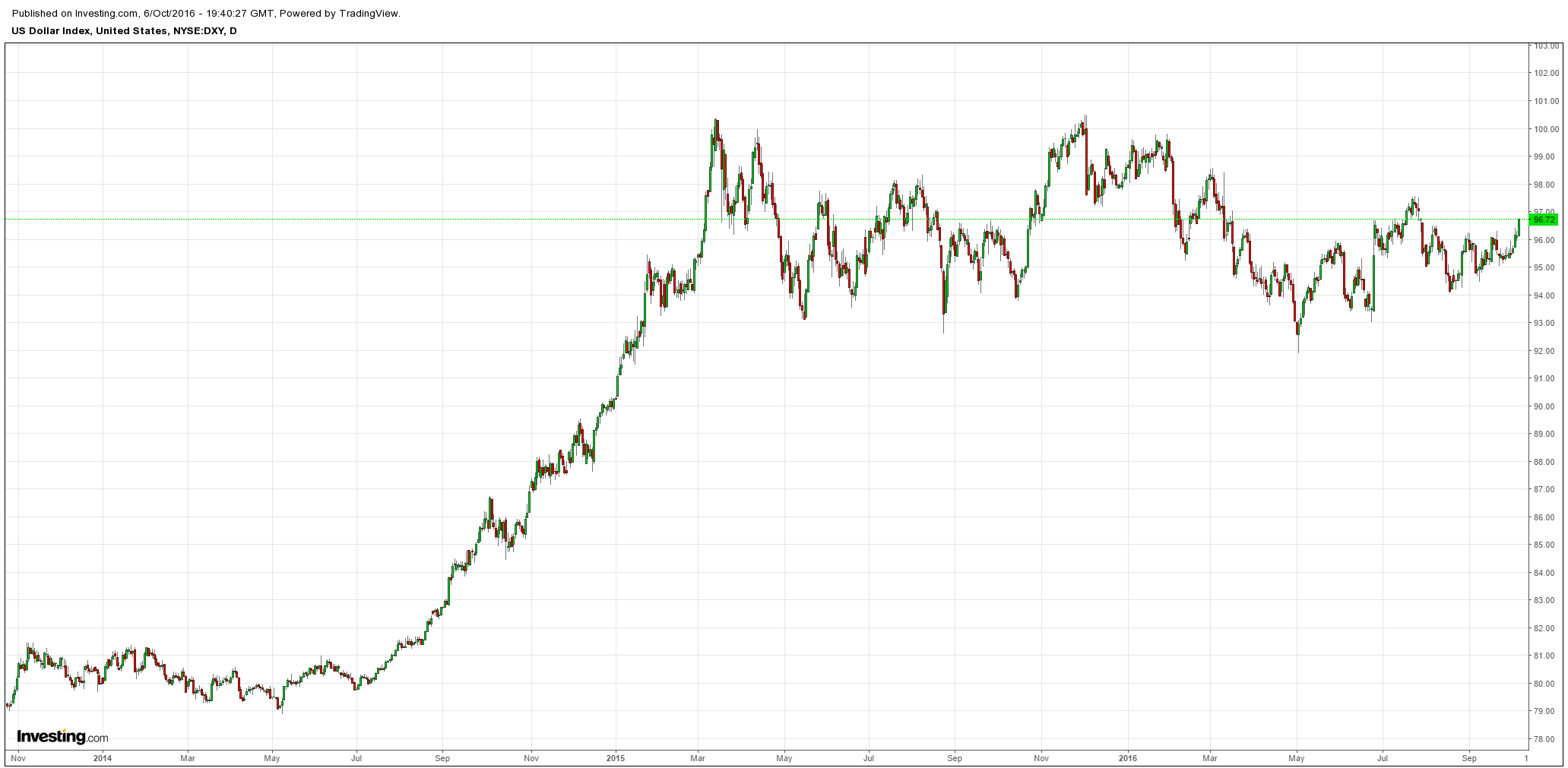
JPY and EUR look to be in trouble:
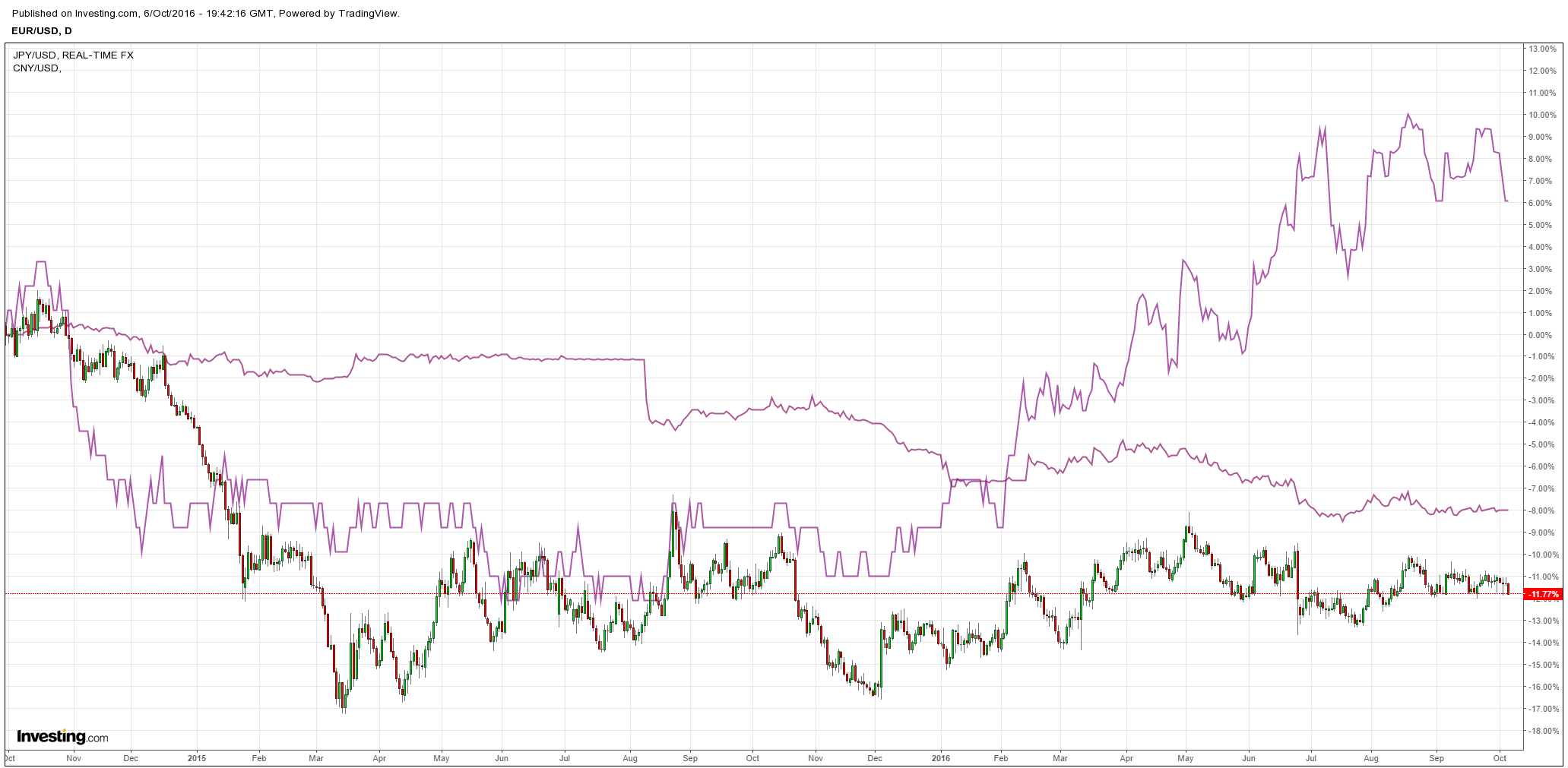
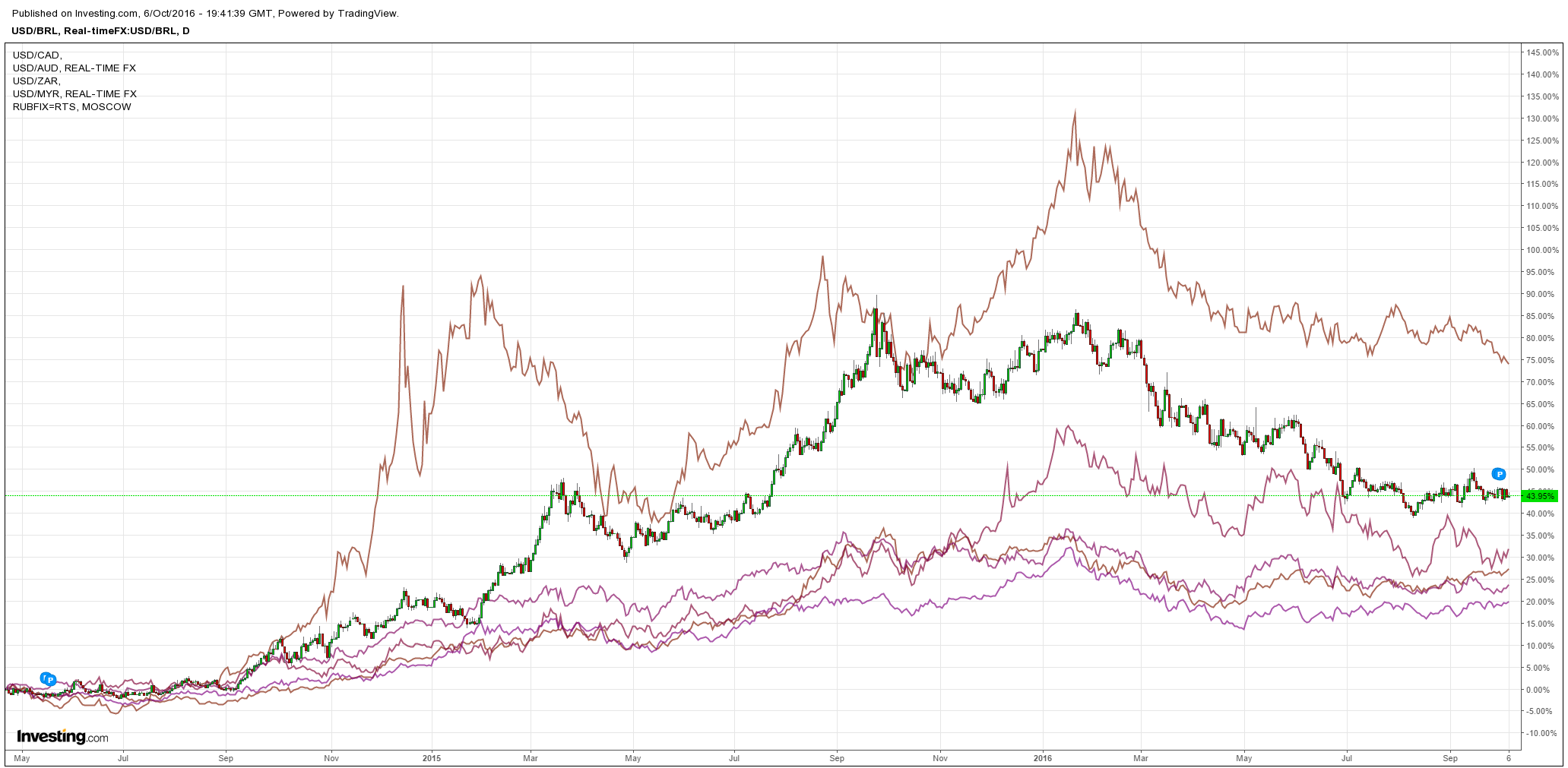
Commodity currencies bifurcated as anything oil rose and all else fell:
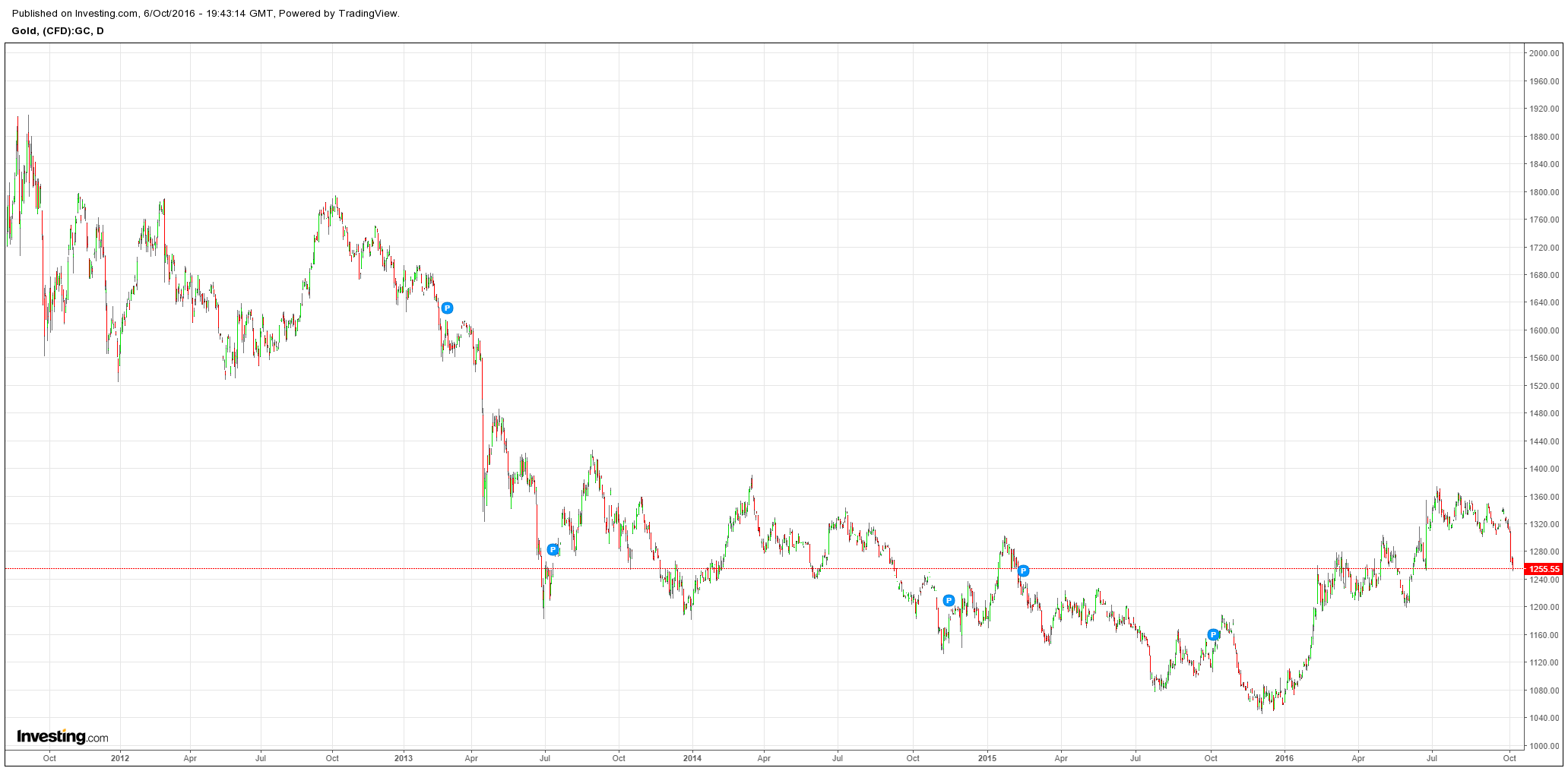
Gold was shellacked again:
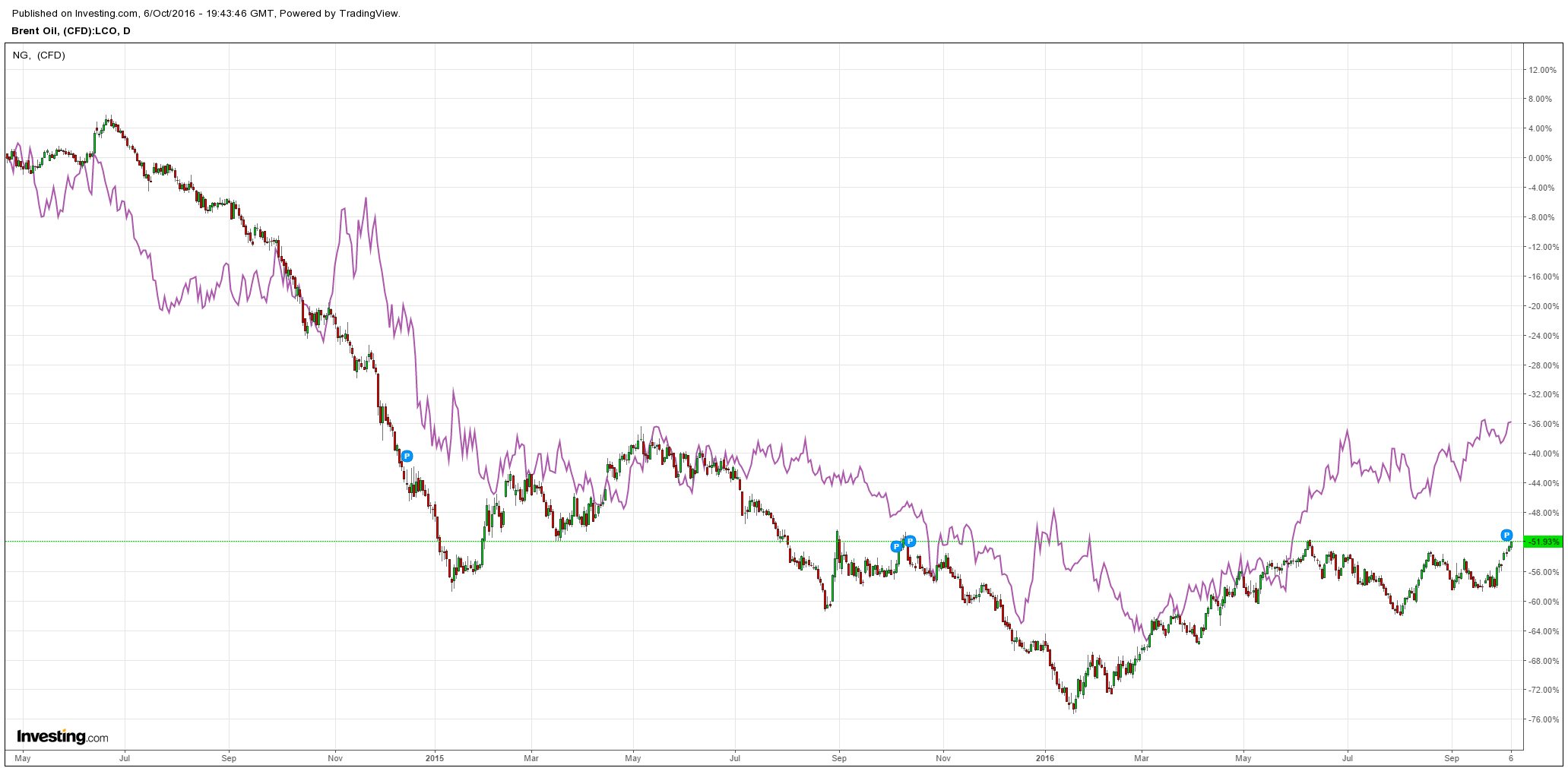
Oil appears ready to blast higher:
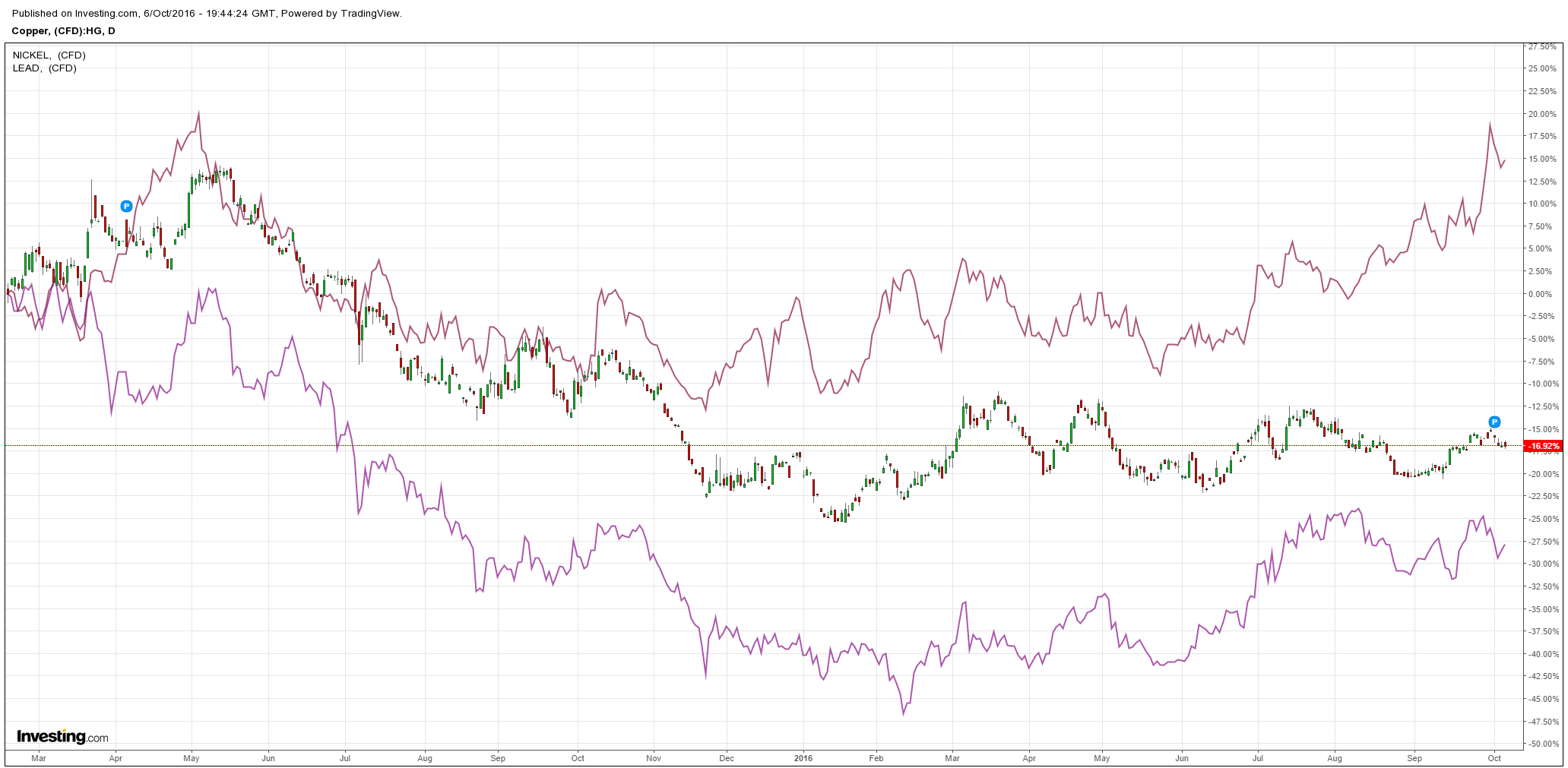
Base metals were mixed:
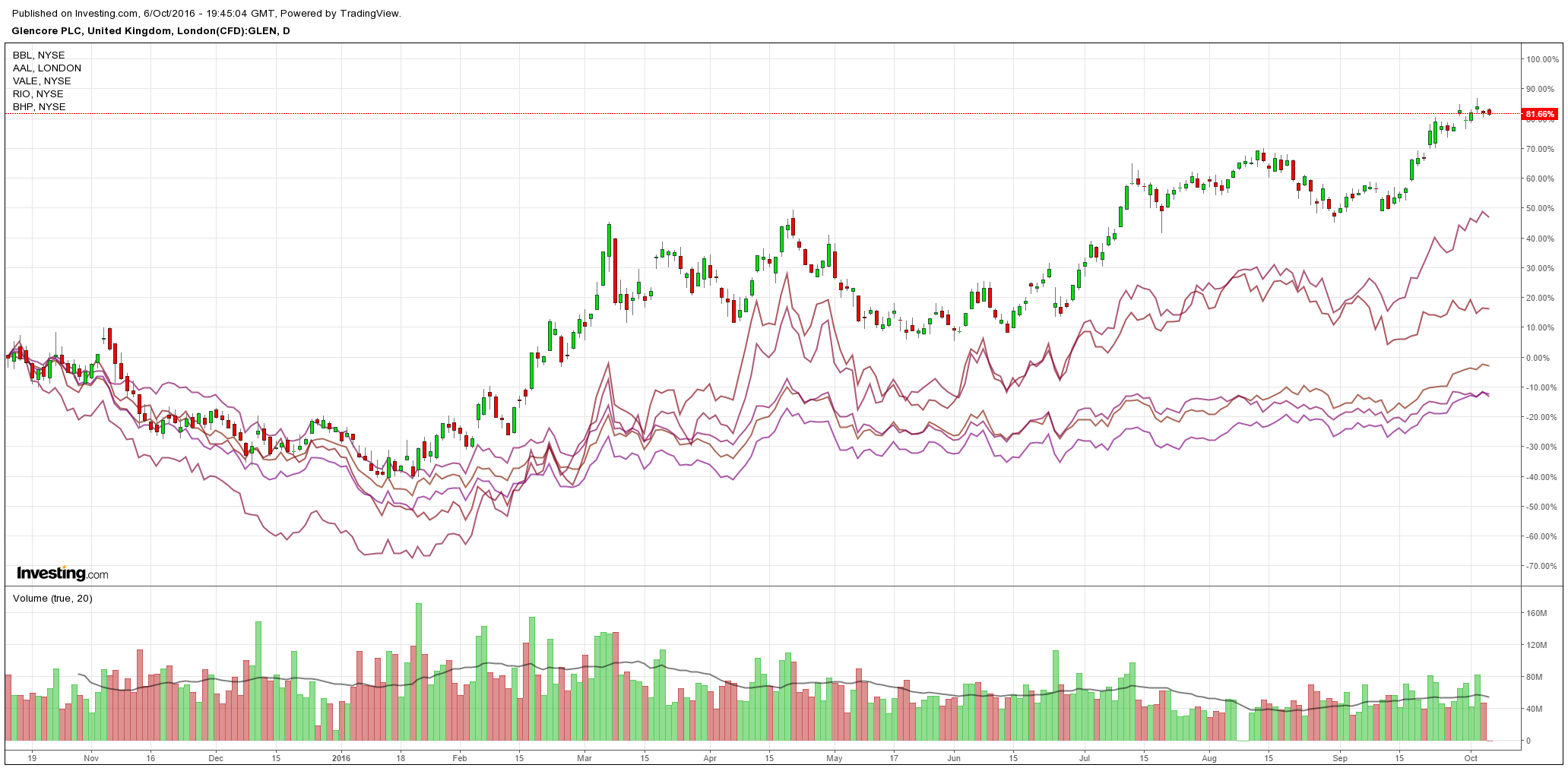
Big miners fell:
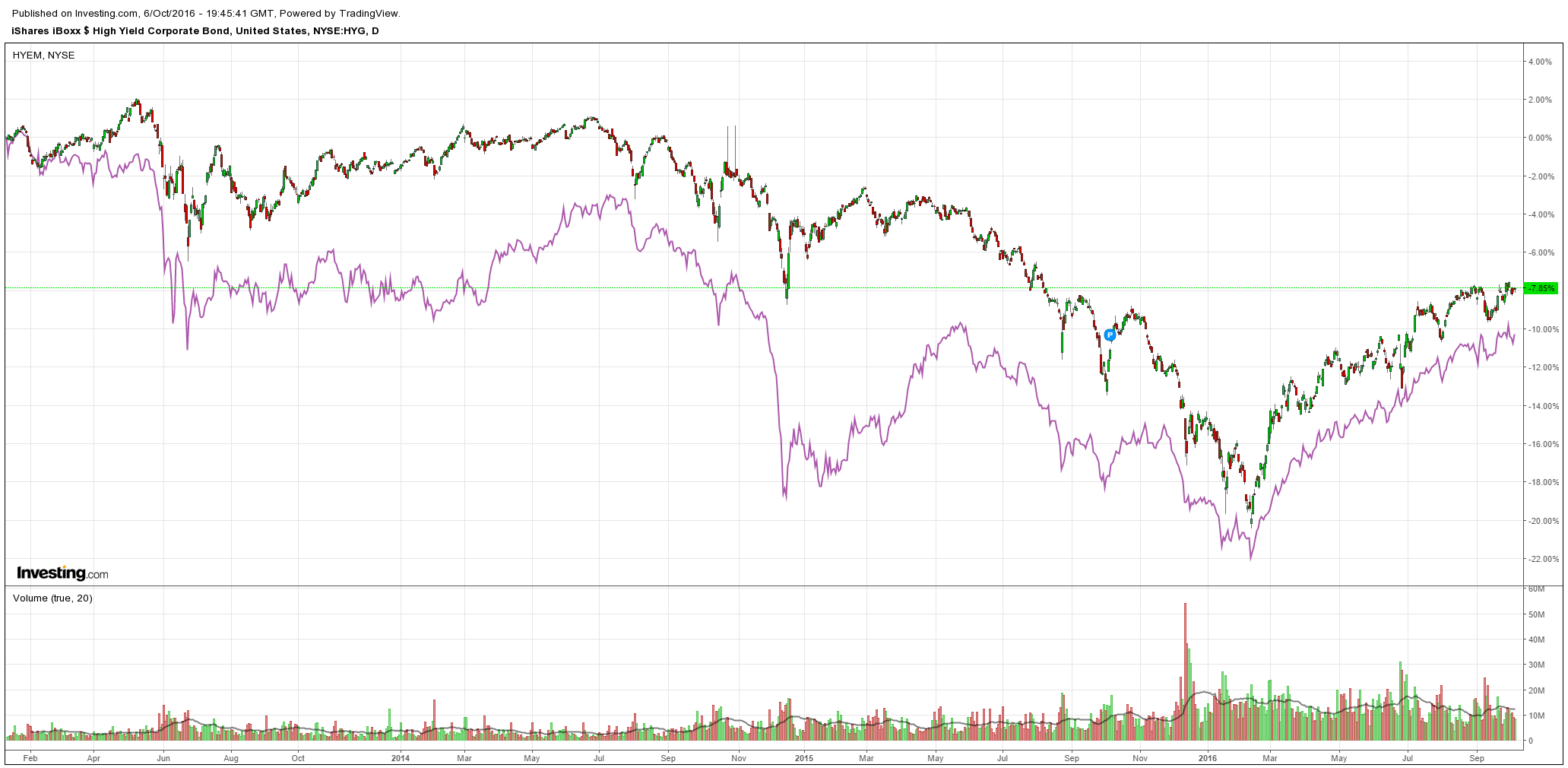
US and EM high yield firmed:
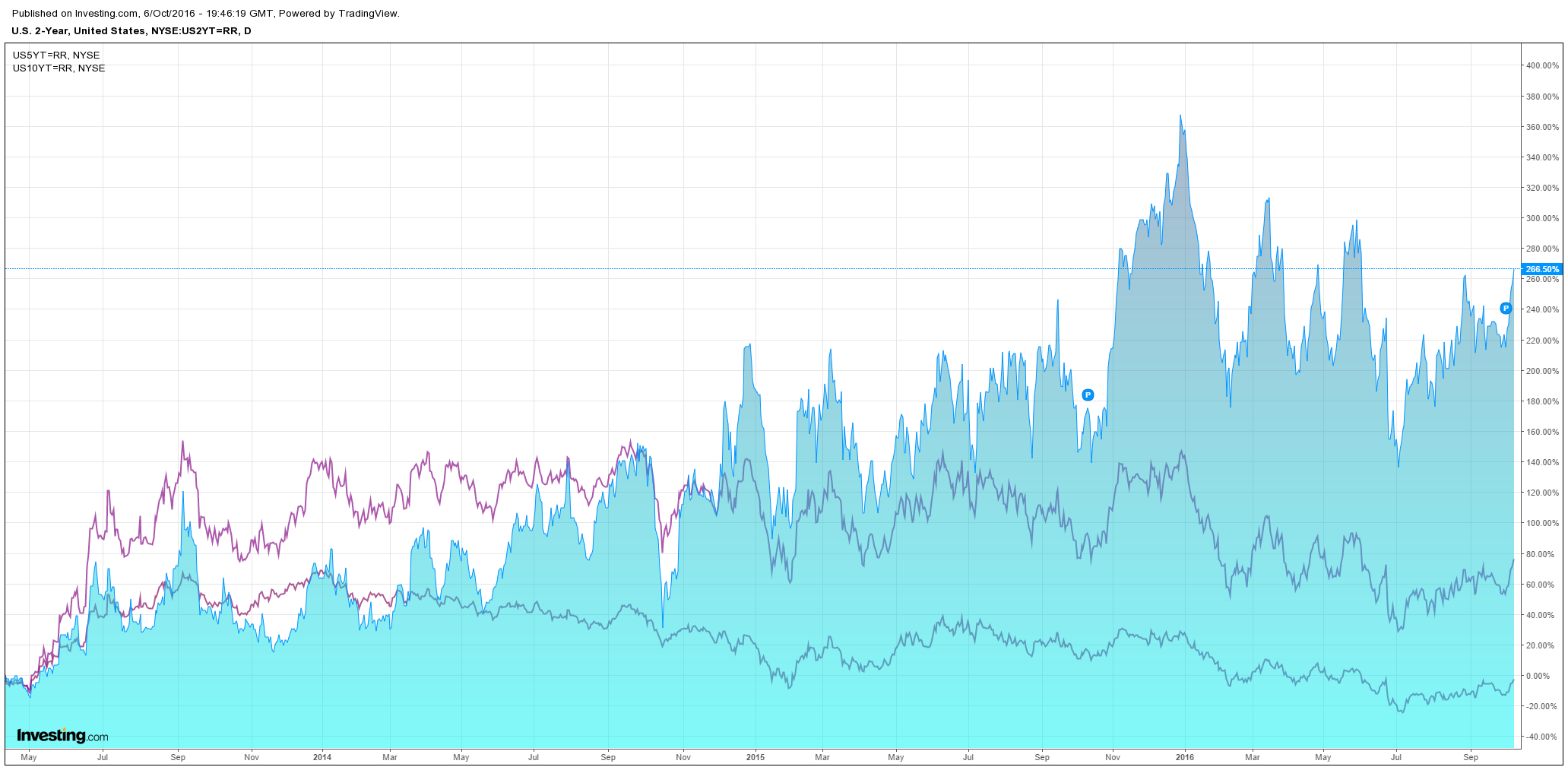
US bonds were dumped:
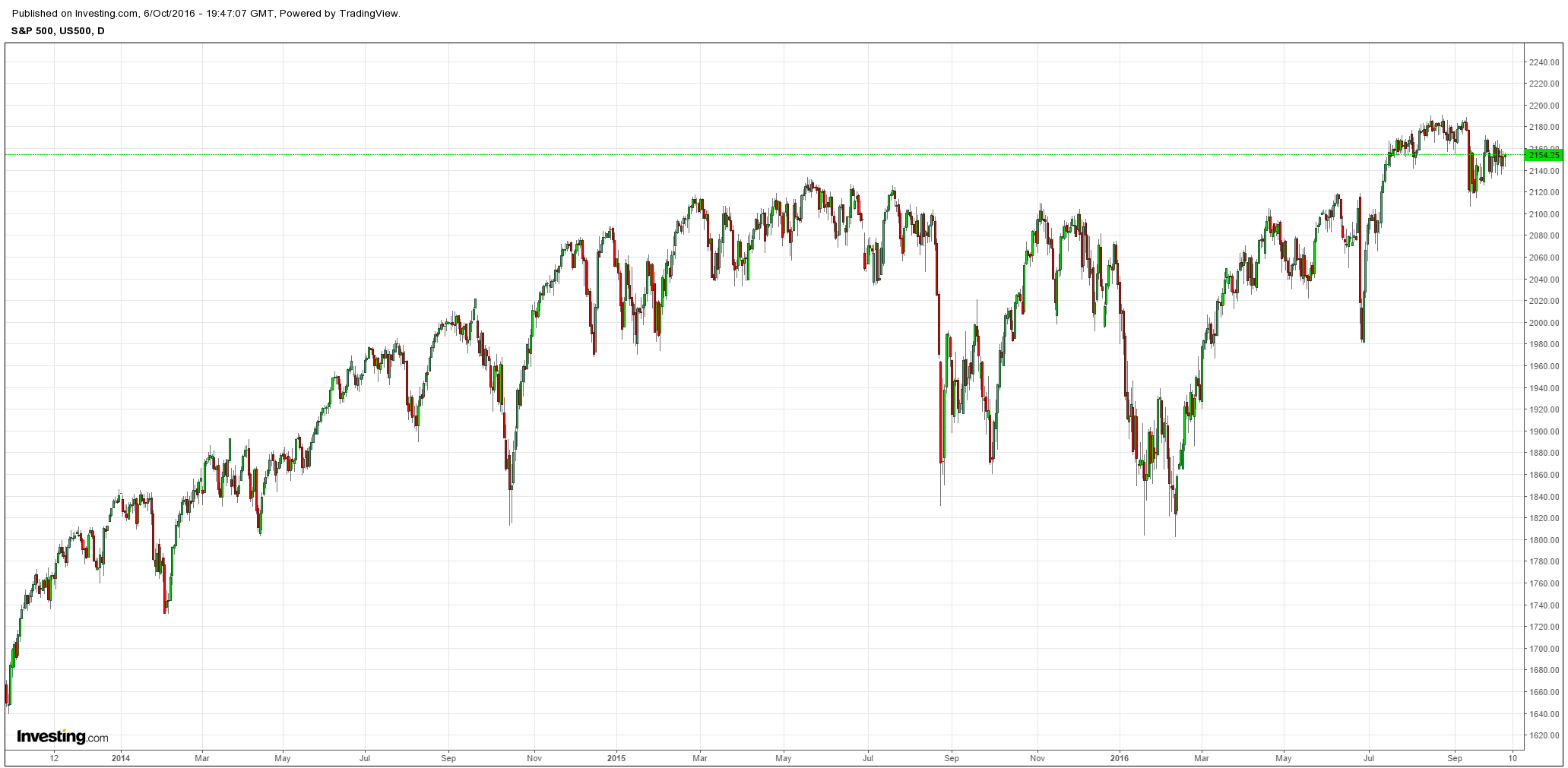
And stocks held on:
Markets are positioning for a Fed hike as head into tonight’s jobs report, from Goldman:
We expect a 190k increase in nonfarm payroll employment in September, above consensus expectations for a 172k gain, and up from our preliminary forecast of 175k. Although payroll growth slowed to 155k last month, subdued employment gains are not uncommon in August, and the trend growth rate in payrolls still looks solid, with the trailing 3- and 6-month averages at 232k and 175k, respectively.
…The unemployment rate is likely to decline to 4.8%, while average hourly earnings likely rose 0.3% in August and 2.7% over the past year.
…Our above-consensus payroll forecast primarily reflects improving underlying labor market fundamentals during the course of the month. Initial jobless claims continued trending down towards post-crisis lows, and nearly all other employment indicators from the various regional and national manufacturing and service sector surveys turned up.
Remuneration will be just as important.
Also boosting the USD was a denial by the ECB that it has any interest in tapering its QE. Not that it matters to me. The pipeline of political risks to the zombieuro is so chock-o-block that I can’t see it rising anyway. From The Guardian:
Much like with David Cameron, Renzi’s early mistakes set himself up for a potentially career-ending disaster. From the moment – when he was still fairly popular – that he vowed to put the issue to the people, he made the vote about himself. In a promise he now surely regrets, he said he would resign if the no vote prevailed and never return to politics.
Renzi had not anticipated that voters might lose faith in him, angry that the economy is not improving fast enough and disillusioned by his poor handling of four bank rescues late last year that sparked accusations he was handing out favours to the political elite at the expense of ordinary Italians.
Advertisement“He thought that his personality and personal position would be an element that would favour the yes vote, and then he realised that, in fact, he was not going to make the yes stronger, but he could be making the no stronger,” said Giovanni Orsina, a professor of contemporary history at LUISS University in Rome.
“He has been trying to depersonalise the referendum in the last months but it has become difficult for him because he tends to personalise everything, even though he knows he shouldn’t,” he added. Orsini said he believed the situation was still far too fluid to predict an outcome. And, as voters in Britain, Colombiaand Hungary have shown in recent months, trying to predict the behaviour of voters in referendums is never easy anyway.
Experts think the polls are unreliable. A recent effort by Corriere della Sera found that 23% of the electorate supported a yes vote, 25% were opposed, and 52% were either undecided or would not respond. Another this week by EMG, a polling firm, found 31% in favour, 36% opposed, and 33% were undecided.
Renzi’s support is thought to be especially weak in the south and among young voters who are attracted to the populist Five Star Movement (M5S).
Finally, it appears markets are also coming around to my view of the BoJ, from Morgan Stanley:
Yesterday USDJPY broke out of an upper channel resistance at 102.50, which for us confirms that a bottom is now in place. Beyond current momentum, the major catalysts for JPY weakness are found within the newly designed BoJ monetary policy. Here the BoJ no longer aims to lower bond yields across the curve, but instead to manage a generally positively sloped curve aiming to keep 10-year yields near zero even in the case of inflation overshooting the 2% target. Rightly, investors cited the dilemma that you can either control quantity or price, but you cannot control both. Hence, investors were convinced the BoJ’s 0% yield target would lead to an implicit tapering, specifically since the country has a current account surplus, generating an excess of savings which push down yields. Investors assumed that the BoJ’s monetary base would grow less than suggested by the JPY80trn QE promise provided earlier and that this implicit decline in the monetary base growth rate would lead to a lower USDJPY. A race of USDJPY downside projections peaked with ex MOF’s Sakakibara calling USDJPY to reach 90. We believe this assessment is wrong for several reasons.
Our reasons for further JPY weakness. Firstly, the assessment above does not take into account the potential for an increase in monetary velocity from the changing environment for commercial banks. In particular the potential for bank profitability to rise and hence increase their risk taking capacity when yield curves stay positively sloped and while the back end trades near predictable levels. Soon we will dive deeper into this theme. Secondly, the steeper international yield curve environment will push the JGB curve up too. With JGB long end yields rising, the BoJ can execute bigger QE purchase operations which will support its monetary base growth. JPY weakness will be the result.
Yep.
The Q4 risk gauntlet looks even more daunting today. If the Fed piles in, all bets are off.
