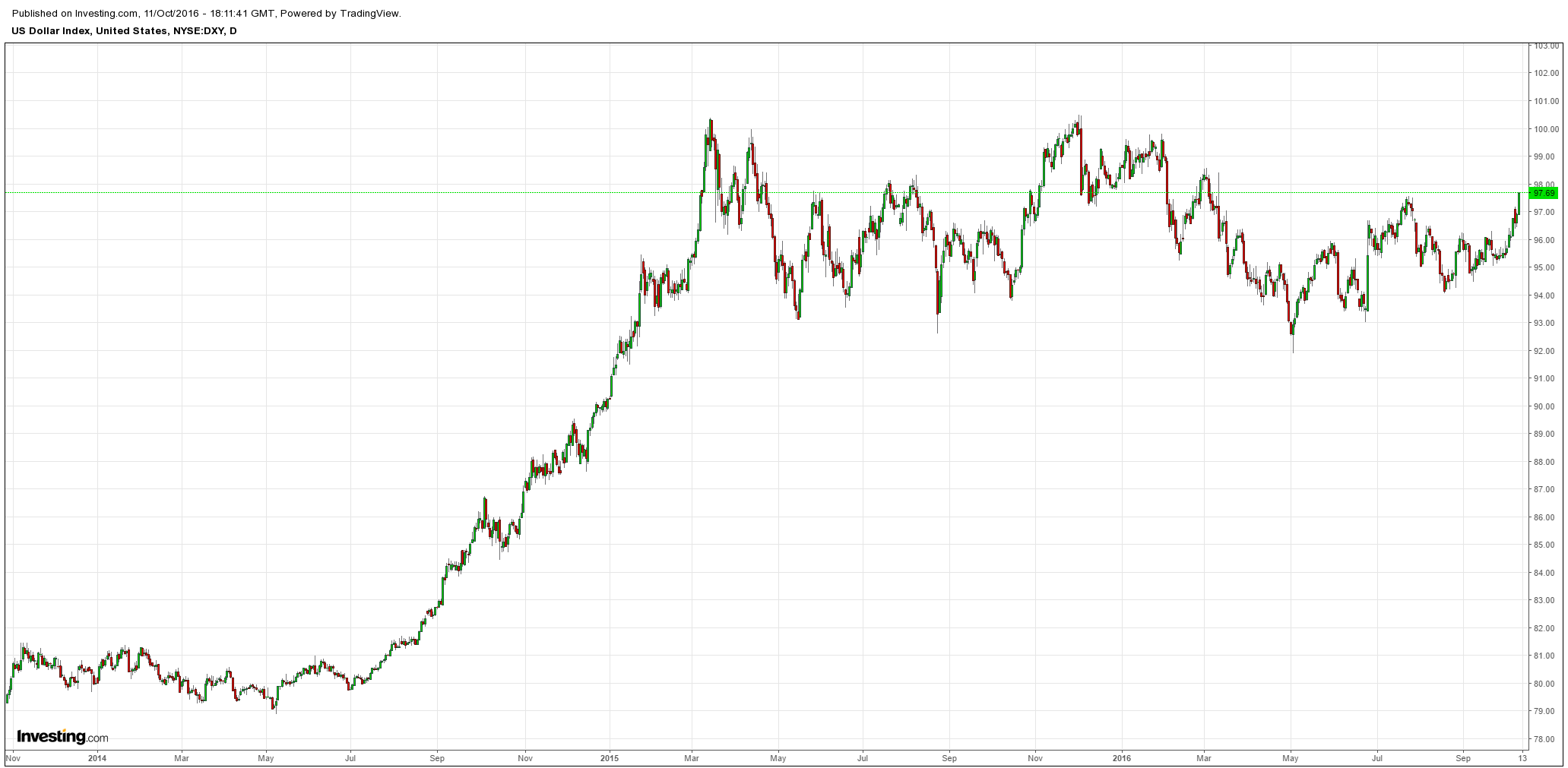
The US dollar is free and running breaking out of its large symmetrical triangle to the upside:
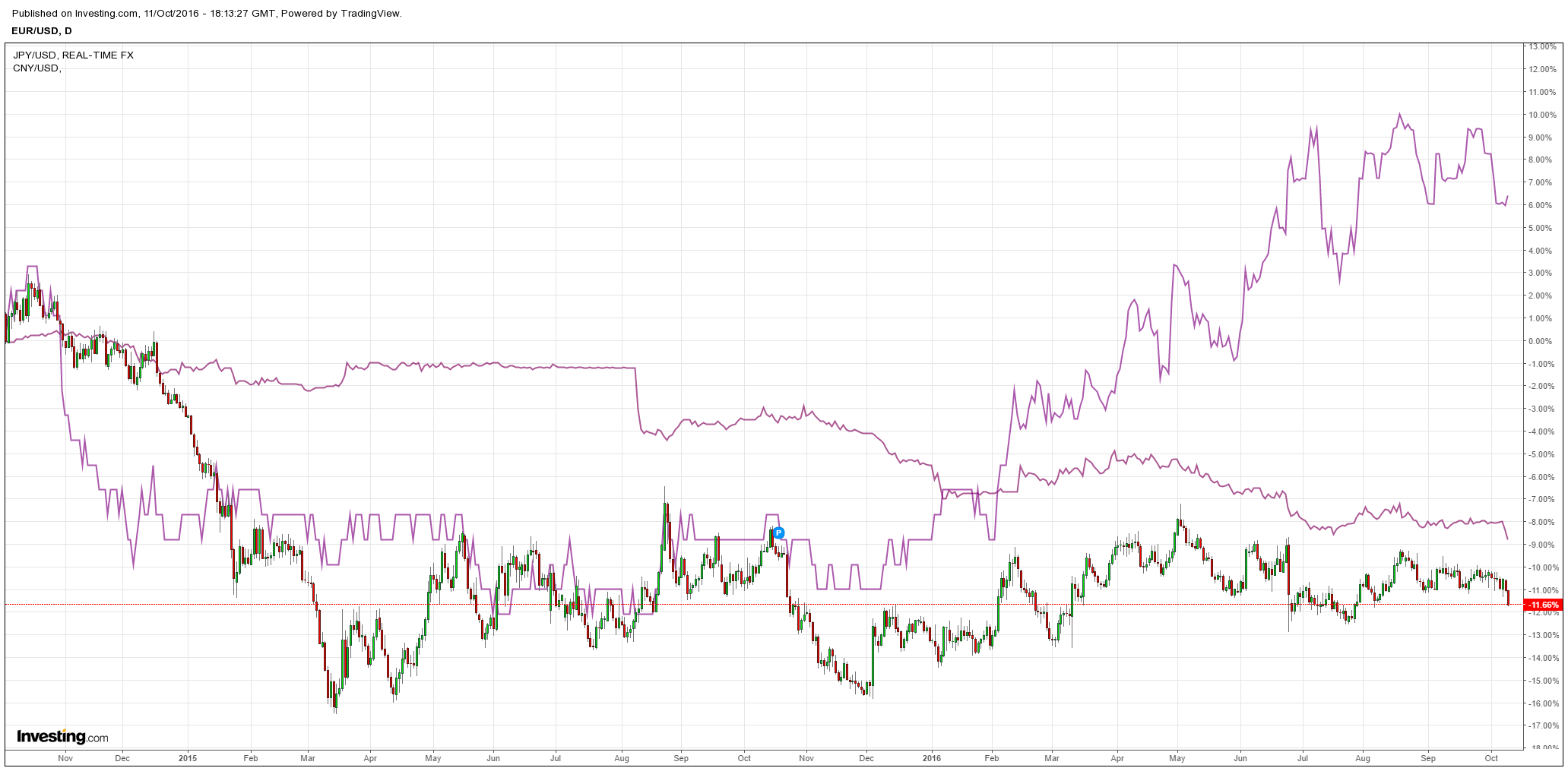
JPY was firm too on safe haven flows but zombieuro and the yuan were crushed:
Advertisement
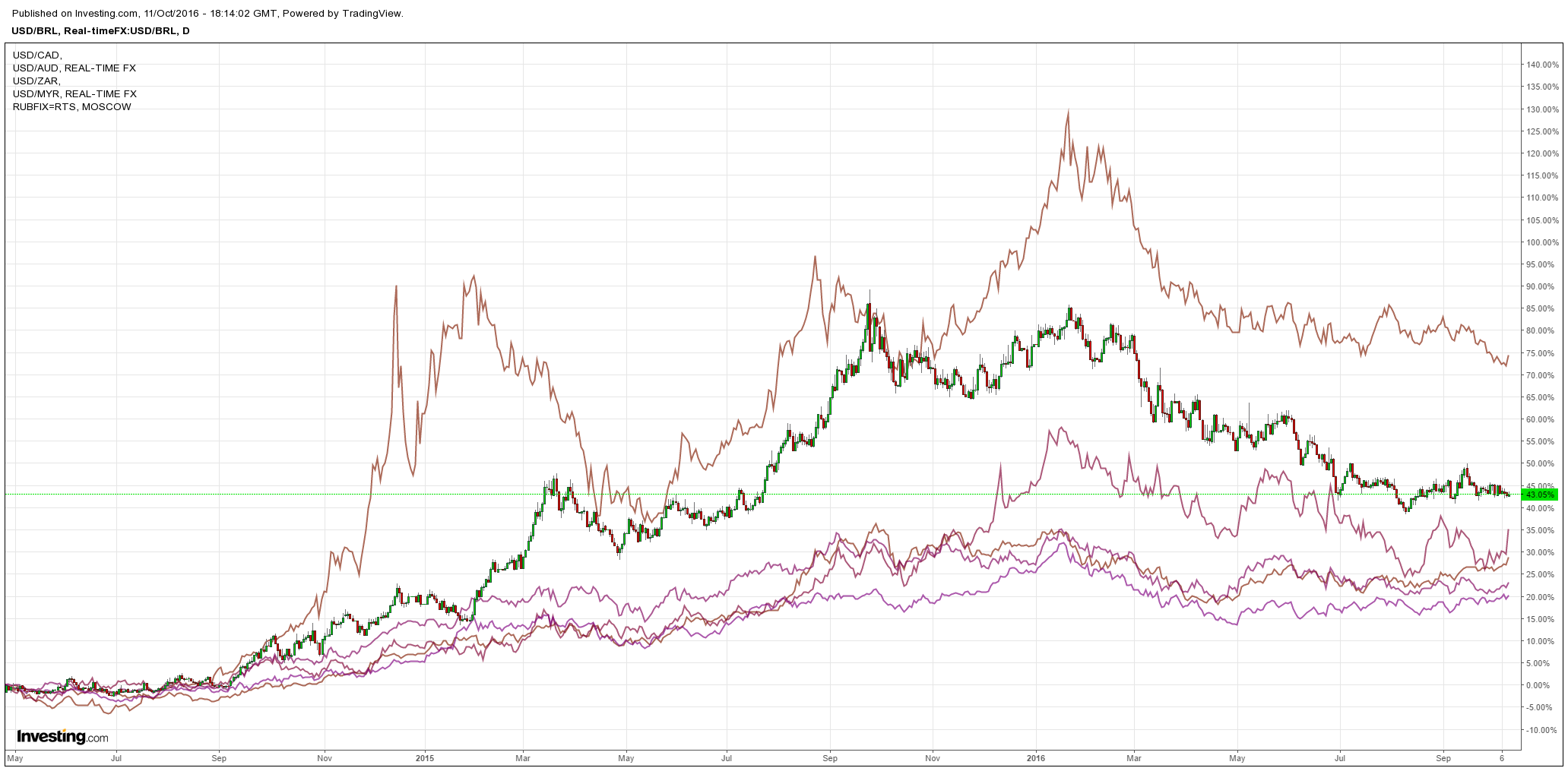
Commodity currencies too:
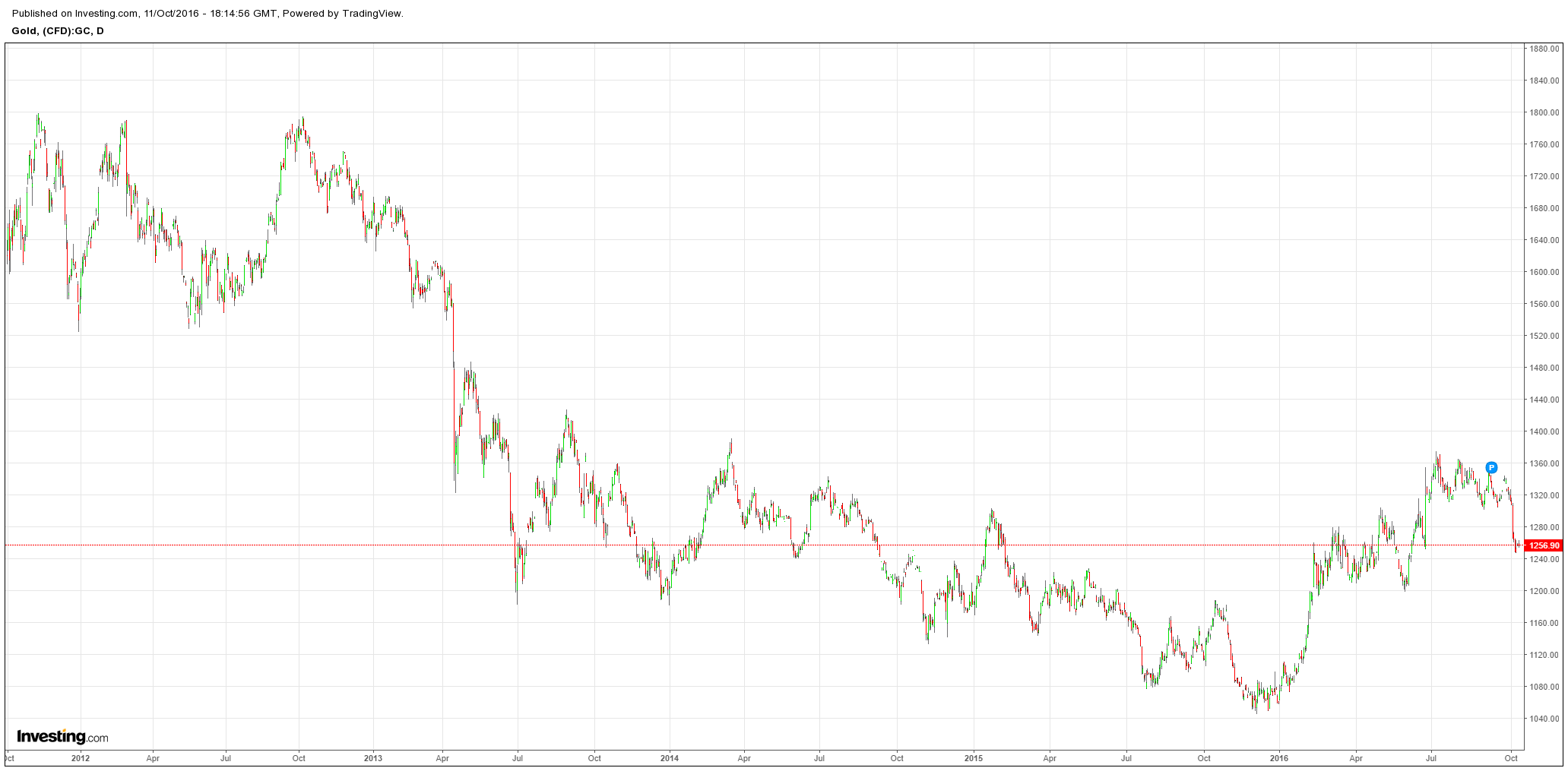
Gold eased but held up well in the circumstances:
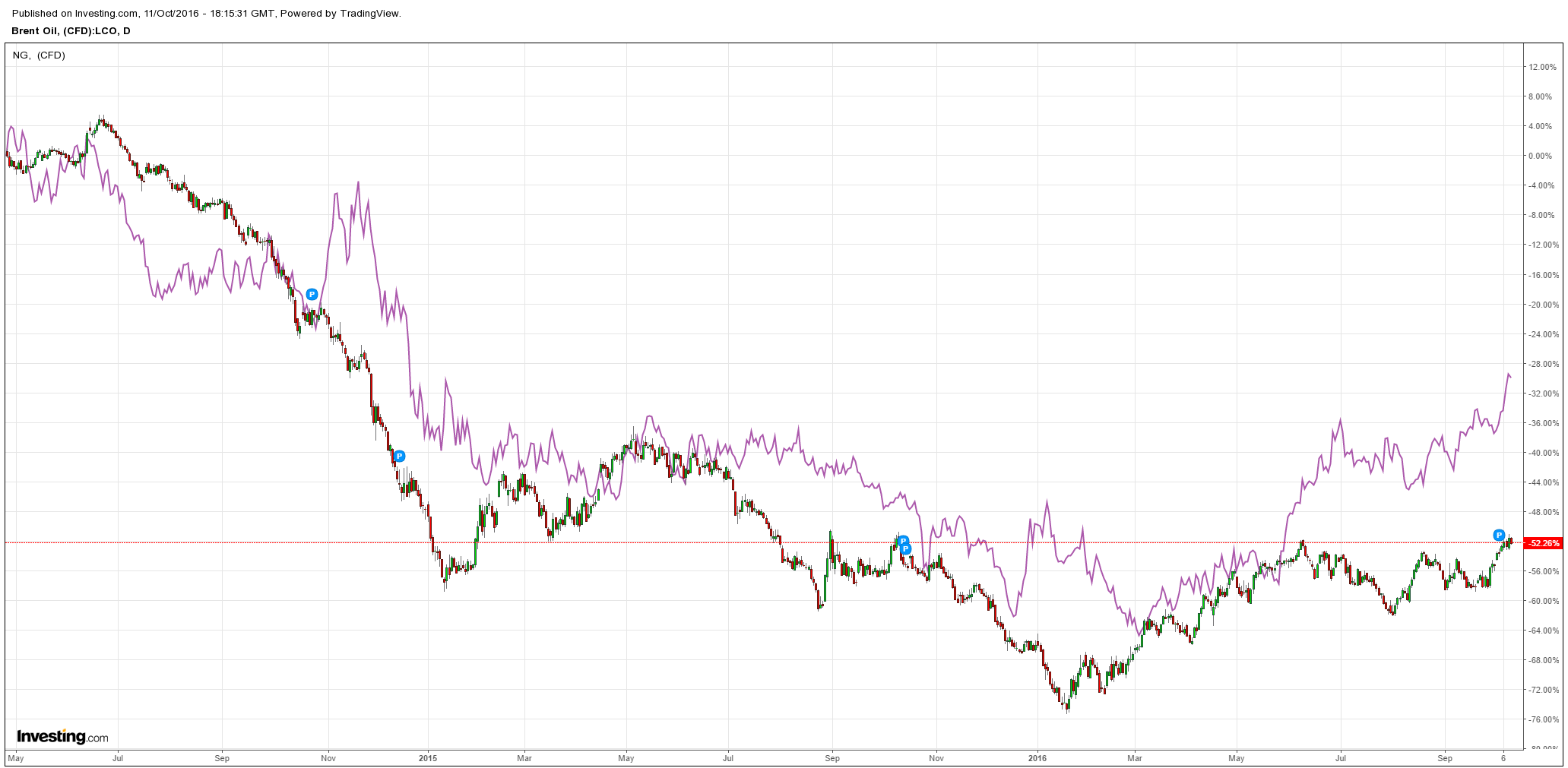
Brent reversed:
Advertisement
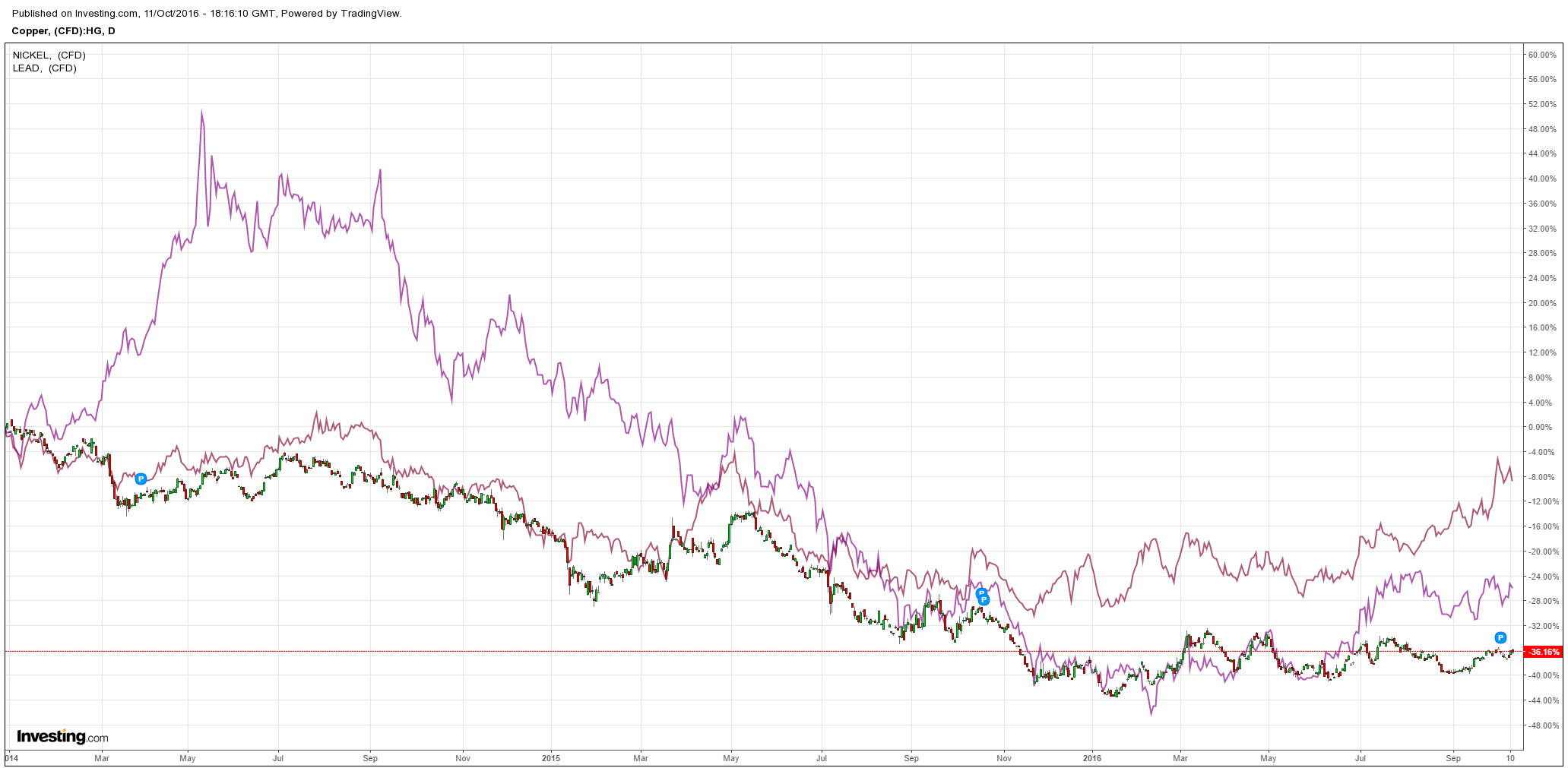
Base metals fell:
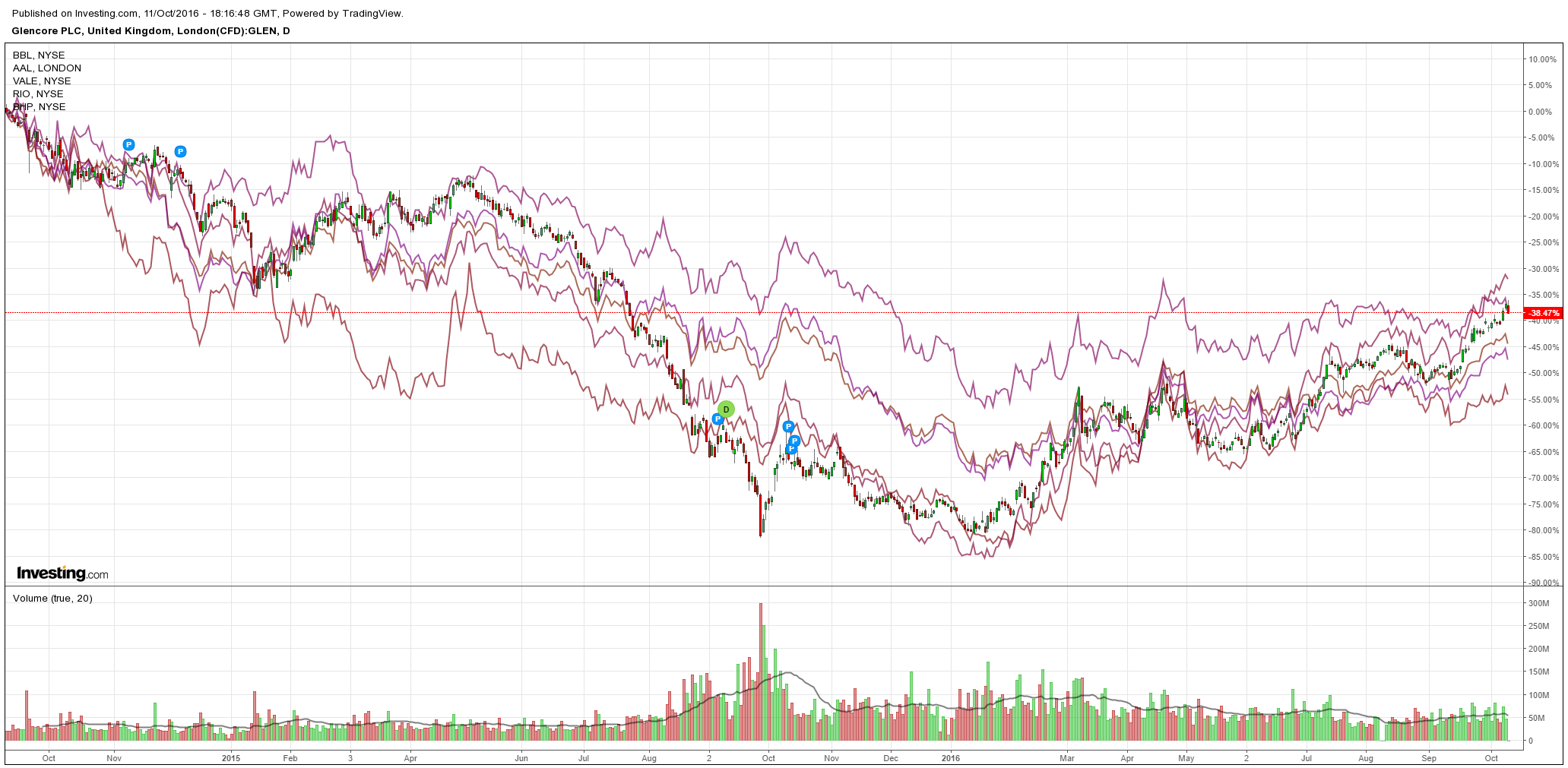
Big miners were flogged:
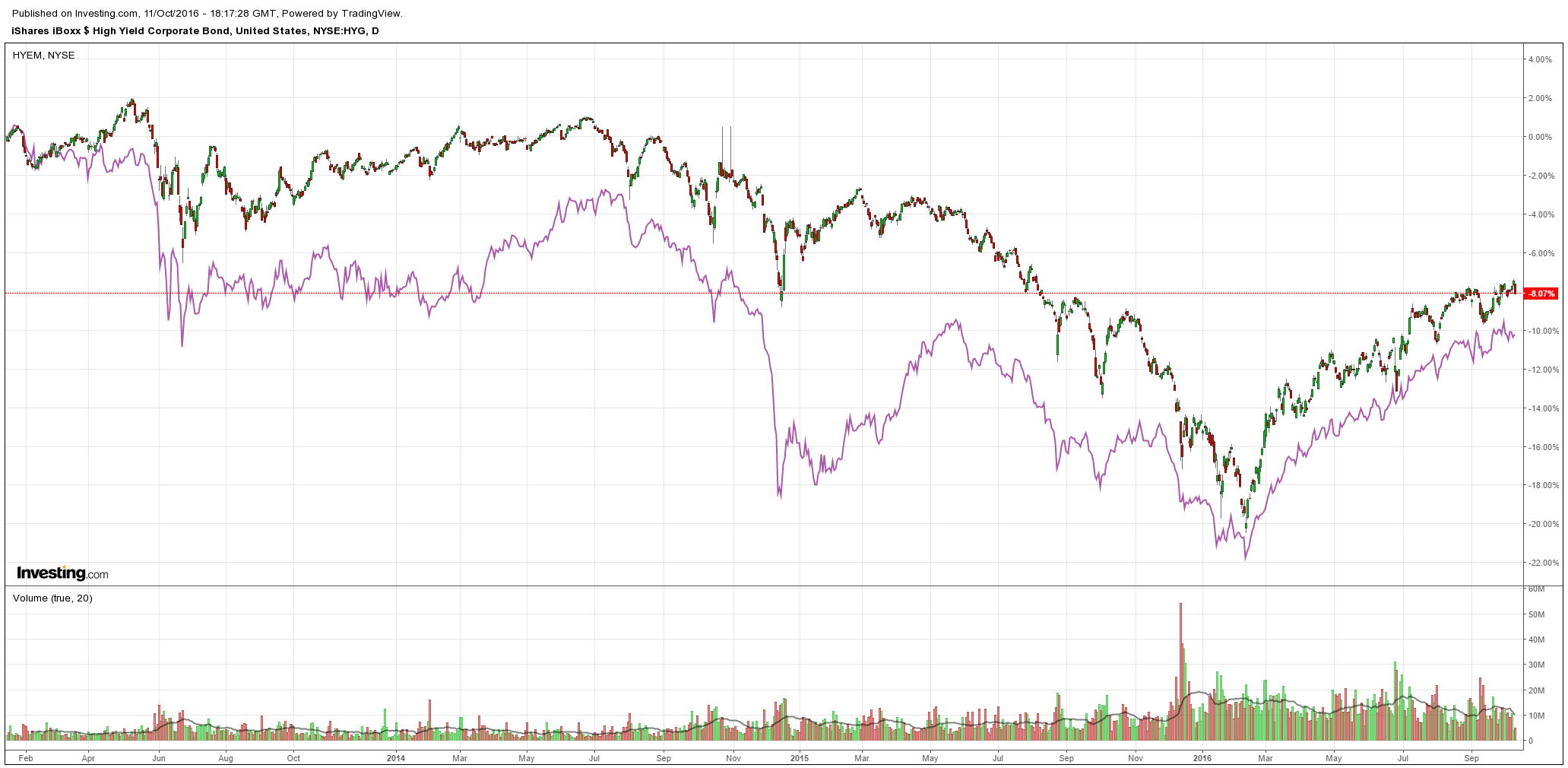
US and EM high yield fell:
Advertisement
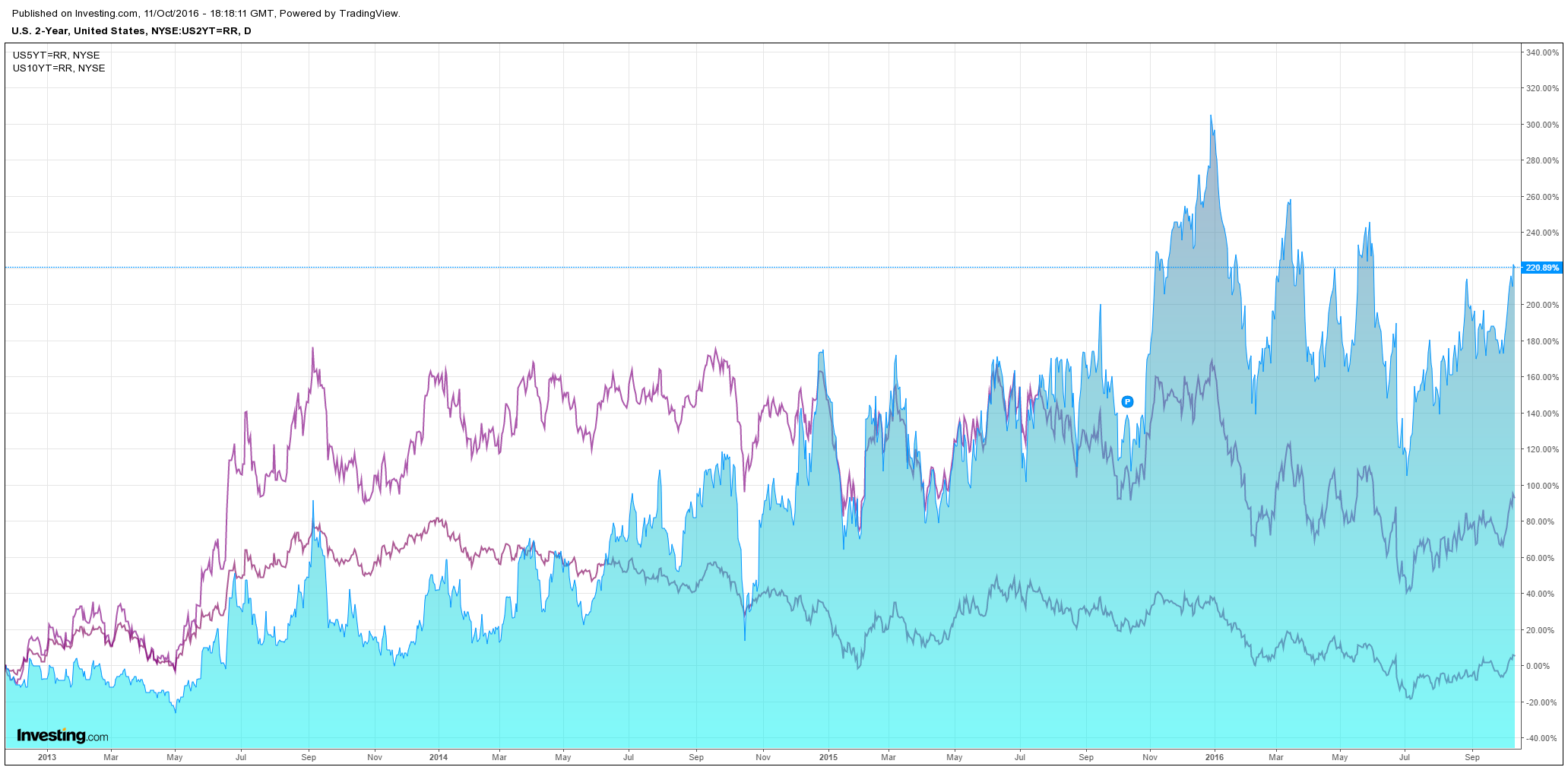
As US bonds were dumped:
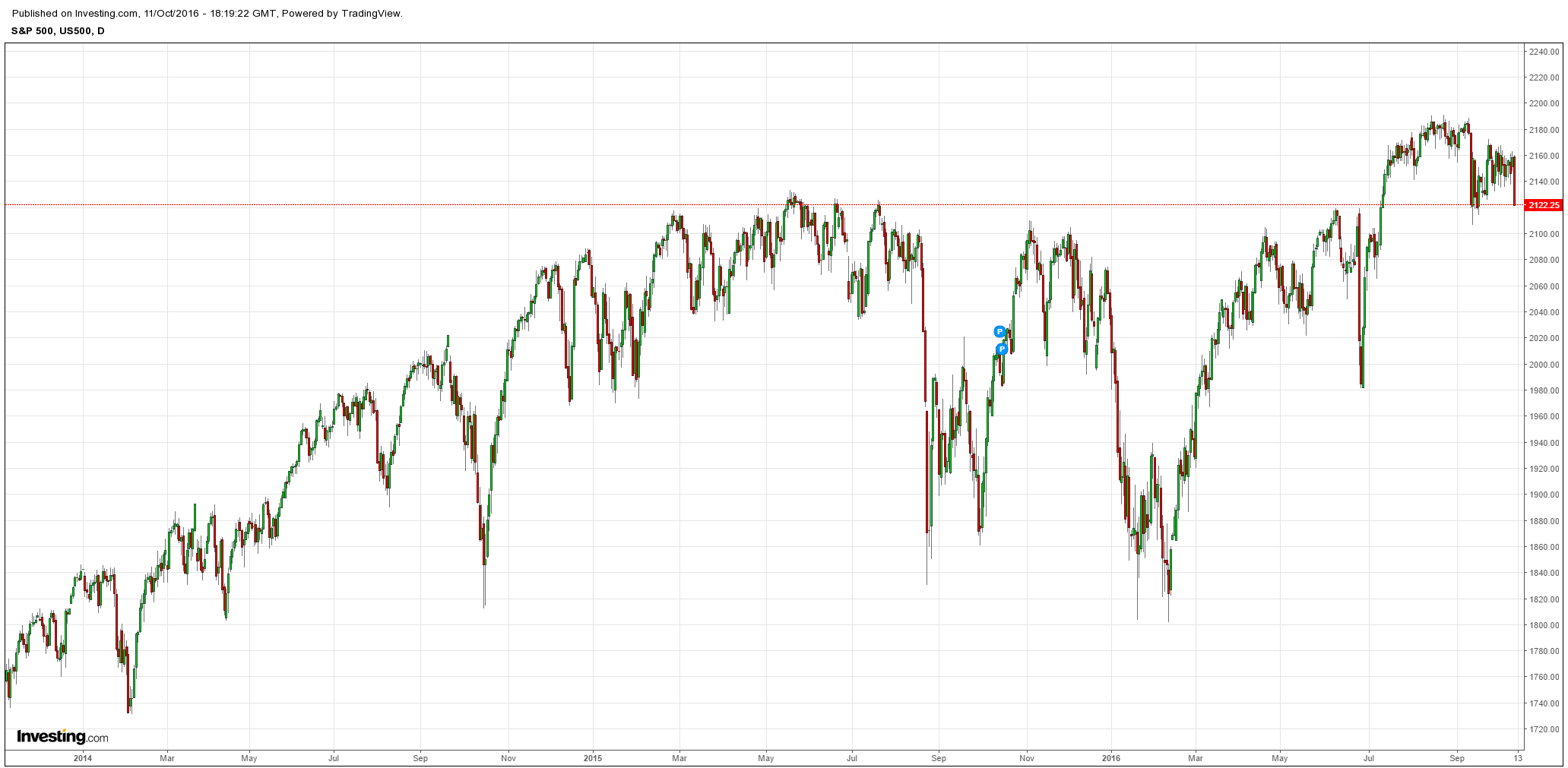
And stocks took a good whipping:
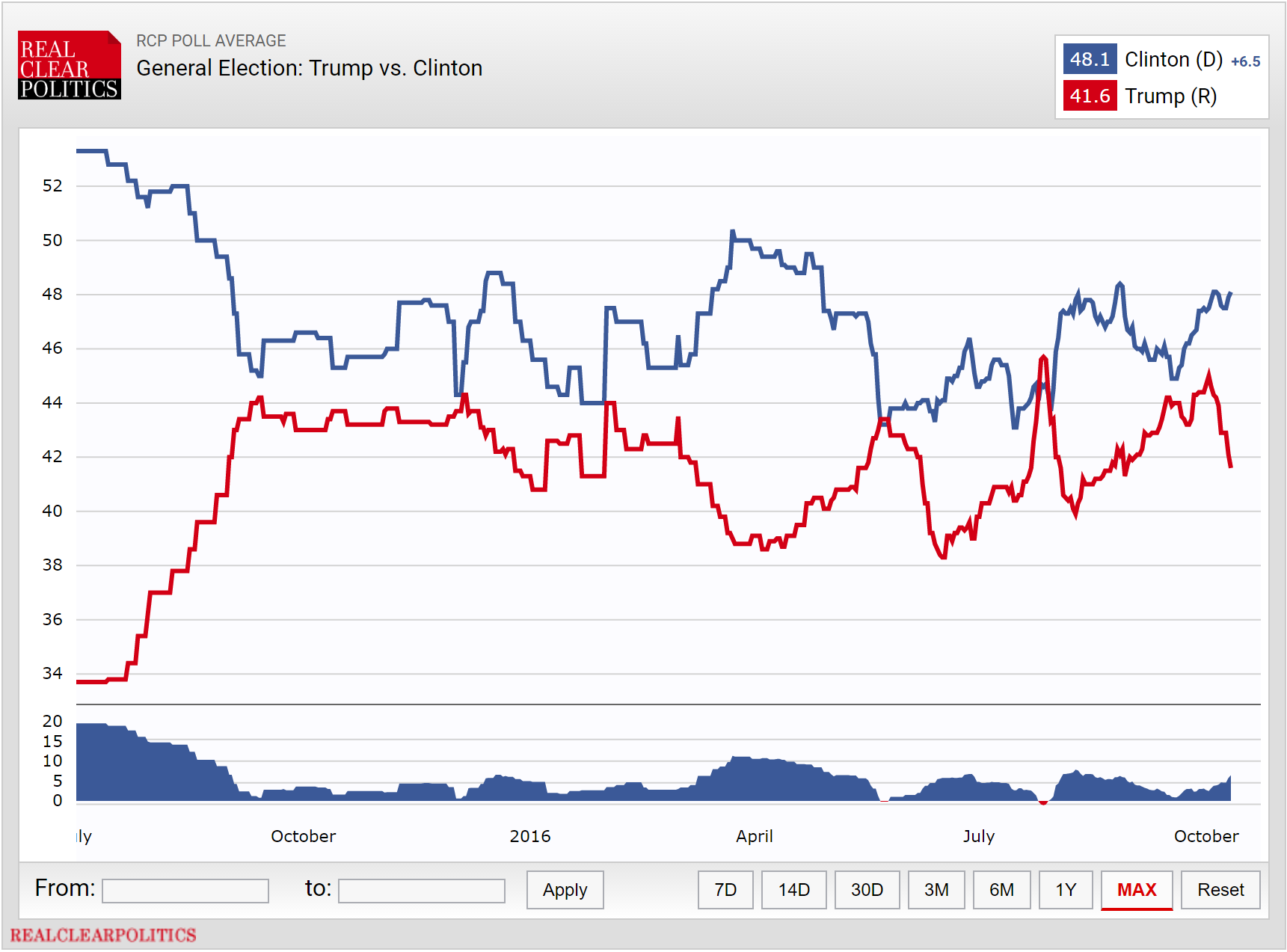
The Q4 risk gauntlet continues to ebb and flow. As some risks fade, Fed rate hike prospects gain. It appears Hillary Clinton is building a winning lead or, perhaps more accurately, The Donald is groping for second:
Advertisement
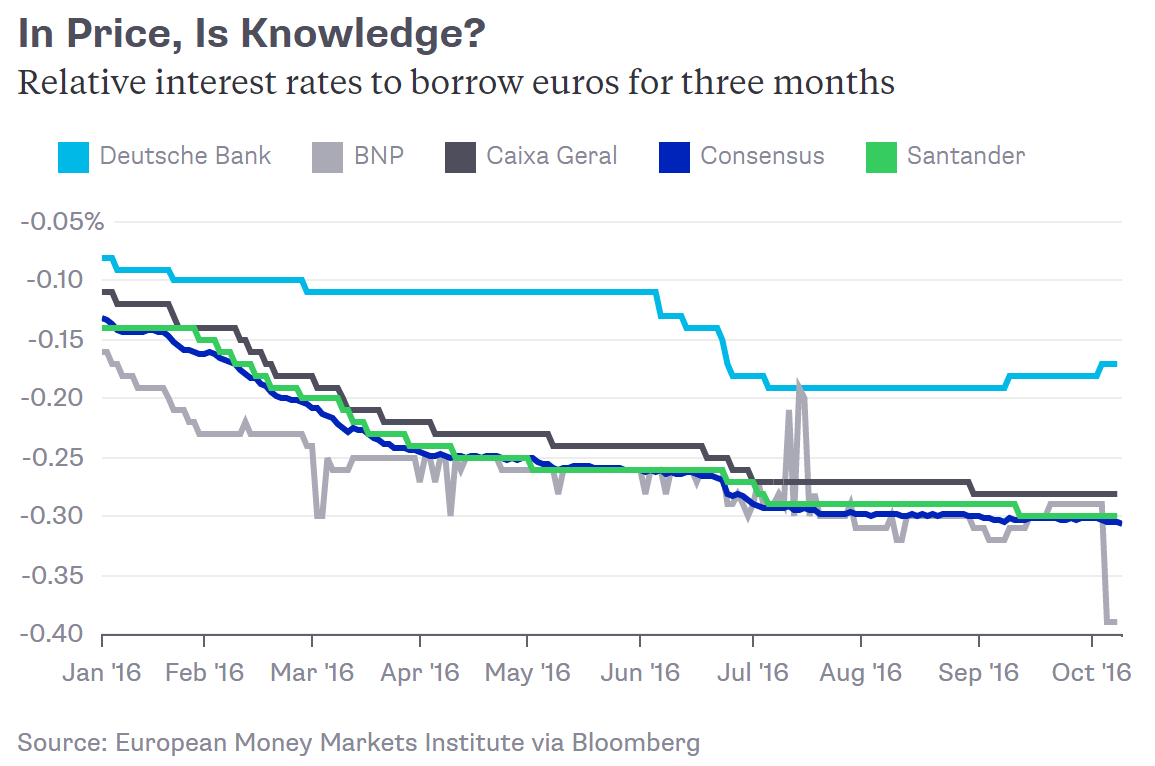
Deutsche remains a serious issue with its funding costs rising, from Bloomie:
Deutsche Bank is in trouble. It’s embroiled in talks with the U.S. Justice Department to negotiate down a $14 billion fine for mortgage-market naughtiness. Its share price has halved in the past year. It was granted special treatment in July’s stress tests, according to the Financial Times. And in the European money market, its funding costs are almost twice as much as those of its peers.
…Deutsche Bank says its short-term borrowing cost is -0.17 percent; the next highest rate among the 20 banks that contributed this week’s levels is -0.28 percent from Portuguese state-owned bank Caixa Geral de Depositos, while the consensus derived from the entire panel is -0.31 percent. Here’s a chart showing what various European banks say the borrowing cost known as Euribor is for three-month euros:
Moreover, while the consensus view is that euros are getting ever cheaper as the European Central Bank’s quantitative easing program rolls along, Deutsche Bank’s funding cost has actually risen in recent weeks for the first time in years. (Technically, in this wacky world of negative euro interest rates, it’s hard to talk about “borrowing costs” as such. More precisely, the discount at which Deutsche Bank says it can raise funds has declined. But you get the picture: Even with rates below zero, everyone else can get funds cheaper than the Frankfurt-based firm can.)
Advertisement
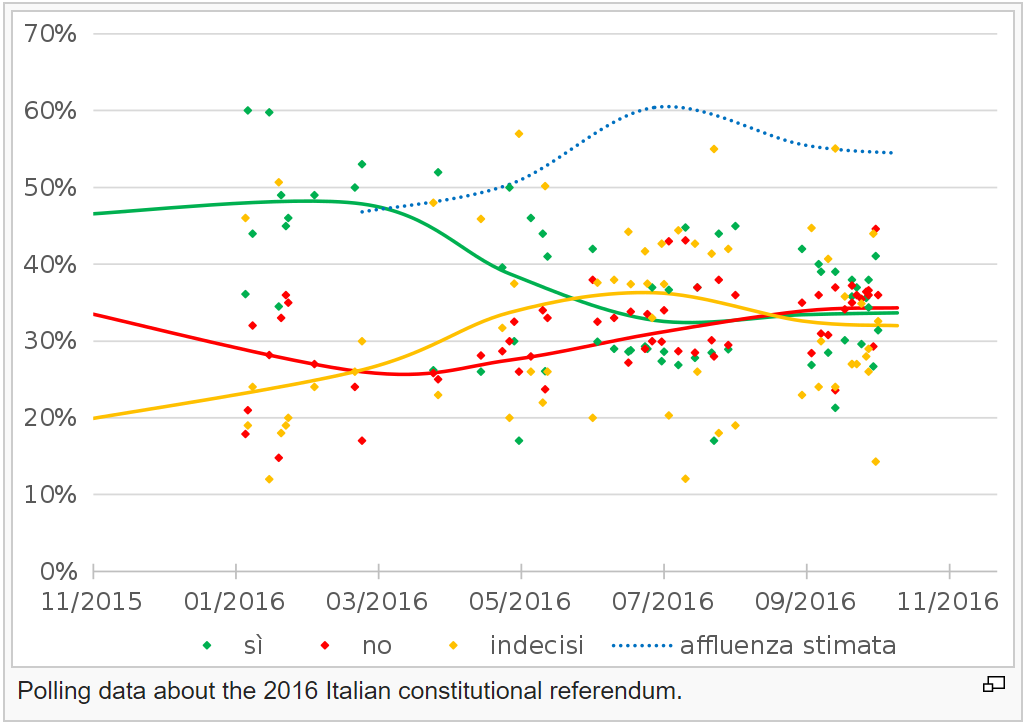
The Italian referendum is still tracking for “no” in the polls, raising the prospect of a step towards Italexit:
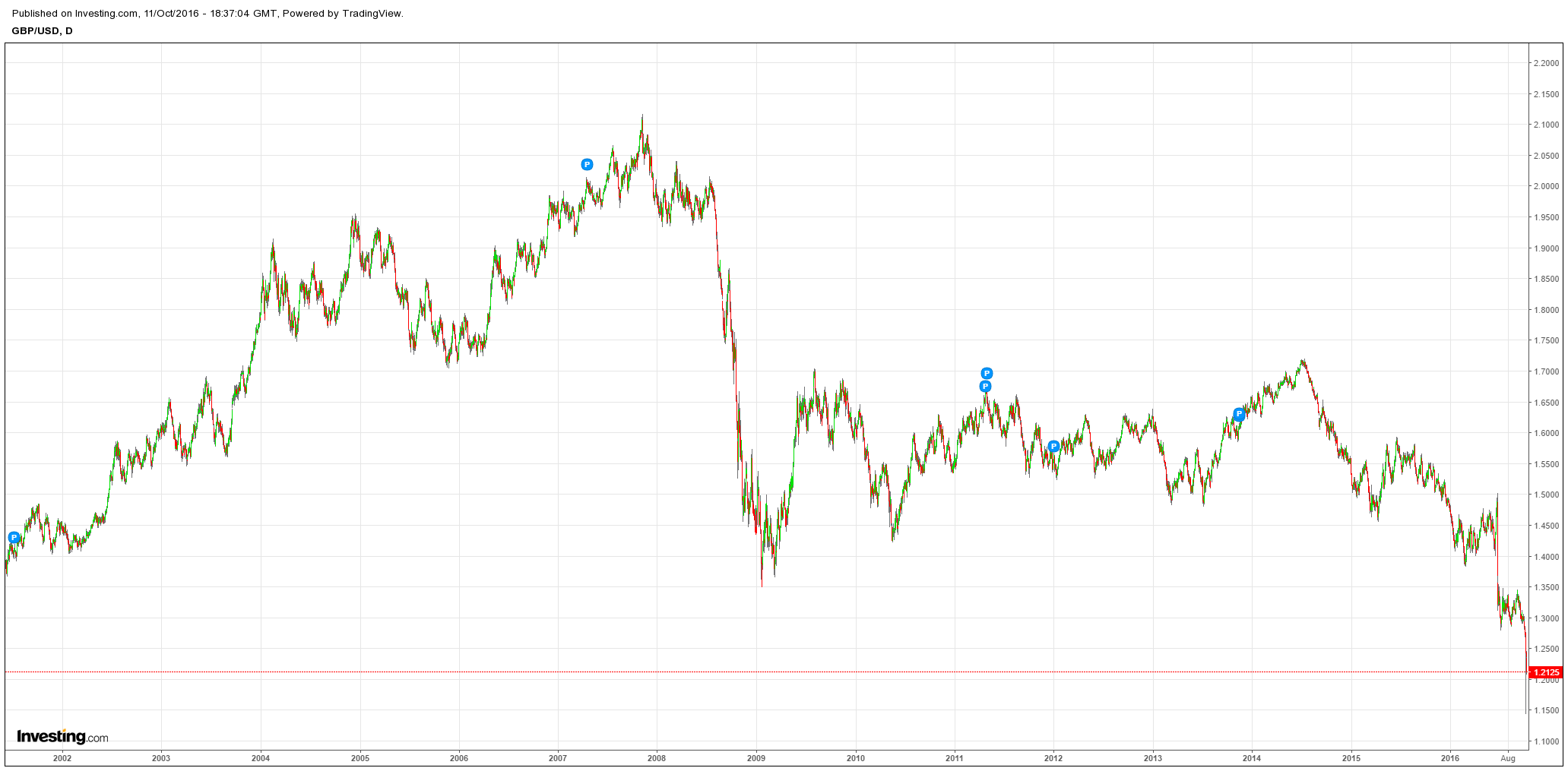
And the hard Brexit is still smashing the pound:
Advertisement
Helping put a rocket under the USD.
As well as that, Chinese property tightening is steadily seeping into market consciousness and the free-falling yuan will have to bother as well before long. It is very bearish for emerging markets and commodities.
To be honest, were it not for the OPEC non-deal, I reckon we’d be squarely tipping towards Mining GFC 2.0 right now. And we may be despite it!
Thus I remain quite skeptical about another Fed hike this year. The always excellent Tim Duy agrees:
Advertisement
Federal Reserve hawks face an array of labor market data that threatens a key pillar holding up their policy view. That pillar is the assertion that monthly nonfarm payroll growth over roughly 100k will soon force unemployment far below the natural rate, thus placing the US economy in grave danger from inflationary forces. By this view, the decline of unemployment long ago justified further rate hikes. Hawks failed to anticipate that the unemployment rate would flatten out at 5 percent despite steady payrolls growth. This outcome does not fit in their worldview. Fundamentally, they were supply-side pessimists. The recent strength in labor force growth suggests their pessimism was sorely misplaced and undermines their argument for immediate rate hikes. The key elements of the FOMC – the permanent voters – now stand as supply-side optimists and are prepared to hold rates at current levels through the next meeting, and perhaps even longer. A December rate hike is still not a foregone conclusion.
Allocations remain unchanged:
short Aussie dollar, equities, commodities and property
David Llewellyn-Smith is Chief Strategist at the MB Fund and MB Super. David is the founding publisher and editor of MacroBusiness and was the founding publisher and global economy editor of The Diplomat, the Asia Pacific's leading geo-politics and economics portal.
He is also a former gold trader and economic commentator at The Sydney Morning Herald, The Age, the ABC and Business Spectator. He is the co-author of The Great Crash of 2008 with Ross Garnaut and was the editor of the second Garnaut Climate Change Review.