
Are markets headed into reflation, stagflation or twilight?
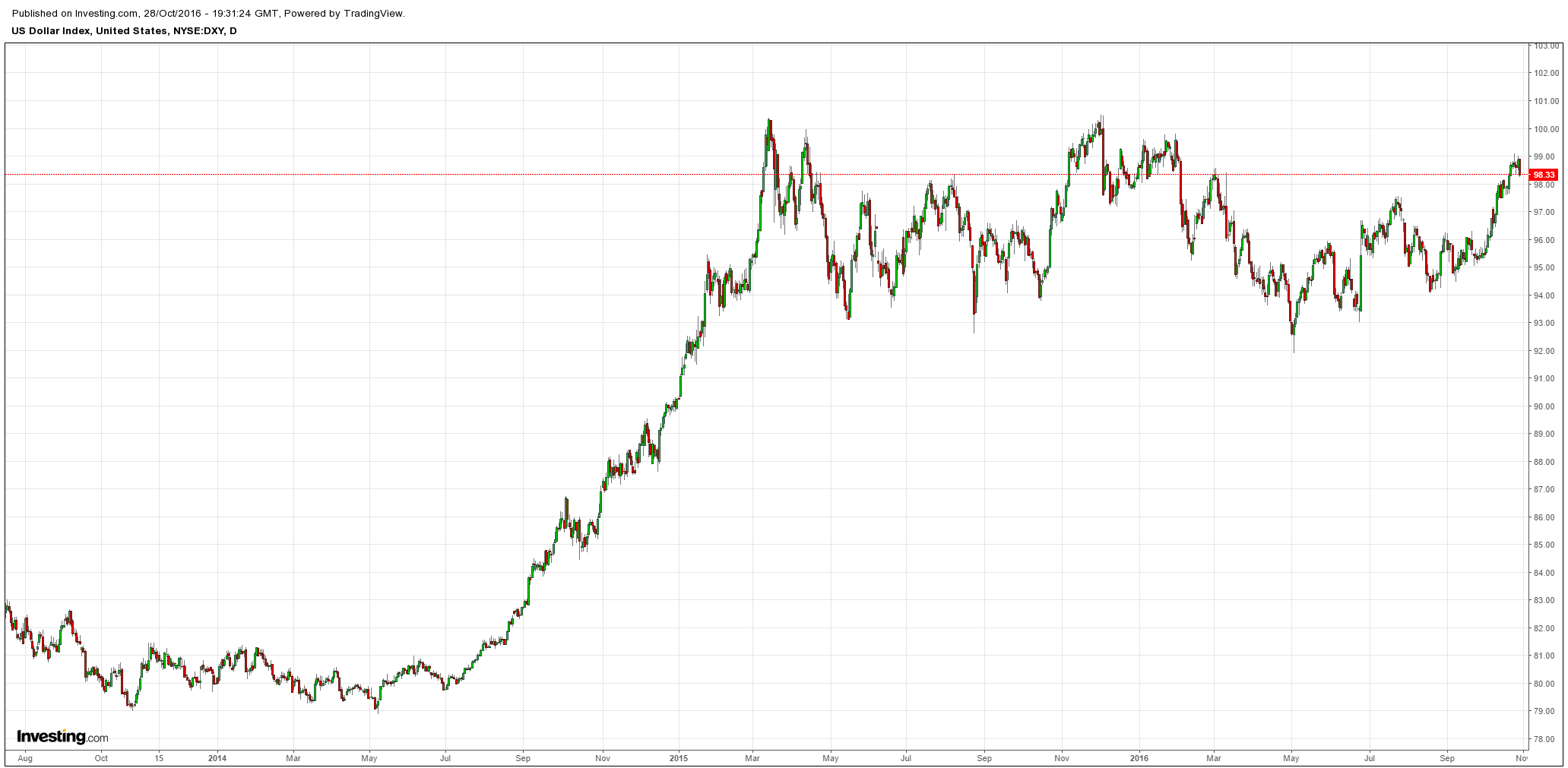
The US dollar fell sharply Friday night:
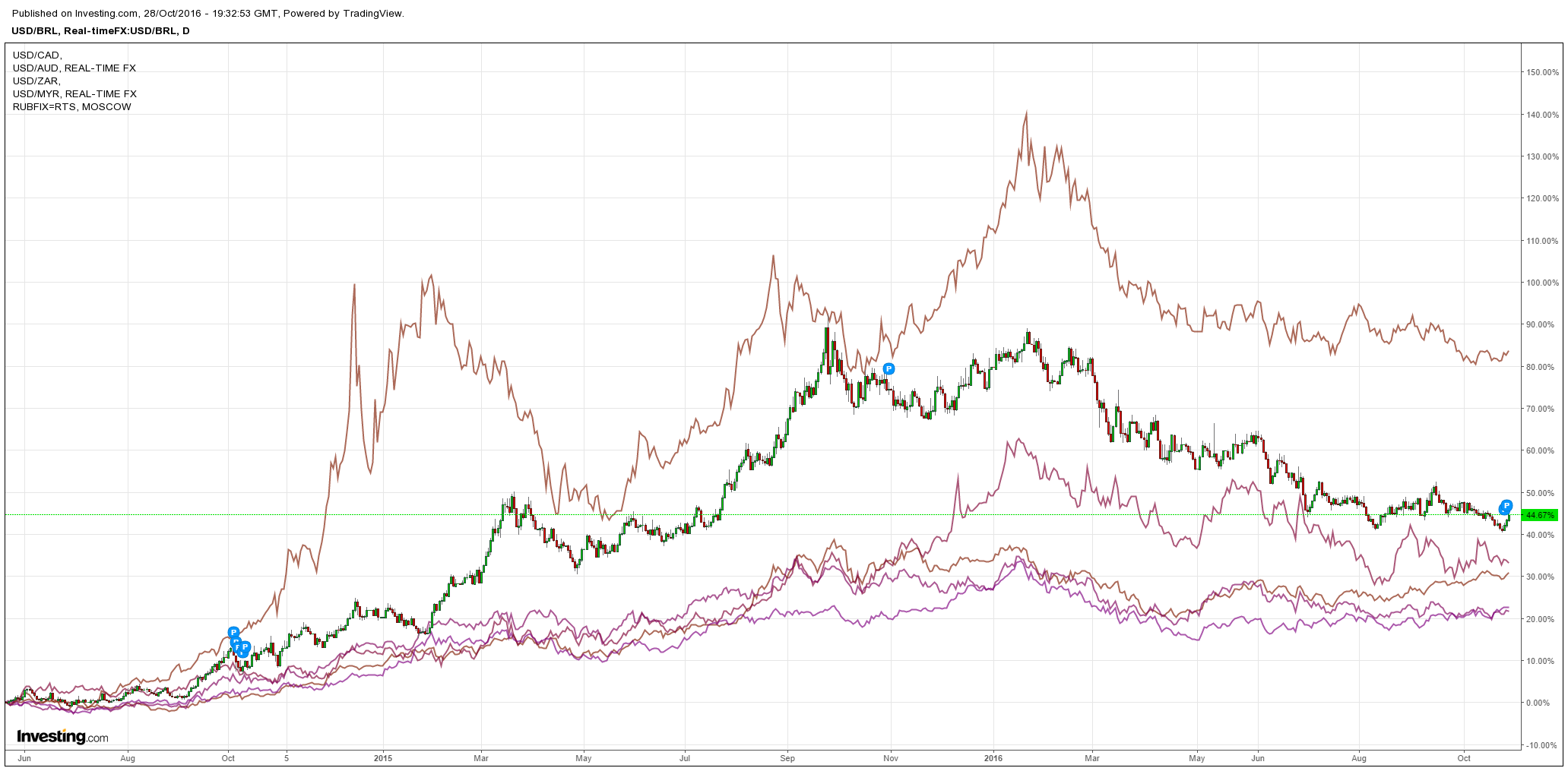
Commodity currencies fell anyway:
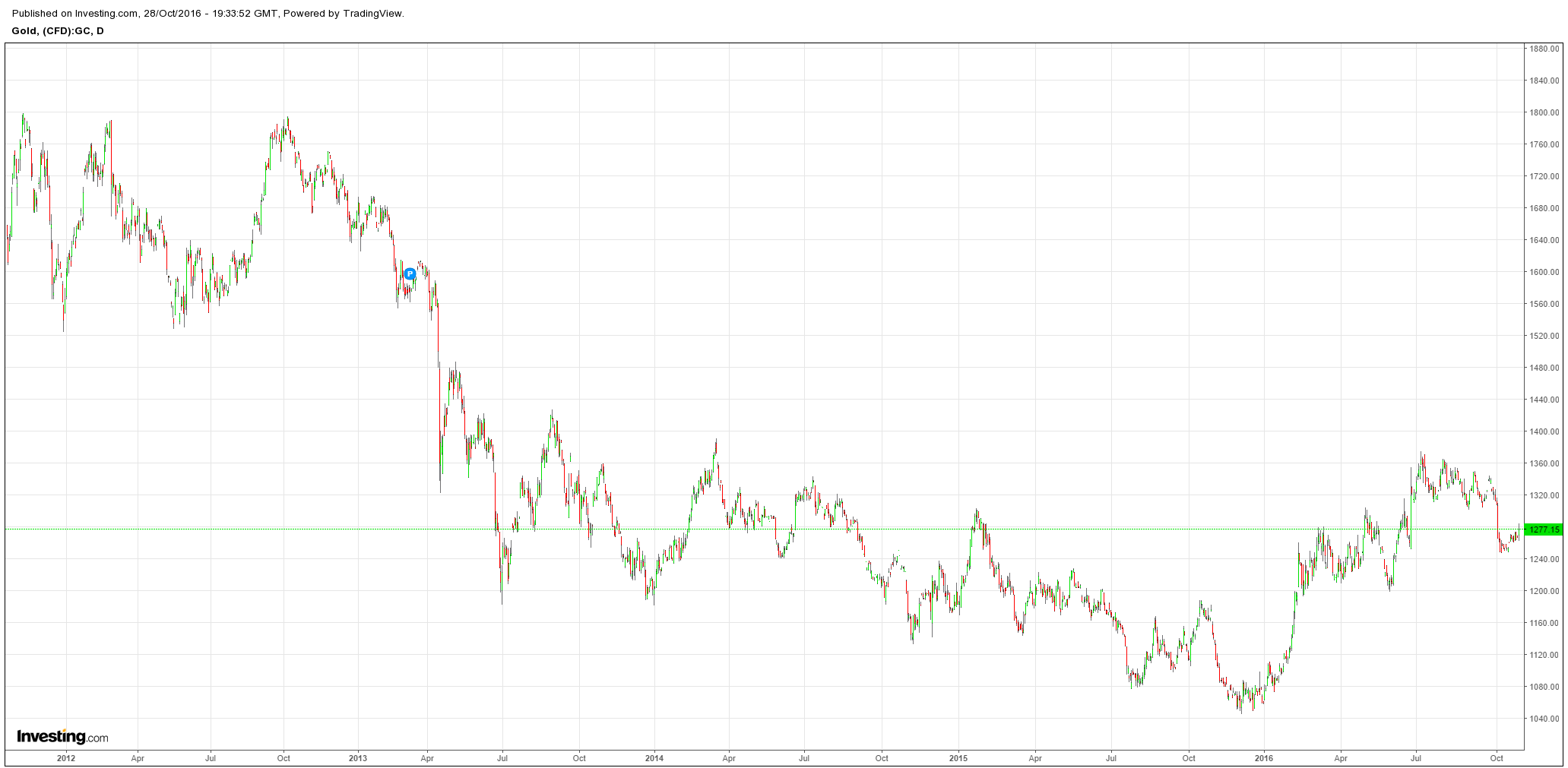
Gold took off:
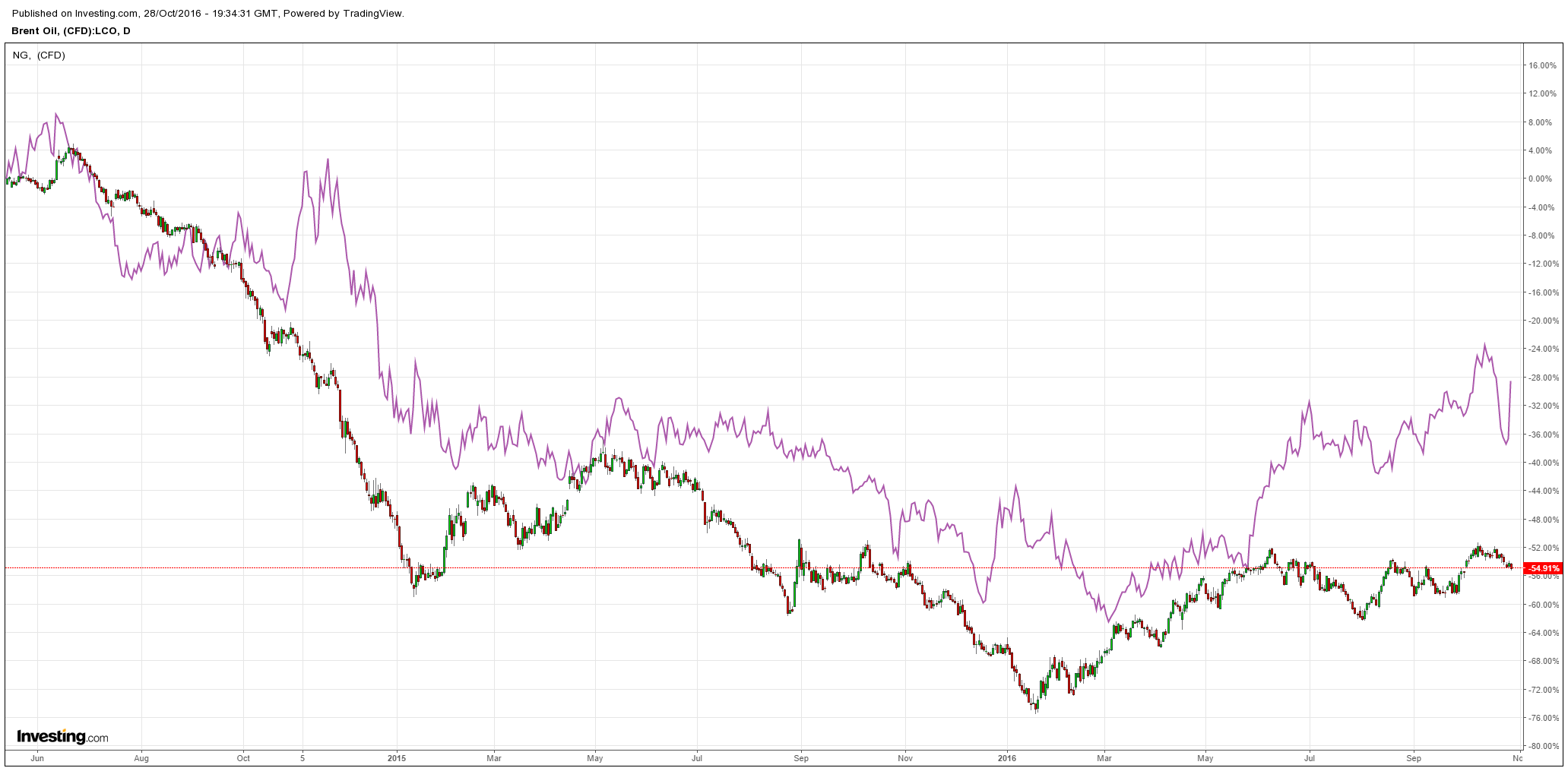
Brent was hit:
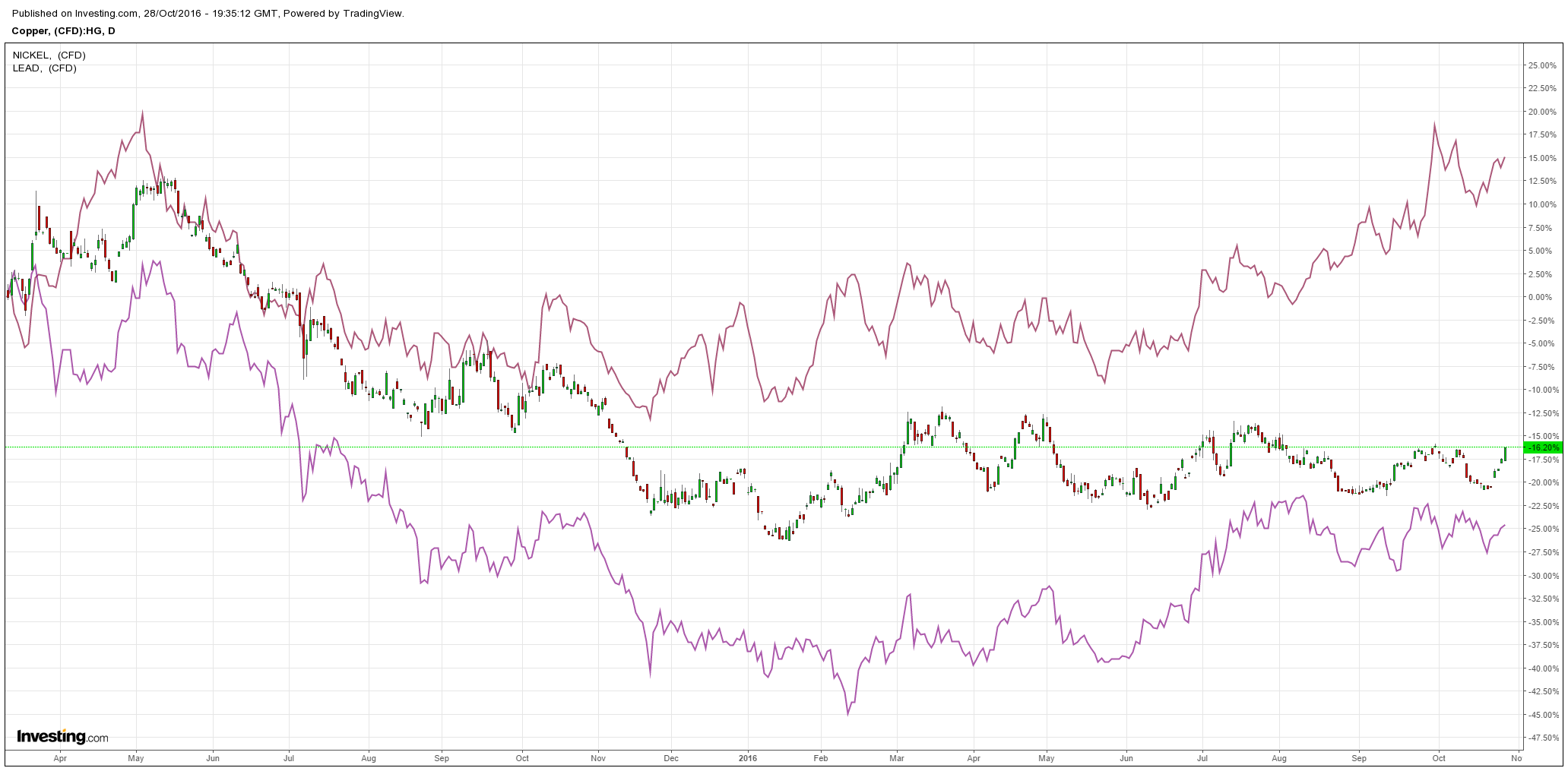
Base metals flew:
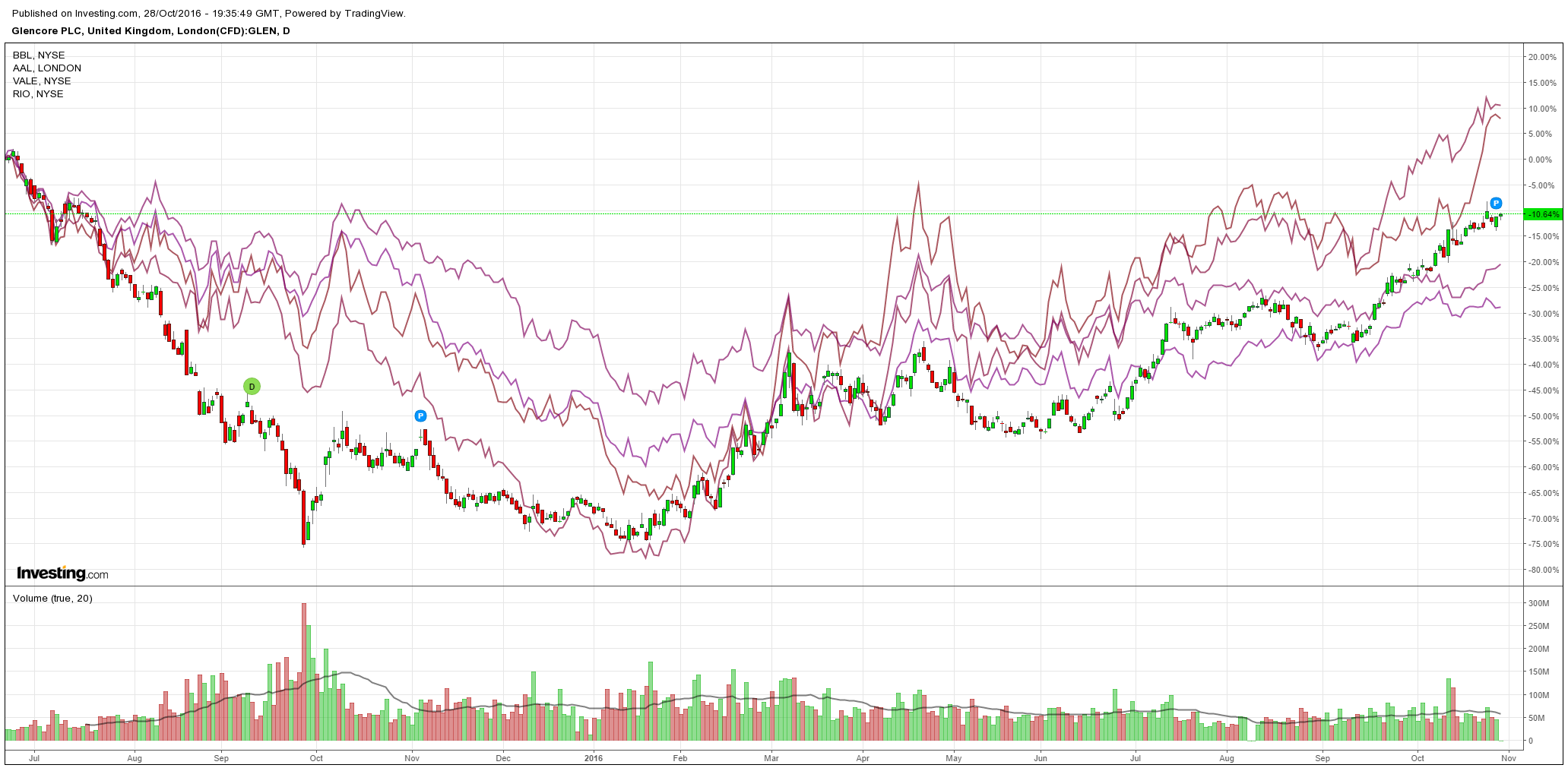
Big miners stalled:
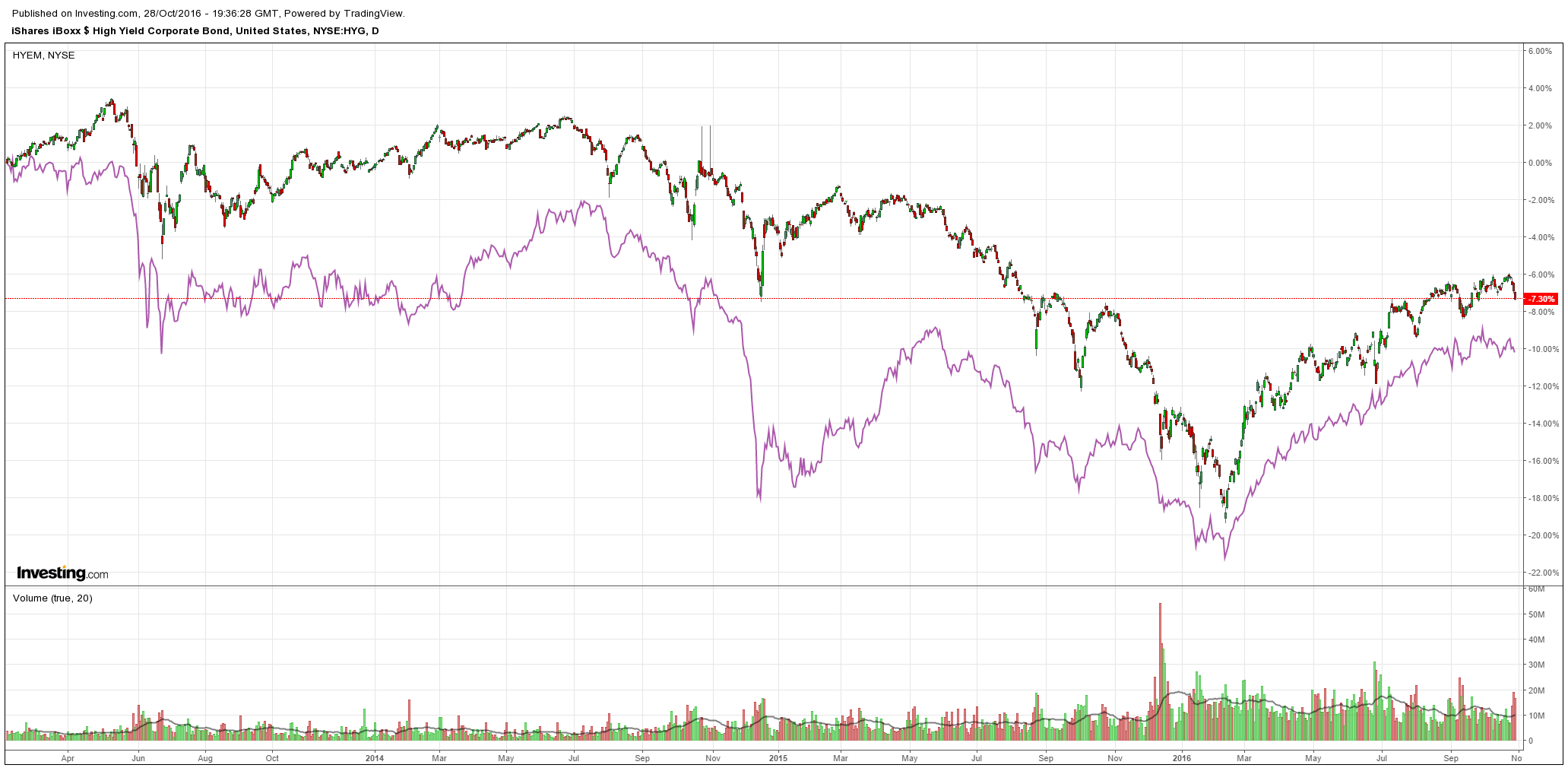
US and EM high yield debt appear to have run out of steam with oil:
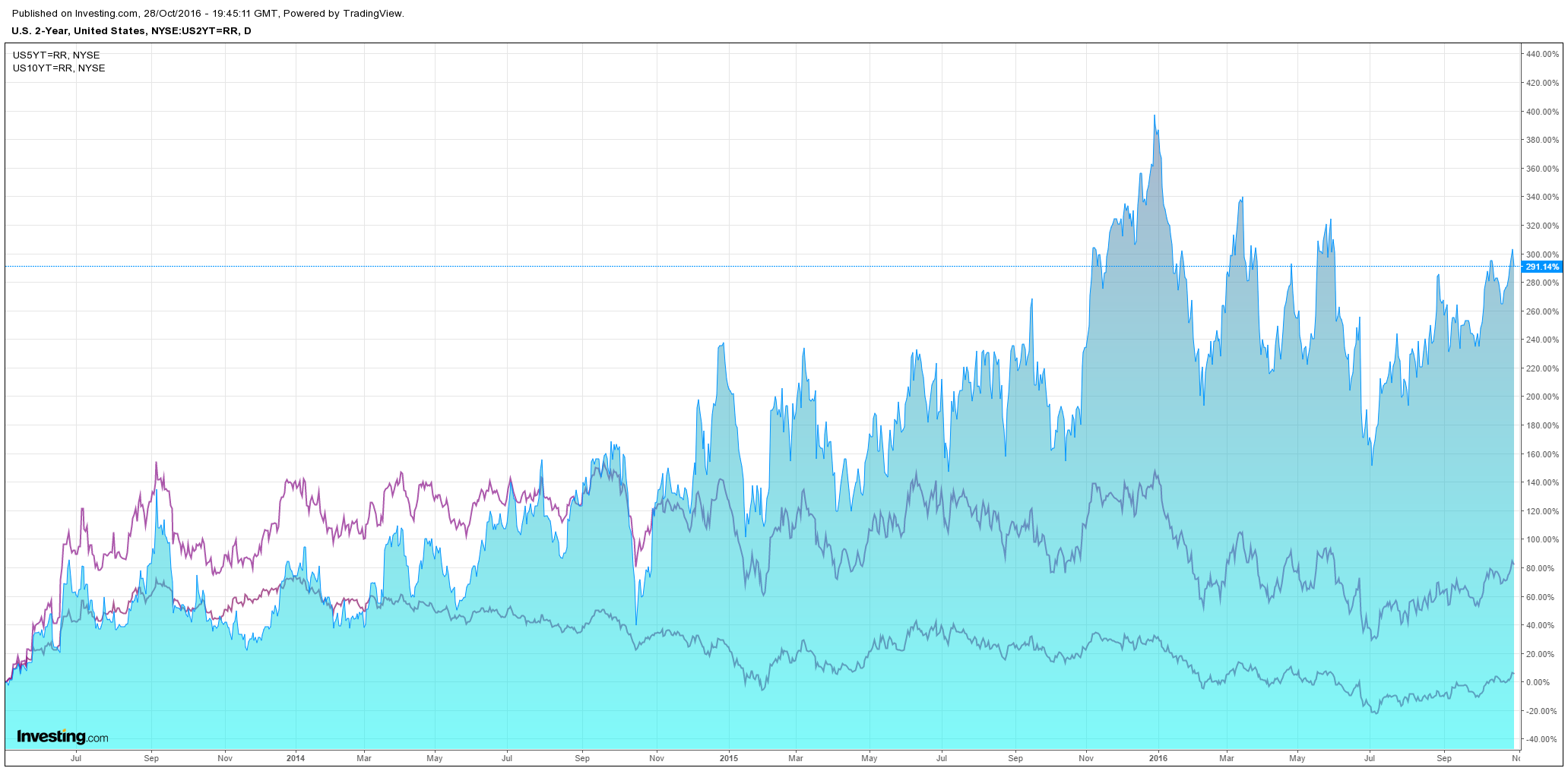
US bonds were bought:
But stocks sold and appear weak:
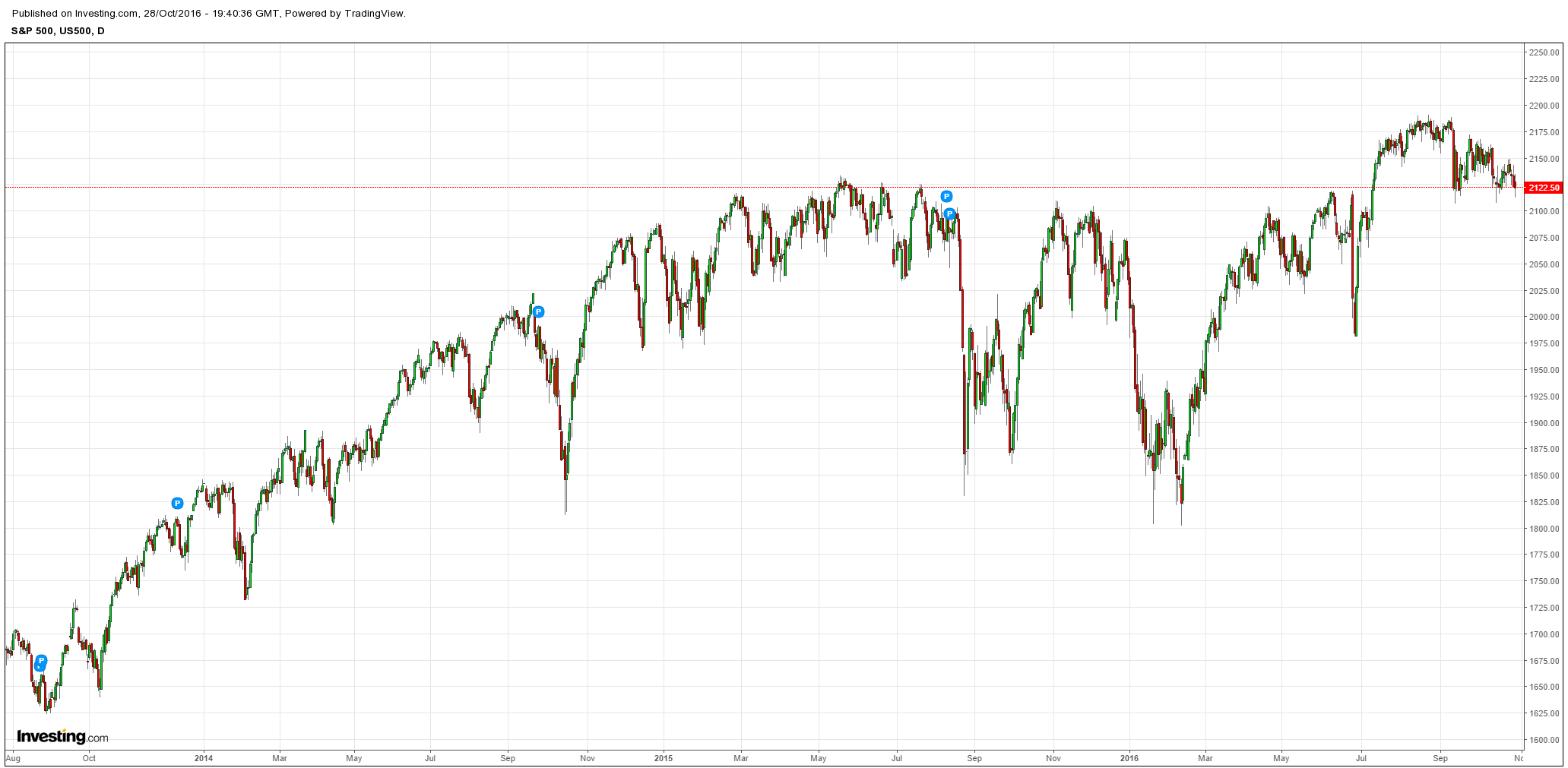
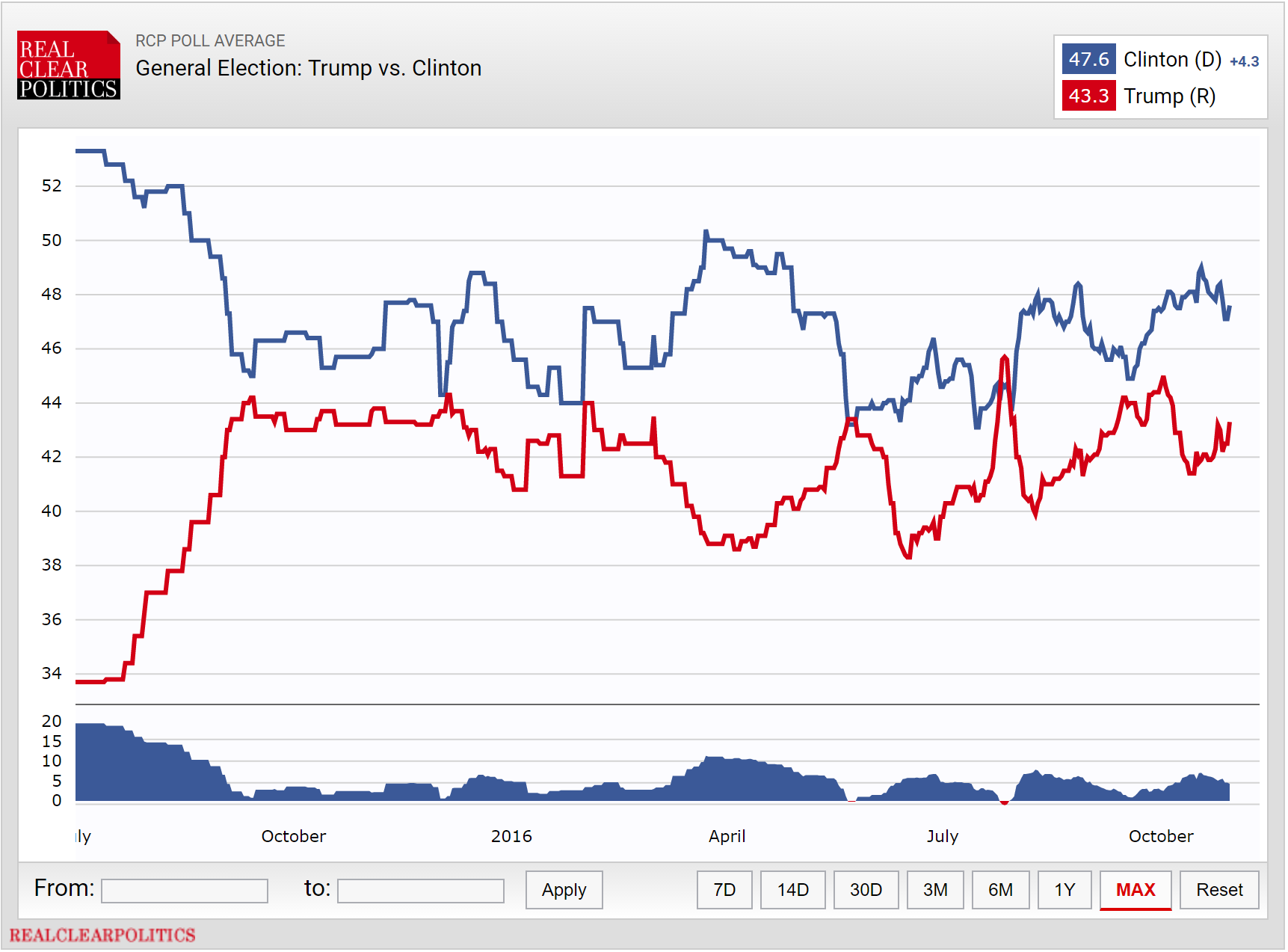
The big driver was US advanced GDP for Q3 which came in well ahead of consensus at 2.9%. So there was a bit of “sell the fact” going on after last week’s strong inflation trade action. Other news in the Q4 risk gauntlet was a bearish too with the FBI reopening the email case against Hillary Clinton and her polling lead has shrunk to 4.3 points:
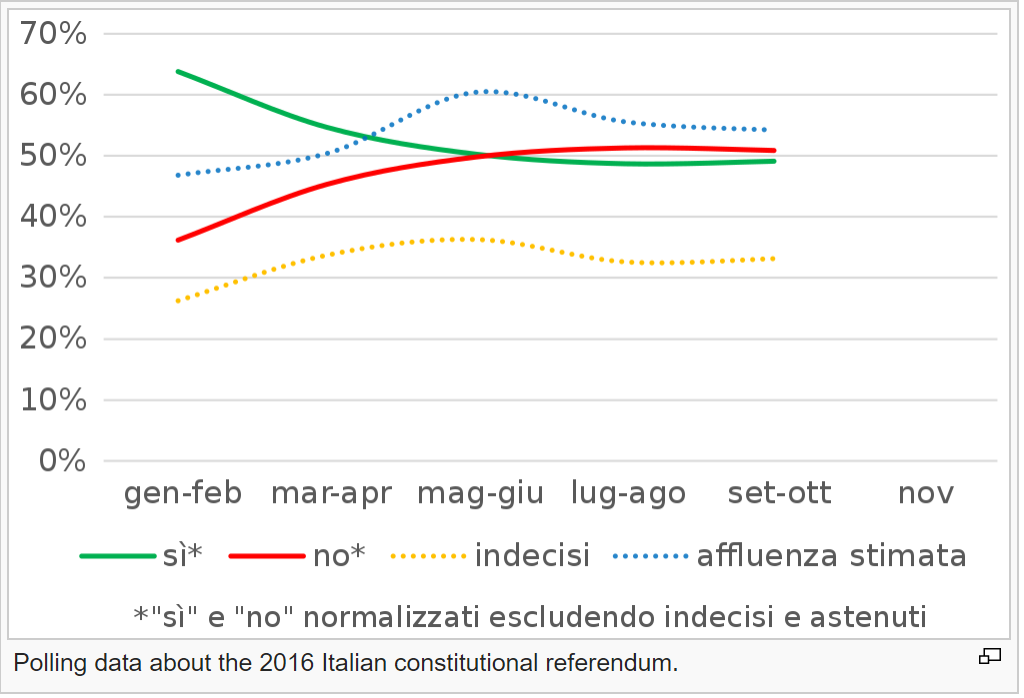
In Europe, Britain is tearing itself apart over Brexit with Tony Blair calling for a second ballot, Deutsche was quiet but the Italian referendum is still firm for “no”:
Macquarie’s excellent Viktor Shvets and Chetan Seth beautifully sum up where we’re at:
In the latest issue, we analyse the implications of the recent pick-up in inflation. As headline inflation rates improve, investors are asking whether it is just another false dawn (one of many that we have endured over the last decade) or could it herald the beginning of a benign and healthy reflation of the global economy or are we witnessing the early stages of stagflation? The answer to this question is critical to the evolution of monetary policies and ultimately will impact various asset classes. If it is stagflation, the clear beneficiaries would be gold and real estate but it would be a very poor outcome for equities and bonds. If it is a healthy reflation, equities would be the clear winner as would commodities but gold and to some extent bonds would be losers. If it is just a false dawn, then investors essentially would re-enter the ‘twilight’ zone of inconsistent signals and a rapid gyration between deflationary, reflationary and stagflationary outcomes.
Most of the pick-up in headline inflation has thus far largely been due to the base impact, which started to kick-in several months ago and was caused by the reversal of commodity prices (~60% round trip in less than 12 months). If commodity prices remain unchanged, almost all economies (US, UK, Euro, China but not Japan) will be hitting or exceeding headline inflation targets. The base effect will be wearing off in 2Q’17 and dissipate by 3Q’17. However, on a core basis (excluding food & energy), there is little evidence of a build-up of significant inflationary pressures (whether at core CPI, PPI or PCE basis).
We maintain that the global economy continues to suffer from strong deflationary pressures arising from overcapacity in most areas, from materials and capital to services and labour. Hence, it is difficult to stimulate inflation and nominal GDP. Since ‘08, the US economy has been consistently stuck at nominal GDP growth rates of ~3.5% (vs. historic average of ~5.5%) whilst the global economy had difficulty accelerating nominal GDP to much more than 4%-5%. The danger is that if monetary policies remain too loose, economies could start sliding into a mild stagflation. Whilst there is too much deflation for virulent late ‘60s-‘70s style stagflation, it is possible that there could be sufficient service inflation to lead to low and volatile real growth rates but rising inflation. Historically, core CPI higher than 2%-3%, tended to depress real GDP. The other possibility is that economies simply revert to a disinflationary state, eventually requiring a far more robust merger of fiscal and monetary policies to alter trajectory. An environment of declining returns on capital and labour precludes normality, makes increase in cost of capital challenging and benign reflation is the least likely outcome.
Unlike previous decades, public sector is now in the drivers’ seat and it is a very confused driver. CBs are confronting a dilemma. Whilst aggressive monetary policies rescued us from a devastating depression, they have not restored the private sector to health. There was no de-leveraging and the private sector is no longer the key to multiplication of aggregate demand. Will CBs see through temporary inflation and maintain a highly accommodative stance (as tightening could derail financial ‘fireball’ and cause significant investment losses) or will CBs feel the danger of stagflation is unacceptably high? It will be a critical choice. We maintain that the answer depends on the mix of fiscal and monetary policies that the public sector decides to deploy. In the short term, it is unlikely that fiscal stimulus will be sufficiently strong to alter outcomes; however over the longer-term, merger of fiscal and monetary policies and nationalization of credit is likely. Thus, the confused ‘twilight’ zone (frequent roundtrips between deflation and stagflation) is still the most likely ST outcome. This keeps us in non-mean reversionary strategies and reluctant to embrace short-term macro trades.
I totally agree. Oddly though my asset allocation strategy is different. I see mean reversion as a pre-requisite to the “nationalization of credit” via helicopter money for a global monetary Marshall Plan. Nowhere does any public authority yet have the burning platform from which to make that jump. One more round of serious crisis is needed to do it via the G20.
Thus MB remains long the deflation trade, waiting to jump aboard reflation when things get ugly enough.
