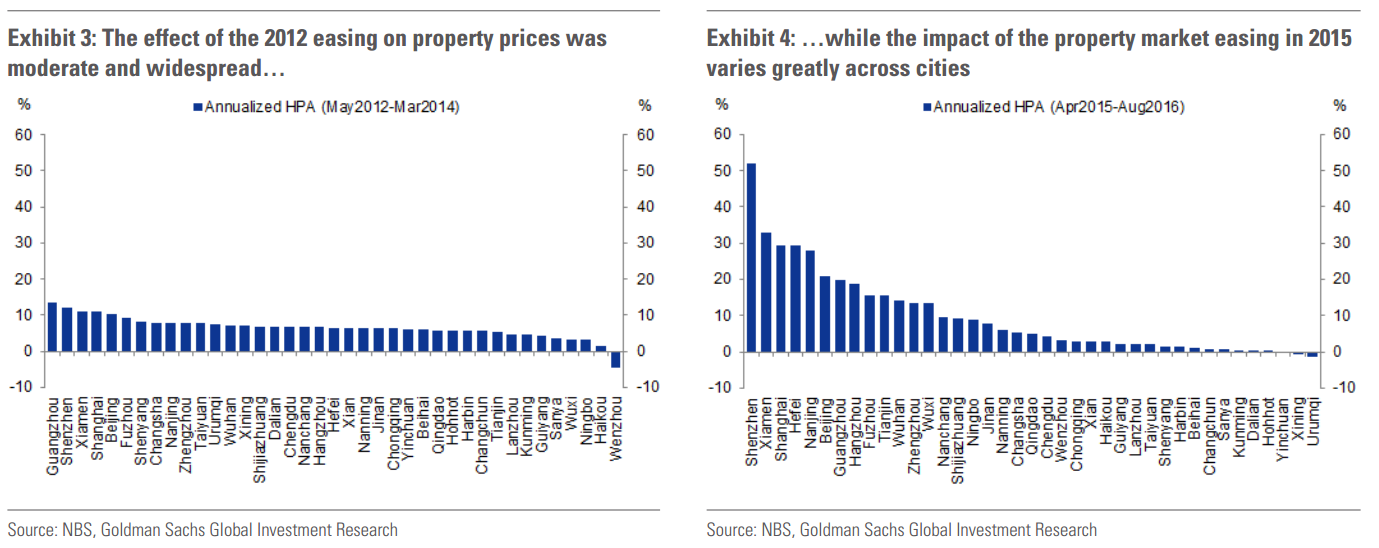
After anemic growth in 2014 and 2015, the Chinese housing market rebounded this year partly due to the effect of policy stimulus. Property prices skyrocketed in many cities. Home mortgages grew 30% from 2015Q2 to 2016Q2, doubling the average annual pace during the previous five years. Our economists estimate that housing is responsible for 14% of China’s economic output and therefore it is no wonder that the Chinese property market has featured prominently in recent market discussions.
Behind better housing data, risks increase
Underneath rising prices and increasing sales, we see growing vulnerability in the Chinese property market. Policy-driven housing booms tend to be followed by slumps due to the payback effect. Overbuilding in regions where fundamental demand is declining can lead to large inventory that weighs on local housing markets for years to come. Deteriorating affordability and strong investment motives among homebuyers also add to downside risks to future construction activity.
Concerns over China housing spill into metal demand
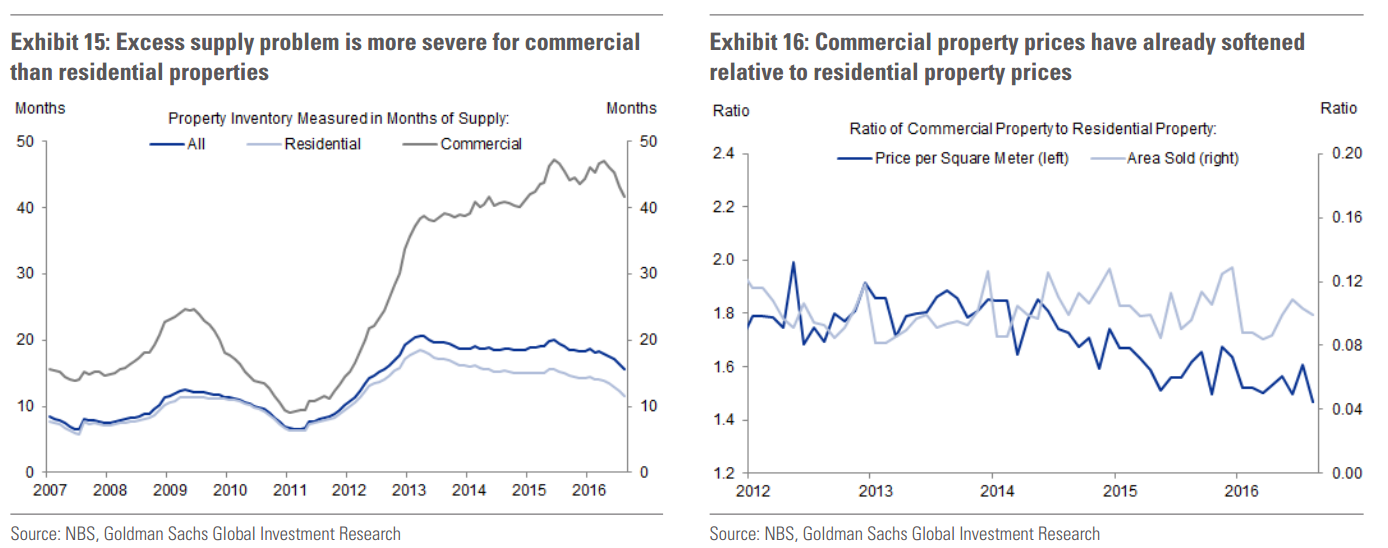
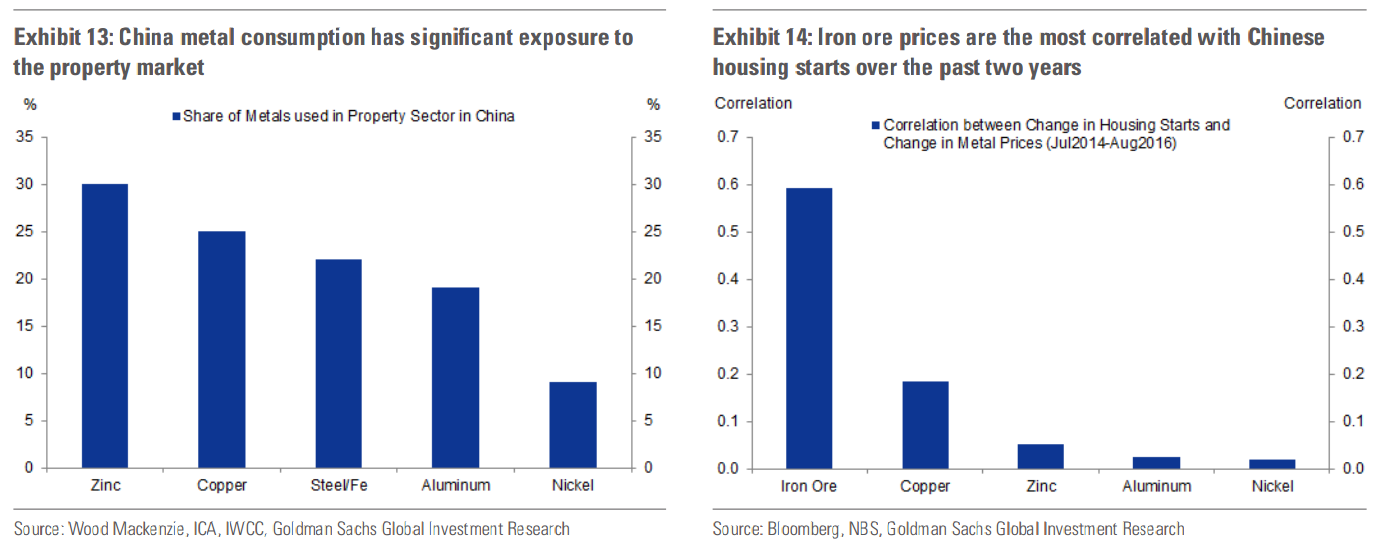
Given the importance of the property market to metal demand in China, our analysis points to risks for metal prices. Over the past two years, iron ore prices have displayed the highest correlation in metals with Chinese construction activity, making steel and iron ore more vulnerable to a potential housing slowdown in China than base metals. We also see more risks for commercial than residential real estate in China. As commercial properties are more steel intensive than residential properties, this is another reason why we think steel and iron ore may face more challenges going forward.
And, as a bonus, whatever happened to Ordos? Answer: Not bloody much.
What happened to the “Ghost Cities”? – A case study of Ordos When we think about ghost cities in China, Ordos is probably the first that comes to mind. Ordos made its name as one of the most famous “modern ghost city” in China. In this section, we provide a brief overview on Ordos and use Ordos as a case study on how the massive buildup of property inventories has evolved over the past few years.
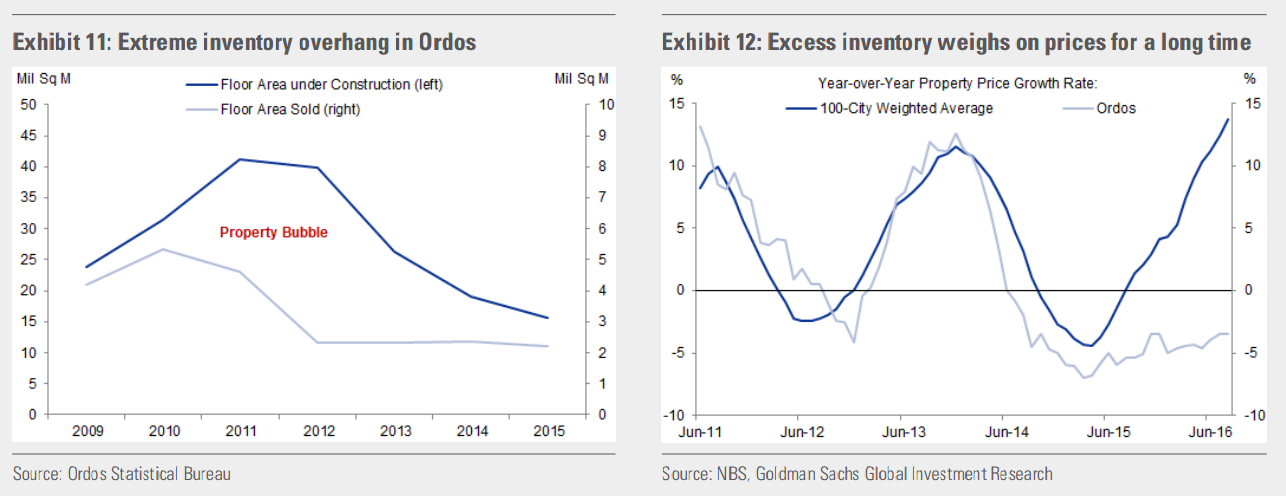
Ordos is a prefecture-level city in Inner Mongolia. Inner Mongolia is very rich in natural resources, having 24% of the total coal reserves in China with 2% of the country’s population. Driven by the boom in coal production, real GDP growth in Ordos averaged 25% per year from the early 2000s to 2010, and its GDP per capita level surpassed Beijing and Shanghai in 2007. Drawn by the economic prosperity, a large flow of migrants rushed to Ordos and population went up 33% from 2004 to 2010. The local government extrapolated the fast economic and population growth and launched a lavish plan to build a new Ordos city. Property construction experienced a massive expansion, with floor space under construction doubling from 2009 to 2011.
Ordos’ fortune turned in 2011 when coal prices peaked. From 2011 to 2015, coal prices fell 60%. The sharp economic downturn triggered a burst of the property bubble. Property sales slowed dramatically, dropping 50% in 2012 (Exhibit 11). Excess inventory weighed heavily on property prices. As shown in Exhibit 12, home prices in Ordos continued to fall in 2015 and 2016 even as prices at the national level registered double-digit gains over the past year.
Absorbing the excess inventory takes years, if not decades. But progress has been made with the help of the local government. In December 2015, Ordos introduced a creative measure called “housing ticket” to destock property inventory. The idea is to link the oversupply of commodity housing to the “shantytown redevelopment” effort. Instead of compensating relocatees with cash, local officials compensated relocatees with “housing tickets” which can be used to buy homes in specified property sites in the city. Besides the “housing ticket” policy, Ordos’ government has also been giving generous subsidies to purchasing and renting homes to draw local farmers into the city. Additionally, the government purchases vacant commercial and office buildings and turns them into public facilities such as schools and senior housing.
Be warned. The current flush of confidence in iron ore is yesterday’s news.
David Llewellyn-Smith is Chief Strategist at the MB Fund and MB Super. David is the founding publisher and editor of MacroBusiness and was the founding publisher and global economy editor of The Diplomat, the Asia Pacific's leading geo-politics and economics portal.
He is also a former gold trader and economic commentator at The Sydney Morning Herald, The Age, the ABC and Business Spectator. He is the co-author of The Great Crash of 2008 with Ross Garnaut and was the editor of the second Garnaut Climate Change Review.