
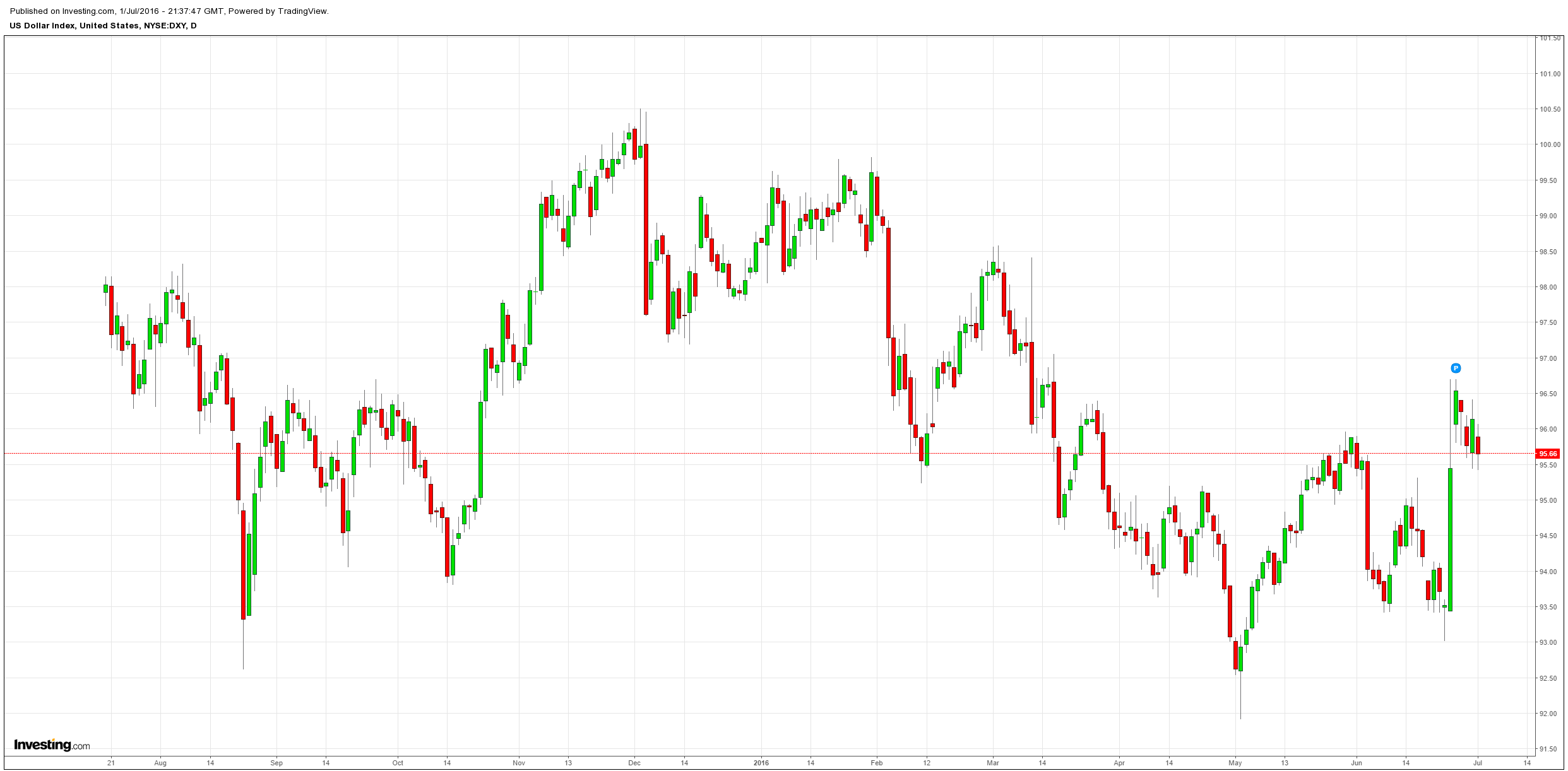
More wild post-Brexit market action Friday night. The US dollar was flat:
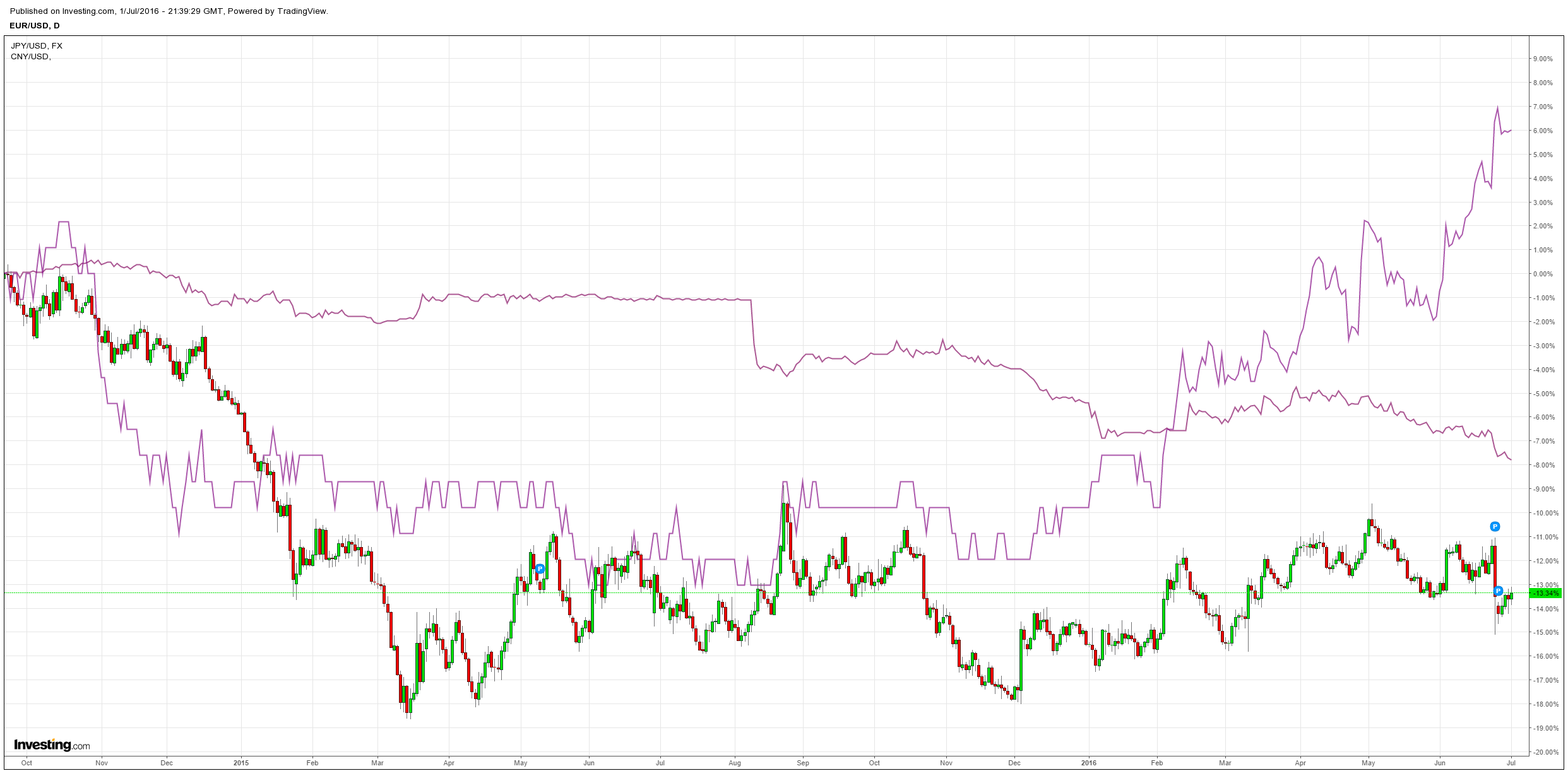
Euro and yen too, Chinese yuan hit another devaluation low:
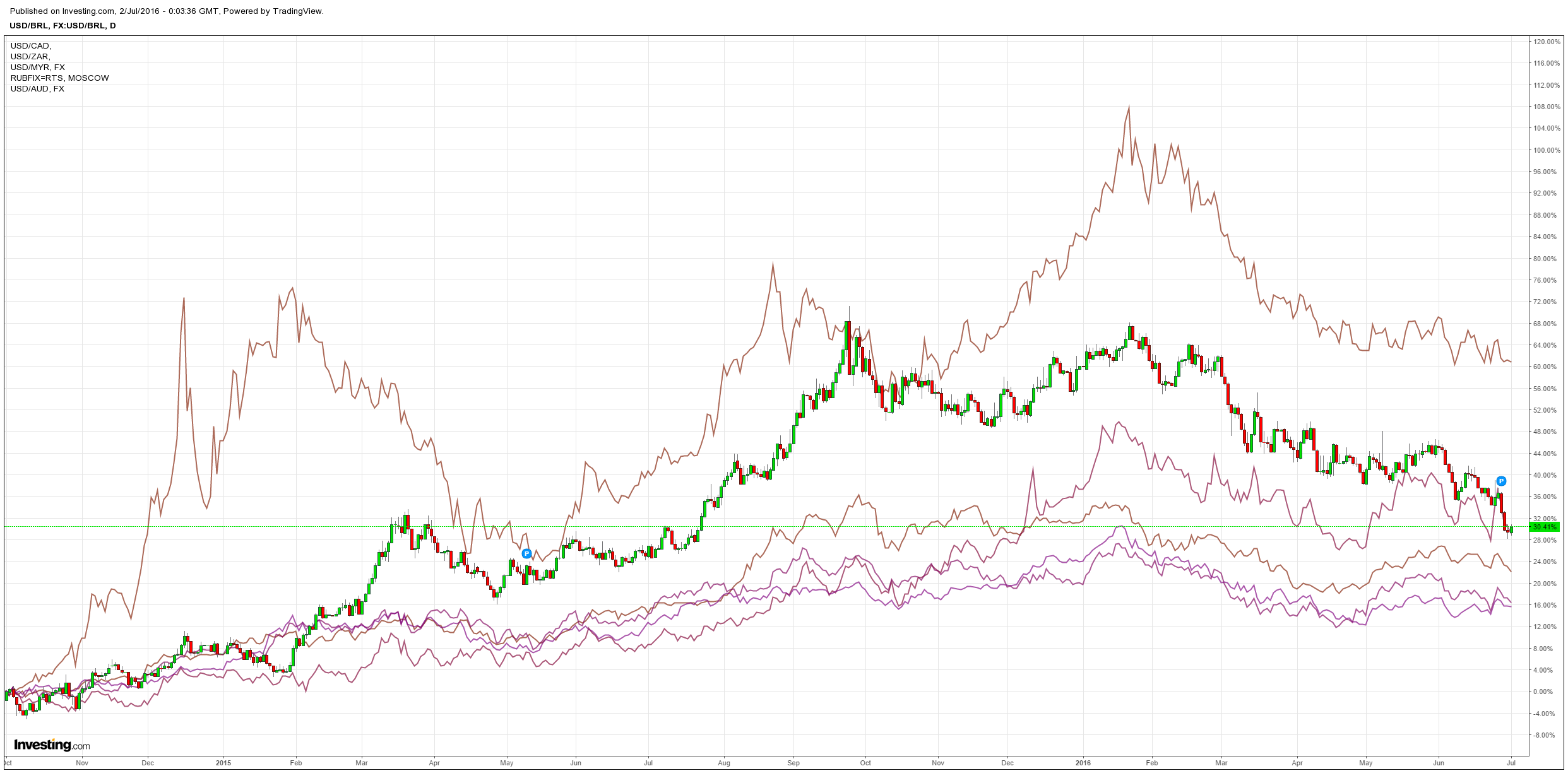
Commodity currencies were strong:
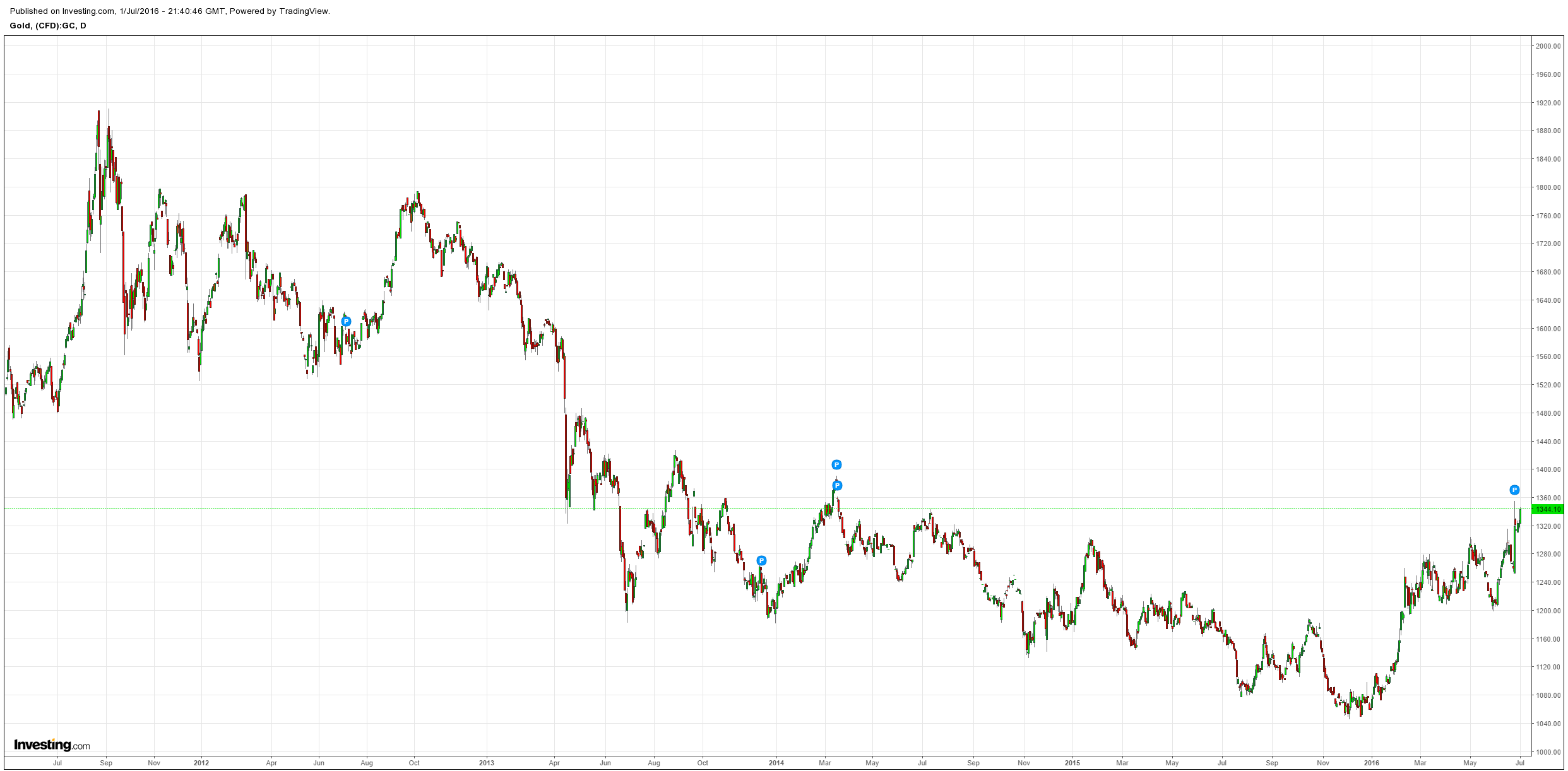
Gold leaped and is threatening break out:
Oil was firm:
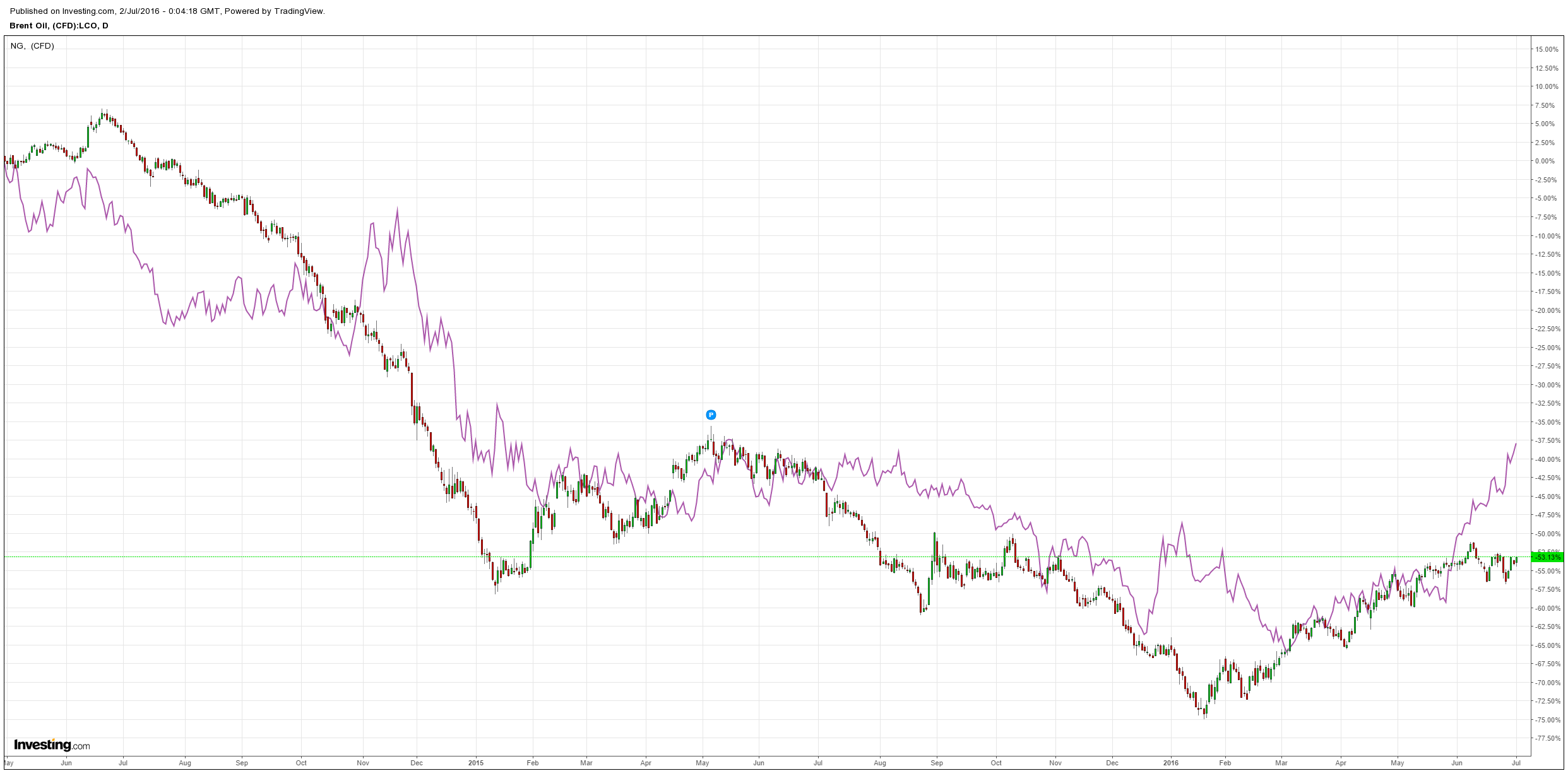
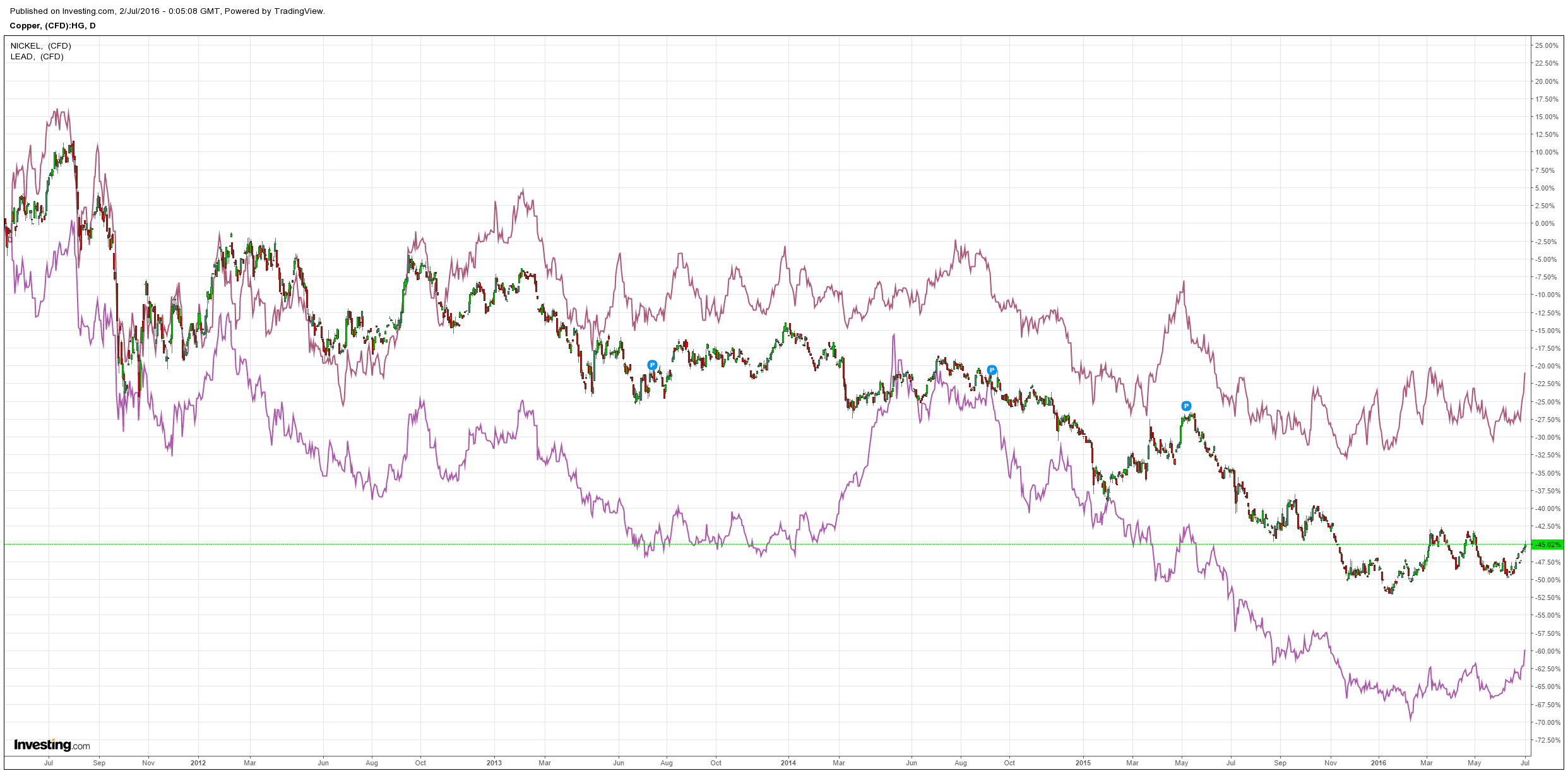
Base metals screamed:
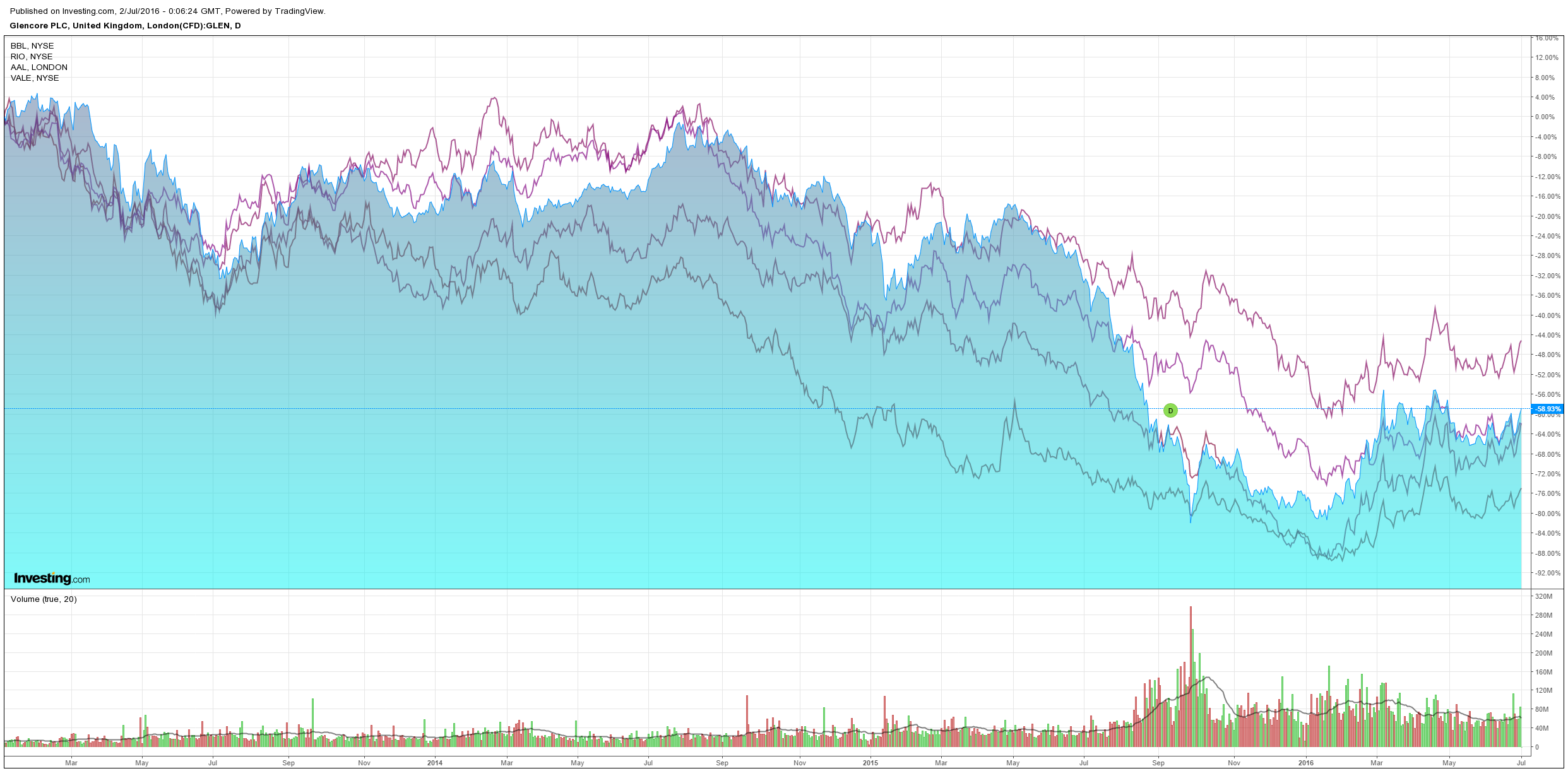
Miners were strong:
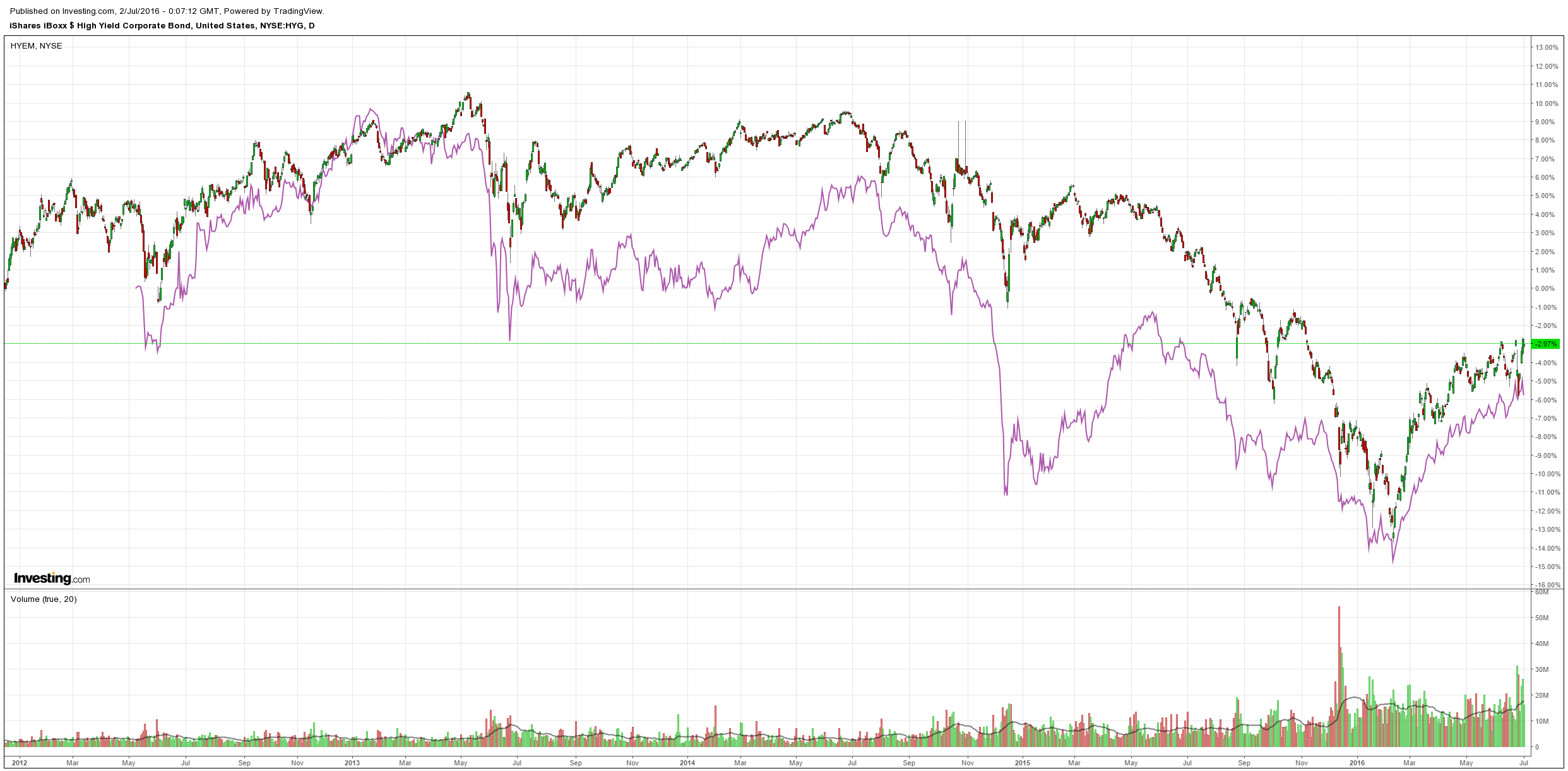
US and EM high yield pulled back:
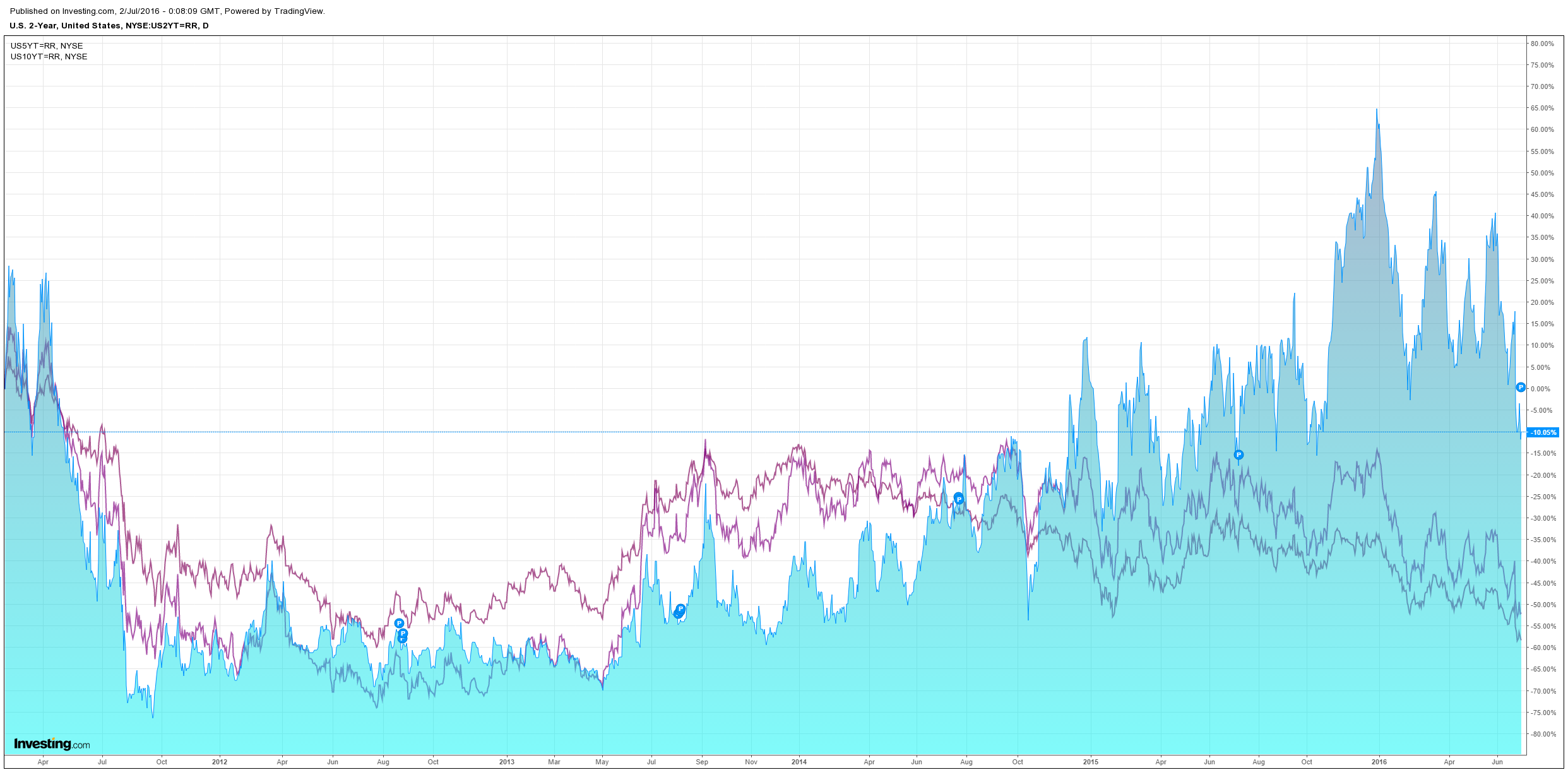
US bonds rocked higher:
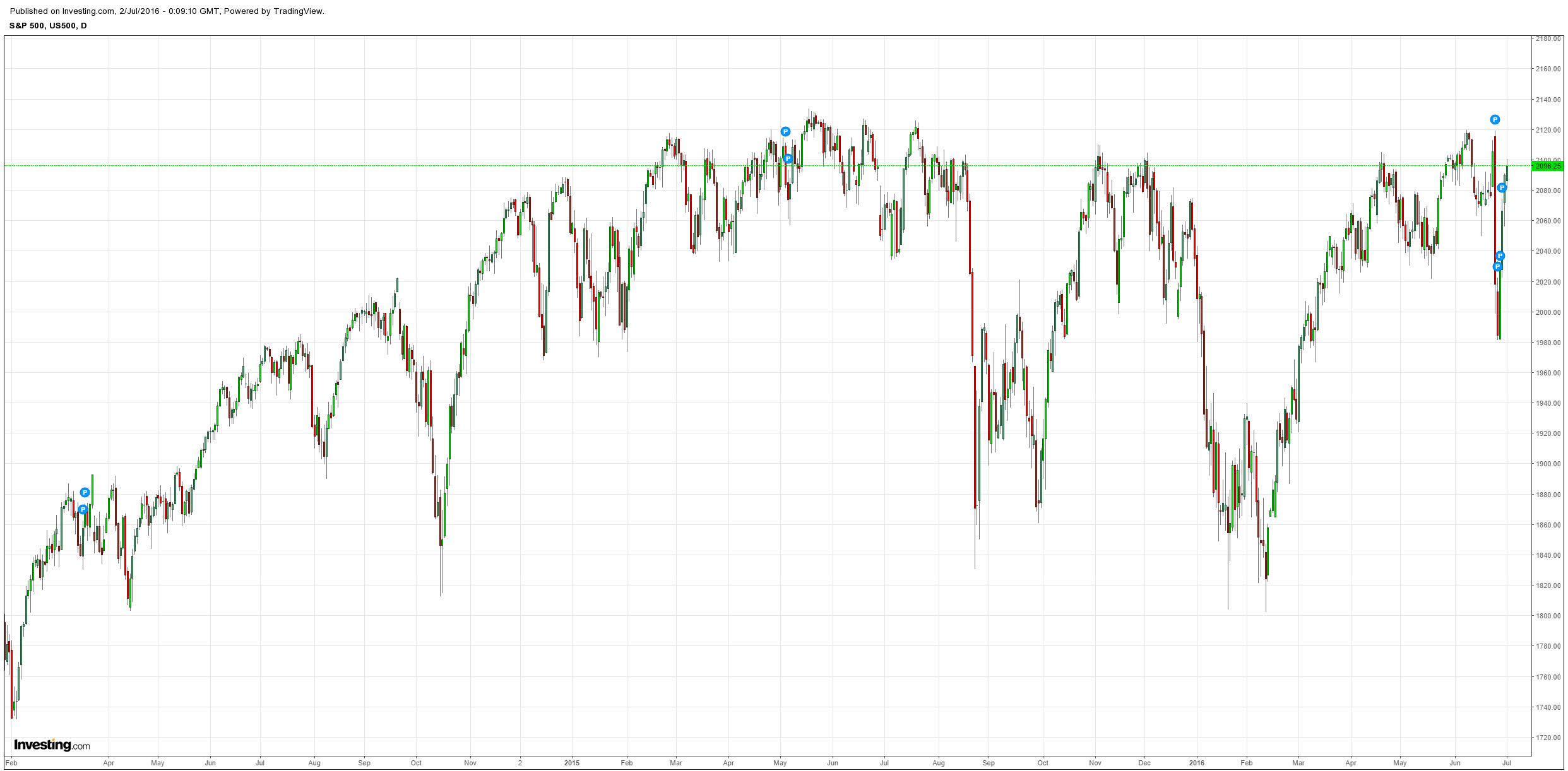
And share added to their gains:
Basically, all hard assets – that is commodities and the assets that they back – continue to climb. Everything dirt is trading as gold despite the firm US dollar. Can this go on? Is it typical? Here is long term chart of gold versus copper, nickel and oil: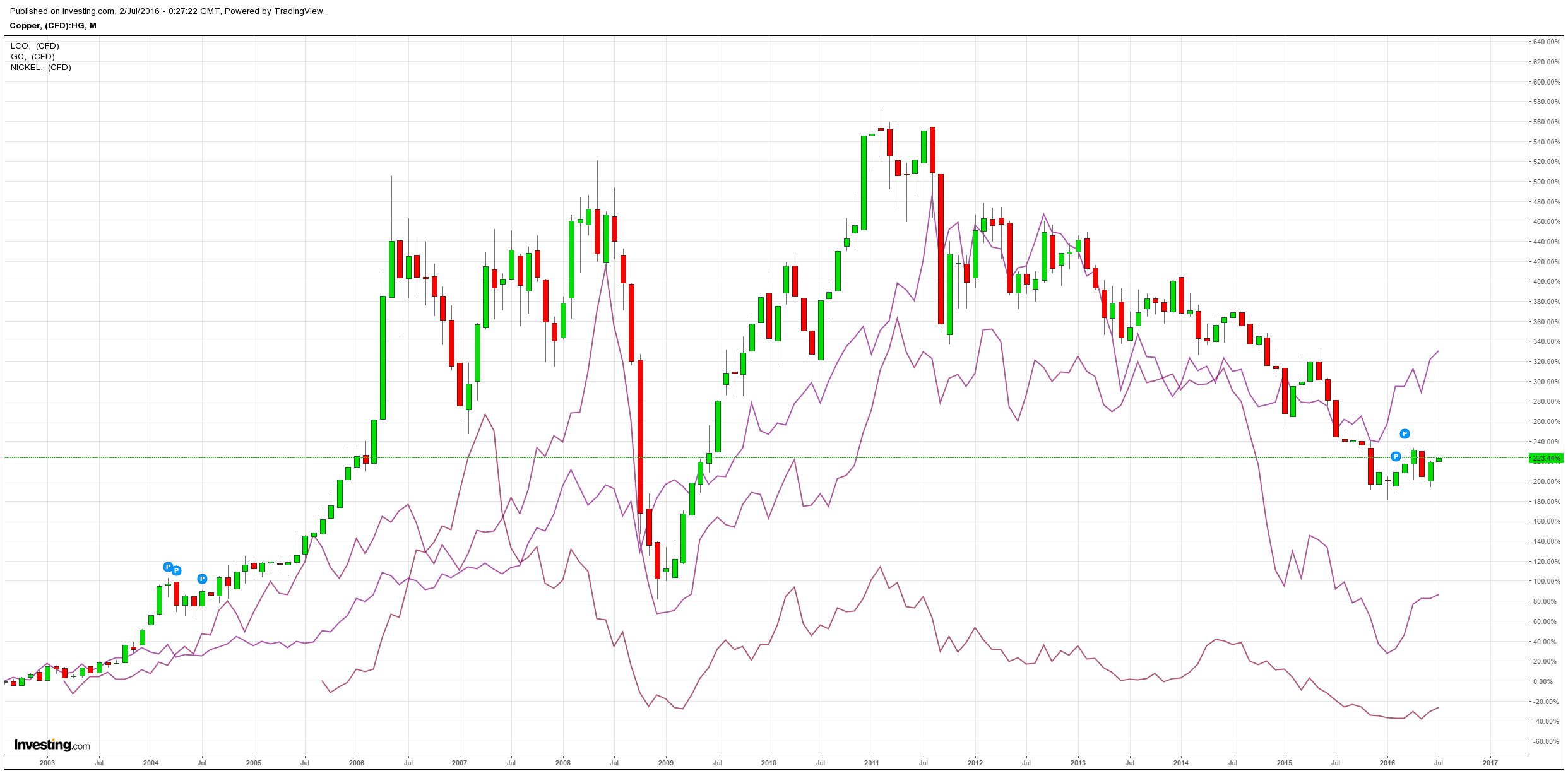
If I added iron ore and coal they roughly track oil though with higher spikes.
There’s clearly a correlation here and that’s not surprising given the post-2003 boom enjoyed a very large monetary tailwind in a falling US dollar. But the other essential (and more important) driver of the boom is accelerated emerging market development to keep industrial commodity supply short. That is gone and we are now in oversupply. That is why although the commodity complex is trading as one today, gold is seriously outdoing the industrials over the long term.
So, will we see ongoing correlation or increasing divergence in the commodities? To answer that let’s explore the landscape:
- commodity markets are front running central stimulus especially in the US or, at minimum, a Fed that is done tightening;
- but that only makes sense if the US dollar is going to fall and it can’t given everyone else is going to print moar with the added updraft to the USD from the zombieuro;
- gold is the exception because it can trade as an anti-currency as questions grow around the fiat system. Other commodities cannot because they will be killed by the economic fallout of any breakdown in the monetary order;
- industrial commodities are therefore either mis-priced or front running something other than US dollar weakness;
- that could be moar stimulus in China though I’d argue that that is likely to be less and less commodity-intensive given the debt problem it raises and the fact that we’re passed the peak of the Chinese property cycle (in terms of the recent stimulus pulse as well as the larger structural oversupply). As well, the Chinese devaluation is extremely bad for commodity prices;
- or, it could be a globally co-ordinated fiscal stimulus that invests a lot in infrastructure and is funded directly by central bank “helicopter money”;
- but that will surely only come after another crisis not before.
Therefore I conclude that the current broader commodity rally is most likely a false signal, the move in gold is genuine (with the usual caveat that any US dollar crisis surge may dent it temporarily), and the commodity complex itself remains a powerful force for deflation not inflation, as well as another reason to stay long bonds and short the Australian dollar.
