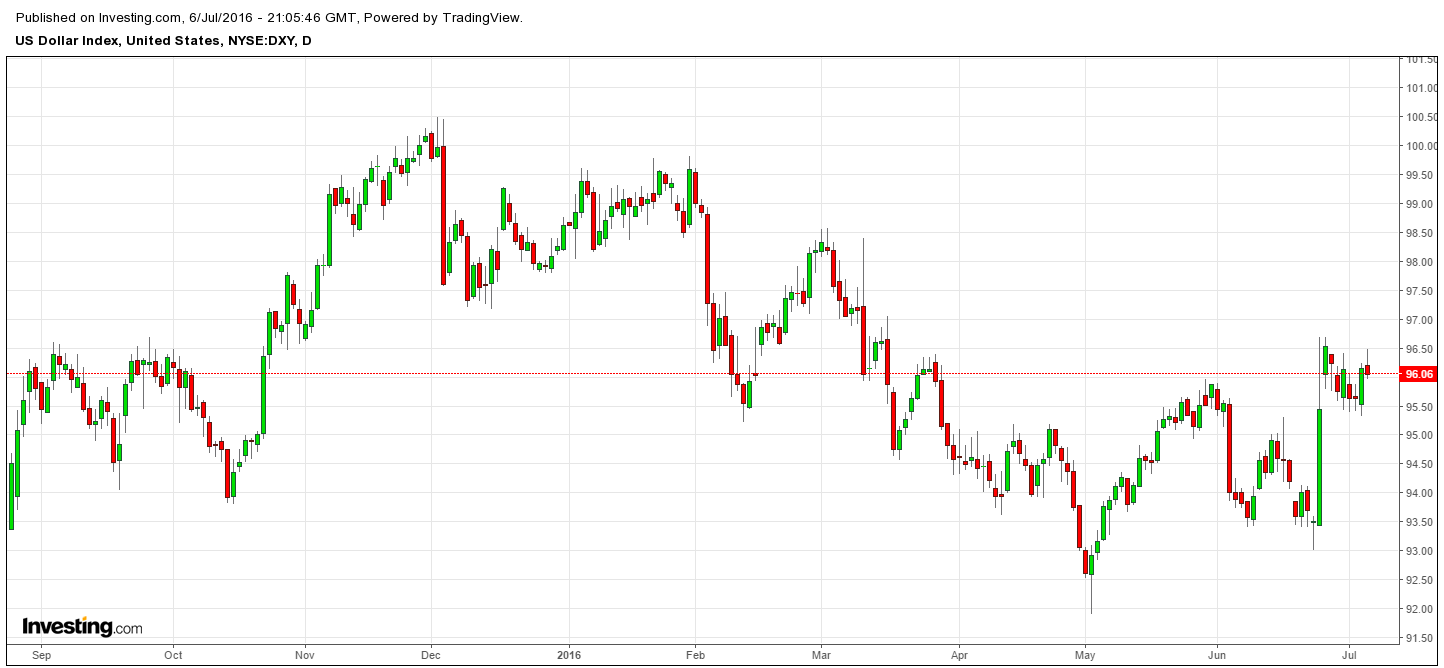
No prizes for guessing where last night’s rally came from! An anxious Fed was enough to turn tumbling markets to buying markets. The US dollar eased:
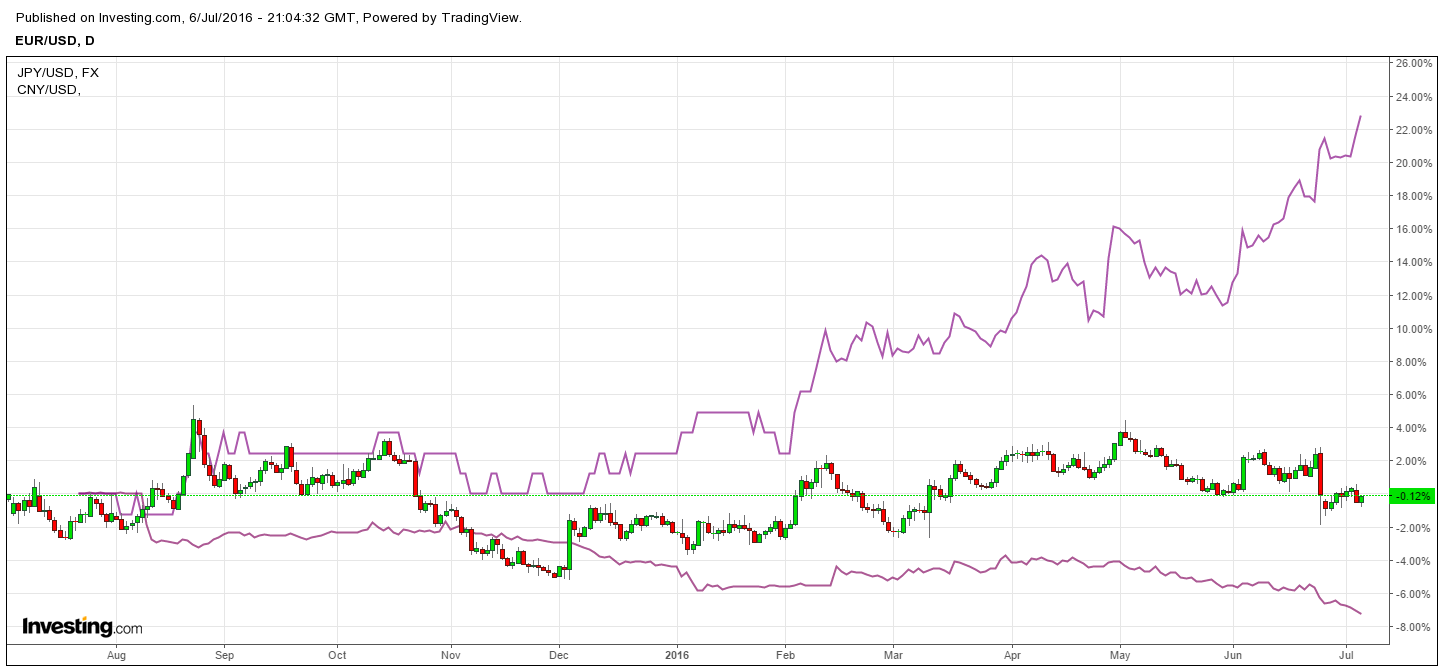
Yen hit news highs, yuan new lows and zombieuro went sideways:
Advertisement
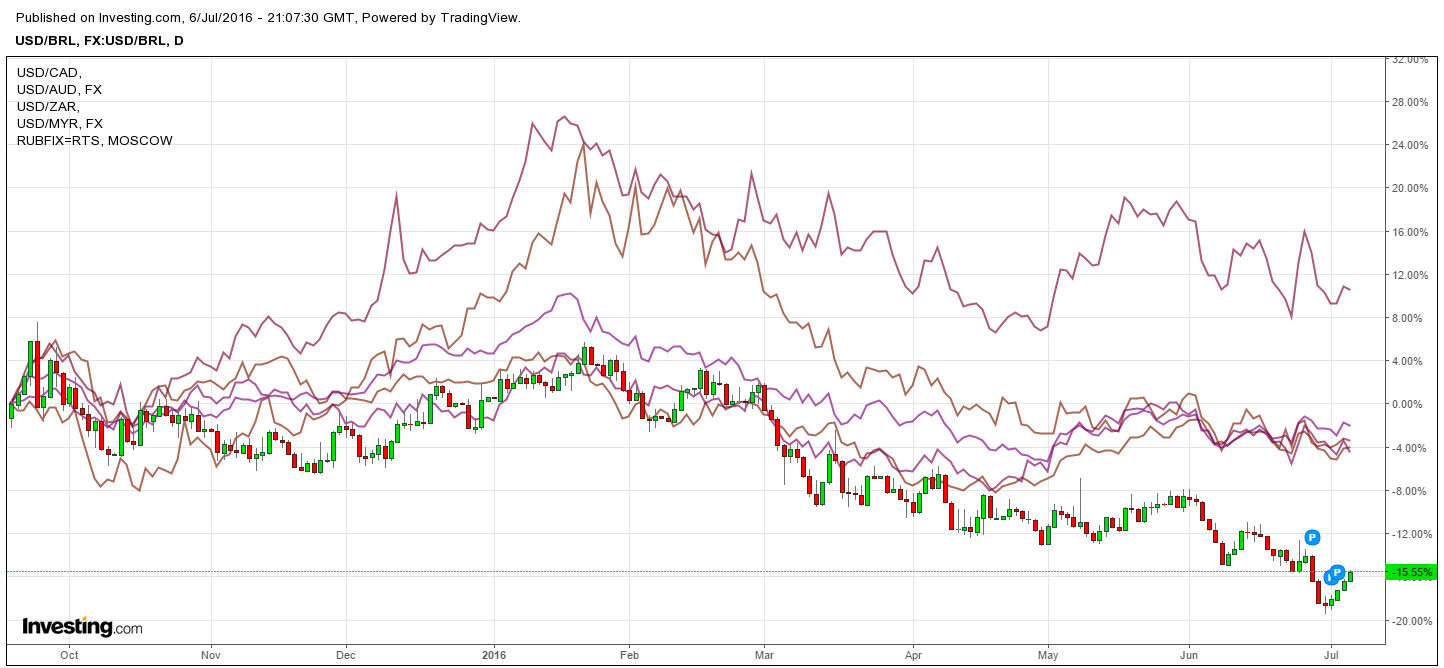
Commodity currencies all jumped except Brazil:
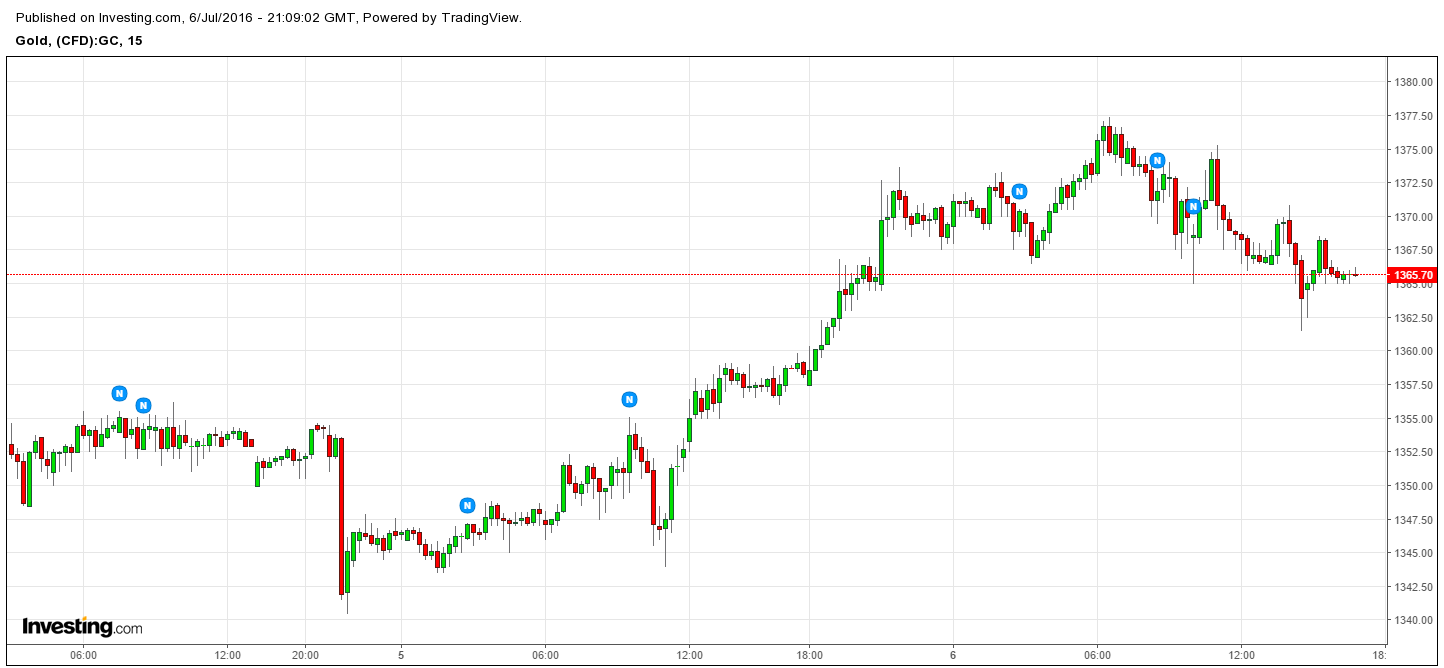
Gold consolidated its breakout:
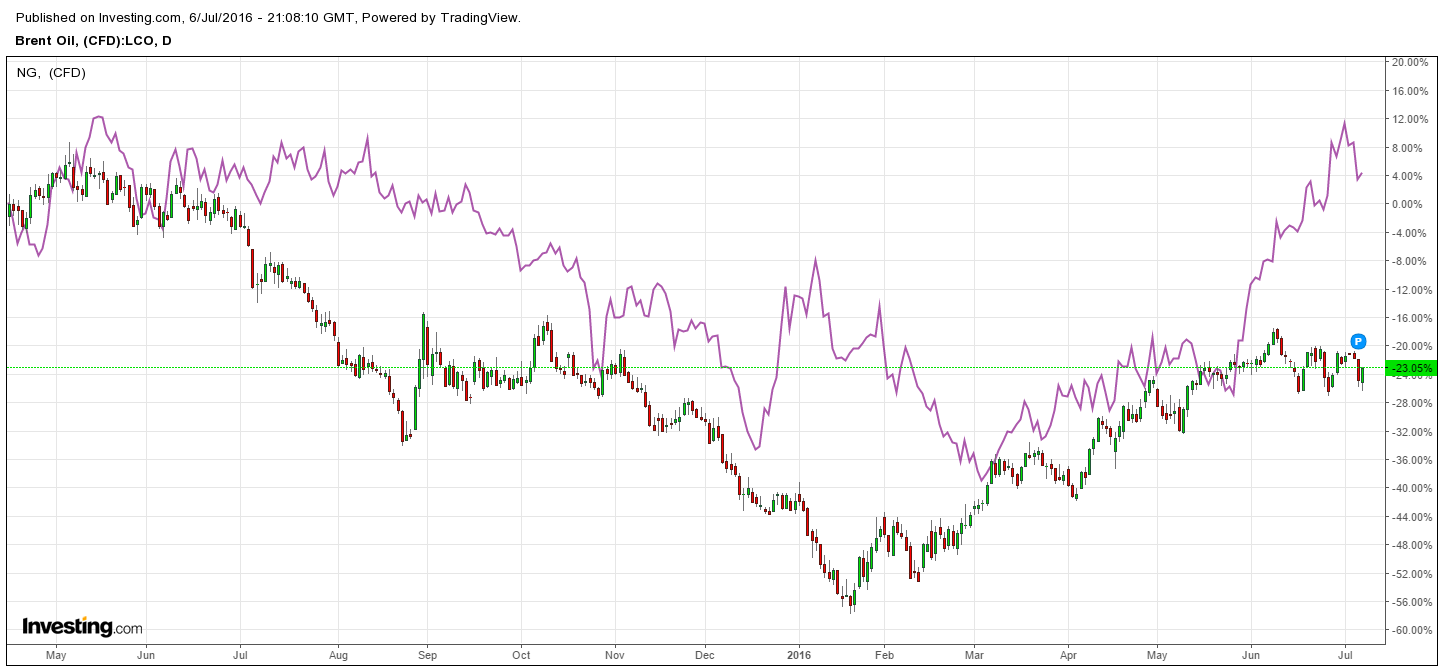
Oil rebounded strongly but its chart pattern is turning bearish as it forms a descending triangle:
Advertisement
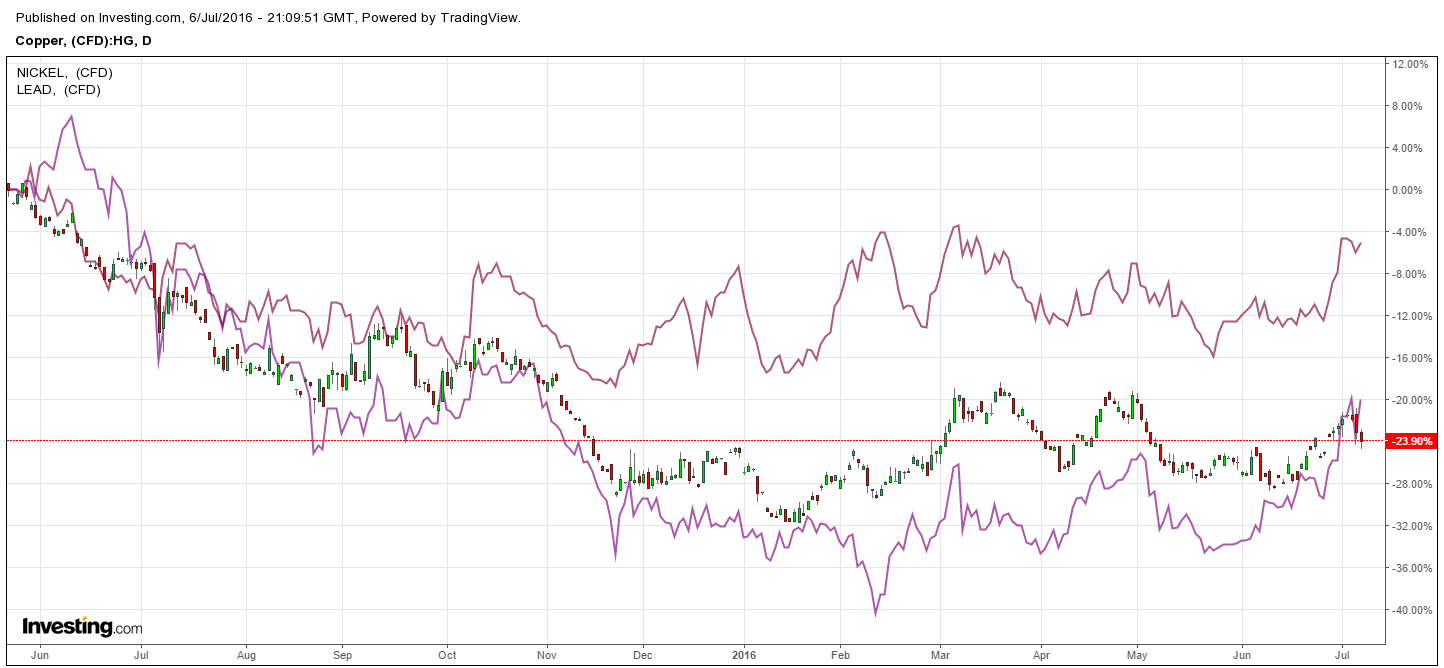
Base metals were mixed but copper weak:
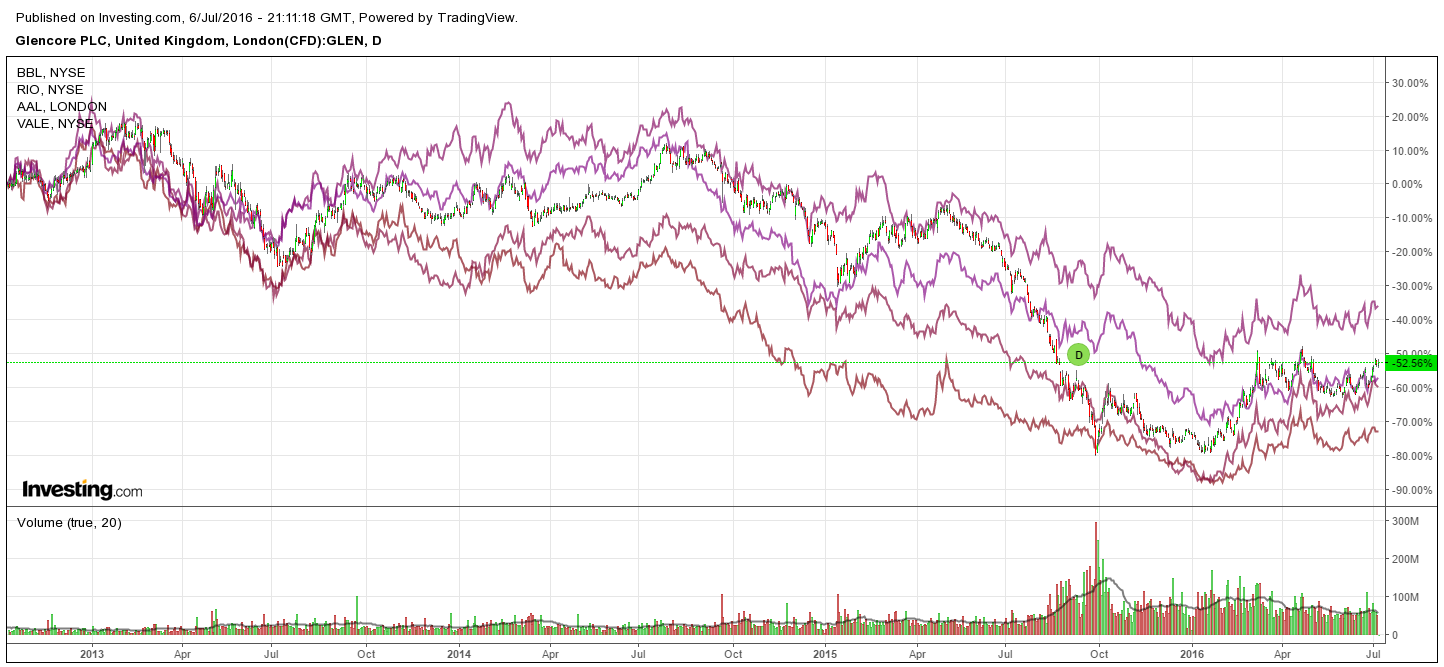
Big miners firmed:
Advertisement
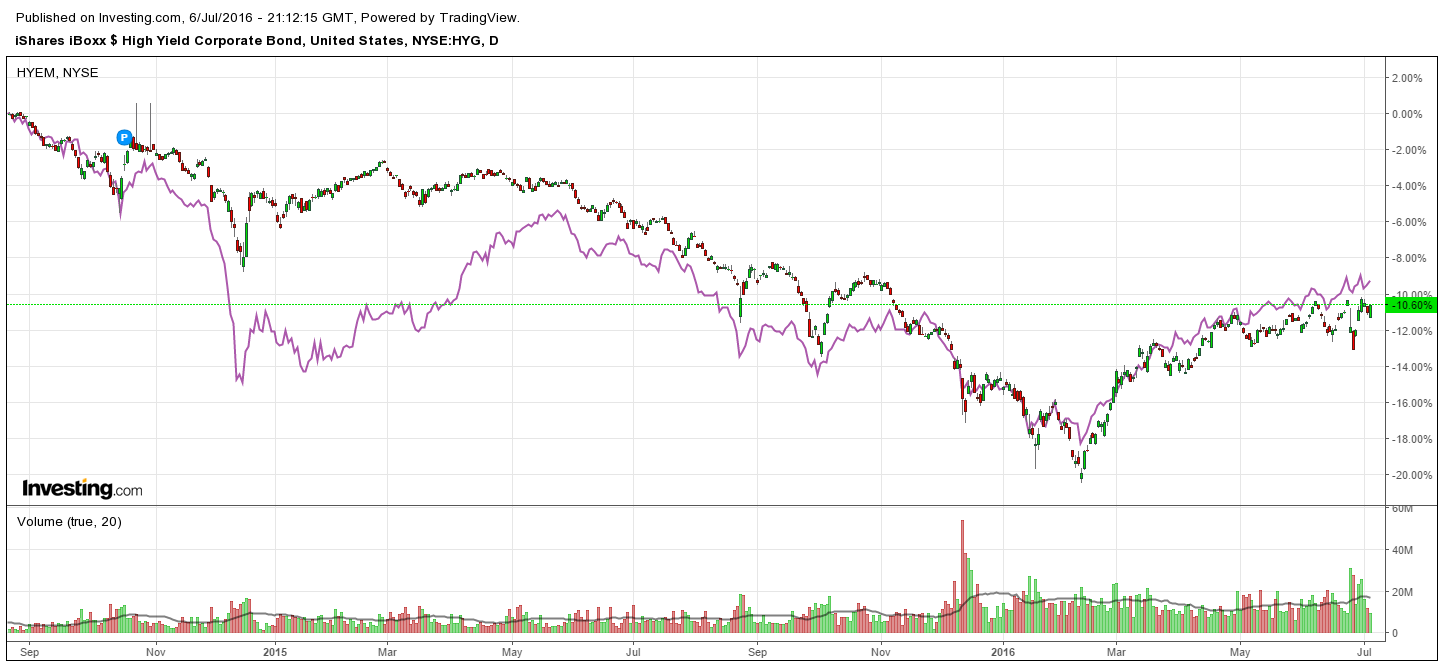
US and EM high yield debt still didn’t get the oil memo:
Blackrock sums it up:
Advertisement
One thing that’s certain in a post-Brexit world: uncertainty. We see heightened political uncertainty, more modest global growth and low-for-longer interest rates ahead, and we have updated our asset views accordingly.
Political uncertainty has increased following the British vote to exit (Brexit) the European Union (EU), and we expect elevated uncertainty for some time. The UK prime minister position is open, a Scottish independence referendum is possible and Brexit negotiation will likely take at least two years. The imminent risk of other EU exits is low, we believe, but key political votes occur in Italy, France and Germany over the next 15 months, and in the U.S. in November.
We have trimmed our global growth expectations, and now expect a modest slowdown over the next 12 months. We see risk of a UK recession and European slowdown, as Brexit uncertainties weigh on sentiment. Our new BlackRock Macro GPS “nowcasting” indicator suggests Brexit-related uncertainty has already started to negatively impact UK and global economic growth. We see limited direct economic impact on the U.S., developed Asia and emerging markets (EM), but increased downside risks.
We expect lower rates ahead, with the Bank of England set to cut interest rates soon, U.S. rates on hold and potential for further quantitative easing in the UK, eurozone and Japan. We believe there’s limited scope for monetary policy to reflate the global economy, however, and much-needed fiscal stimulus and structural reform progress looks unlikely over the coming months.
In response, we have downgraded European stocks to underweight, with a negative view of the eurozone banking sector. We have a preference for income, and have upgraded U.S. credit and EM debt to overweight. We like U.S. investment-grade credit, hard-currency EM debt, stocks in selected EMs and global quality and dividend-growth stocks. Overall, in today’s uncertain, low-growth environment, we prefer credit to equity and believe exposure to gold and alternatives as diversifiers makes sense.
Correct on European banks. But there is one thing missing from this analysis that makes its allocations wrong. The oil market is not ready for slowing global growth. And where oil goes, so goes the commodities complex, EM debt and equity.
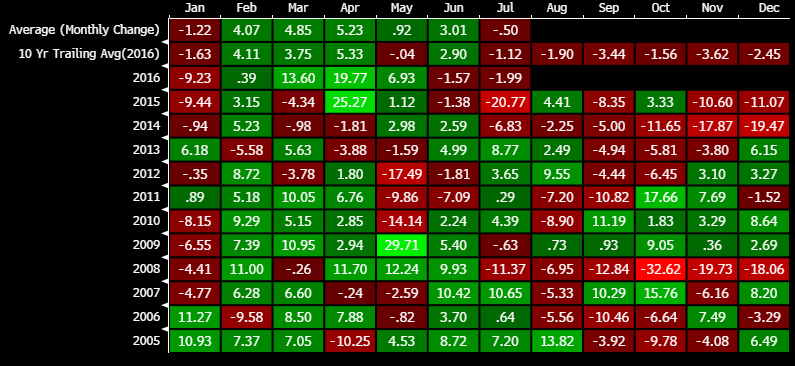
My expectations are firming for an oil breakdown. It’s chart is ugly. Seasonality is about to turn difficult:
Advertisement
China is going to slow through H2 and its strategic reserve build is done. Supply disruptions have turned positive in Canada, Nigeria and Libya (albeit with strong caveats). US consumption is much lower than thought and it is now in the midst of a gasoline glut.
When/if oil goes, EM and US high yield debt is going to freeze up again even as European interbank markets choke up: a collision of the Mining GFC and Brexit. Moar printing in Japan, Europe, the UK, China and anywhere else will only make this worse as it puts upwards pressure on the US dollar further hurting the oil price. Equity markets cannot handle that kind of risk.
The way this is shaping, only the Fed can turn it around by hammering the US dollar lower. That’s going to take moar easing not tightening and that is not coming before another major market accident of sufficient magnitude to derail the US cycle.
Advertisement
Gold, bonds, short Aussie dollar, cash remain the plays.
David Llewellyn-Smith is Chief Strategist at the MB Fund and MB Super. David is the founding publisher and editor of MacroBusiness and was the founding publisher and global economy editor of The Diplomat, the Asia Pacific's leading geo-politics and economics portal.
He is also a former gold trader and economic commentator at The Sydney Morning Herald, The Age, the ABC and Business Spectator. He is the co-author of The Great Crash of 2008 with Ross Garnaut and was the editor of the second Garnaut Climate Change Review.