From Bloomberg:
Billionaire investor George Soros said China’s debt-fueled economy resembles the U.S. in 2007-08, before credit markets seized up and spurred a global recession.
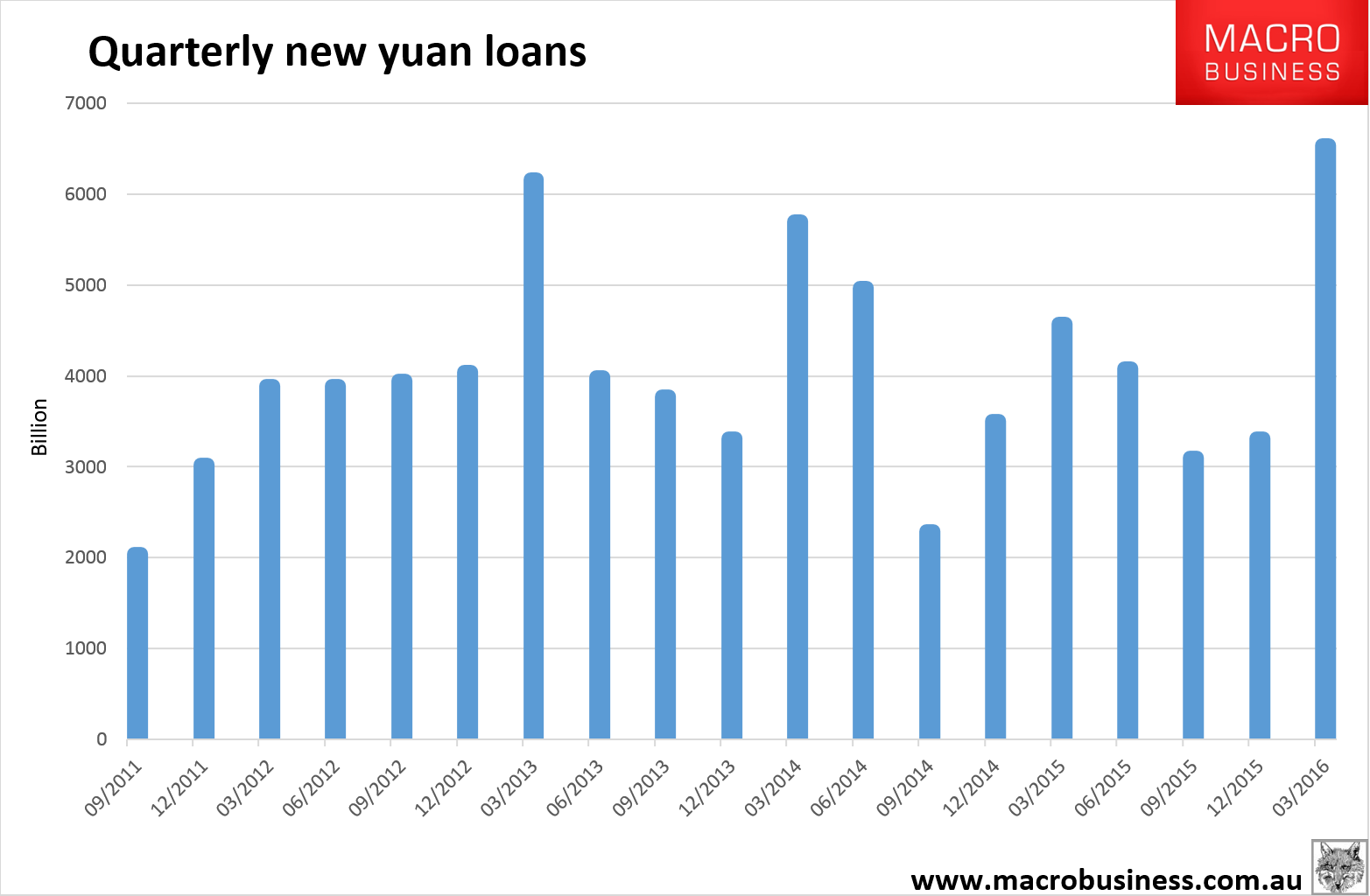
China’s March credit-growth figures should be viewed as a warning sign, Soros said at an Asia Society event in New York on Wednesday. The broadest measure of new credit in the world’s second-biggest economy was 2.34 trillion yuan ($362 billion) last month, far exceeding the median forecast of 1.4 trillion yuan in a Bloomberg survey and signaling the government is prioritizing growth over reining in debt.
What’s happening in China “eerily resembles what happened during the financial crisis in the U.S. in 2007-08, which was similarly fueled by credit growth,” Soros said. “It can reach a turning point later than everyone expects.”
The Chinese credit surge is substantial:
But I disagree with the US analogy. China is not pre-GFC US, it is if anything pre-90s Japan, though perhaps not that bad, either:
- the banks are still largely publicly owned so there will be no “sudden stop” credit event such as in the US. Despite bad loans piling up, China can literally just order its banks to keep lending;
- however, China is running out of debt head room as the marginal growth return on each yuan borrowed collapses;
- thus it must reform or it will eventually face a financial and currency crisis;
- it faces a similar demographic challenge to Japan as well;
- but, it is still poor and has much latent productivity growth if it can can release it.
China has the policy scope to support its glide slope to lower growth but beyond that it will get much more difficult.