

As noted earler by Houses & Holes, today’s consumer sentiment data for July, released by the Westpac-Melbourne Institute, was basically unchanged, down 0.1 points to 102.1, suggesting that the number of optimists remains slightly above the number of pessimists. The index is now running roughly in line with its long-term average after retracing sharply from March’s high (see next chart).
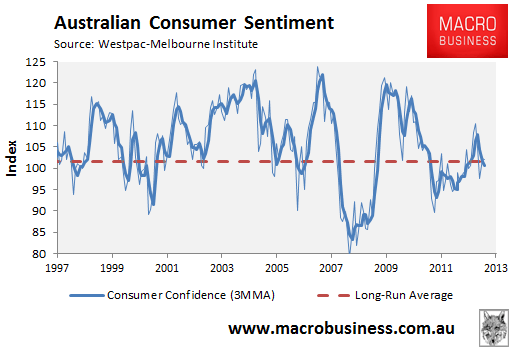
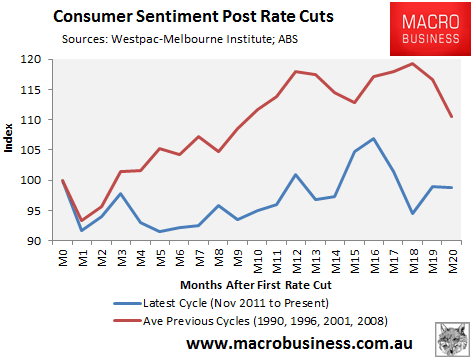
While consumer sentiment has risen by 3.0 points over the past 12 months, it remains 1.3 points below its November 2011 level, which is when the Reserve Bank began its latest interest rate-cutting cycle, whereby 2.0% has been shaved off the official cash rate. The response to date has also been well below the average 10.5% improvement in consumer sentiment over the four prior rate-cutting cycles (see next chart).
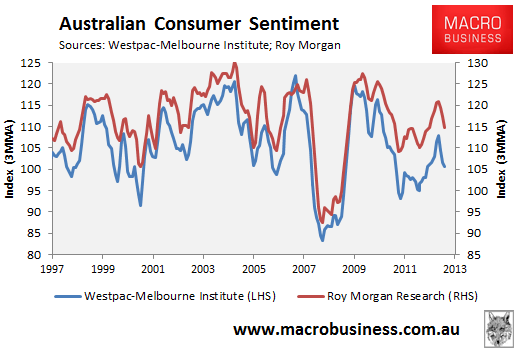
Australia’s other provider of consumer sentiment data, Roy Morgan Research, also shows a material weakening in consumer sentiment since March, although it too is up 4% over the past year (see next chart).
Overall, despite the significant cuts to interest rates, Australian consumers remain prudent. If sustained, the recent fall in consumer sentiment may presage headwinds for the Australian housing market.
The next chart plots the annual change in house prices (adjusted for inflation), as measured by the ABS, against the annual change in the Consumer Sentiment Index on a quarterly basis up to June 2013:
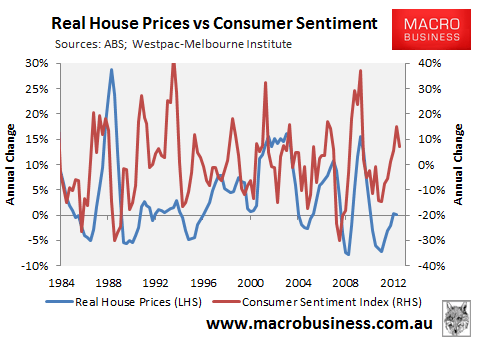
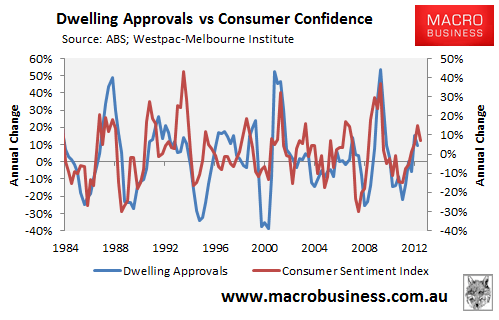
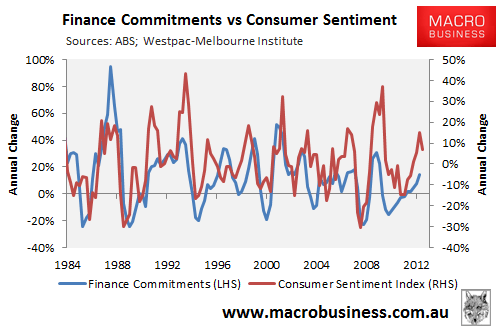
As you can see, there is a high correlation between both series, with consumer sentiment tending to lead house price growth.
The same applies to dwelling approvals (see next chart).
And the value of housing finance commitments (both investor and owner-occupied):
We shall see.
