
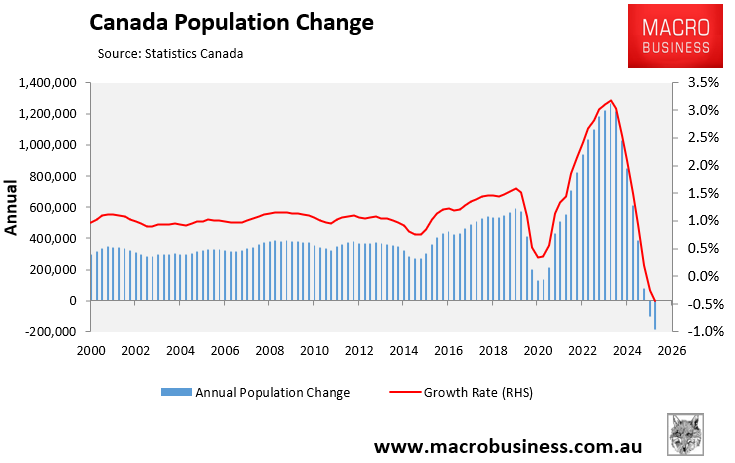
We recently reported that Canada’s population has been declining because the centre-left Liberal government decided in late 2024 to slash immigration.
In the March quarter of 2026, Statistics Canada reported that Canada’s population had declined by 234,500 from its peak in Q2 2025, driven by a 590,500 reduction in non-permanent residents (NPRs) from their peak in Q3 2024:
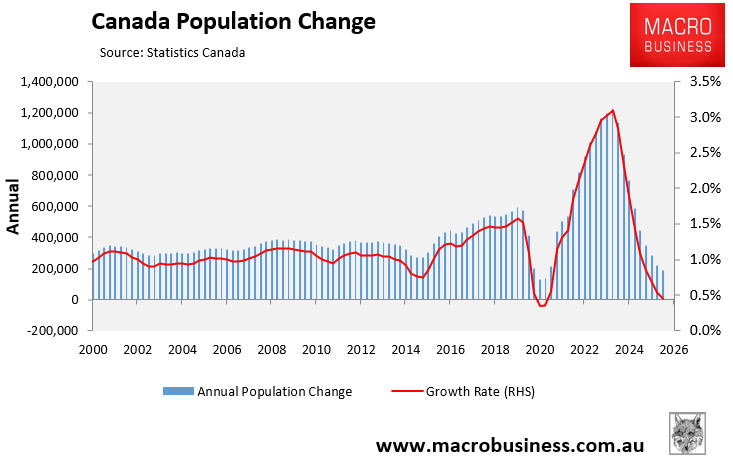
However, new data from Statistics Canada has significantly revised population growth and immigration upwards.
As illustrated below, Canada’s population has now grown by 189,400 (0.46%) over the year to June 2026:
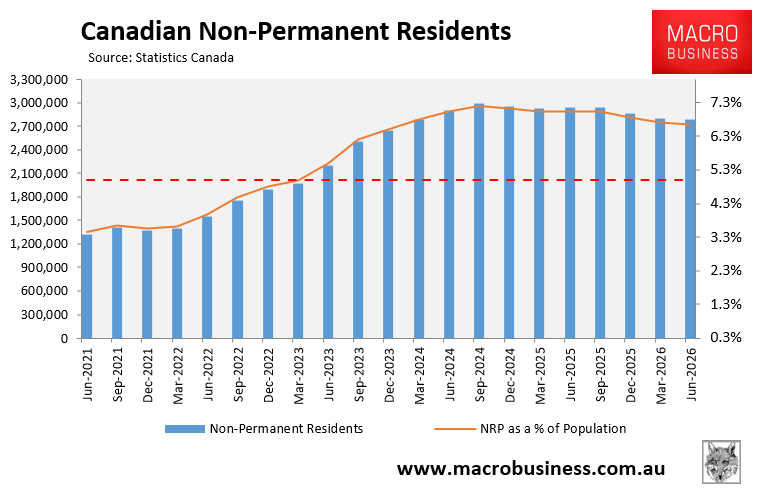
The decline in NPRs (temporary migrants) has also been far less pronounced. The stock of NPRs has now only declined by 204,000 from its peak in Q3 2024 and now comprises 6.7% of Canada’s population, down from a peak of 7.2% in Q3 2024:
Stacey Hallman, a Statistics Canada spokesperson, said the agency, in its annual September review, noticed an increase in the number of permit extensions, which allow newcomers to continue their stay in Canada after their initial permit expires, and an increase in the time it takes to process these applications.
“We have done an adjustment to account for this, and that’s why we are seeing a larger revision today than we have seen in Septembers of the recent past”, she said, adding that the overall trend of slowing population growth remains despite the adjustments.
So basically, Statistics Canada undercounted NPRs by assuming that more people left than actually did.
The Canadian government has set a target of reducing the stock of NPRs to 5% of the population by the end of 2027. Given this latest Statistics Canada data, the government will struggle to meet this target.
Regardless, the actual population increase of 189,400 is the slowest annual growth since 1944-45.
This decline in population growth (immigration) has also taken pressure off the nation’s rental market, which has recorded 23 consecutive months of declining asking rents:
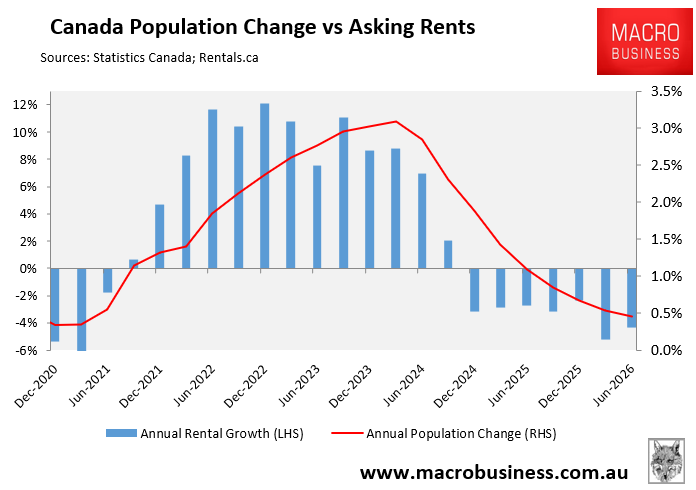
The lesson for Australian policymakers remains the same. If they genuinely want to ease the housing shortage and rental crisis, the federal government needs to slash immigration, as Canada has.
