

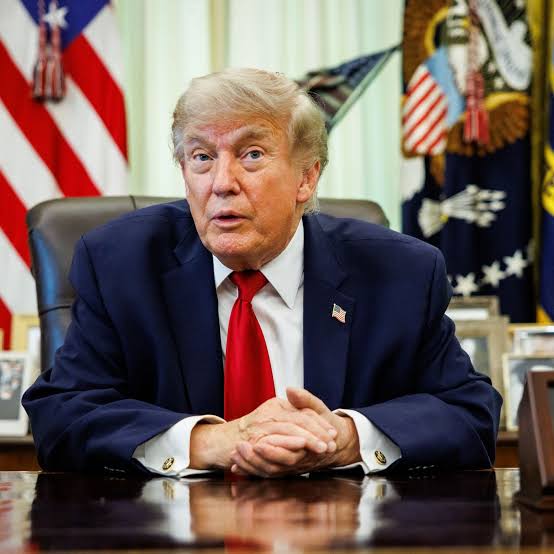
Of course he thinks it right to call the Head of FIFA about red cards in soccer matches involving the USA. Would Albo do that for the Socceroos?
In a bizarre kind of way you have to admire Donald Trump’s almost honesty.
There is something about his bare faced effrontery and shamelessness, about serving only really himself, which at first barely seems credible, then has people going back over what they see as rationale.
And then ultimately arriving at the idea that, yes, he is a psychopath, and psychopaths ultimately are only about themselves or those close to them and are almost entirely resistant to concern about what effects their actions may have on others.
Like all psychopaths he will use everything at his disposal – the money, the information, the media, the ‘contacts’, the very systems he has propelled himself to the top of, to get his way, and further his interests. Dissenting observations from anywhere about his actions have him appeal to legality, then power, then righteousness, then the ‘good’ – all of which have onlookers going back over their interpretations of rationale.
Large numbers arrive back at the psychopath observation about Trump and his actions. Often with the rejoinder ‘well, he is in power now’ and a throwaway thought of foreboding about where it all ends up.
The news, in recent weeks, that he has made Billions in cryptocurrency transactions and market positions in the first 18 months of his Presidency would surprise almost nobody. Coming on top of the fairly obvious oil market trading pointing to someone within his administration placing very large bets on the ups and downs of global crude prices since February, it seems almost quite ‘clean’.
But even then to stand in front of the cameras and state that his financial assets are all sealed off in some fund managed by others, over which he has no influence, and which has no influence over him nor awareness of what he does, is pushing the envelope of credulity. Anyone who has ever been near an investment bank knows that isn’t how they work.
Investment is about delivering the mostest for whoever owns the capital, and rule Number 1 is to know who that owner is. If it is an Oligarch, a General, or a dictator, then that’s who gets pleased. If it’s some sort of mutual then maybe there’s scope to do a deal with management. But there is always someone to be pleased, and with anything related to Donald we can be confident it is him.
This preparedness to rock the credulity boat is ultimately what made him an outsider for the rest of the 1%, or most of it, when he first ran for President. He is pushing the envelope on their nice quiet game of pretending to act in everyones interest when acting in theirs by acting in his interests and asserting it is everyones.
But what he is actually doing differs little fundamentally from what they have done for generations. They shaped policy to suit people like themselves and capitalised on the outcomes – regardless of the effects on others. Donald is just taking it a step further and capitalising on every action democratic process has placed in his hands, to make a few bucks more – and any effects on others aren’t his fault and are something he will swat the blame for away.
Here in Australia, we don’t have the overt psychopath in power, yet. The Westminster system mitigates against it, the same as it does in New Zealand, Canada, the UK. Centuries of dealing with psychopaths in power mean that most of Europe has similar safeguards about letting psychopaths into power. The Japanese following their WW2 experience decided to shape their political system to reduce the risk of psychopaths near power also.
But both sides of mainstream politics in Australia have been serving up the adherents of the 1% for a generation or more. The same can be observed of most of those other nations.
In the years since the 1970s the politicians of the developed world, from both the left and right of the political spectrum, have largely pushed socioeconomic policies:-
- towards lower taxation of capital – at both high income and corporate level
- towards less regulation designed to protect social interests
- towards less bureaucratic oversight ‘in the national interest’ and towards more bureaucratic oversight attuned to ‘stakeholders’
- towards more financialised services and social goods and more private sector embedded in the provision of public services
- towards the promotion of debt for working people to access material and family advancement – notably housing and education – with the attendant observation that working people across the developed world are more responsive to servicing debt they take responsibility for, than to ideological concerns, or those further up the capital access chain.
- towards deindustrialisation and the reduced exposure of concentrated capital to the action of organised labour.
Ultimately that last has been towards the removal of sectors of the economy that organised labour or the state can halt, expose, restrain or legally challenge, and the replacement of this with ‘services’ which for the most part are very easily transferable at a moments notice, difficult to organise in a labour sense, and which for the most part can be price threatened, and comprised of elements small enough to make bureaucratic oversight meaningless.
Demand, in an aggregate sense, has been inflated by heavy immigration in Europe, North America and Australasia. Across the board economies of the developed world have aged, with economic policy outcomes weighted towards support of the aged. They have also become more attuned to redress of grievance – be it gender disability or ethnicity – with policy driving significant government funded employment to sustain this. That the funding is increasingly derived from labour with the capital ‘elite’ sheltered from taxation adds to the perception the post WW2 democratic tradeoff, of economic prosperity for all in exchange for toned down revolutionary fervour, is now expired.
The developed world is also all coming to terms with the onset of global warming and the likelihood that the human race will fail to reduce carbon emissions enough to head off major environmental consequences. The gap between the dictates of the rapidly developing world, and the actions of India and China for starters, and the developed world which across the board has experienced an energy price shock more severe amongst working people than those up the capital chain, underpin a major credibility gap between electors and elected, and labour and capital.
On top of that is the advent of Artificial Intelligence which currently seems to be rendering individual privacy and ownership of creative literary, artistic output a thing of the past, and would appear to have no respect for sovereign rights of peoples anywhere. It is solely in the hands of either the capital alite, or authoritarian governments, and which Trump in the US is now both directly funding and buying the US a seat at the table and is very close to the course of his wealth accumulation in office.
Democracy itself, which was imbibed for generations as the safeguard of a balance of life, security and respect for ourselves and others, has become an apparent bargaining process all about allocating profits and benefits to the upper end of the capital chain, and costs and consequences to those at the bottom of the capital chain.
It is failing.
Prime Minister Starmer of the UK, Chancellor Merz in Germany, the US Democrats and the credibility gelding of the Australian Liberals are all symptoms of the same issue. The voters in those nations have lost confidence in their democratic process to represent their interests.
In Australia in recent weeks we have had two outstanding examples of just how feeble the democratic impulse has become here.
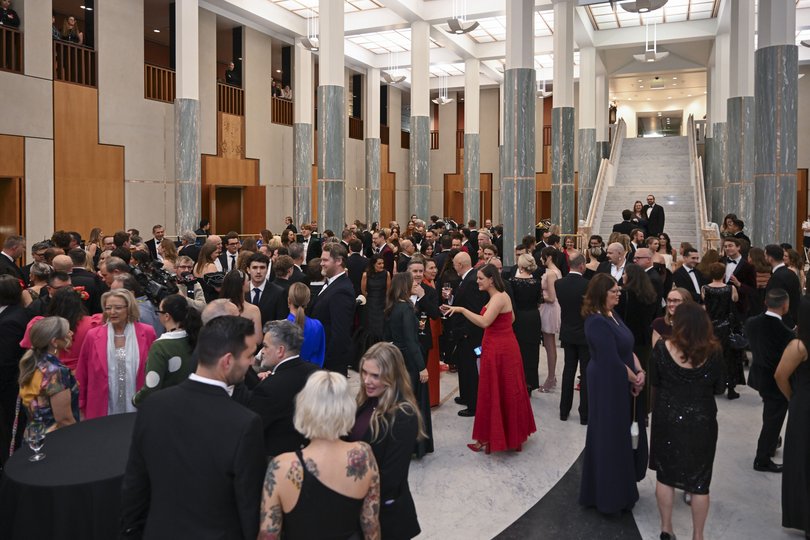
Is it important for electors that Federal political elites have a formal celebration?
The first was a midwinter ball which saw our politicians seemingly of the view they should appear in sync with the attendees of the Brownlow or Dally M Medals. They seemingly have little awareness that the reason the public indulge the hooplah, and the ball gowns, for the footballers is because regardless of their foibles as people they are very good footballers, when the widespread perception of our elected representatives is that they aren’t good at representing us. And the football highlights played on the night garner far more respect and motivate the masses more, than any political or administrative highlights.
Then if we think to ourselves that the event was almost certainly attended by, and probably largely funded by, corporate interests who used the event to whisper their versions of good policy into the ears of our representatives, then that would only fuel a sense of detachment from proceedings on the part of the electorate.
Then we had the spectacle of Indian Prime Minister Narendra Modi appearing at rallies attended by large crowds of Indian immigrants in Australia and New Zealand. Prime Minister Albanese and Victorian Premier Allen came along to pay homage at the Australian event in a way which Donald Trump, for one, would have baulked at in the US. Americans can assume that if policy isn’t about Donald then it will be about the US.
However no such qualms pervade Australian politics. Prime Minister Albanese was certainly there to play backing vocals to the Indian leader and there was no fervour or upbeat sense of focus on Australia and Australian interests. They were an assumed beneficiary of anything Modi touted about India and Indians. Would any leader in Europe have attended that same rally in the same way? Would it have been allowed anywhere else? Why would Australians be comfortable with Albo presenting himself that way, and with their interests being presented as a side salad, at an event in Melbourne? It wouldn’t be allowed in India would it? Or have Indians redeveloped a taste for white people telling them what is good for them?
Did Albo ask if President Putin of Russia, who Modi meets more often than he meets Albanese, was a fan of rallies or seek to represent anything of Australia’s concerns about Russia to VVP? Should Albo ask if President Xi of China would like a rally next time he pops out? For a more Australian national interest did Albo inquire if India was doing anything about its coal use, or the seeming dodginess of some of its educational institutions feeding people into the Australian community with qualifications recognised as equal to Australian? Did Albo or Allen come away with anything at all which could be said to be in Australia’s national interests?
Or was it all about currying favour of Indian immigrant voters to help Albo and Allen be reelected?
And if so, are they any different than Trump? And do they have any answers for the apparent democratic and economic failures we see about us?
Many of us thought not.
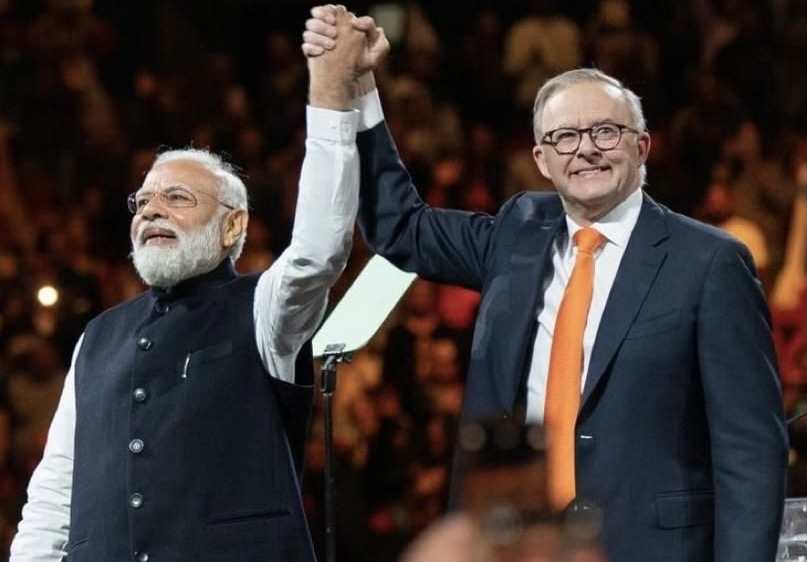
Why was Albo allowing, let alone appearing as a warm up act, the leader of another country which has strategic interests other than Australias to stage rallies in Australia (again)?
Is this a look most Australians will think firms respect for their political leaders?