
Aussie mortgage holders are among the world’s most punished
Justin Fabo from Antipodean Macro published the following chart last week, illustrating how Australians are paying among the highest mortgage rates in the world:
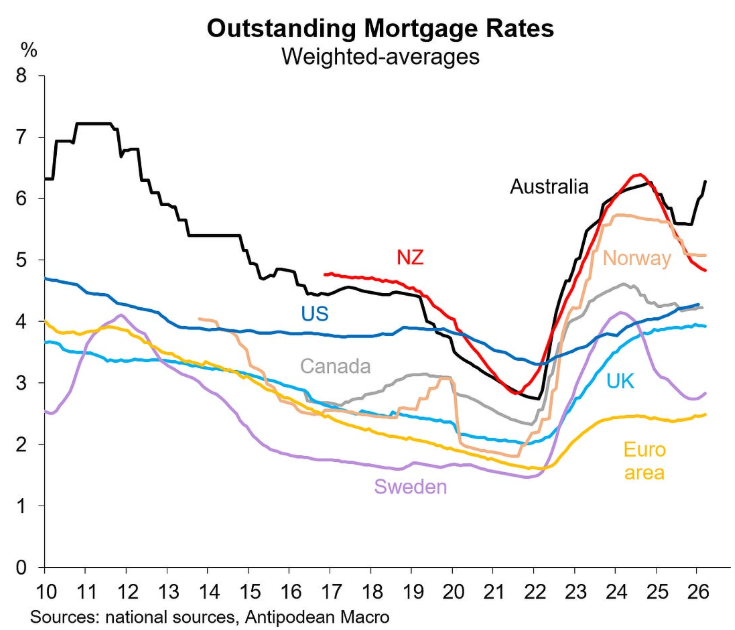
The gap in mortgage rates between Australia and New Zealand has also widened. Australia’s weighted-average mortgage rate was 6.28% in May, 1.45% higher than New Zealand’s 4.83%.
Australia’s world-beating mortgage rates are because it has higher official interest rates than most other nations. For example, Australia’s 4.35% official cash rate is 1.85% higher than New Zealand’s 2.5%.
Australia also has one of the highest shares of variable-rate mortgages in the world, while the vast majority of fixed-rate mortgages in Australia have terms of less than three years.
As a result, changes in official interest rates are passed on to Australian mortgage holders far more quickly than abroad.
To illustrate this point, the following chart from Fabo shows that the average interest rate on new mortgages in the United States was actually higher than in Australia in May, despite the interest rate on outstanding mortgages being far lower in the United States:
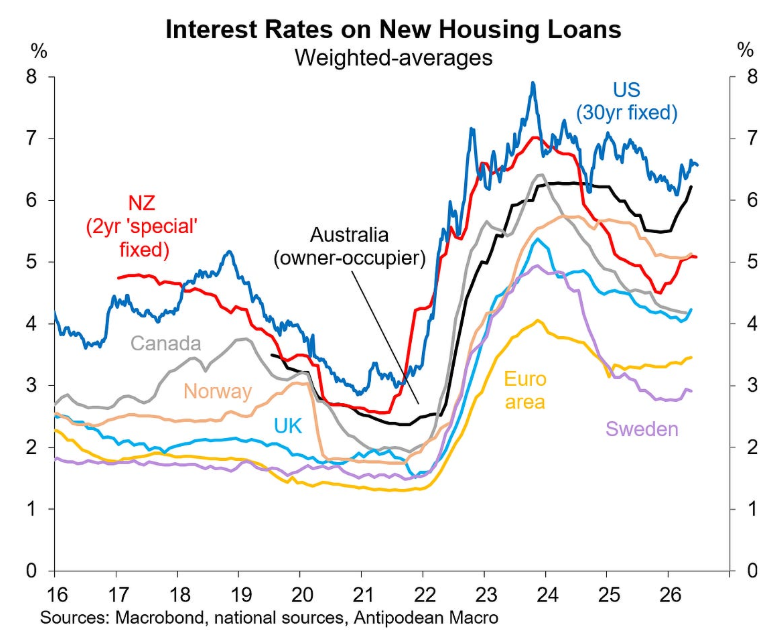
This dichotomy is because most mortgages in the United States are 30-year fixed, meaning that changes in official interest rates only impact new borrowers.
Regardless, the above data suggests that Australian mortgage holders are suffering more than in other nations due to a combination of our mega-mortgages and higher interest rates.
The only solace is that economists and financial markets have lowered their probability of further rate hikes, suggesting we may be near the peak of this interest rate cycle.
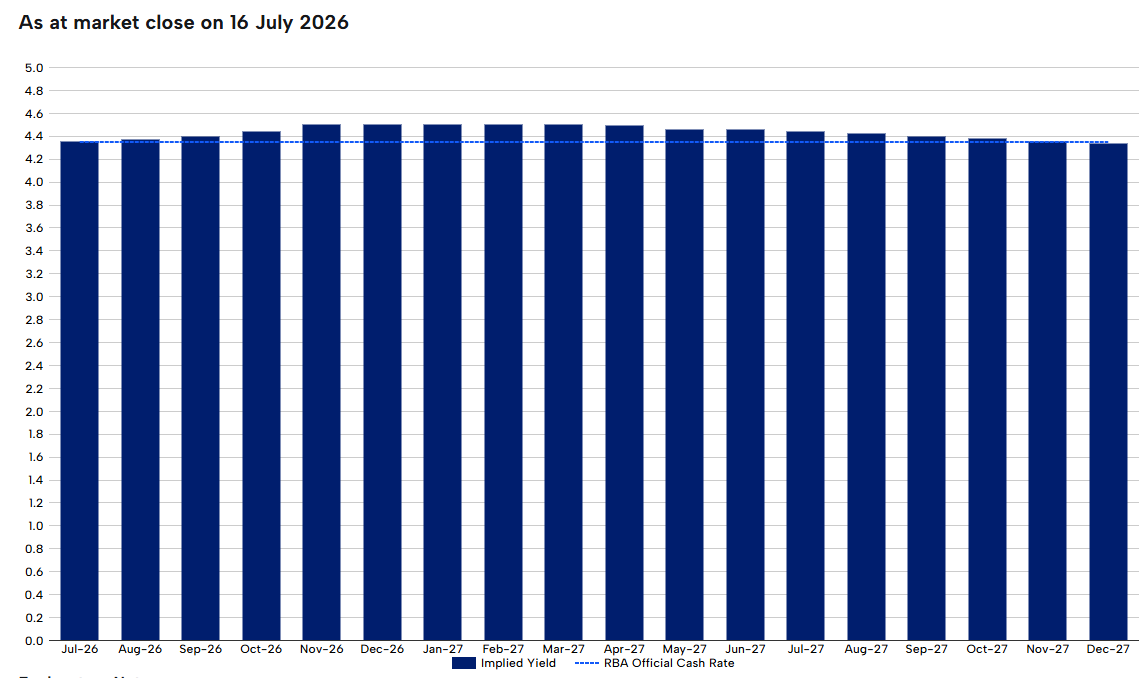
Futures market interest rate pricing
