
Canadian renters rejoice while Aussie renters continue to suffer
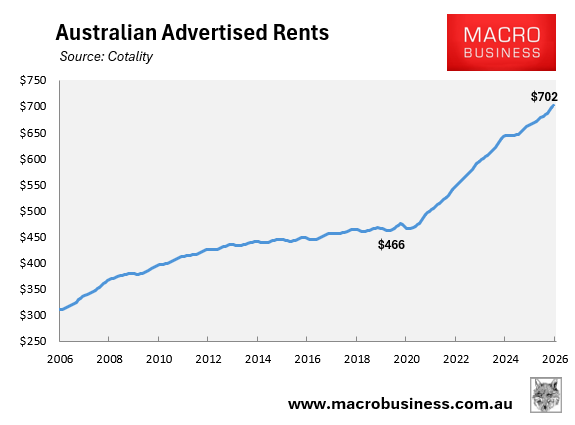
Australian tenants have experienced the sharpest increase in advertised rents in modern history.
According to Cotality, the national advertised rent has risen by an extraordinary 51% since the end of 2019, adding $12,250 to the annual cost of renting the median home.
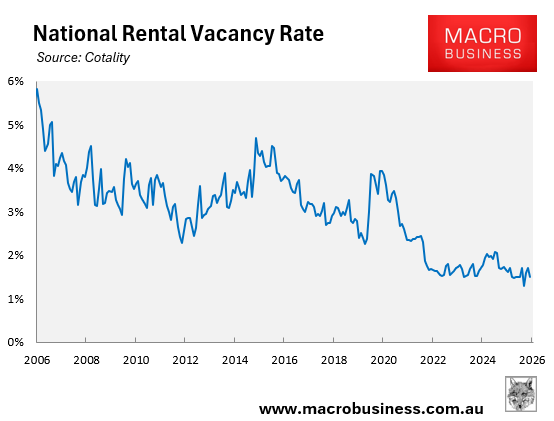
The situation facing Australian tenants has worsened recently, with vacancy rates tracking around record lows.
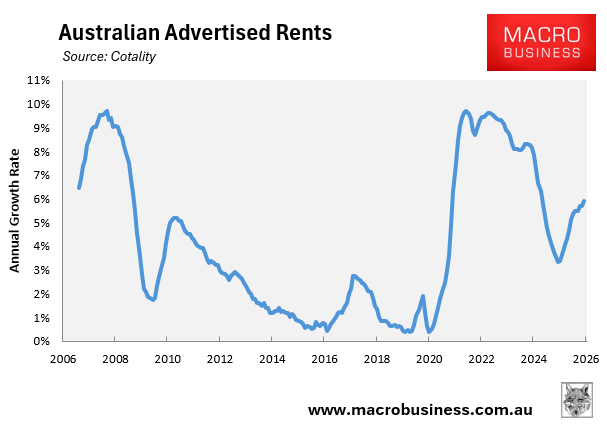
The rate of growth in advertised rents has also recently accelerated, approaching twice the pace of wage growth.
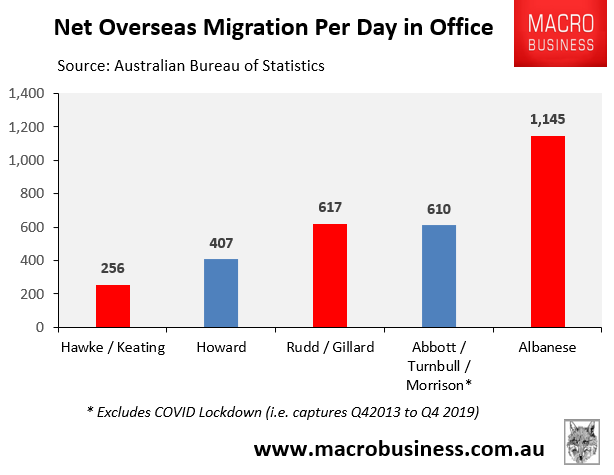
The primary culprit behind Australia’s record rental growth has been the surge in net overseas migration, with more than 1,100 net migrants arriving per day since the Albanese government came to office in mid-2022.
Canadian tenants benefit from negative net overseas migration:
The contrast with Canada’s rental market could not be starker.
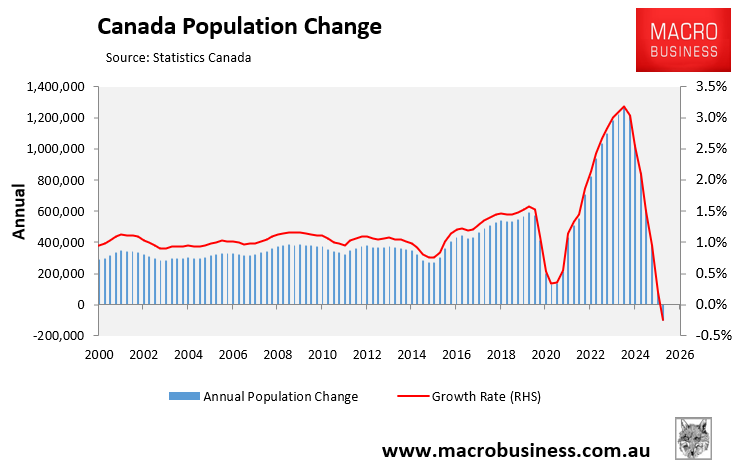
Canada also experienced a post-pandemic surge in migration, which drove population growth of just over 3 million people (7.9%) between the September quarter of 2021 and the September quarter of 2024.
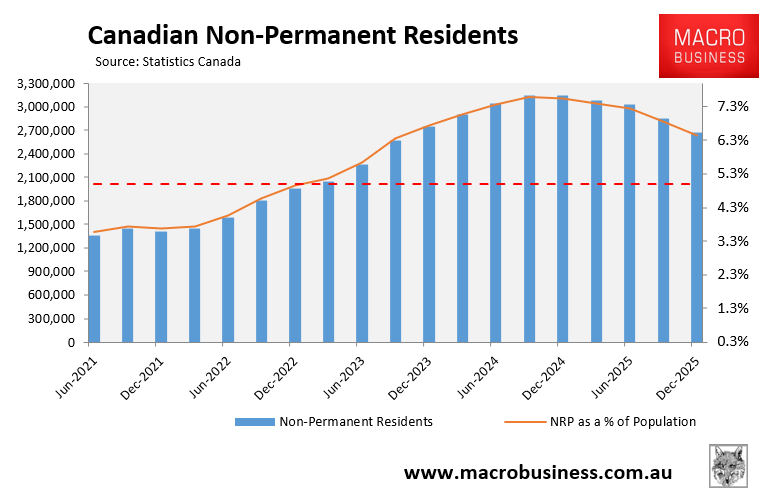
Non-permanent residents (NPRs), also known as temporary migrants, drove Canada’s record population growth. NPRs increased by nearly 1.8 million between the September quarter of 2021 and the December quarter of 2024, from 1.36 million to a peak of 3.15 million.
As a result, the share of NPRs rose from 4.1% of Canada’s population in the September quarter of 2021 to a peak of 7.6% of the population in the December quarter of 2024.
Canadian tenants suffered greatly, with rental vacancy rates collapsing to record lows and rental growth booming.
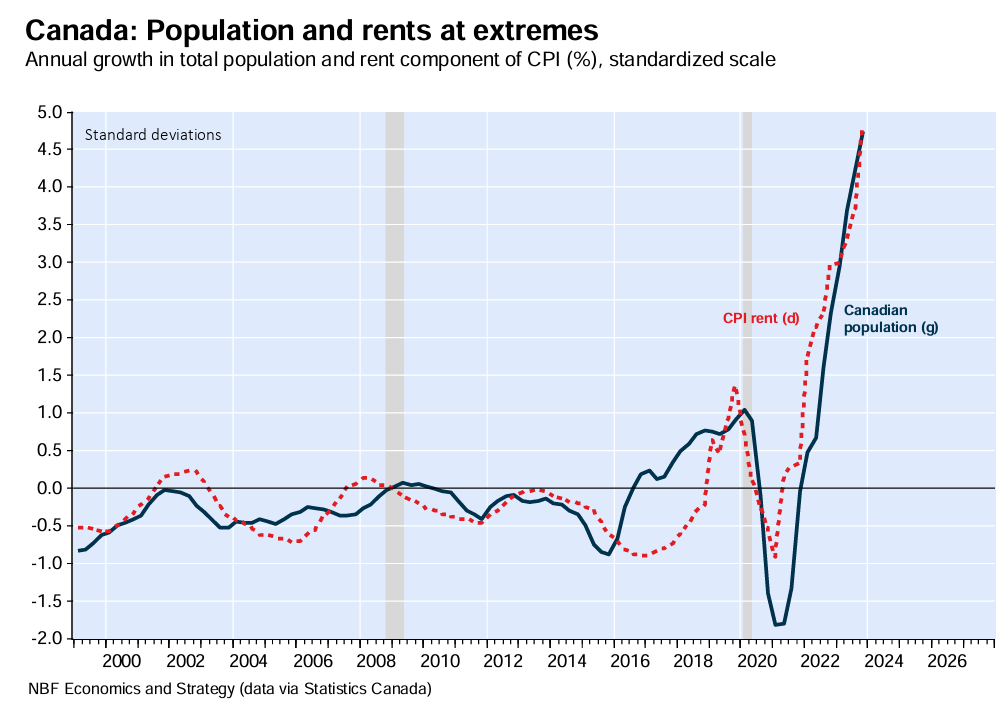
In early 2024, Canada’s rental and population growth were extreme
The difference is that the Canadian government recognised its error and, in October 2024, announced deep cuts to migration aimed at stabilising the nation’s population.
The reforms included reduced annual permanent-resident targets, restricting international-student and temporary-worker admissions, and tightening asylum and border rules.
Canada has cut its permanent residence target from 500,000 to 365,000 by 2027.
Canada has also set specific targets for NPRs, including international students (where reductions are most substantial) and temporary foreign workers.
By the end of 2027, NPRs are forecast to comprise 5% of the Canadian population, down from 7.6% at their peak.
Canada’s immigration reforms have worked, with the population declining by 100,000 (0.25%) in the 2025 calendar year, the first reduction since records began after the Second World War.
The stock of NPRs also fell by 462,000 in 2025, and their share of the population declined to 6.5%.
The impact on the rental market was immediate, with asking rents falling.
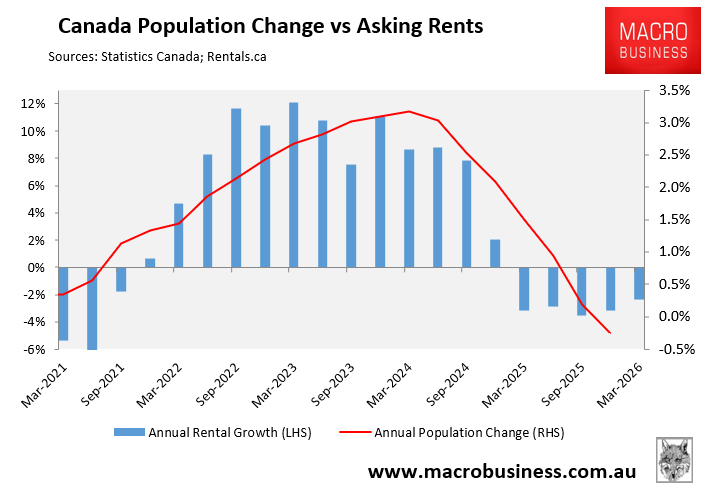
Indeed, the latest data from Rentals.ca show that the average asking rent in Canada has fallen for 20 consecutive months in year-over-year terms:
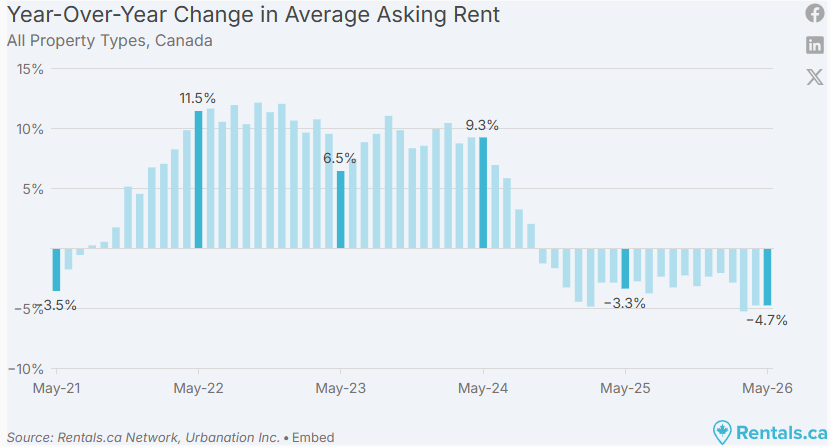
Rentals.ca reports that asking rents in May 2026 were 7.4% lower than in May 2024, although they were still 19.7% higher than the $1,695 in May 2021 during the COVID-19 border closure:
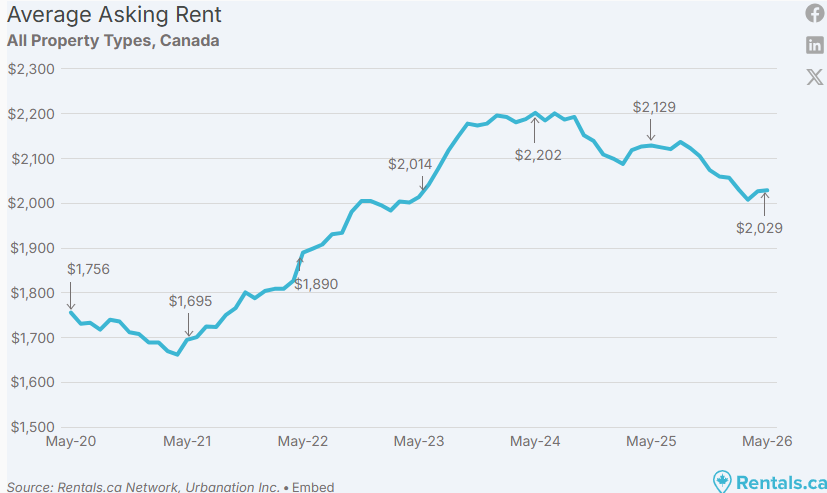
Canadian landlords are also offering incentives to entice tenants, such as free or discounted parking, move-in credits, gift cards, cash bonuses, and free-rent periods.
“Canada’s rental demand has always been tied closely to population growth, especially in large urban centres where newcomers, international students, and temporary workers are more likely to rent first”, the article explains. “That demand engine has slowed sharply”.
“This demographic shift matters because the rental market is highly sensitive to changes at the margin. When tens or hundreds of thousands fewer people are competing for apartments, even a modest increase in vacancy can change landlord behaviour”.
Lessons for Australia:
The data above show that Canada’s sharp immigration cuts are rapidly improving the rental market, saving tenants thousands of dollars each year in rent.
Australia’s federal government should emulate Canada and ease its rental crisis by sharply reducing immigration.
Doing so would rebalance demand with supply, lift the rental vacancy rate and put downward pressure on rents.
