
Canada’s “ugly” growth experience holds lessons for Australia
Canada’s newly declared recession has exposed how heavily the country’s headline GDP growth relied on record‑high immigration, with Prime Minister Mark Carney acknowledging that reducing immigration contributed to the downturn, according to the National Post.
Analysts argue this simply reveals what has been true for years: Canada’s economy has been expanding only because its population was expanding, not because productivity or living standards were improving.
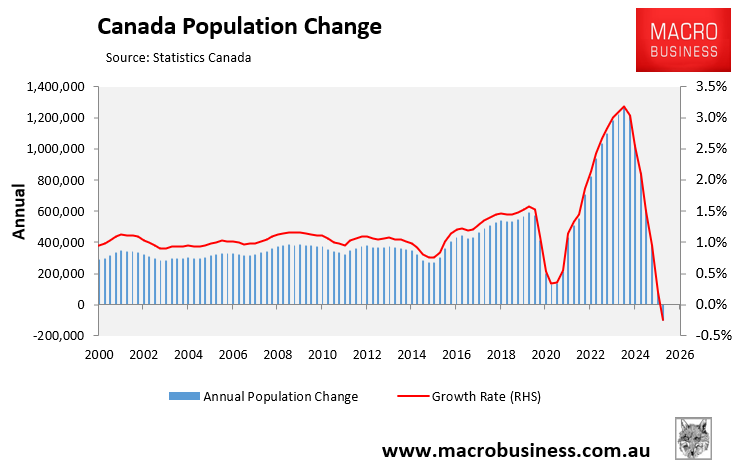
Post‑COVID GDP increases were largely driven by adding millions of new consumers (temporary workers, students, asylum seekers, permanent residents).
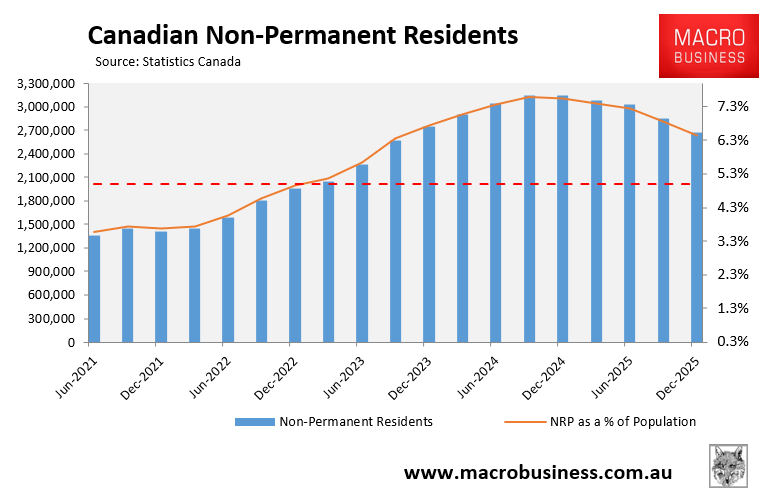
In both 2024 and 2025, GDP grew slower than population, meaning GDP per capita fell.
Economists describe this as a “per‑capita recession”, with Canadians effectively becoming poorer.
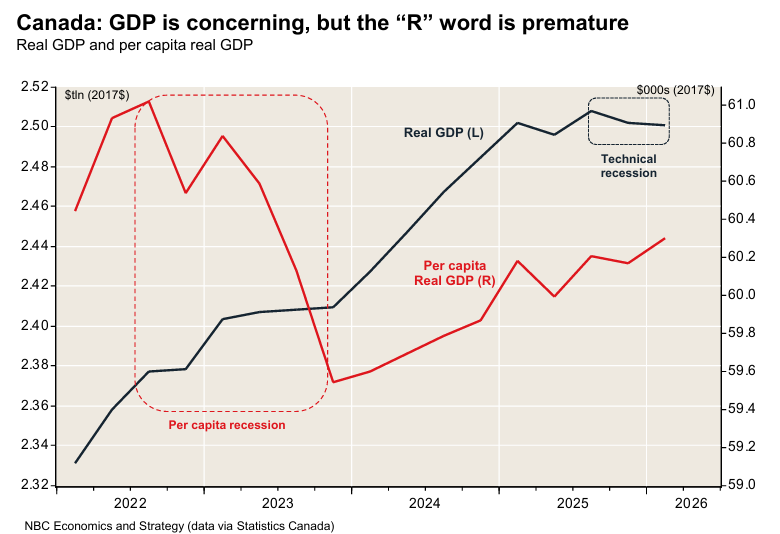
The Fraser Institute found that from 2020 to 2024, Canada’s population grew by 6.4% while GDP grew by only 6%, producing the worst five‑year decline in per‑capita GDP since the Great Depression. It called this phenomenon Canada’s “ugly” growth experience.
The National Post article argues that Canada’s economic model has been masking stagnation by relying on immigration‑driven GDP growth. Once immigration was reduced, the underlying weakness became visible.
Lessons for Australia:
Canada’s experience echoes Australia, which experienced 10 quarters of negative GDP per capita growth over the past 15 quarters.
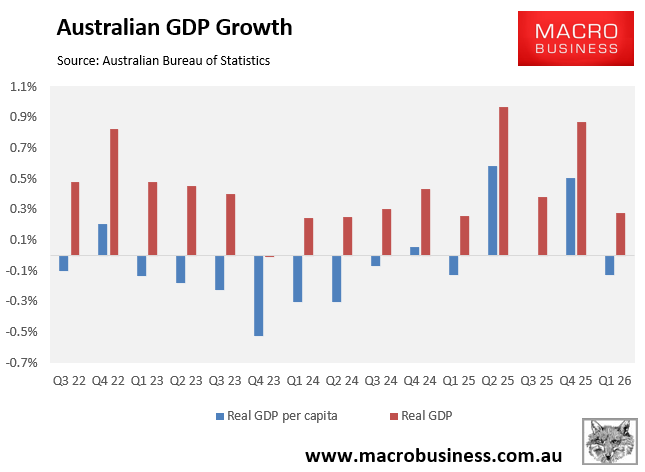
Australia’s real per capita GDP in the March quarter of 2026 was tracking 0.5% below where it was in the June quarter of 2022 when the Albanese Labor government took office.
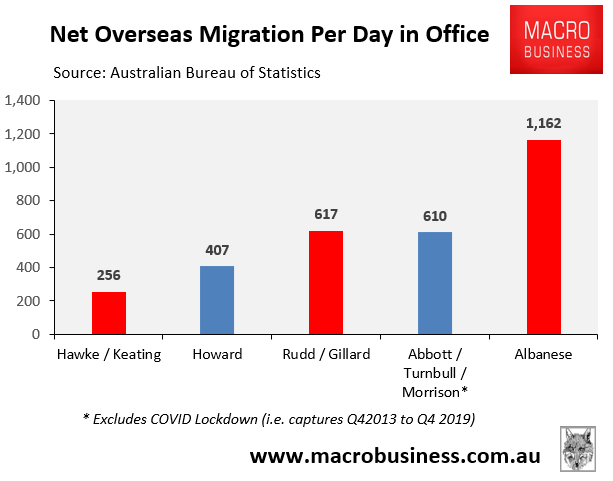
Like in Canada, Labor’s record net overseas migration, which has averaged 1,162 per day in office (with the latest reading as of Q3 2025), has masked the decline in Australia’s real per capita GDP.
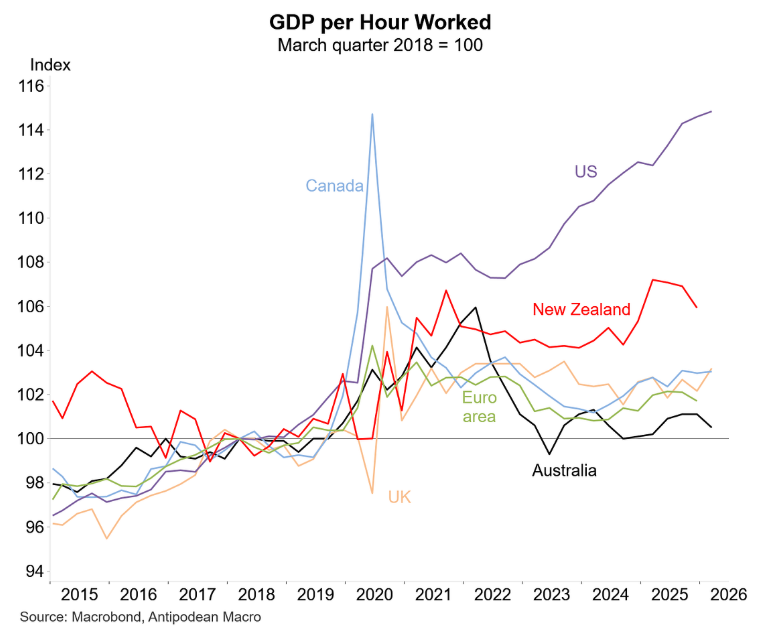
The surge in population growth has also masked the unprecedented decline in Australia’s labour productivity growth, which has ranked among the poorest in the OECD over the post-pandemic period:
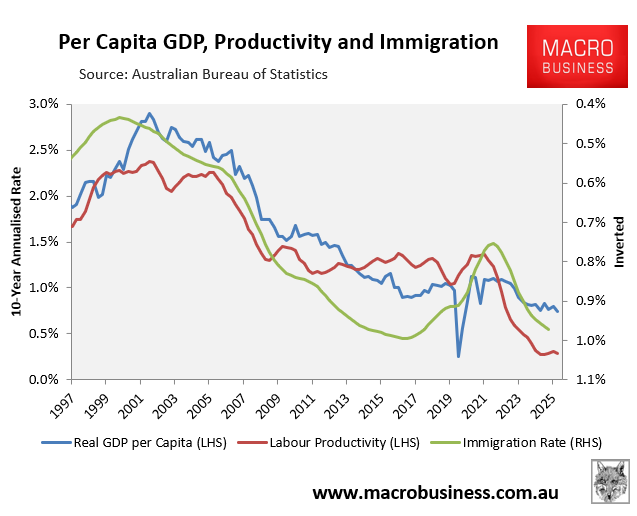
Taking a longer view, Australia’s productivity and per capita GDP growth have been in secular decline ever since the federal government more than doubled net overseas migration in the mid-2000s:
In short, Australia, like Canada, traded investment-led, productivity-based growth for low-productivity, immigration-driven growth.
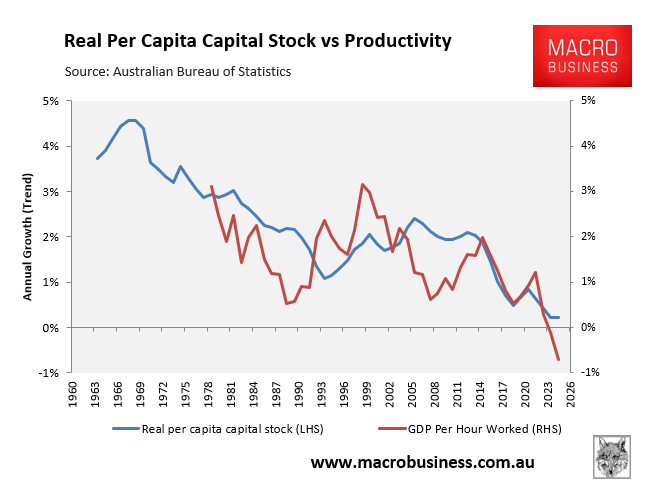
Both nations are now suffering the consequences with living standards in retreat.
