
SQM Research figures released on Wednesday have revealed that weekly asking rents across the capital cities have risen an average of 6.9% compared with a year ago.
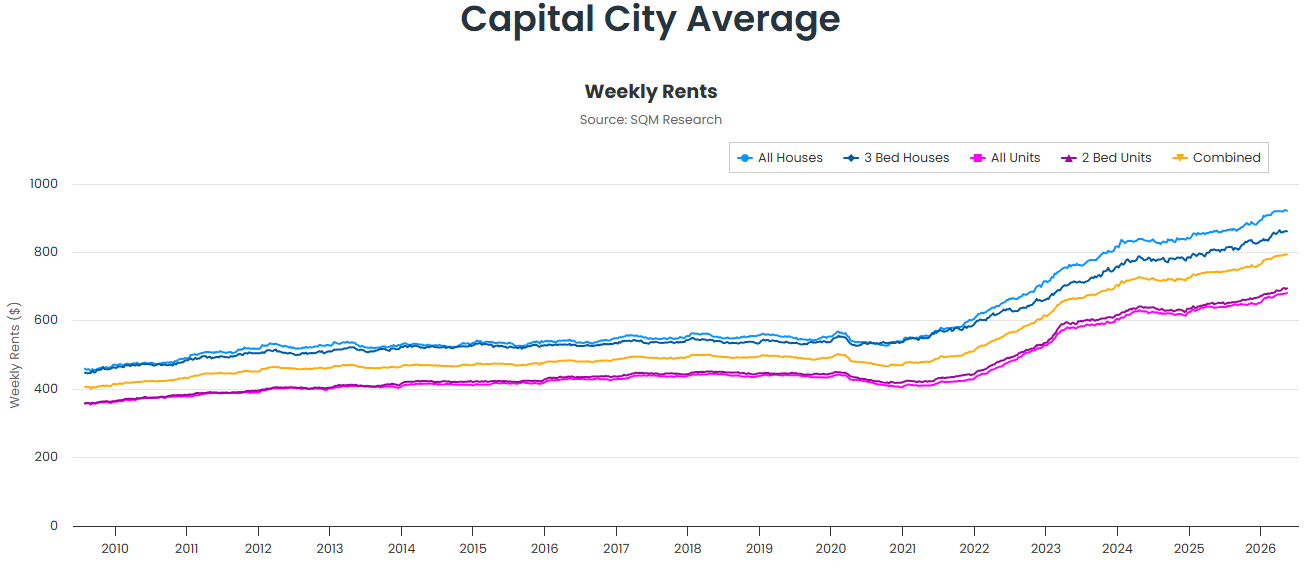
SQM Research managing director Louis Christopher told The AFR that the yearly rate of gain is tipped to go as high as 10% over the next year, with the tax changes announced in last week’s federal budget likely to add to existing supply concerns.
“I’m seeing no change with building numbers or suggestions there will be equilibrium between supply and demand any time soon”, he said.
“Going forward with the property tax changes, we can expect a decline in available rental stock over the course of the next two years. Rental yields will need to rise to encourage investors back into the market and that will happen through a combination of housing price falls and rises in rents”.
Sunrise host Natalie Barr also attacked the property tax changes, claiming they had already driven up rental costs, despite only taking effect a week prior.
“Australian renters are reporting significant rent increases following the federal budget announcement, with weekly rises ranging from $25 to $100 despite Treasury predictions of only $2 per week increases”, Sunrise reported.
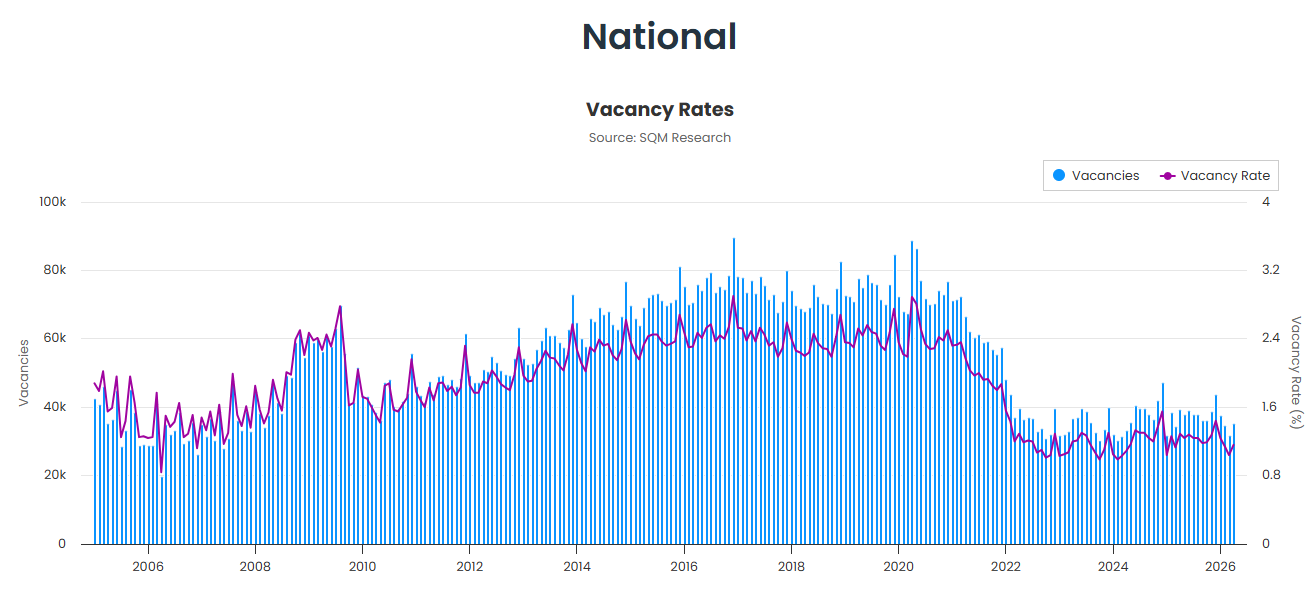
However, independent economist Saul Eslake argued that rents are determined by vacancy rates and ‘what the market will bear’, rather than costs faced by landlords.
“Rental is not a cost-plus business”, he said. “That is, landlords charge what the market will bear, which is driven largely by vacancy rates”.
That’s right. Australia’s rental vacancy rate has collapsed to a historic low, which is why rents have surged. Taxation settings have nothing to do with it.
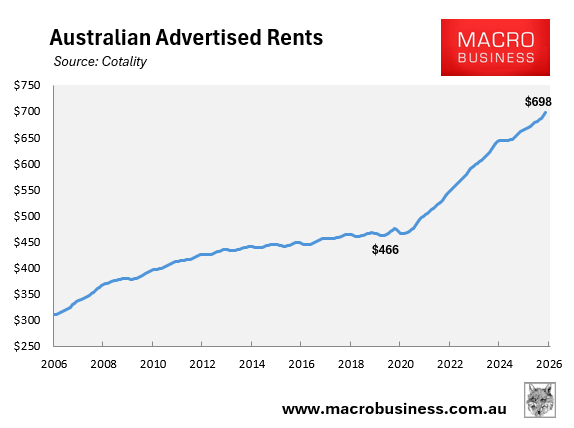
According to Cotality, the median advertised rent in Australia has risen by 50% since the end of 2019, despite full negative gearing and the CGT discount, with most of this growth occurring in the past four years:
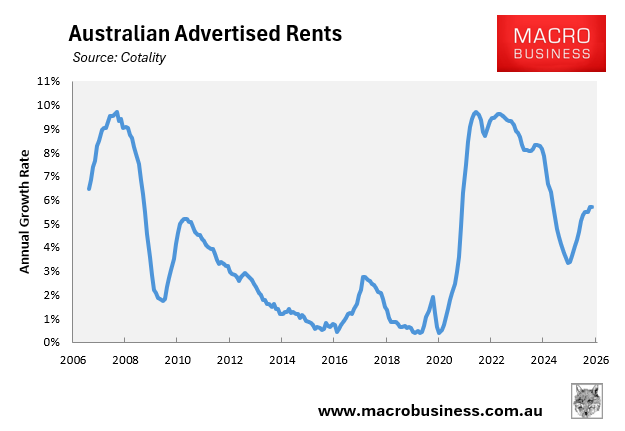
Cotality has also reported a resurgence in rental growth over the past year, suggesting the situation is worsening:
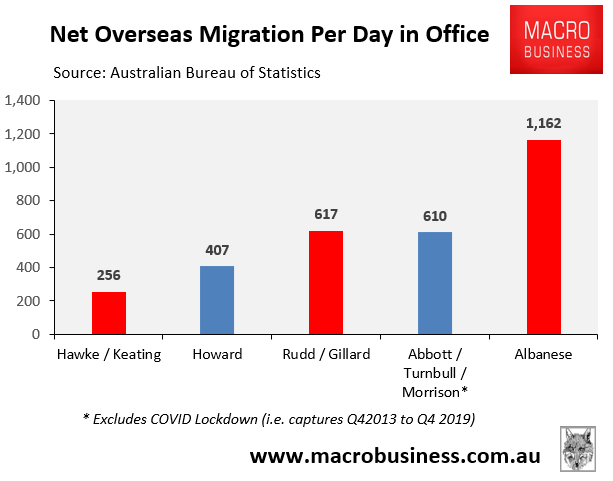
The true culprit of the rise in rent is the government’s mass migration program, which has seen a record volume of renters imported into the nation since mid-2022:
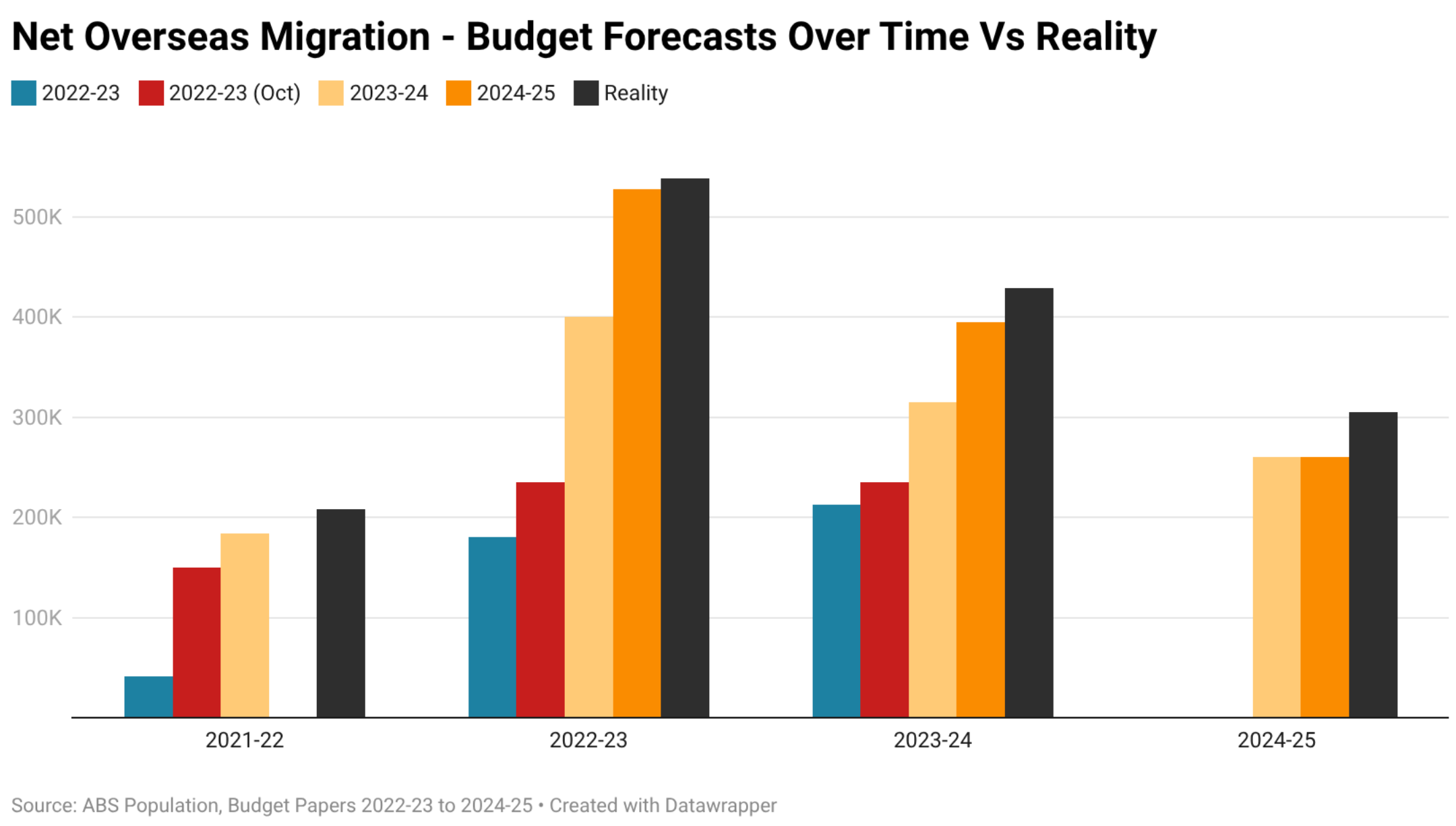
Every single federal budget since Labor was elected has badly underestimated net overseas migration:
And last week’s federal budget upgraded net overseas migration by 55,000 from last year’s budget and December 2025 MYEFO’s forecast:
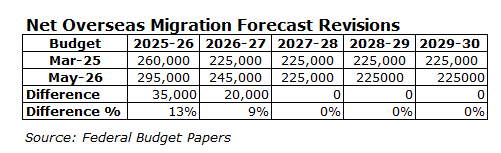
That’s 55,000 extra people who are projected to come to Australia and require rental accommodation.
Meanwhile, the supply side of the housing market remains bottlenecked amid soaring construction costs, high interest rates, labour shortages, and falling home values, with CBA downgrading its forecast of dwelling completions to a level way below the government’s targets:
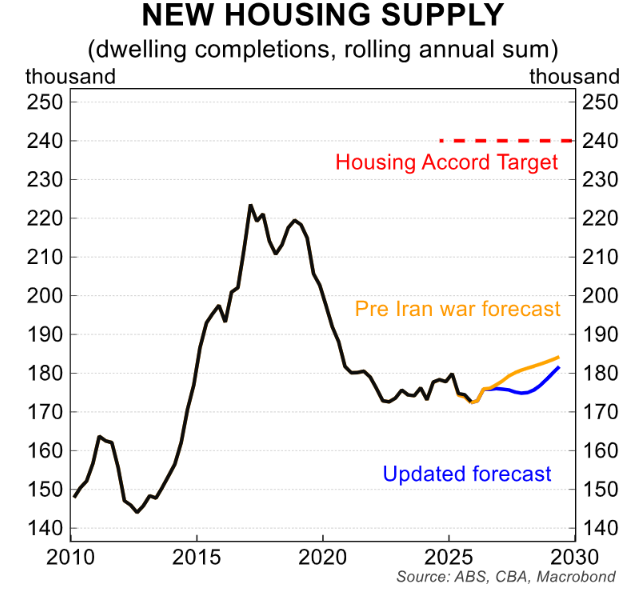
The reality is that Australia’s rental market will continue to tighten so long as the federal government continues to import tenants via immigration at a faster pace than homes can be built.
The obvious solution is to emulate Canada and drastically cut immigration.
Canada implemented drastic immigration cuts in mid-2024, which led to the nation’s first annual population decline since the Second World War last year:
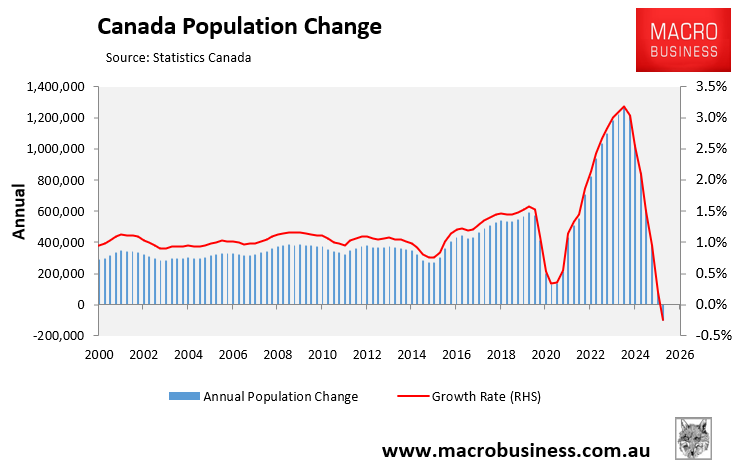
The impact on the rental market was immediate, with asking rents falling.
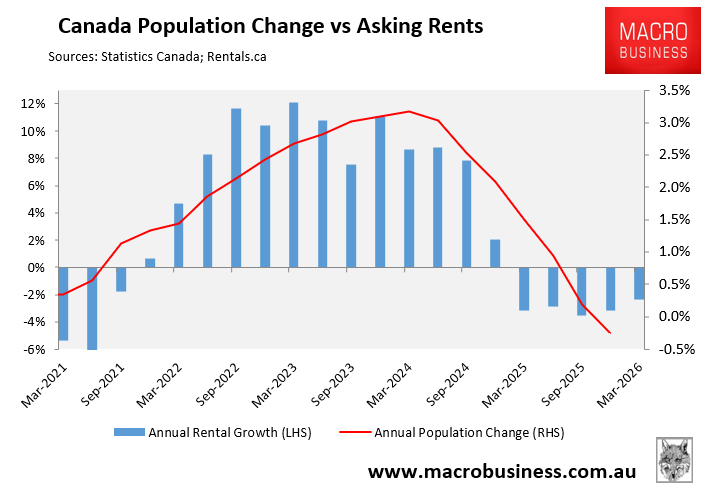
Indeed, the latest data from Rentals.ca show that the average asking rent in Canada has fallen for 19 consecutive months in year-over-year terms:
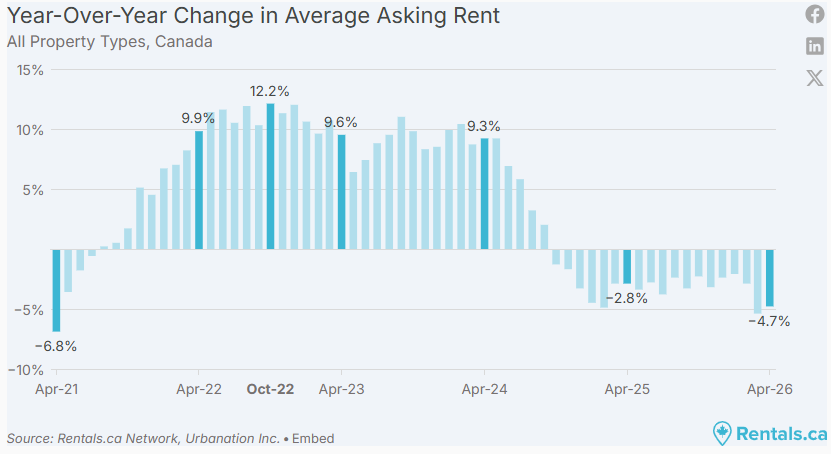
Rentals.ca reports that asking rents in April 2026 were 7.4% lower than in April 2024, saving the typical Canadian renter nearly $2,000 a year in rental costs.
Cutting immigration into Australia would rebalance demand with supply, lifting the rental vacancy rate and placing downward pressure on rents.
