
Canadian government schools Australia on housing affordability
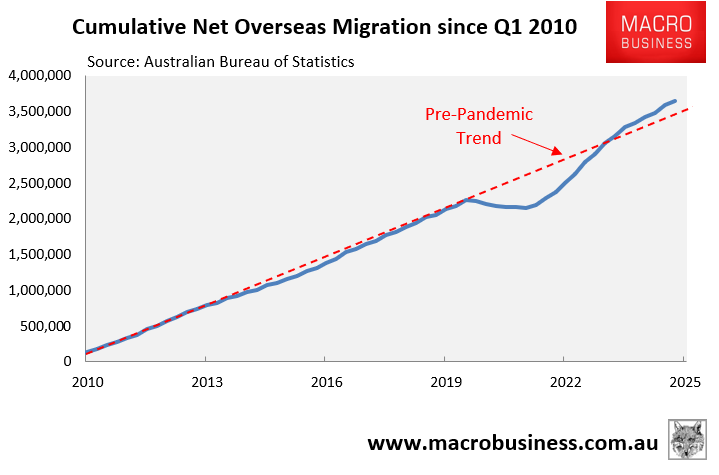
Australia’s rental crisis continues to worsen as population growth driven by immigration exceeds supply.
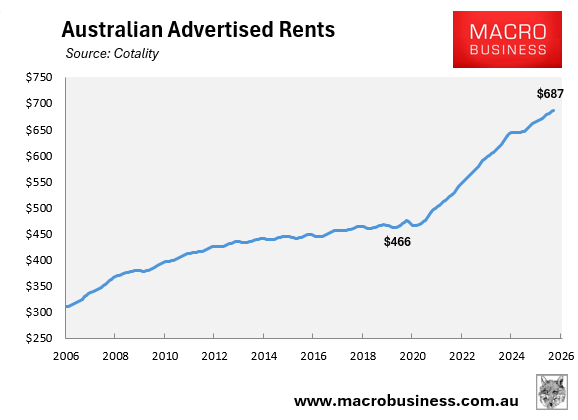
According to Cotality, nationally advertised rents have soared by 47% since the end of 2019, adding nearly $11,500 to the annual cost of renting for the median tenant:
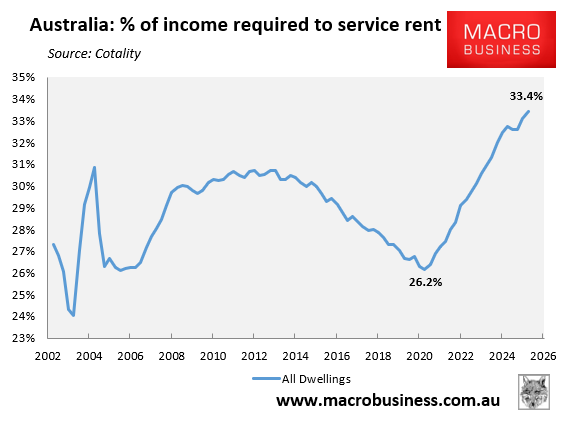
Rental affordability in Australia is now tracking at an all-time low, with the median tenant household sacrificing a record share of their income to meet rent payments:
The rental situation continues to worsen in Australia, with the national rental vacancy rate tracking at a record low and the number of homes listed for rent across the combined capital cities also at a historically low level:
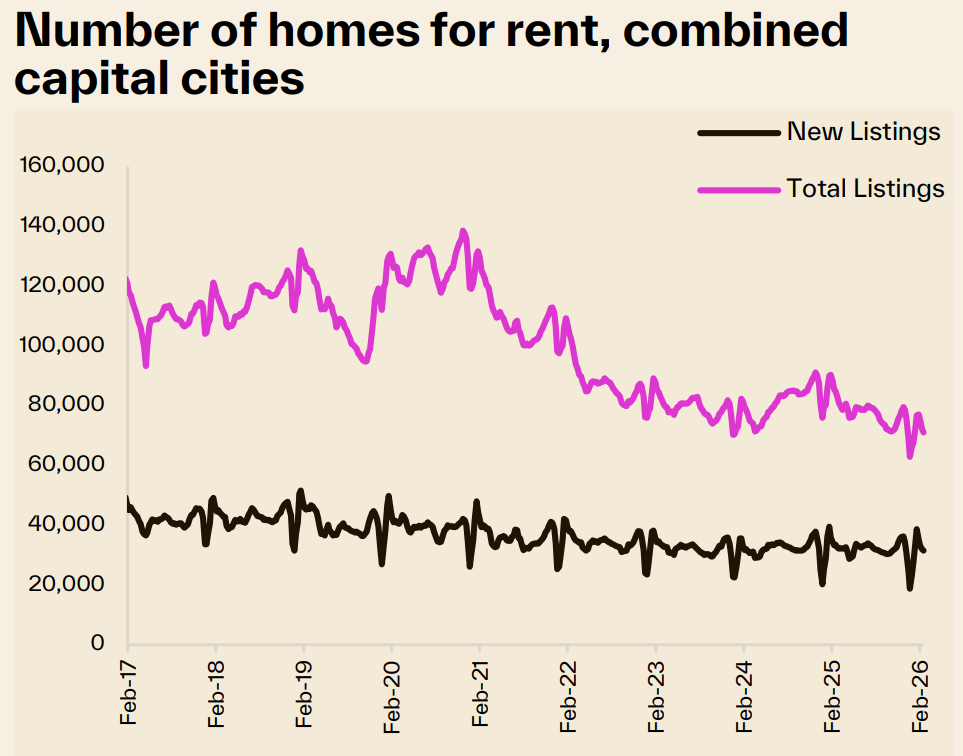
Source: Cotality
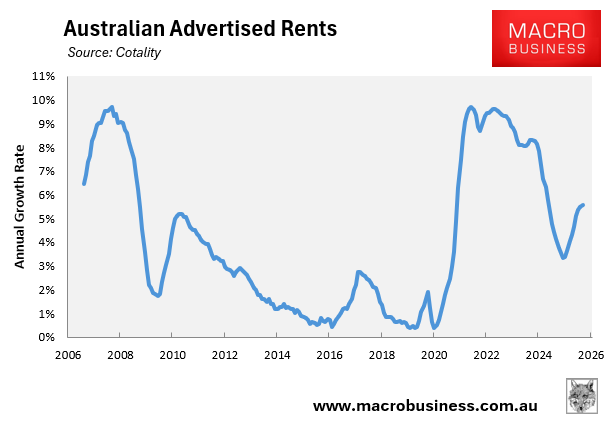
As a result, Cotality reported that the growth in advertised rents has accelerated, up 5.5% in the year to February 2026, meaning that affordability will continue to worsen:
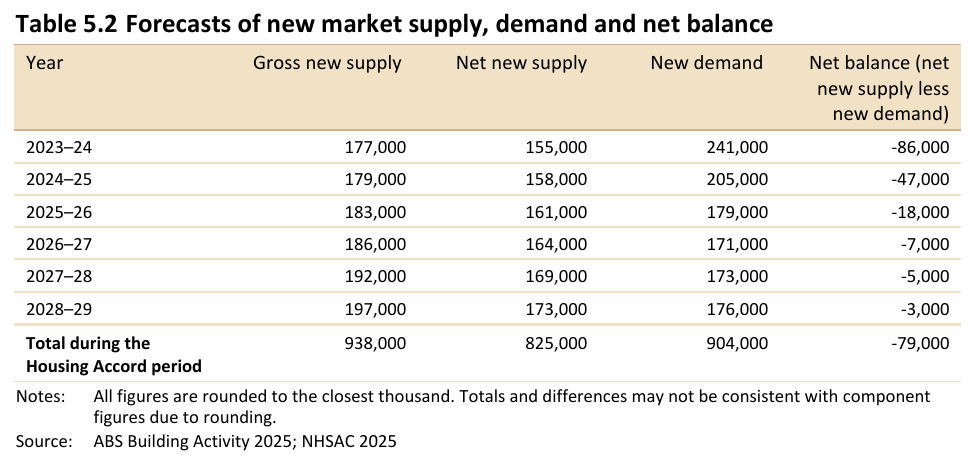
The medium-term outlook is dire, with the federal government’s National Housing Supply and Affordability Council (NHSAC) forecasting that population demand will run ahead of new housing supply every year to at least 2028-29:
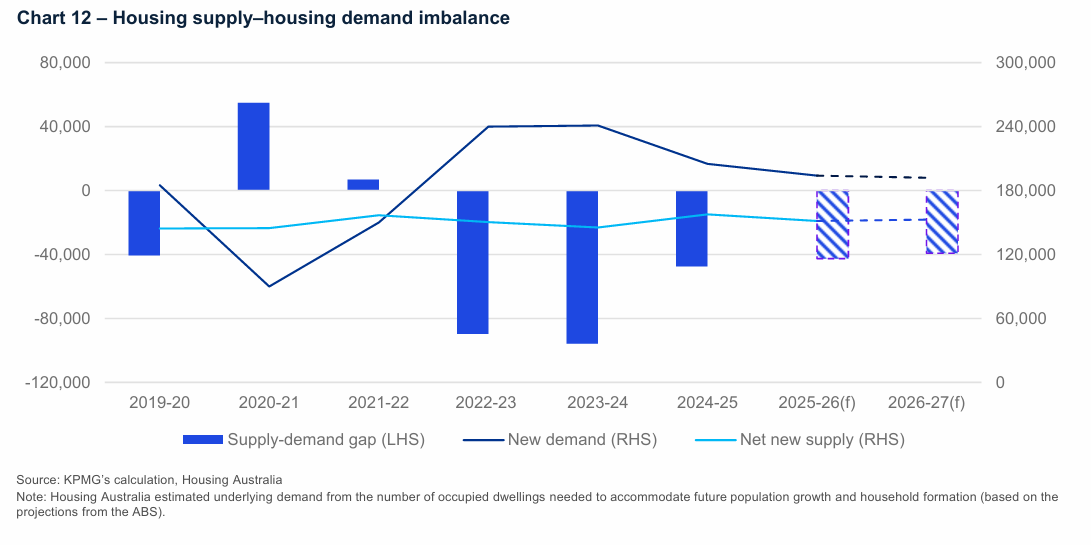
KPMG’s latest annual housing report also projected a worsening shortage of housing, with population demand outrunning supply:
Canada provides the solution to the rental crisis
Canada experienced a record immigration influx following the COVID-19 pandemic, which sent rental growth soaring:
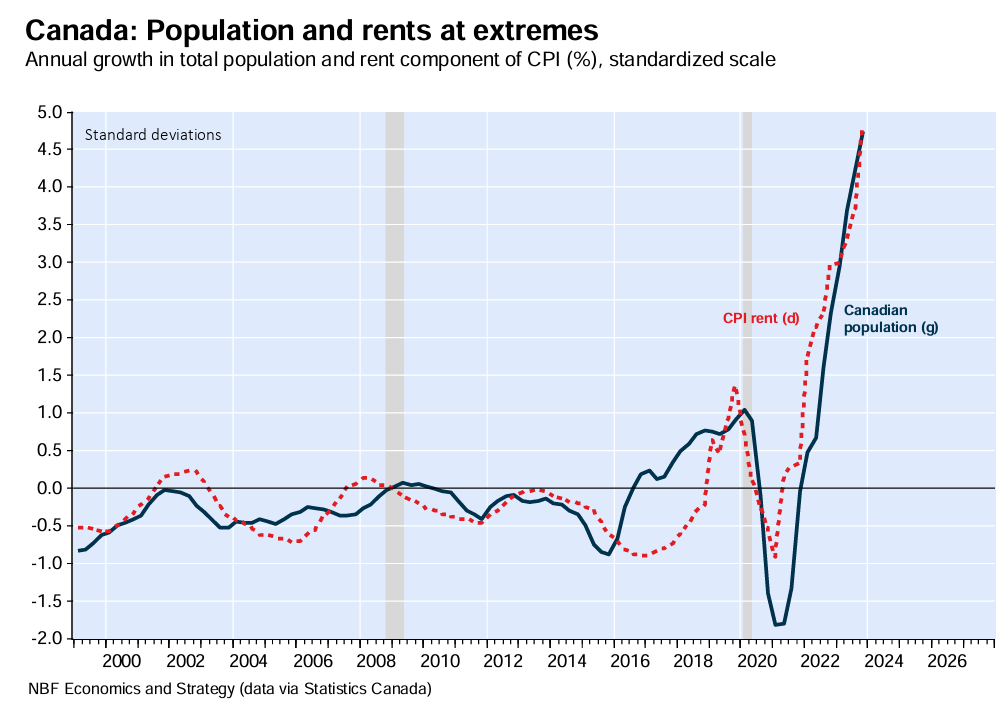
Chart from February 2024 (from National Bank of Canada)
Temporary residents drove Canada’s population boom, with non-permanent residents (NPRs) increasing from 1.36 million in Q2 2021 to 3.15 million in Q3 2024, according to StatCan.
NPRs made up a record 7.6% of Canada’s overall population at its peak.
The left-of-centre Liberal government of Canada realised the policy blunder and, in 2024, imposed major immigration kerbs aimed at alleviating demands on housing and infrastructure while also rebalancing the economy towards sustainable growth.
The measures include lowering annual permanent resident targets, limiting international student and temporary worker admissions, and tightening asylum and border policies.
The government reduced Canada’s permanent residence target from 500,000 to 365,000 by 2027.
Canada has set specific targets for NPRs, such as international students (the most significant reductions) and temporary foreign workers.
By the end of 2027, NPRs are targeted to account for 5% of the Canadian population, down from 7.5% at its height.
Canada’s immigration reforms have been incredibly effective.
The Canadian population fell by 76,000 in the third quarter of 2025, marking the first decrease in the country’s history (excluding the pandemic).
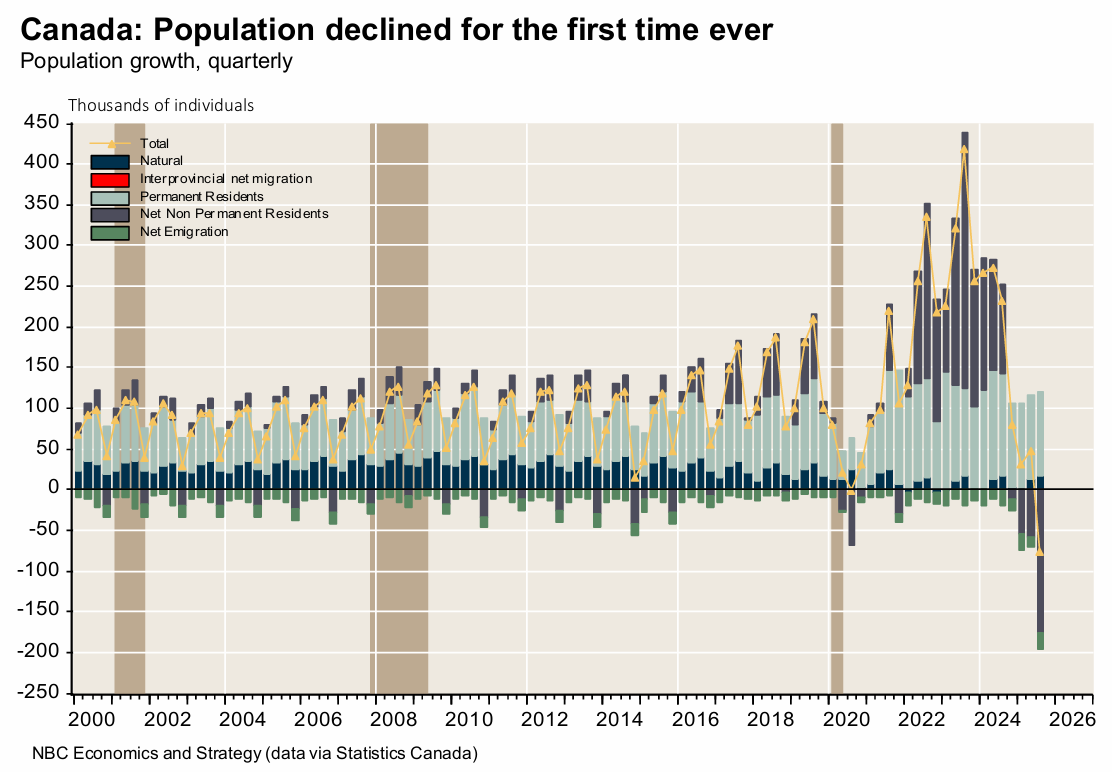
Chart from the National Bank of Canada
Throughout the quarter, the number of NPRs declined by 176,000, contributing to the population fall.
After peaking at 7.6% in Q3 2024, the percentage of NPRs decreased to 7.3% in Q2 2025 and 6.8% in Q3 2025.
The impact on Canada’s rental market has been stunning.
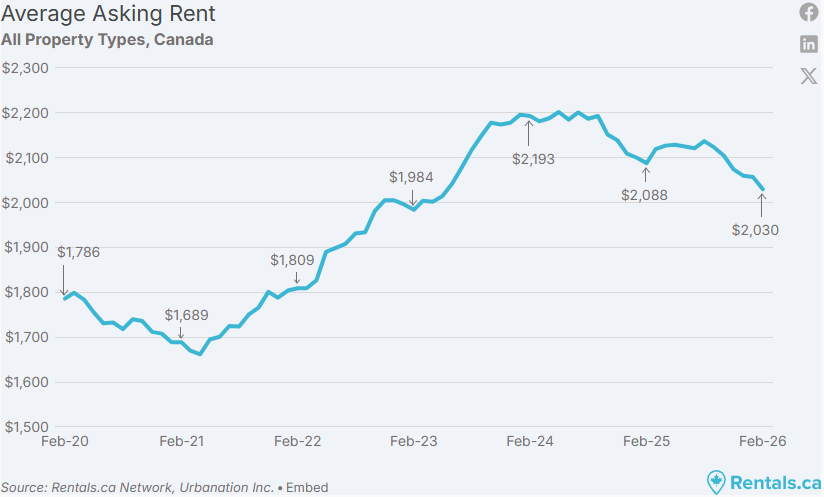
According to Rentals.ca, the average asking rent in Canada has fallen for 17 consecutive months to a 33-month low, down 7.8% from its May 2024 peak:
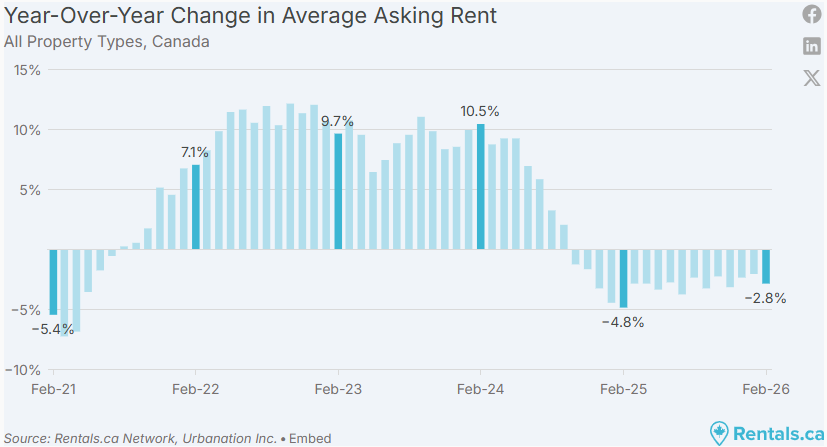
The typical Canadian tenant household is now paying $172 less each month on rent, saving them $2,064 per year:
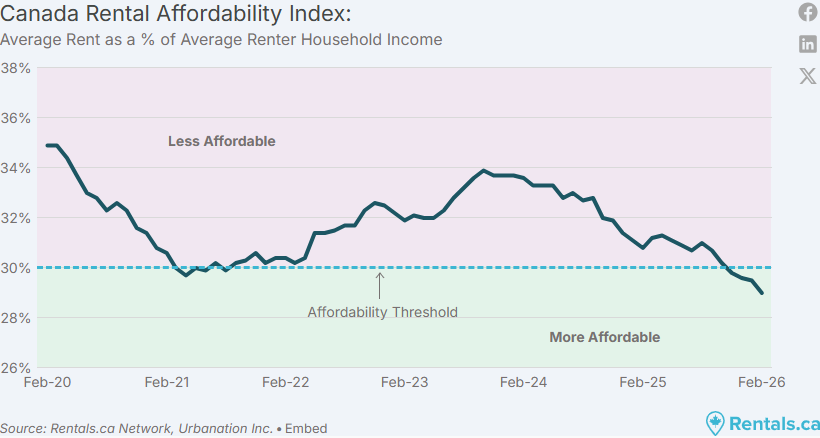
Unlike in Australia, rental affordability in Canada is rapidly improving. The average rent in February accounted for 29% of average renter household income, down from 31% a year ago and 34% two years ago, and below the standard 30% affordability benchmark, according to Rentals.ca:
Canada’s Finance Minister Francois-Philippe Champagne put it bluntly during his visit to Australia last week, stating the following to The Australian Financial Review Business Summit about the nation’s immigration curbs:
“There’s a fundamental principle that if you accept people in the country, they need to be able to find a place to live, they need to be able to send their kids to school, and they need to be able to go to hospital if they need medical services”.
“We had reached a point of imbalances. We needed to bring that back to a sustainable level”.
Independent Australian property market analyst Cameron Kusher questioned why Australian politicians won’t take the same approach to immigration:

“This is a completely reasonable position yet I can’t imagine anyone from the major political parties saying something like this, let alone making an argument to changes our immigration policies to something resembling this”, Kusher said on Twitter (X).
The reality is that Australia is experiencing its worst rental crisis in modern history, driven by a record surge in immigration post-pandemic.
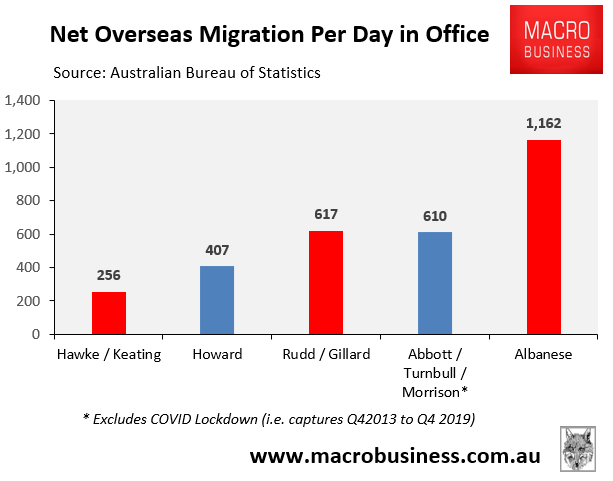
Moreover, the federal government’s own advisory body, the National Housing Supply and Affordability Council, forecasts that the situation will worsen.
Therefore, the only realistic solution to Australia’s rental crisis is for our policymakers to emulate Canada and restrict immigration to a level that is well below the nation’s capacity to build housing and infrastructure.
Why won’t the Albanese government follow Canada’s example and adopt the sensible approach that the majority of Australians also endorse?
