
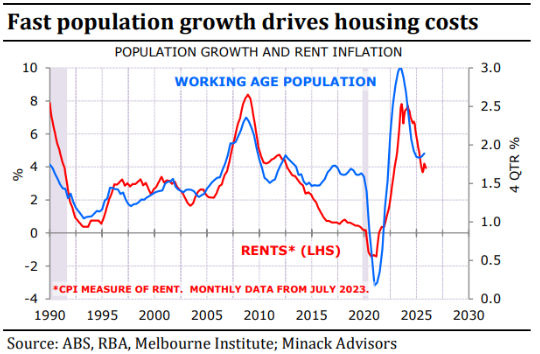
Leading independent economist Gerard Minack published the following chart illustrating the primary driver of Australia’s rental crisis: excessive population growth via immigration:
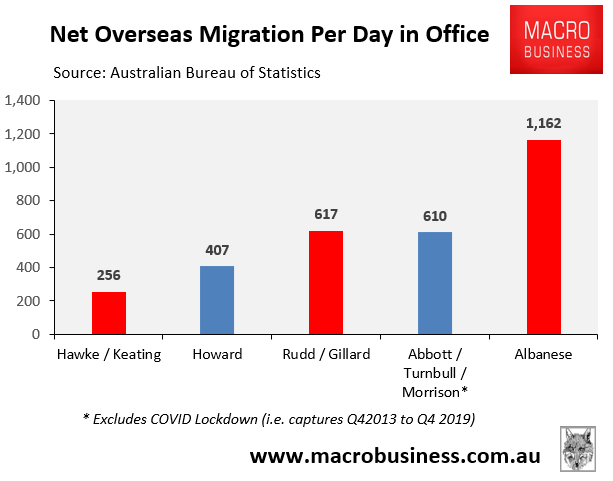
After Australia’s international border was reopened in late 2021, net overseas migration surged, with just under 1.5 million net migrants arriving between Q4 2021 and Q2 2025.
As a result, rental demand surged and advertised rents soared, driving up the cost of living for tenant households.
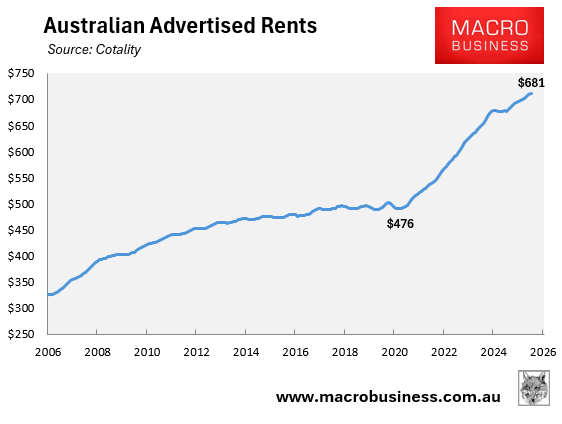
Since the end of 2021, nationally advertised rents have risen by 31%, according to Cotality, adding around $8,500 to the annual cost of renting for the median tenant.
With rental vacancy rates tracking near historical lows, annual advertised rental growth has risen to 5.5%, according to Cotality:
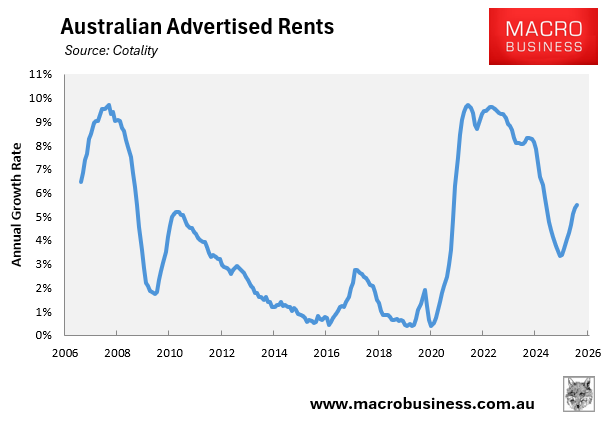
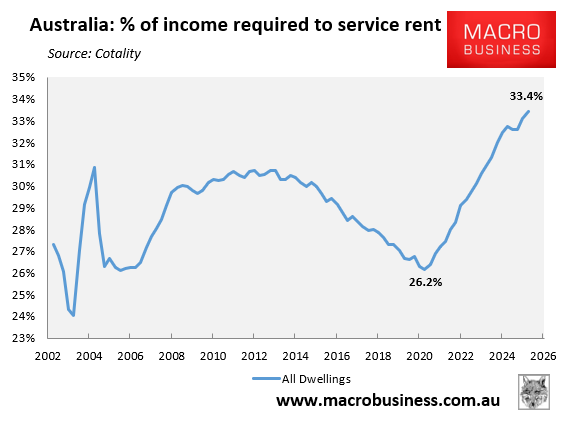
This reacceleration of advertised rents suggests that rental affordability in Australia will worsen from its already record-low level:
The situation is made worse by the slow rate of housing construction in Australia, which is likely to worsen now that the Reserve Bank has commenced another tightening cycle.
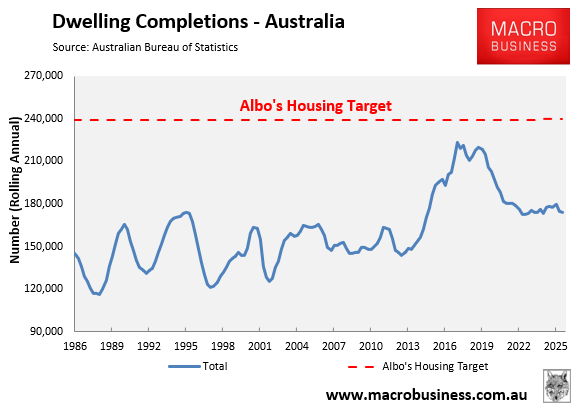
The rental market will remain tight unless the federal government reduces immigration to a level below the nation’s construction capacity.
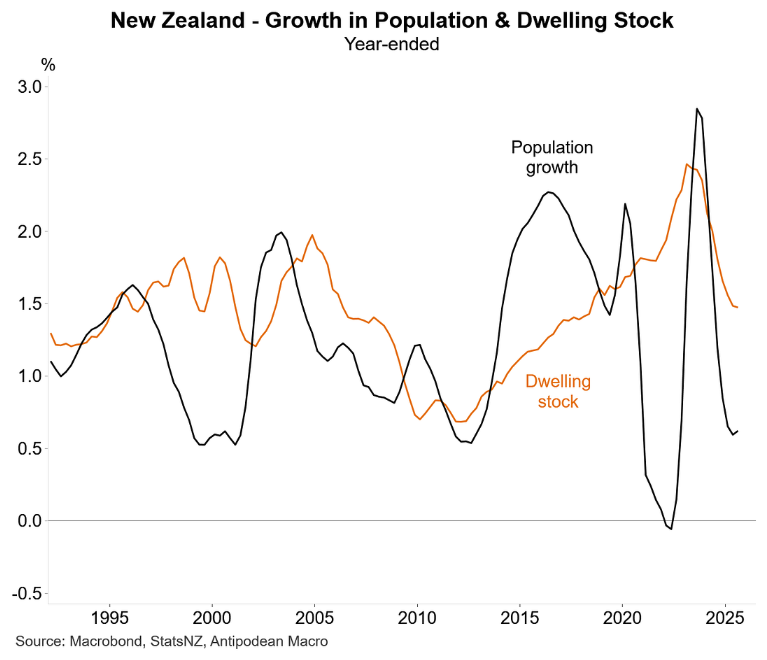
Canada and New Zealand provide important counterfactuals. Both nations have dramatically slowed net overseas migration and population growth, as illustrated below.
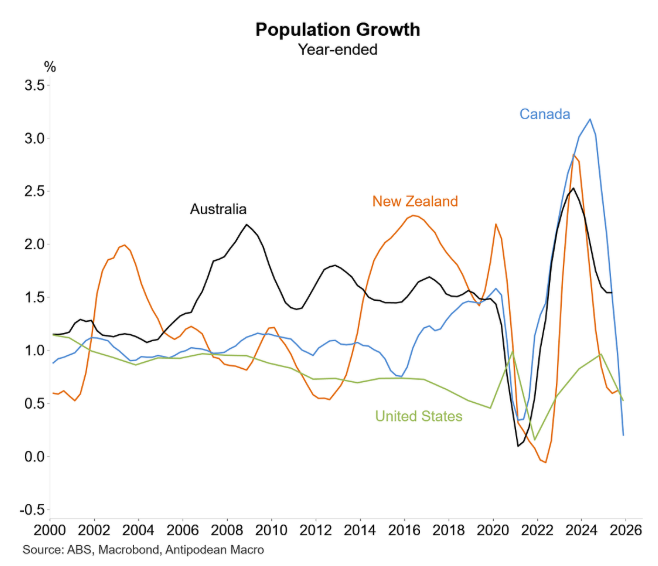
Chart by Justin Fabo from Antipodean Macro
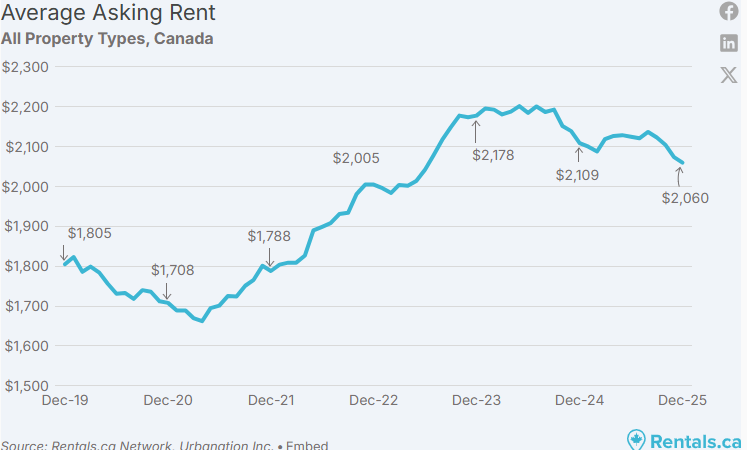
Canada has recorded 15 consecutive months of declining annual asking rents, which has lowered the median rent by around 6.5% from its mid-2024 peak:
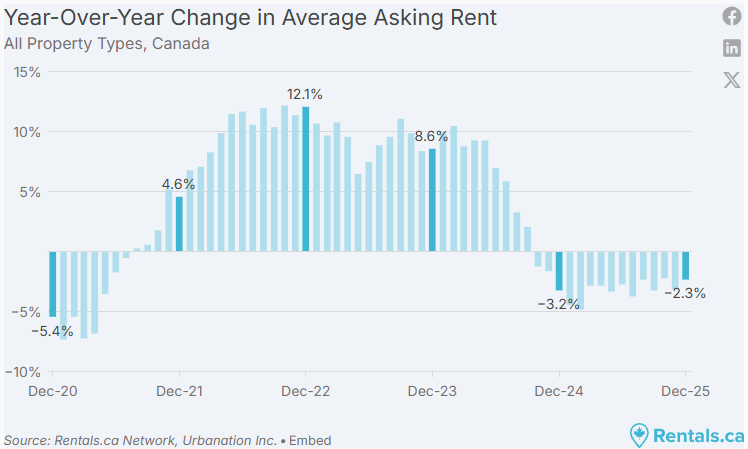
As a result, rents in Canada are tracking at their lowest level in 30 months, and the average Canadian is spending $142 less per month ($1,704 per year) than they were at the peak in mid-2024:
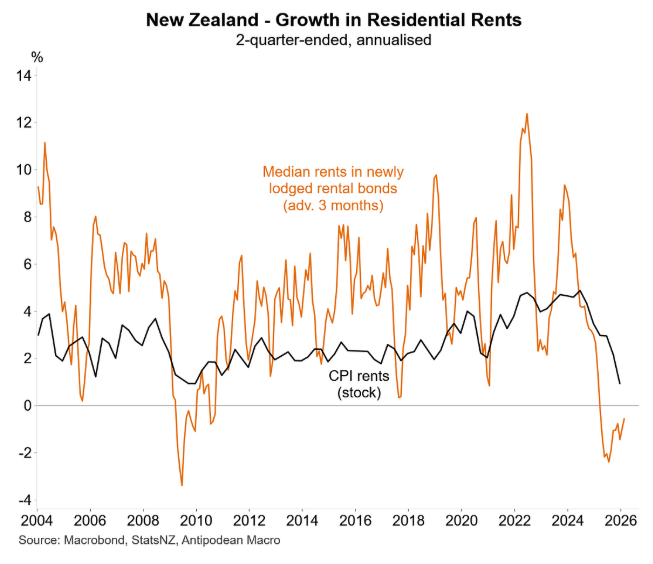
New Zealand also experienced a decline in rents in 2025, according to Realestate.co.nz and Trade Me.
The number of homes listed for rent on Realestate.co.nz reached a 10-year high in January, up 12.8% year over year to 7,224.
The following chart from Justin Fabo at Antipodean Macro summarises the rental situation, with median rents in newly lodged rental bonds outright declining and the growth in CPI rents (stock) falling fast:
Population growth has fallen well below the rate of dwelling construction, meaning that New Zealand’s housing supply is improving:
Canada and New Zealand offer templates for solving Australia’s rental crisis.
Put simply, immigration must be significantly reduced to allow housing supply to catch up. The equation is that simple.
