
Canada solved its rental crisis. Australia can too.
Following the reopening of international borders after the conclusion of the Covid-19 pandemic, Canada experienced a record surge in immigration alongside a corresponding rise in rents.
The following chart from the National Bank of Canada from February 2024 illustrates the situation at the time, with both population growth and rents exploding:
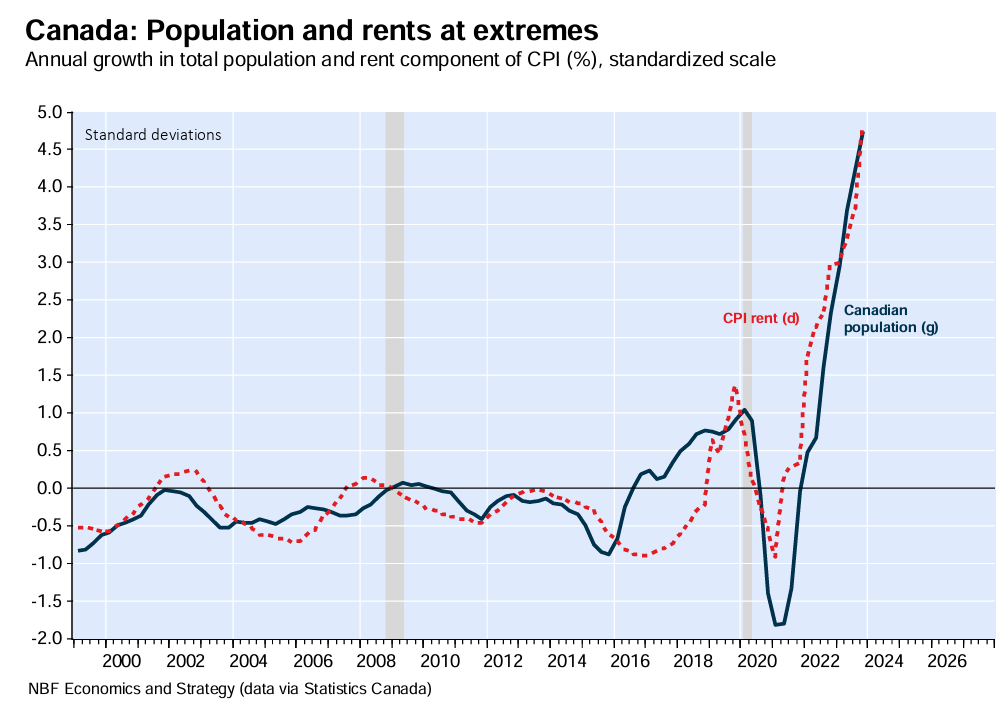
Chart from the National Bank of Canada
Temporary residents drove Canada’s population surge, with the number of non-permanent residents increasing from 1.36 million in Q2 2021 to 3.15 million in Q3 2024, according to StatCan.
Non-permanent residents (NPRs) accounted for a record 7.6% of Canada’s total population at its height.
The left-of-centre Liberal government of Canada recognised the policy error and later in 2024 implemented sweeping immigration cuts aimed at easing pressures on housing and infrastructure, alongside rebalancing the economy toward sustainable growth.
The measures include decreasing annual permanent resident targets, restricting international student and temporary worker admissions, and toughening asylum and border rules.
Canada’s permanent residence targets have been cut from 500,000 to 365,000 by 2027.
Canada has set specific targets for NPRs, including international students (the most substantial reductions) and temporary foreign workers.
By the end of 2027, NPRs will make up about 5% of the Canadian population, down from 7.5% at its peak.
Canada’s immigration reforms have proven extremely effective.
The Canadian population declined by 76,000 in the third quarter of 2025, the first reduction in the country’s history (excluding the pandemic).
Throughout the quarter, the number of NPRs decreased by 176,000, driving the population decline. After peaking at 7.6% in Q3 2024, the percentage of NPRs fell to 7.3% in Q2 2025 and 6.8% in Q3 2025.
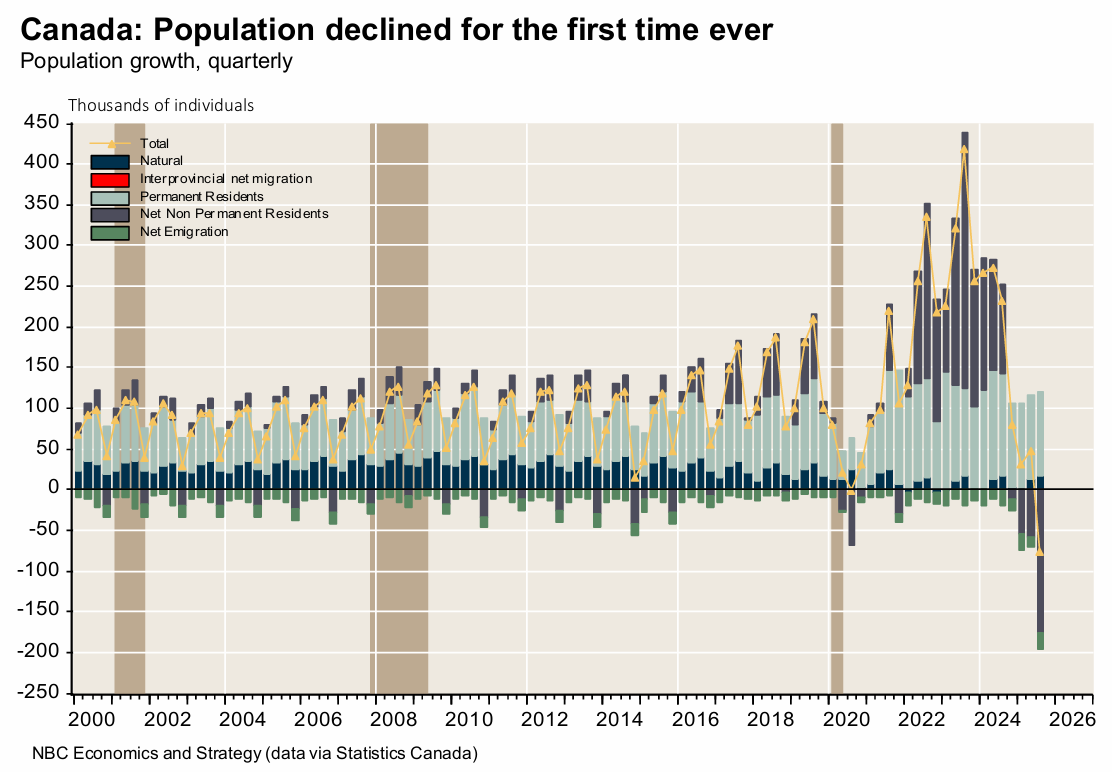
Chart from the National Bank of Canada
The severe slowing of Canada’s population growth has been felt most acutely in the nation’s rental market.
According to new data from Rentals.ca, annual Canadian asking rents have declined for 16 consecutive months and are now tracking at a 31-month low.
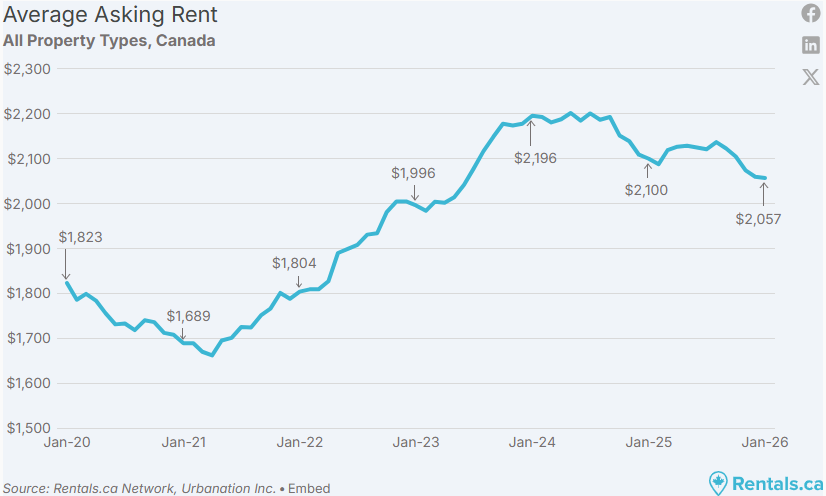
Canadian asking rents have fallen by 6.6% from their May 2024 peak, saving the average tenant $145 per month ($1,740 per year) in rental costs.
Rental affordability is now at its best level in six years, tracking below the 30% affordability benchmark:
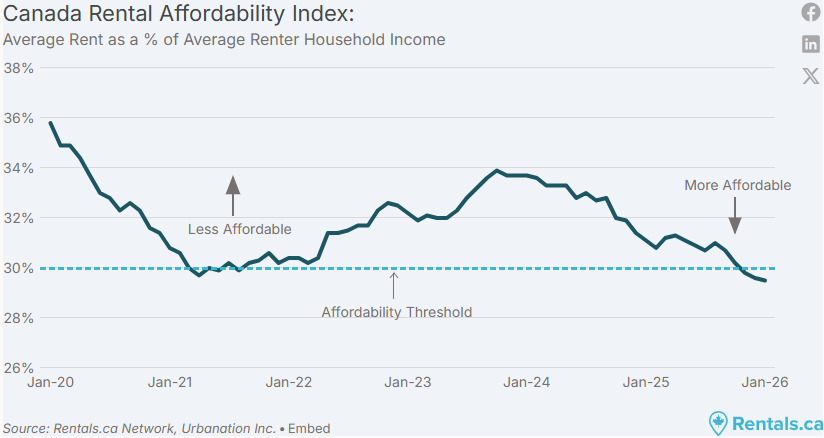
“As a percentage of average renter household income, rents in January fell below 30%, the standard benchmark used by the industry to measure affordability”, Rentals.ca noted.
“At 29.5%, the average rent-to-income ratio was its lowest of the past six years, even falling below lows seen during the pandemic”.
Lessons for Australian policymakers:
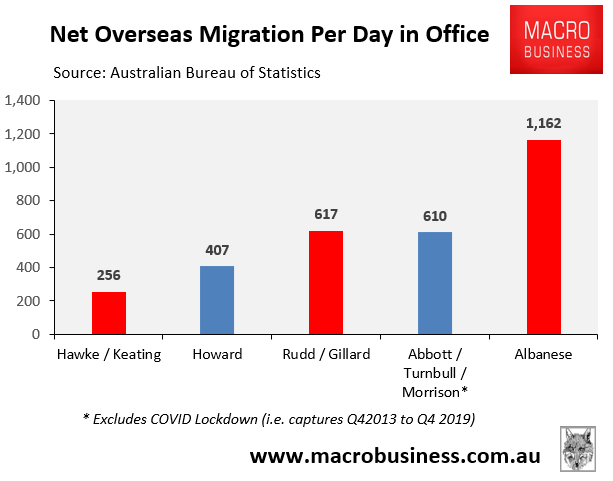
Australia is experiencing its worst rental crisis in modern history, driven by a record surge in immigration post-pandemic.
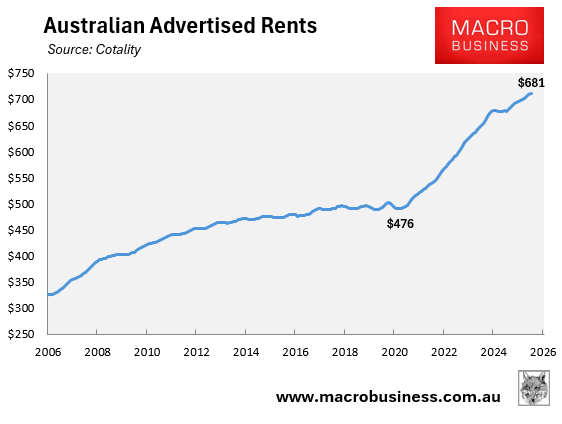
According to Cotality, nationally advertised rents have risen by 43% over the past five years, adding around $10,600 to the annual cost of renting the median Australian home.
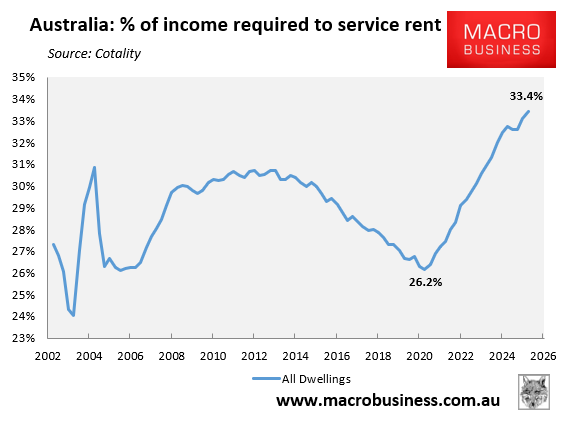
Rental affordability is, therefore, tracking at its worst level on record, with Cotality estimating that the median household needs to spend 33.4% of their incomes to rent the median home:
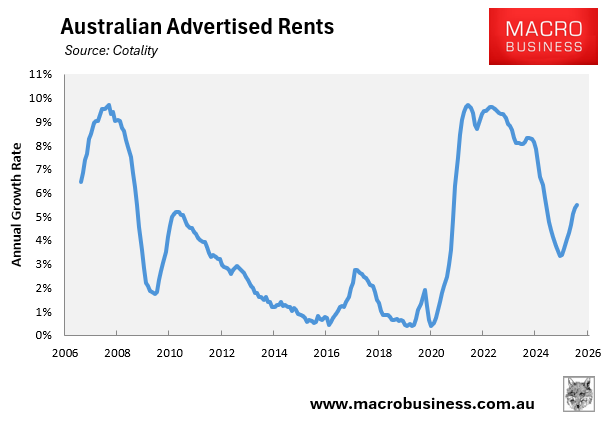
Rental affordability is likely to worsen in Australia given that advertised rents have reaccelerated, growing by 5.4% in the year to January 2026 amid historically low rental vacancy rates:
Finally, both the National Housing Supply and Affordability Council (NHSAC) and KPMG forecast that Australia’s housing demand, driven by population growth (immigration), will remain ahead of new supply for the foreseeable future.
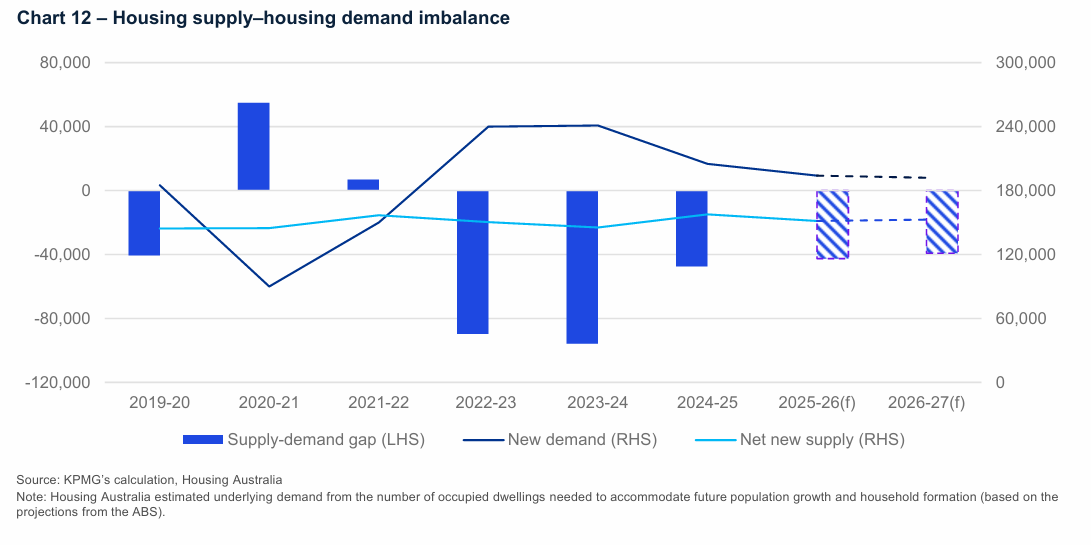
Source: KPMG
Therefore, the only realistic solution to Australia’s rental crisis is for our policymakers to emulate Canada and restrict immigration.
Canada solved its rental crisis by restricting immigration. Australia can too.
