
The politics of public interest failure is coming home to roost

It is the time of year when pundits come out to wrap up the past year and lay the conceptual framework for how they want the world to see the year ahead.
In Australia’s media, where desperation to curry favour from governments is a sine qua non for existence, it is wall-to-wall look away from what the electorate is experiencing and the recasting of narratives so as not to articulate the shortcomings blighting life for ordinary Australians.
Sunday’s AFR comment from John Black is a case in point. Black is a former Labor senator who has headed long established demographic research consultancies for more than a generation and pops up from time to time in the media.
He is in the press, prompting Australians to look away from their own experiences and to see their flyblown politicians and bureaucrats as pantomime rather than policymakers.
Let’s see where he takes us…….
Politics in 2026 the tale of a nation divided by richer and poorer
The main source of instability next year will be the wealthy getting wealthier and the less well-off drifting to the minor parties.
John Black Election analyst
The lede is promising, given Australians are among the most heavily indebted people on the planet, reliant on a commodity sector overdue for a generational slump, shoehorned into government-funded jobs, and coshed by house prices and energy policy ineptitude.
All of this is happening while the AI wave rolls towards the shore of some of the most expensive people in the world, in the most expensive buildings in the world, using the most expensive energy and internet in the world.
Richer and poorer, and what makes them so, is precisely what we should be looking at.
But first.
Any discussion of likely political trends between now and the next election has to start with the events of December 14 at Bondi Beach, when 15 people, including a ten-year-old girl, were killed at a Jewish Hanukkah celebration.
Police allege two gunmen linked to Islamic State carried out the killings, which were broadcast to horrified Australian families watching television over dinner at home on that Sunday night.
A visibly upset and resolute New South Wales Premier Chris Minns subsequently apologised to the victims and their families for the deaths, accepted personal responsibility for not doing enough to prevent the escalation of antisemitic vandalism, graffiti and firebombings during the past two years, and promised a state royal commission to find out why the terror attack had happened and how it could be stopped from happening again.
No such apology or promise of a Commonwealth royal commission has been forthcoming from Prime Minister Anthony Albanese, despite the subsequent firebombing of a Melbourne rabbi’s car on Christmas Day, illustrating that violent antisemitic attacks are going to continue in other states and demand a national response.
Apart from the overdue adoption of the July 2025 recommendations from the government’s own antisemitism advocate Ms Jillian Segal, the Bondi killings appear to have been treated by Labor’s new generation of factional careerists as a passing political problem, to be managed with tacky photo ops and contrived announcables, including a State visit from the Israeli President Isaac Herzog and special Bondi New Year Honours awards.
But, no matter how smart you think you are, the mob will always work you out, as my former Senate colleague Graham Richardson frequently observed.
A post-Bondi Resolve Poll in The Sydney Morning Herald found almost three out of four Australians felt that racism and religious intolerance had been on the rise since the conflict in Gaza began in October 2023 and that there should be tougher screening of migrants to identify antisemitic or extremist views.
“The underlying drivers of this political instability stem from the government being unable to control spending.”
Half of all voters, including one in five Labor voters, described the Albanese government’s response to the Bondi killings as “weak”, with Albanese suffering a huge 15 point drop in his net satisfaction scores, driving Labor’s primary vote down by three points, with the Coalition and One Nation each gaining two primary vote points.
Just think about that opening stanza for a minute.
Black’s entire piece, including Headline and lede, is 1096 words. Of that, he has teed off with 394 words of comment about the political fallout of the Bondi shootings.
Let us start by acknowledging that, by any standard, a pair of gunmen shooting innocent people at the beach is an outrage. Australia has experienced a national tragedy. Like previous shootings at Port Arthur by Martin Bryant, Hoddle Street by Julian Knight, or Queen Street by Frank Vitkovic, or the Lindt Cafe shooting, the simple observation can be made that there are some deranged people in our world.
Quite rightly, questions are being asked about what sort of views are out there and how easy it is for adherents to those views to access firearms, and what sort of risks such people pose to the ordinary person on the streets.
Given that one of them was a national of another country with long-term Temporary Residence in Australia, further questions arise about the ability of visa holders to fit in with the locals.
These are all good questions.
From there, a number of observations can be made. Let us start with the fact that according to the last census, the Jewish population of Australia was 0.4% of the entire population, and the Islamic population was 3.2% of the population.
If this were terrorist anti-semitism, it would not be an issue for many of us. Many of us are wondering why people from elsewhere are playing out their issues here, and why Australian politicians are being asked to apologise or act on them, when Australians have domestic issues that those same politicians should be dealing with.
From that point, let us put the question back to him about what the bigger issue in the electorate is – house prices, energy costs, costs of living, terrorism or anti Semitism?
Most Australians would be hard-pressed to find adherents of Judaism or Islam. While we’re at it, could we ask John the demographer which issues people are most likely to vote on?
From there, we could go further and observe that Australians have been watching on from the other side of the world as the people of Palestine somehow crafted some utter stupidity on 7 October 2023, and drew an Israeli response which couldn’t have been unexpected and is morally grotesque – but is in keeping with other regional regimes.
These people have been murdering each other, and often themselves, for generations now. This essentially shapes what Australians know and think about both Judaism and Islam. The overwhelming public view is: don’t get involved, and don’t bring that moral and geopolitical mess to Australia.
The one bright moment of the tragedy for Australia is that one person who went right into bat for the rights of Australians to have a day at the beach without being shot at was an Islamic ex-Syrian policeman who sells smokes.
No doubt there are massive questions about Australia’s immigration intake, but if we are taking migrants, let us have more like Ahmed Al-Ahmed, who went into bat for our rights and did the right thing.
While we can hope that he and his family have a long and happy life in Australia, the economics of providing long and happy lives is likely to be a far greater voting factor in the electorate.
The living economics of Australians will be the determination of voting intentions long after the re-understanding that there are arseholes and their ideologies and religions in our midst.
If Albo’s response to anti-Semitism is weak then it’s worth asking if it is weaker than his responses to housing, energy, costs of living or immigration. The man appears not to be outraged by issues that outrage the electorate.
John meanders on to the economics, and the richer and poorer:
It should be pointed out that the next Australian federal election is not due until mid-2028 and while support for the ALP has dropped 1 per cent or so since the election, the Coalition parties have experienced the biggest post-election drop in primary votes, of some 5 per cent.
The Liberals show little sign of regaining their losses from their left flanks from among professional women to both Labor and the teals in the elections of 2022 and 2025, when working class tradies realigned from Labor to the Coalition, via the National Party and One Nation.
This political inversion means 2025 Labor Party seats now have higher incomes than Coalition seats and contain more professional women and fewer tradies than Coalition seats. The wealthiest seats (average 2021 weekly family income $3339) are held by Teal MPs and the poorest are represented by the National Party ($1701).
The underlying drivers of this political instability stem from the government being unable to control spending as our Socialist Left prime minister appointed a Socialist Left ACT senator Katy Gallagher in charge of getting value for money from the public servants who are also her constituents.
As outlined by economics editor John Kehoe, federal spending surged an extraordinary eight per cent in nominal terms in the year to June 30 and federal spending reached 27 per cent of GDP, the highest since the 1980s, if we exclude the cash splash during Covid.
This represents the biggest increase in spending for a first term government since Gough Whitlam in the 1970s. And Australia now has a vastly bigger public service which has grown by about 40,000.
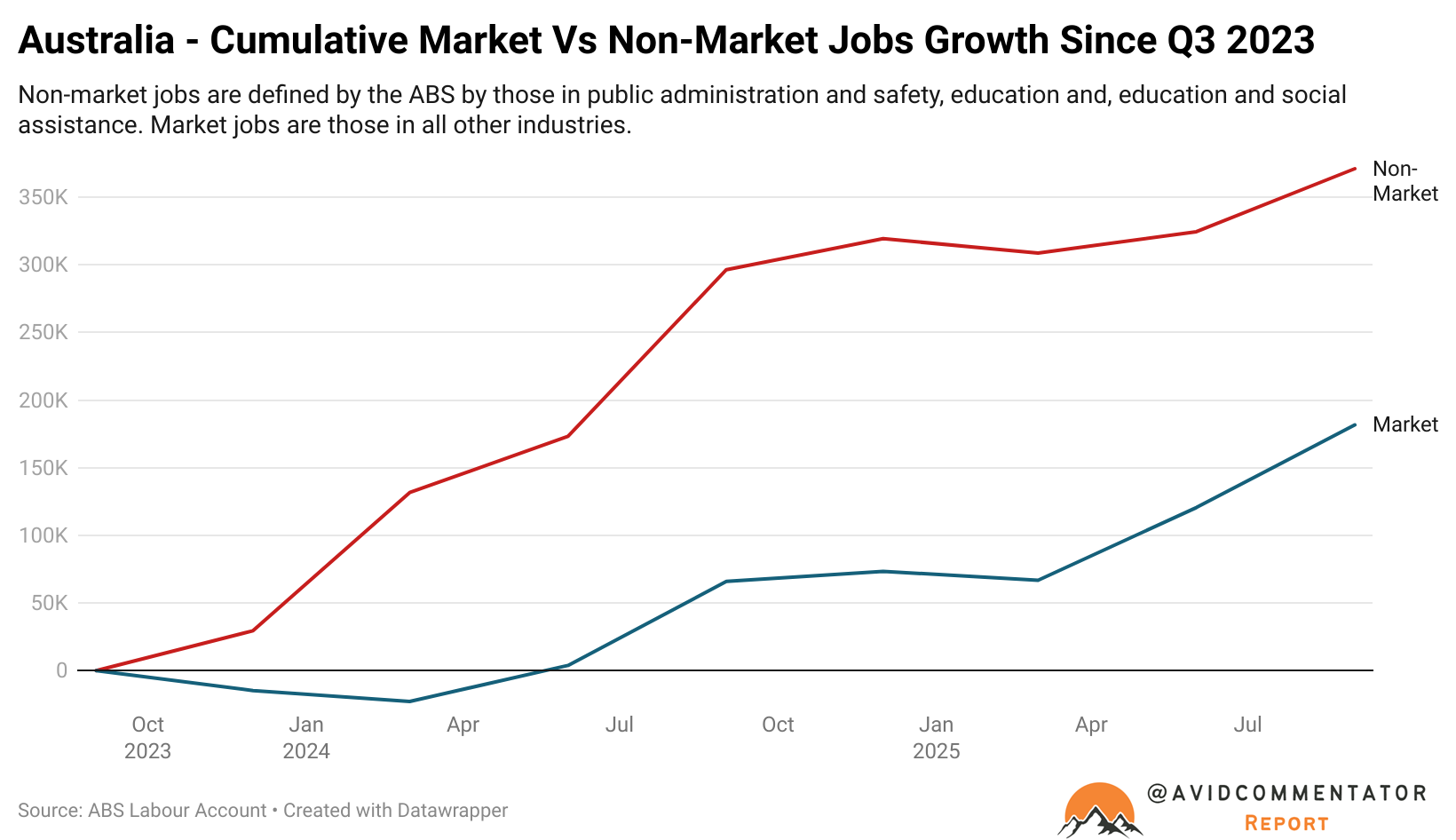
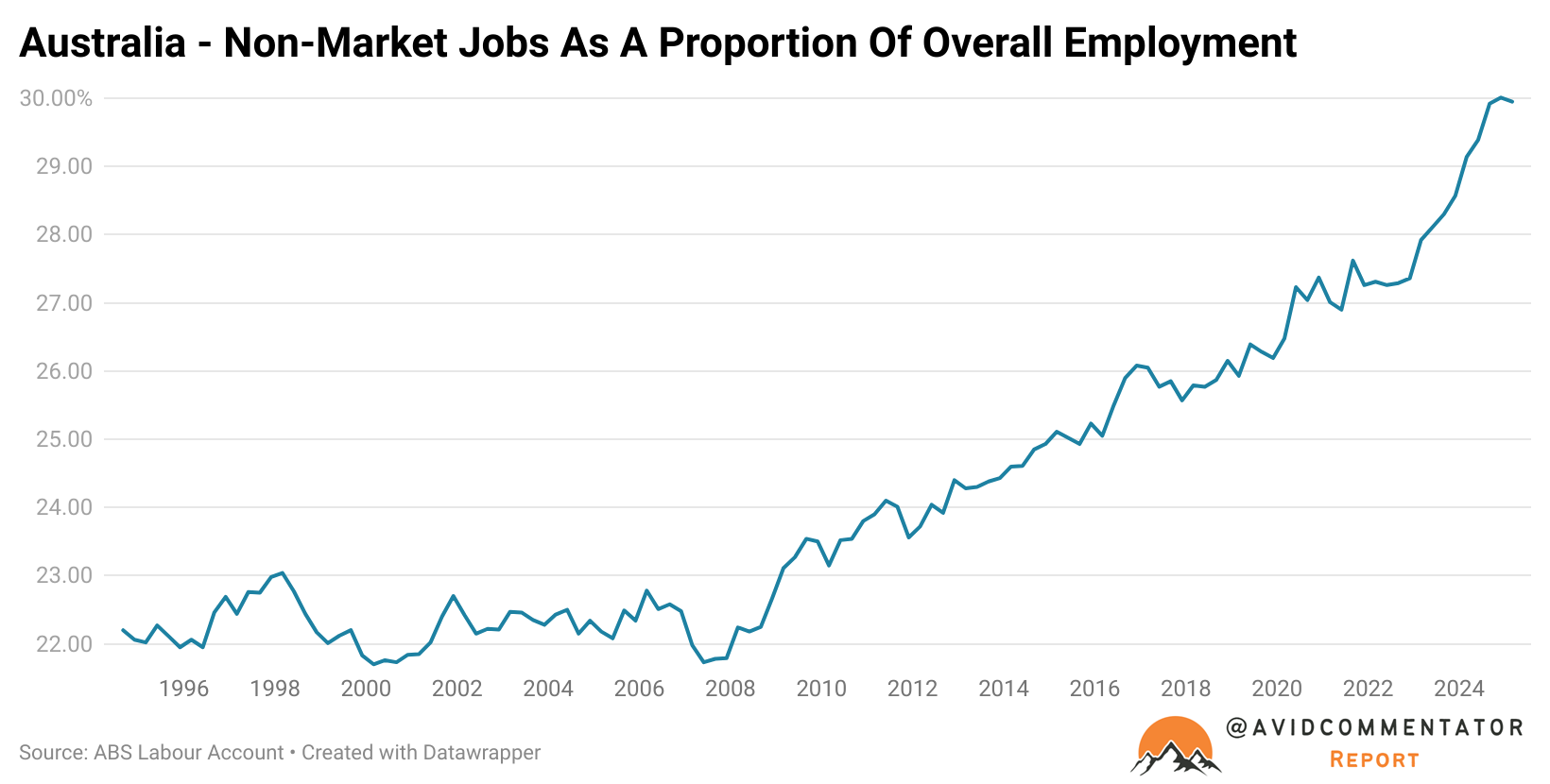
Non market employment is the place to be
Black is right about the Liberals. They are frauds. To have the sheer effrontery of the last election to come out with talk about immigration cuts and gas reservation is to wear on their sleeve the contempt they showed for the electorate in power over three terms of government, where they cemented in Australia’s immigration and energy issues.
They have sung lead vocals in the Government for 20 of the 30 years since the demise of the Keating government in 1996. More than any other entity, the Liberals are responsible for Australia’s policy failings. But they aren’t alone, and they aren’t the owners in power right now.
Albo and the ALP are. And Black skates right by the policy berg they have us on course to hit. He gets to it at the end there with his point about Federal debt reaching 27% of GDP, and doesn’t mention ScoMo’s Covid era giveaways.
But even his route to that point conveniently misses the revenues component of the federal budget – could we tax people more or give them fewer concessions? – and his throwaways about professional women voting ALP and the recent expansion of the Commonwealth public sector don’t put two and two together.
Every public sector in Australia has a demographic of 2/3 female to 1/3 male, reversing a demographic that was the opposite in 1990.
Every public sector has seen rapidly growing executive levels – notably that same Commonwealth public sector, from 19% of all staff in 2000 to 32% of all staff in 2025, overwhelmingly privately educated. Every public sector in Australia has seen executive remuneration outstrip overall remuneration forward of 2000.
It appears that if professional Australia isn’t up for a fight for survival of the fittest in the corporate jungle, it will find a nicely sheltered public teat, and the safest conditions appear to be in one of Australia’s public sectors, and ladies get first dibs.
Thirty years ago, the reversed demographics were called institutionalised sexism, but nobody says that now. Then there’s the array of lawyers, auditors, medical professionals, and consultants just a contract removed from public service one way or another. Then there’s the University sector.
Of course, none of that would matter if the Australian public were getting better policy, would it? But part of the reason professional women like the ALP may be right there.
Black continues, however, towards that berg, touching on some of the policy choices we have utterly reamed ourselves with over the last 30 years.

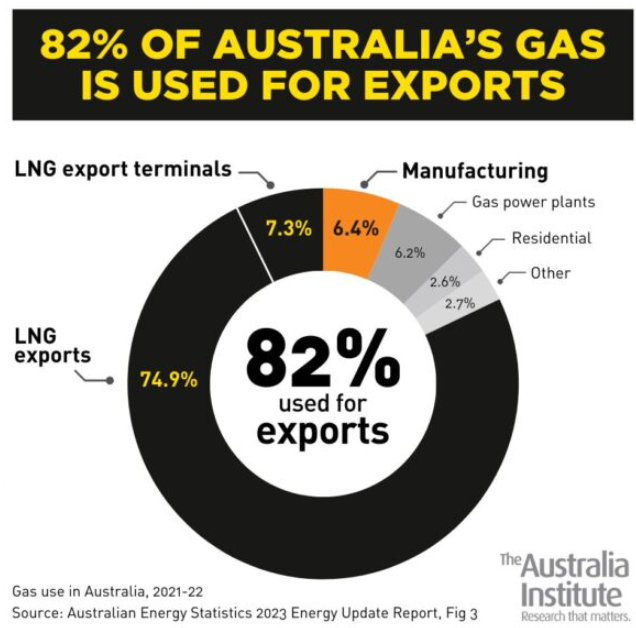
Electricity prices have helped drive inflation, and all that gas we export could have kept prices down
Other inflationary drivers include the Minister for Climate Change and Energy Chris Bowen who has been incapable of delivering promised price cuts to power bills courtesy of allegedly free sunshine and wind.
Falling fertility rates have pushed the government to rely on increasing net overseas migration to maintain population growth and a steady supply of taxpayers to fund health and welfare needs for our bubble of ageing boomers.
In the absence of any productivity gains due to the government re-regulating the labour market back to the 1960s, and with Commonwealth spending now pushing up inflation, we can expect the RBA to increase interest rates during the current term of government. This will lift unemployment rates for less skilled, older Australians and boost mortgage rates for our new generation of aspirational migrants in outer urban marginal seats.
These trends are unlikely to concern wealthier families in top income quartile inner-urban electorates, as our economic modelling shows they have been getting wealthier under the current government, which is one good reason why they stuck with Labor or the teals at the last election after dumping “Scottie from marketing” in 2022.
Black floats climate and energy policy to wet lettuce Chris Bowen when he could have raised gas export policy to blast away both sides of mainstream politics for the last decade.
Then it’s on to falling birth rates pushing governments to rely on net overseas migration to maintain growth rates and taxpayers. Macrobusiness has, over the last decade and beyond, amply demonstrated that Australian population growth, driven almost solely by NOM, has outstripped most of the rest of the world.
It has, over the same period, demolished the idea that immigration is in any way about providing taxpayers, demonstrating that immigration is a net drain on the budget now and only represents a can-kick insofar as those we bring in will also age and need pensions.
People have ceased having children because of the contraceptive effects of debt.
Men and women of an inclination to do so have ceased having children because having children is very expensive, life is very expensive, and to start life without being given housing by ones parents means Australians are submerged in debt right at the point where once upon a time they could have a kid. The average mortgage now is North of $600 thousand – and see what that gets you.
To sustain a mortgage anywhere near that requires a full time average income. If any young couple out there has doubts about their ability or their partners ability to support that mortgage over 25 or 30 years then you can’t really blame them for thinking it is better for the kids sake not to have them. Then look at the jobs on offer and ask themselves if they will sustain a mortgage or the relationship over the longer term. In a nation which has deskilled itself inside an inward facing economic bubble of meaningless low paid jobs.
Is John suggesting young couples should have confidence that the bipartisan policymaking which brought this about should be believed about its ability to sustain it or craft a path out?
Then there’s the disturbing fact that about 80% of all jobs created since the ALP came to power in 2022 have been essentially government-funded, mainly in low-productivity jobs with reasonably low income outcomes. The bubble he needs to look at is the bubble of people arriving to be employed on the public account.
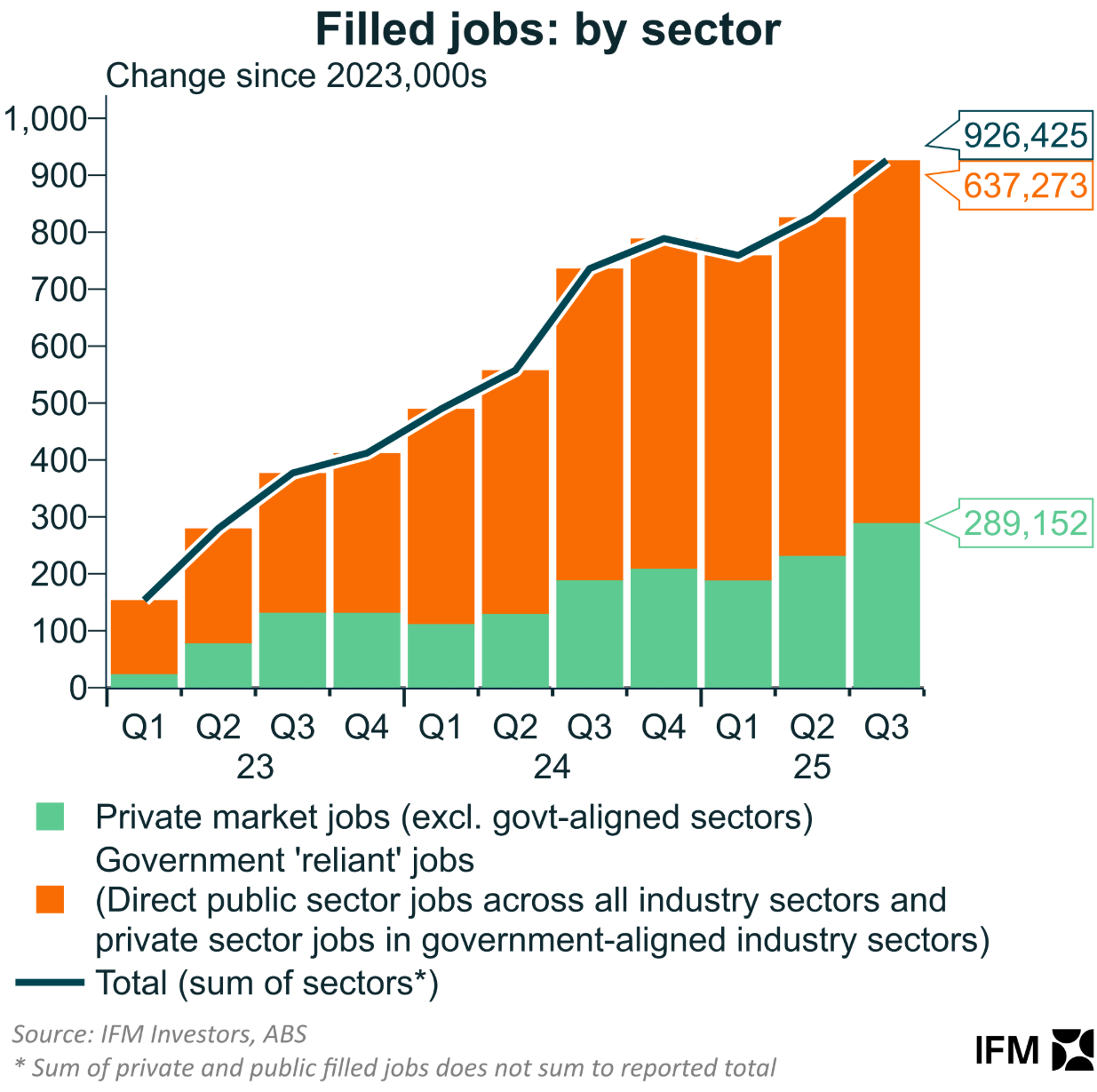
In that low-skilled migrant flooded dynamic, reflecting Australians’ plummeting economic complexity, John spots low productivity.
Given the policy backdrop is some of the worlds most expensive land energy and internet, one of the worlds most indebted populations – reflecting a policy priority, and failure, of ensuring rising house prices – and an economy which has deindustrialised more than any other, is john surprised that private sector employers – and of course the public sectors – see little point or need to invest in productivity maximising plant or systems when they can just add another bum on a seat?
He is right that the likely outcome is rising rather than falling interest rates, given all the extra people desperate for houses, energy, and transport systems, for starters. And he is right that the inner city ‘elites’ probably won’t care, and have been juicing up with the ALP spending, following on from ScoMo’s Covid largesse.
The only alternative is the emergency glass-smashing of interest rate panic should an economic implosion occur.
Is it ever far away in a nation relying on coal, gas, iron ore, and gold for its export revenues? Could the ghost of commodity crashes past, the type of which we haven’t seen for 45 years, be the ultimate policy failure on the road ahead?
Rather than go there, John moves the cups around on the shuttleboard, starting with the Liberals.
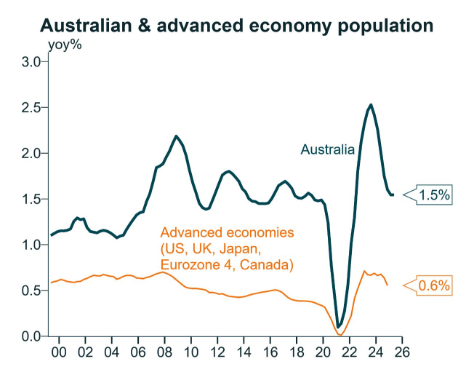
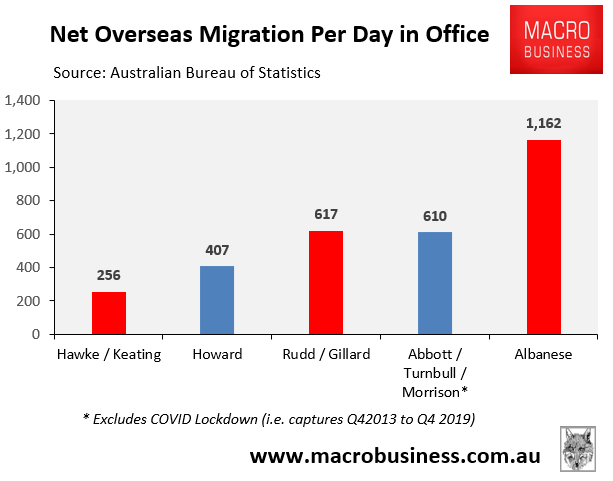
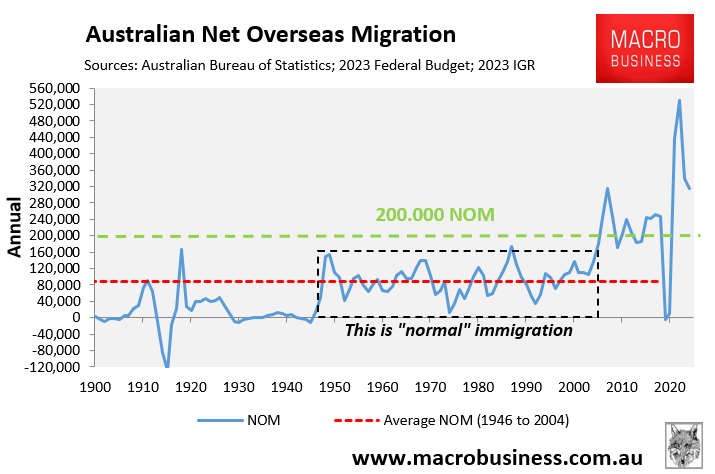
Australia has been on a population growth binge like no other – driven purely by immigration
If Opposition Leader Sussan Ley wants to win back wealthy teal voters and attract growing numbers of aspirational migrants, the Liberal Party needs to prove it can manage politically pain-free cuts to government spending and redistribute these savings as tax cuts to dual-income aspirational families in the third- and fourth-income quartiles.
Does anyone think the Liberals could handle pain-free cuts to anything for anyone? Have we forgotten the Morrison government’s Stage 3 tax cuts? Redistributed up the food chain?
John is having Australians on. The third and fourth income quartiles? Weren’t they the beneficiaries of a generation’s worth of ‘trickle down’ and the increasing debt Australians took on for their housing? Wouldn’t they be the people his modelling is showing have been getting wealthier under the current government?
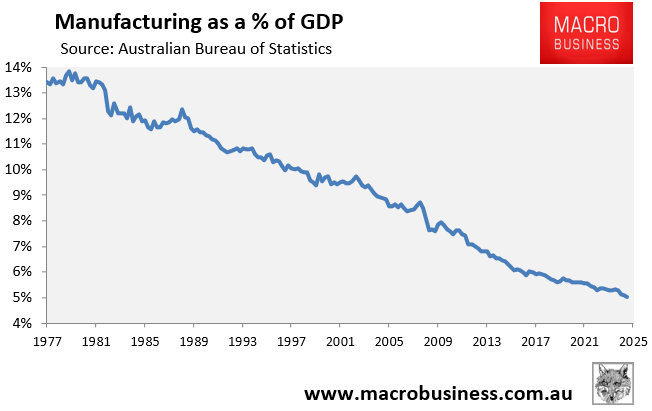
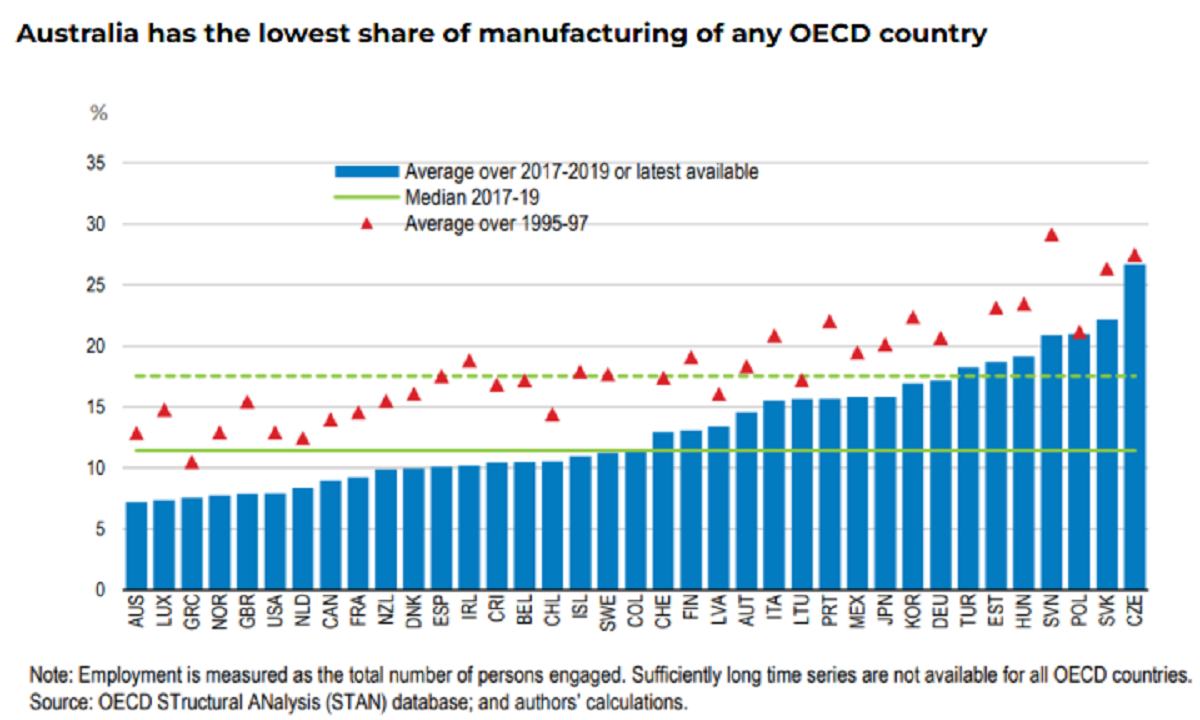
Did both sides of Australian politics design this? Did they do anything about it?
The Labor Party need to cauterise leaks from its former working-class voters on the fringes of our capital cities and provincial cities, who have been getting relatively poorer since 2022. We’re looking here at less well-educated, blue-collar and Australian-born working families in second income quartile jobs many of which are vulnerable to disruption by technology.
We assume the ALP will have identified what is, in part, why there is such an inordinate focus on anything other than the lived experience. Anything will do. Trump, Putin, the Chinese and whoever was on the Island with Epstein. Droughts floods, bushfires or sporting successes. Eclectic restaurants? Property buys of the rich and famous?
He is right, the old working class has deserted the ALP, and for most, it’s the lucky dip of alternatives on the day. For many there’s the thought nobody represents them.
People in the in crowd like to think of them as less well educated, as though it’s synonymous with stupid, and one suspects that John the ALP senator wouldn’t have used the expression ‘Australian-born working families’ about the people who were once the bedrock of the ALP.
John epitomises why Australians increasingly hold political and bureaucratic elites in contempt, and having seen technology and Free Trade disrupt their workplaces, could view AI doing something similar with white collar workplaces with some degree of schadenfreude.
These voters are angry and they blame their financial difficulties on high migration and neglect from both the major parties. Hence, their drift in the early term opinion polls to One Nation of up to 18 per cent, which Australia’s top psephologist William Bowe says could be enough votes for One Nation to win up to eight Coalition and three Labor Party rural and mining House of Representatives seats at the 2028 election.
Could their financial difficulties stem from housing or energy costs? Have both been essentially bipartisan policies since the early 2000s? Has heavy immigration been another bipartisan policy? Was Australia’s deindustrialisation?
And how many others have there been?
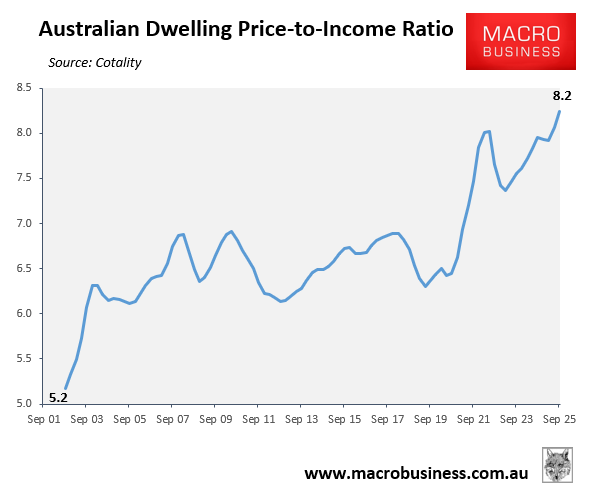
Australian house prices and the debt required to get one are the biggest causes of financial stress for ordinary Australians
This is our political Ghost of Christmas yet to come. And the mob can see him and their chance of redemption, even if their government cannot.
Black concludes with a Christmas ghost when, as far as much of the public is concerned, it is the chicken of public interest policy failure coming home to roost. And he hasn’t mentioned that it will likely be an external account failure, which it brings with it.
Away from those commodities, it is only proximity to the government teat or policymaking that makes people richer or poorer, and those at the downmarket end know that it is by bipartisan design, which brings its own political dynamic.