
Canada shows Australia how to fix housing shortage
Canada experienced one of the world’s biggest immigration surges post-pandemic, which created the worst rental crisis in the nation’s history.
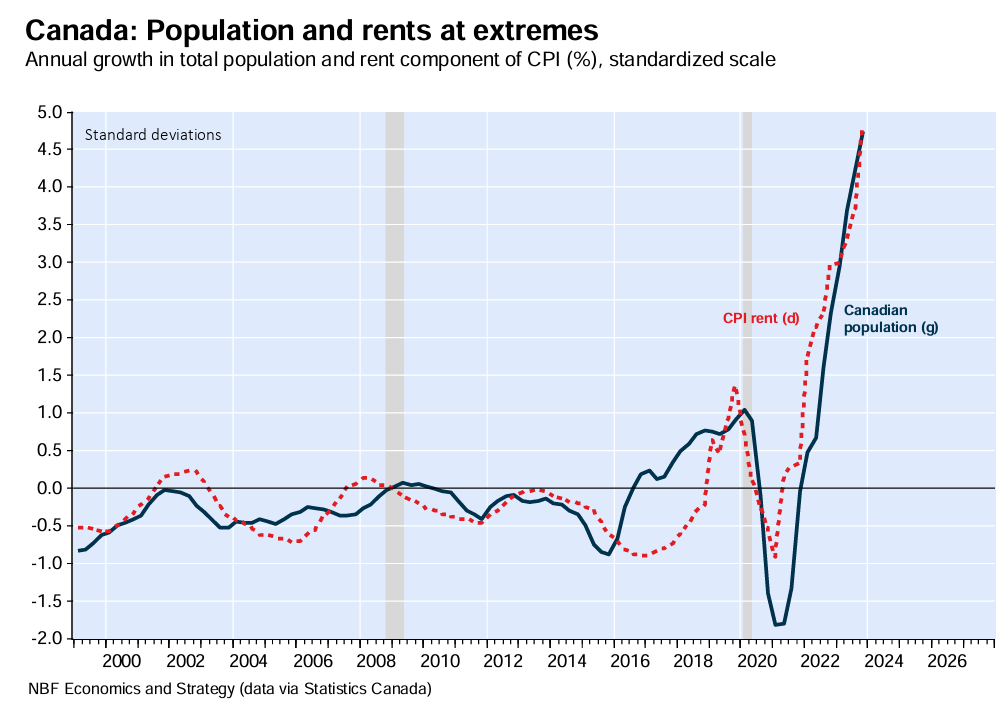
Canada’s rental crisis in 2023
Amid a growing voter backlash, the Canadian government has introduced a series of measures since late 2024 to lower immigration levels, focusing on both permanent and temporary residents. These include reducing annual permanent resident targets, capping international student and temporary worker admissions, and tightening asylum and border measures.
Canada’s permanent resident targets were lowered from an ambition of 500,000 to 365,000 by 2027.
For the first time, Canada set controlled targets for temporary residents, including international students (largest reductions) and temporary foreign workers.
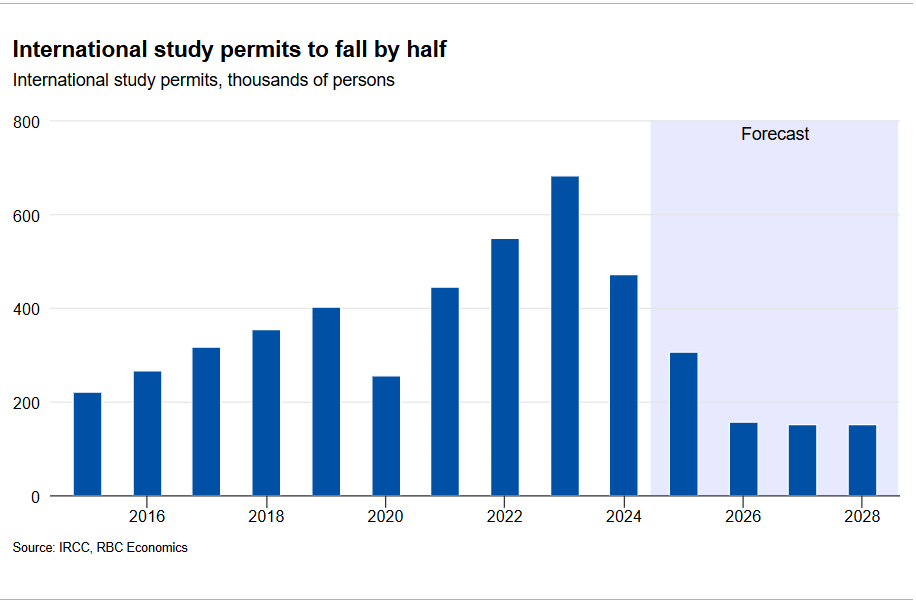
The share of the Canadian population made up by temporary visa holders is to be reduced from a peak of 7.5% to 5% by the end of 2027.
Temporary resident numbers have contracted sharply after program caps tightened.
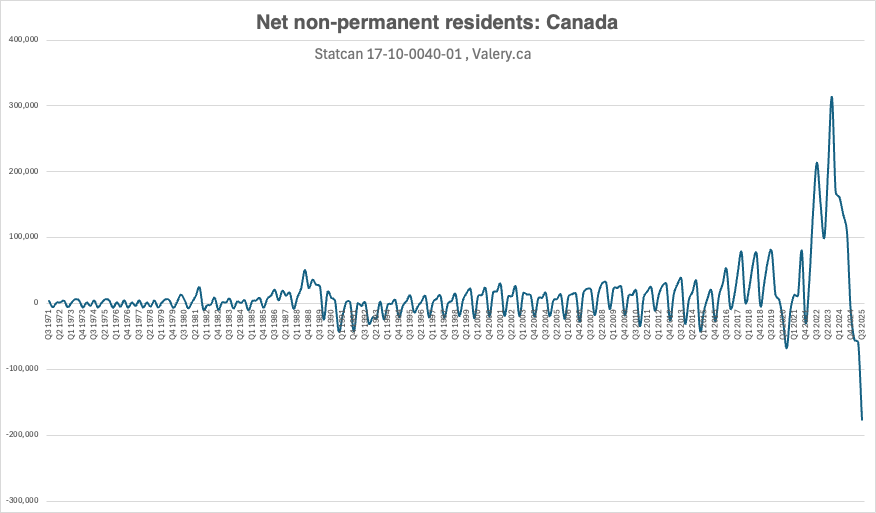
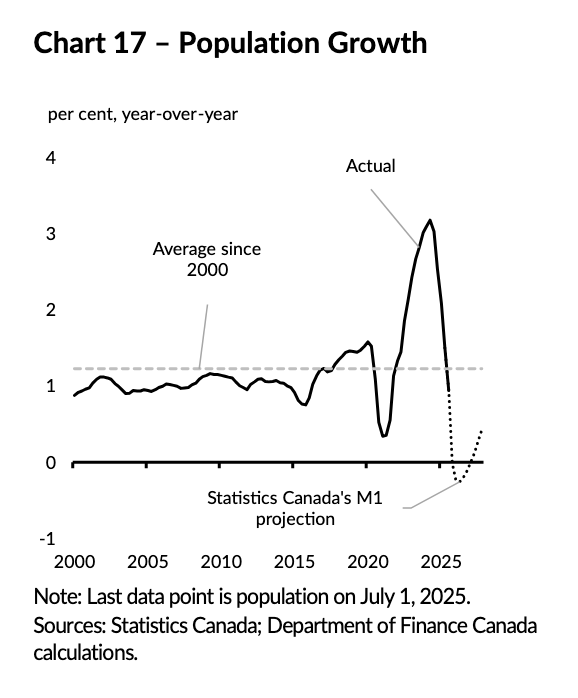
As a result, Canada’s population is now outright contracting. The population declined by 0.2% in the third quarter of 2025, with almost 77,000 fewer people in the country. Annual population growth slowed to only 81,000 in Q3 2025:
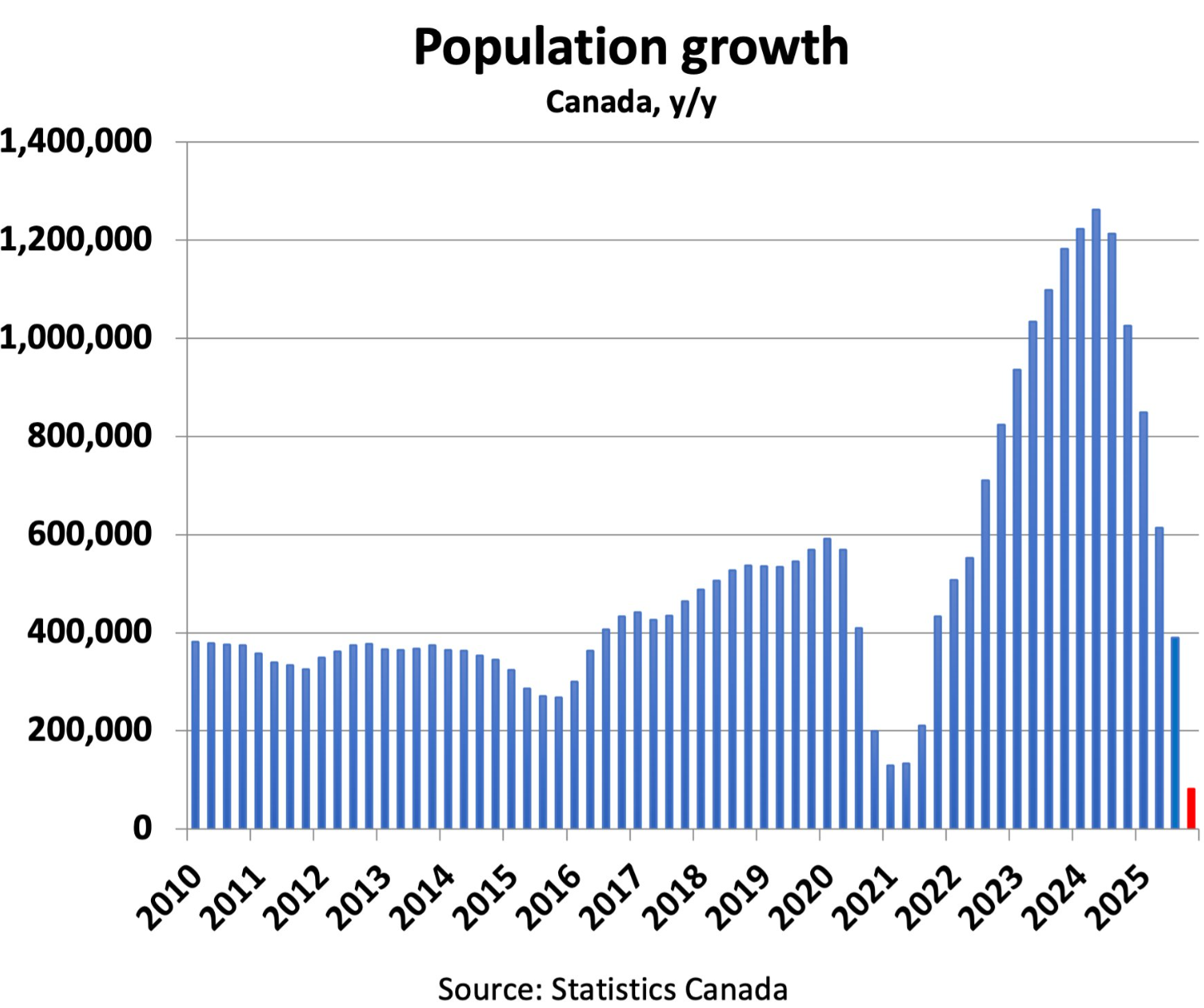
This result is in line with Statistics Canada’s projection that the overall population would contract.
An October report from TD Bank noted that the immigration cuts have had a dramatic impact on the rental market:
“Reduced immigration has moderated demand for purpose-built rentals and, consequently, rent growth”, the economists wrote.
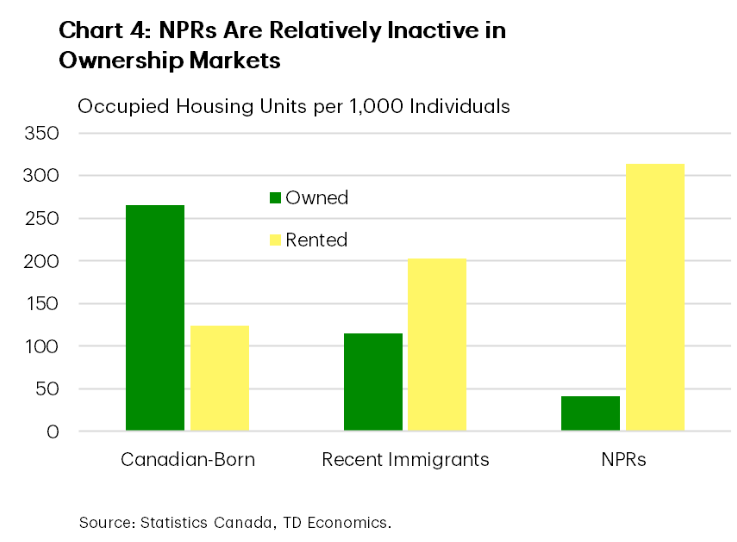
The economists showed that NPRs (temporary migrants) are most concentrated in Canada’s rental market:
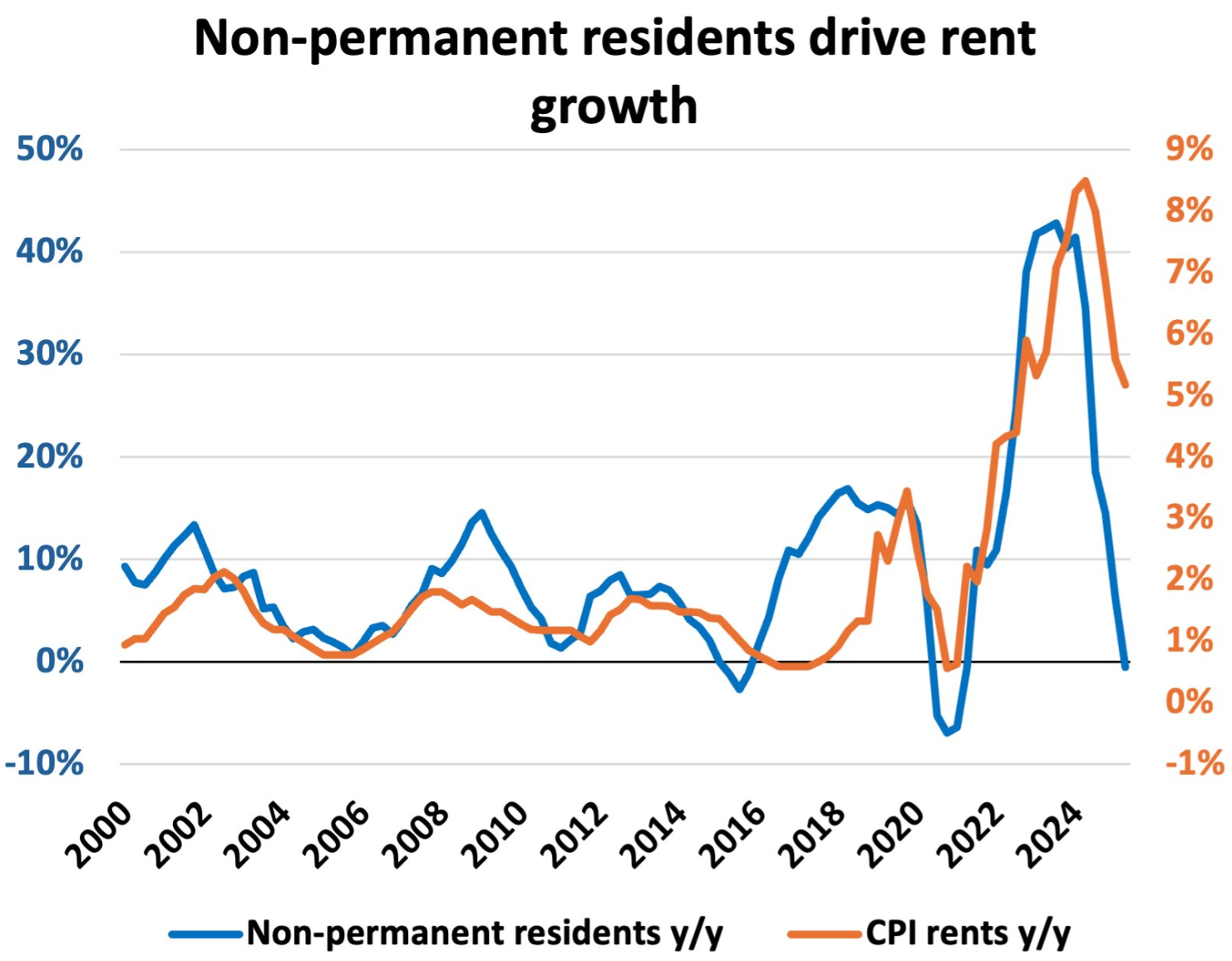
This is important, as the departure of NPRs has driven the reduction in population growth and rents:
Source: Ben Rabidoux
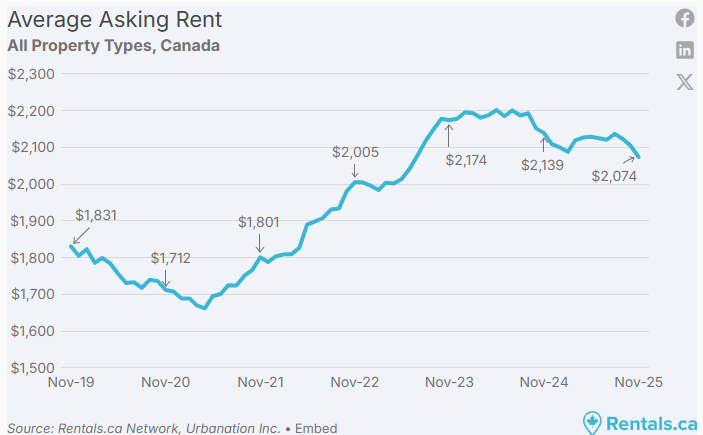
Indeed, the latest data from Rentals.ca showed that advertised rents have declined for 14 consecutive months, down 3.1% year-on-year in November:
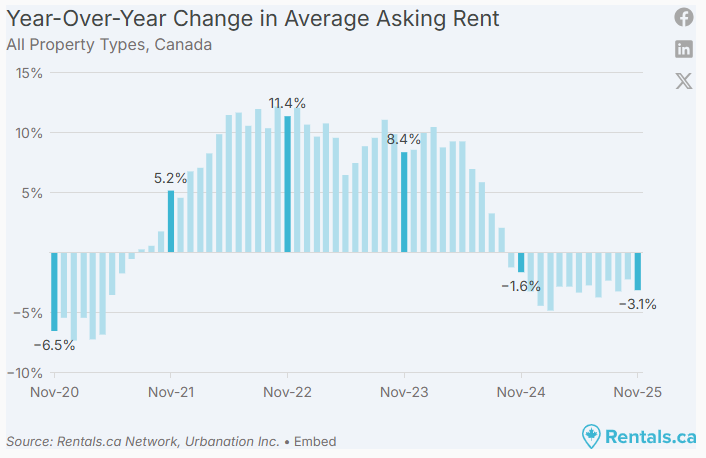
This marked the lowest advertised rental level since June 2023, with advertised rents now tracking $100 below the level from two years ago:
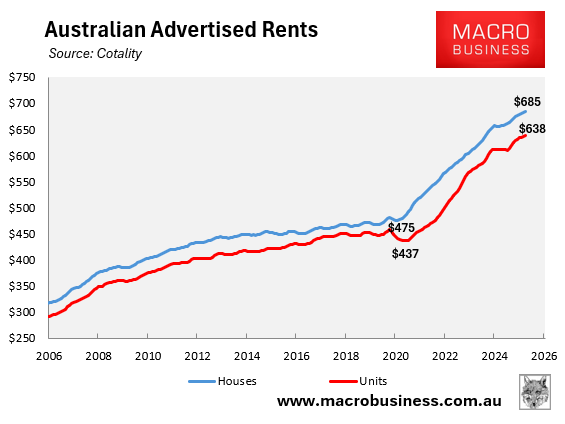
The situation is the polar opposite of Australia, where advertised rents have soared by 44% over five years, adding around $10,600 to annual rental costs for the median renter:
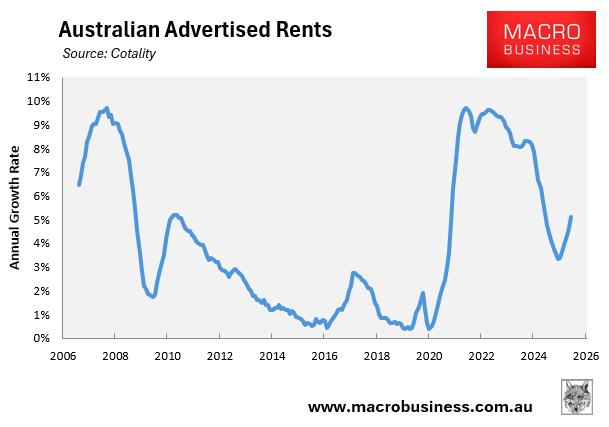
With immigration appearing to have reaccelerated, rental vacancy rates have fallen to a new record low and rents are also reaccelerating:
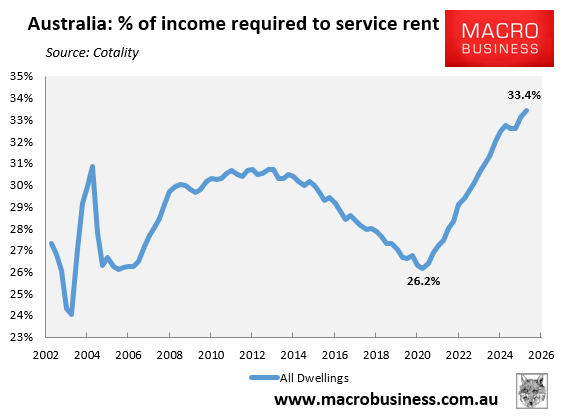
As a result, Australian rental affordability, which is already the worst in recorded history, is certain to worsen.
The Albanese government could have alleviated the rental crisis by emulating Canada’s immigration cuts.
Instead, Labor has chosen to raise the effective permanent migrant intake to record levels and increase the international student planning level for 2026.
Australia’s immigration intake will, therefore, remain at historically high levels, the housing shortage will deepen, and the rental crisis will worsen.
