CoreLogic’s latest housing chart pack notes that the monthly pace of rental growth eased to its lowest since August 2020, with rents rising only 0.1% in July:
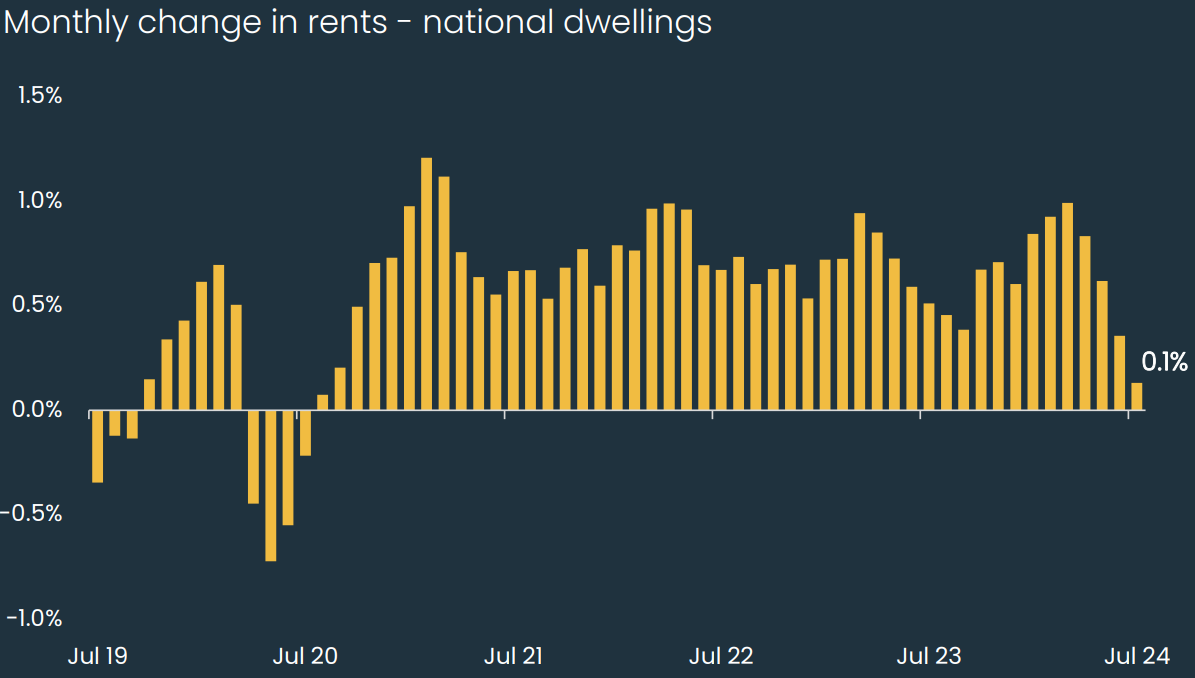
Source: CoreLogic
Results varied across the capitals, with rents rising in Adelaide (0.6%), Melbourne (0.3%) and Perth (0.3%), flat in Darwin and Canberra, and falling in Sydney (-0.1%), Brisbane (-0.1%) and Hobart (-0.3%).
The annual change in rents slowed to 7.8% in July, down from a recent peak of 8.6% over the year to April:
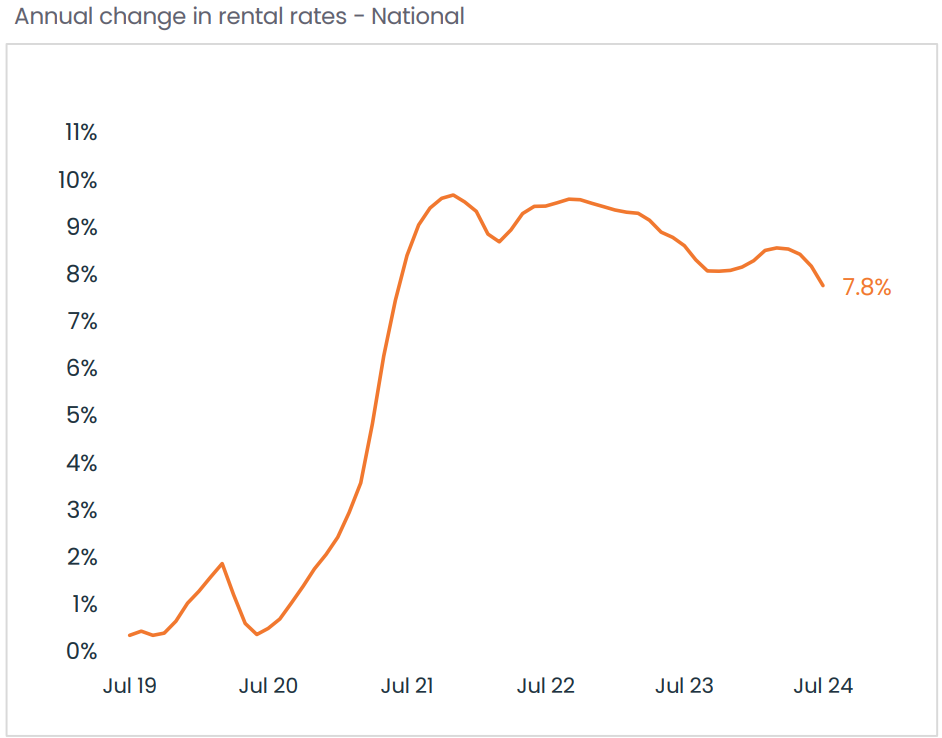
Source: CoreLogic
The combined capitals have been the main cause of the slowdown, with annual rental growth slowing from 9.7% in February to 8.0% in July, while regional rental growth has accelerated from 5.4% to 7.1% over the same time period.
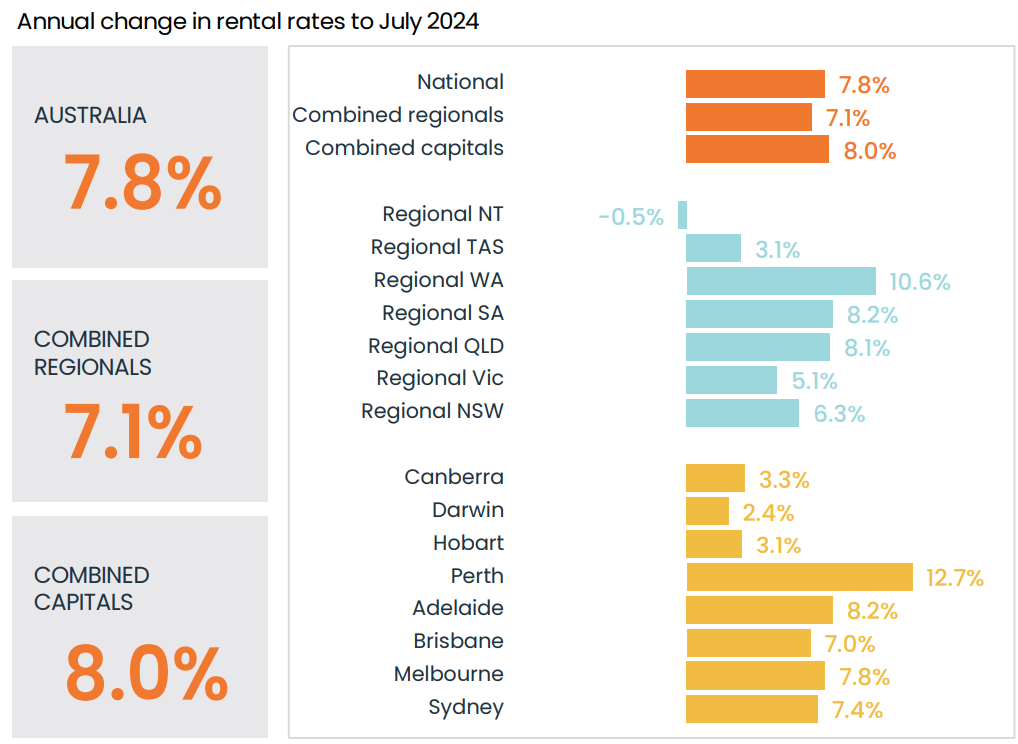
Source: CoreLogic
CoreLogic noted that the slowdown in rental growth is welcome news to tenants who have seen rents increase by 39.7% over the past five years, adding approximately $180 to the median weekly rental value.
Rents appear to have hit an affordability ceiling after increasing so aggressively.
Unlike mortgages, rents cannot be leveraged. This means that rental growth is more closely tied to household income, which limits its potential increase.
Indeed, this morning’s report from CBA economist Stephen Wu showed that households are responding to rental pressures by moving into shared housing and delaying household formation.
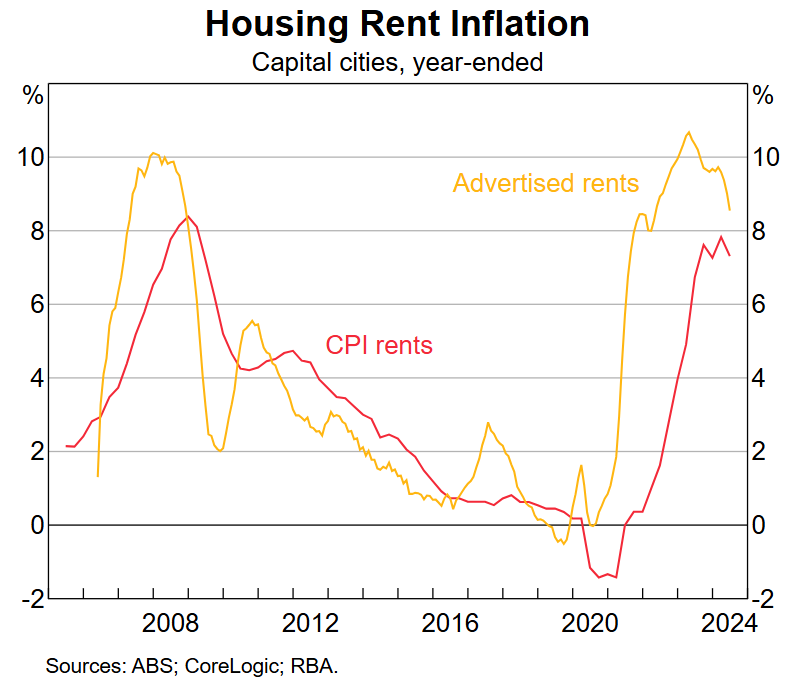
The RBA’s latest Statement of Monetary Policy also warned that Australia faces an extended period of strong rental inflation because “rents on new leases flow through to CPI rents with a lag as only a small share of the stock of rental properties update leases in a given month”.
As a result, “CPI rents inflation is likely to be high for some time”: