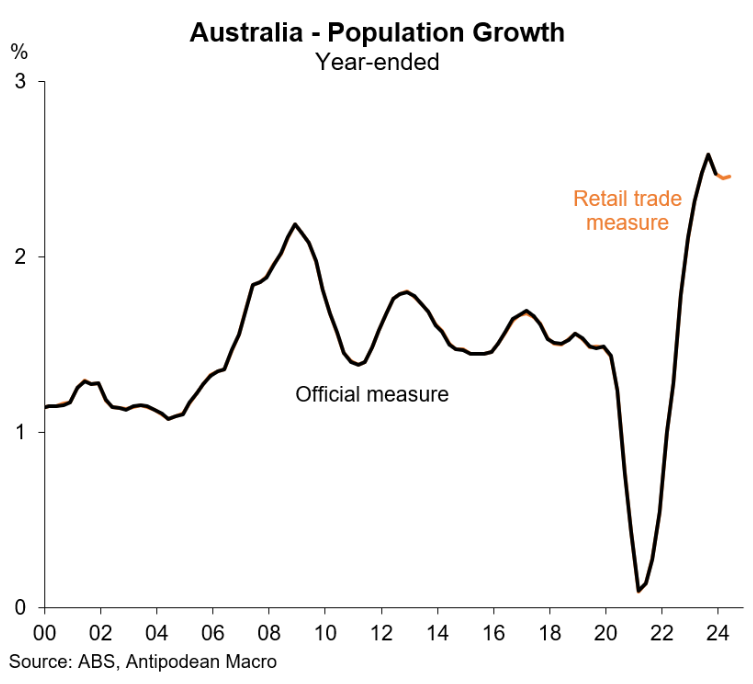
The Australian Bureau of Statistics (ABS) estimate of population growth, gleaned by Justin Fabo from the per capita retail trade estimates, remained turbo-charged at 2.5%:
This suggests that the demand-supply imbalance in Australia’s housing market will have widened, increasing the cumulative housing shortage.
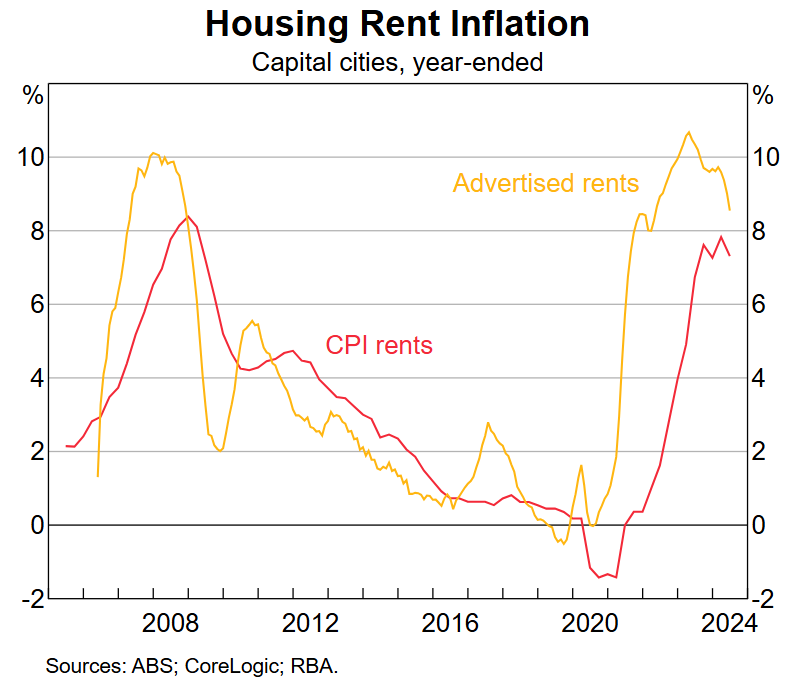
As a result, home prices have risen to record highs and rents are rising at a rapid pace.
CBA economist Stephen Wu has released a terrific report showing that households are responding to rental and home price pressures by economising on housing costs. That is, “more people are living in share houses, and fewer are living with just their partner”.
“With supply unable to respond quickly, adjustments are having to occur on the demand side”. notes Wu. “Shifts in household formation are increasing average household size and beginning to moderate the demand for housing while supply growth remains constricted”.
Below is the crux of Stephen Wu’s report.
Multi-unit dwelling supply is constrained
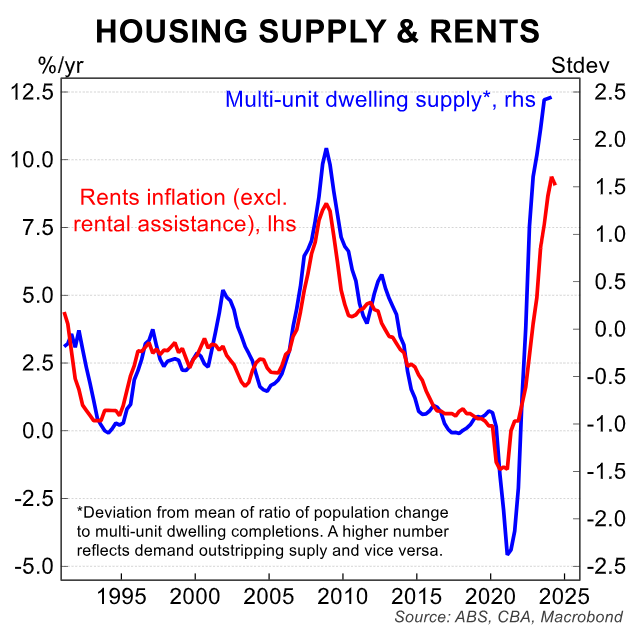
To set the scene for the rest of the note, the chart below shows the close relationship that exists between multi-unit dwelling demand-supply imbalance and rent price growth.
The pace of rent inflation (excluding the impact of the increase in Commonwealth rent assistance) is the fastest in more than three decades but does come after a short period of pandemic-depressed rents.
Rents make up 6% of the CPI basket and have been a key reason for elevated inflation outcomes.
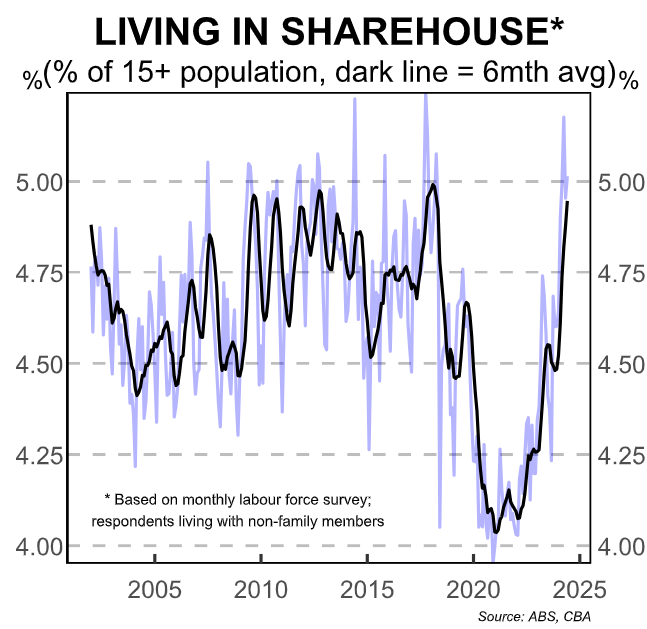
In response to high and rising prices, households are economising on their housing costs. This is most clearly seen in the increase over the past two years in the share of the adult population living in share houses.
The data is choppy, but the pace of increase appears to have ramped up since the start of this year. The share sits at ~5% from just over 4% over 2020–2021, an increase of ~200k individuals.
There has also been an increase in those living with other related individuals (e.g. siblings, cousins, grandparents).
Family formation is potentially affected
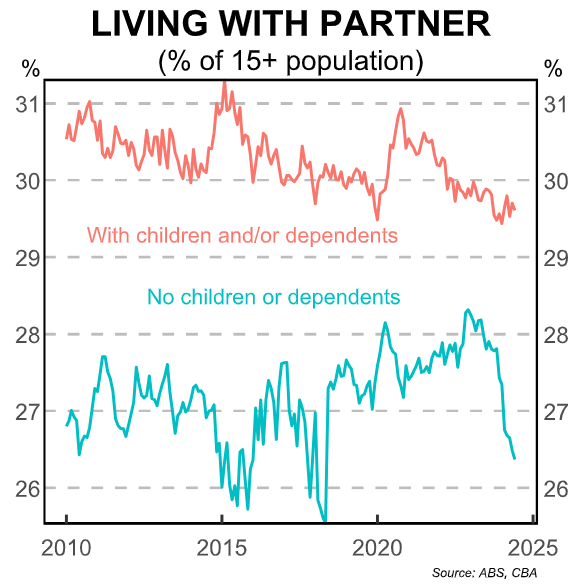
Another key adjustment has been occurring via a sharp decline in the share of the population living with just their partner (i.e. without children or dependents).
It’s not a case of children moving back into the family home: there has been no similar shift up in couple households with children and/or dependents (which occurred during the initial stage of the pandemic).
The rapid increase in dwelling and rent prices could be delaying when couples move out together, instead choosing to remain at home or in share houses.
Just under a quarter of all couple-only households are aged 34 years or younger.
There is still a preference for space
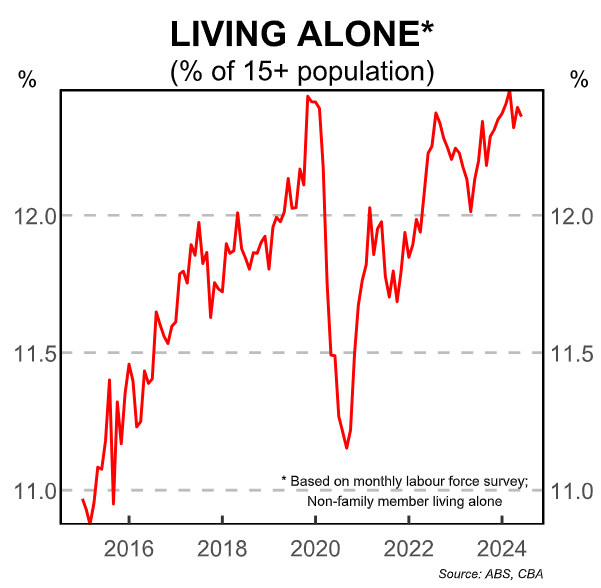
The share of the adult population living alone has risen sharply, after having collapsed during the initial pandemic shock. There’s probably an element of a post-pandemic preference for additional space given working from home arrangements.
However, it is worth noting that around 42% of one-person households are aged 65 years or older, of which the overwhelming majority own their homes outright and who as a result have not been impacted by rent and home price pressures.
In contrast, the 25-34 year old age cohort only make up around 12% of all those living alone.
Aligns with sharply declining housing affordability
The RBA noted in its August SMP the average household size had increased further over recent months ‘possibly in response to affordability constraints’.
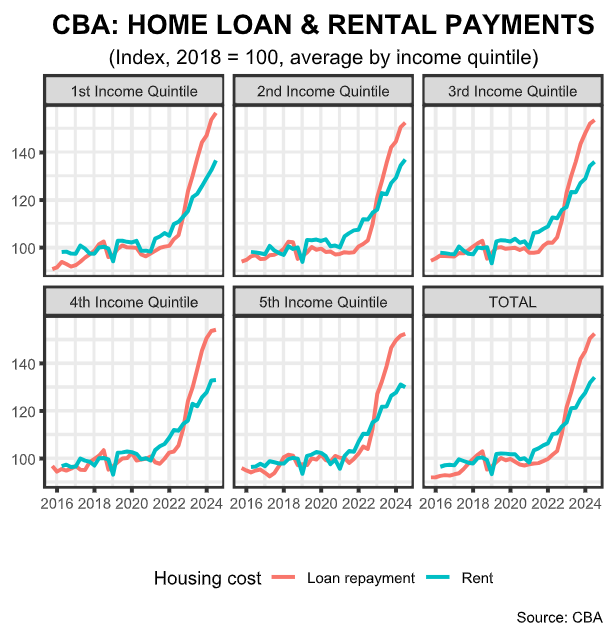
As we show above, there are fewer couple households and more individuals in share houses. And as we show below, housing costs for both renters and mortgage holders have increased significantly across all the income quintiles.
There are early signs growth in rent payments for lower income households is now easing.
Shift in housing preference impacting advertised rents
The shifts in housing preferences and outcomes, as well as the economising of housing costs as outlined above are reducing housing demand. This is somewhat offsetting the strength in population growth.
Rents growth is likely softer than the counterfactual where this doesn’t occur.
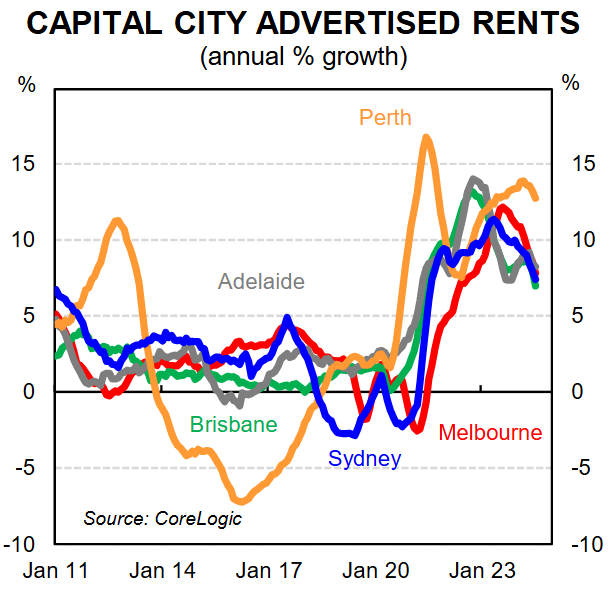
That said, rents across the entire rental stock are still growing very quickly. But more recently, growth in advertised rents (on newly listed stock) has begun to moderate. This will take time to impact the stock.