
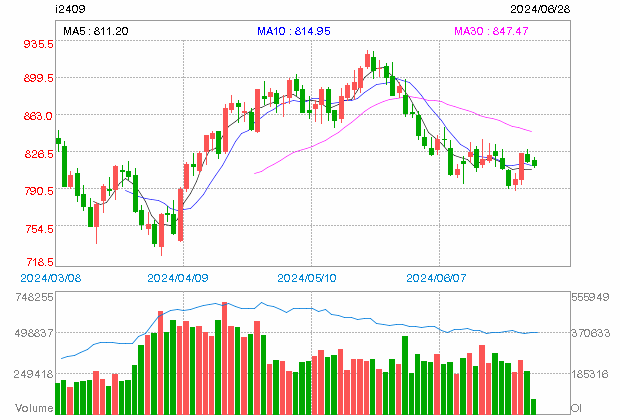
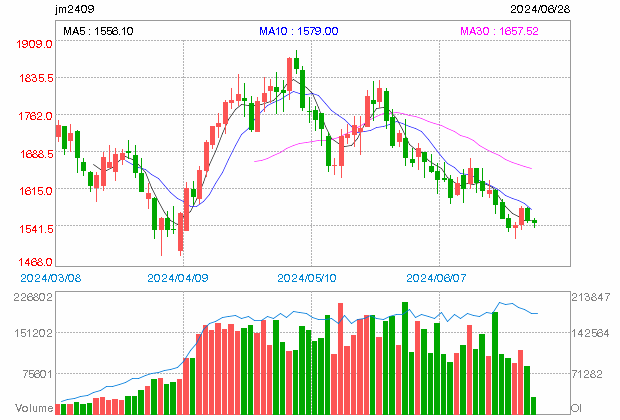
For years, iron ore and coking coal have traded to the beat of Chinese stimulus. In recent days, the oversold duo have been trying to rebound but it is weak effort
Iron ore:
Coking coal:
This rebound came on thinnest of reasons:
China’s capital city Beijing announced steps on Wednesday to reduce the cost of buying a home, including cutting mortgage interest rates and the minimum down-payment ratio, to try to boost the local property market.
Expectations of near-term resilient demand acted as tailwinds to prices of the key steelmaking ingredient, according to analysts.
Average daily hot metal output in July is expected at about 2.37 million tons based on current production and maintenance plans, meaning that ore demand will be relatively rigid, analysts at Everbright Futures said in a note.
Additionally, “traders may also have been buoyed by a Hong Kong court’s decision to adjourn Chinese (property) developer Shimao Group Holdings liquidation hearing to July, giving it more time to refine its debt restructuring plan,” ANZ analysts said in a note.
Tak about yawn. A better reason for a decent bounce is tracked by Goldman:
The Politburo announced the Third Plenum will be held on July 15-18 in its June meeting today (June 27).
In our view, the reform focus at the Third Plenum will likely be on both “containing left-tail risks” and “growing right-tail potential” for China in the “post-property era”.
Rather than a “big bang” policy initiative, we expect continuation, or even scale-up, of existing reform measures on a multi-year horizon.
These may include fiscal and financial reforms to contain systemic financial risks and prevent negative spillovers from the prolonged property downturn, as well as continued support for emerging industries and urbanization to boost China’s long-term growth.
Specifically on fiscal/tax reforms, we expect more signals on central government borrowing, local government debt resolution, and future tax system reforms.
Consumption tax reform may be part of China’s fiscal reforms – this could have long-term benefits, but the implementation will likely be gradual. Our recent client conversations suggest clients hold low expectations for major structural reforms from the Third Plenum.
Due to the long-term nature of the Third Plenum agenda, we think it will take time for policy specifics to be formulated and the reforms announced to be implemented.
Even here, the hopes are pretty dim and likely only to boost existing measures.
Iron ore loves a dead cat bounce but this one is not shaping as getting very high.
