
Last month, the Reserve Bank of Australia (RBA) and the federal budget lamented that Australia had not built enough homes to keep up with its rapid population increase.
Both bodies presented Australia’s housing shortage as a supply problem and suggested that Australia is bad at building homes.
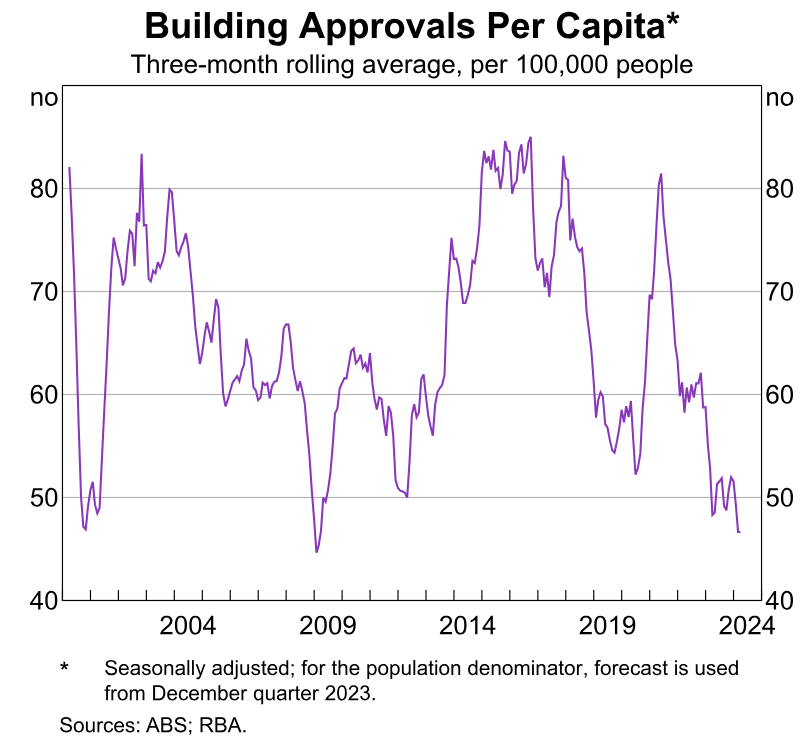
The RBA created the following chart showing that building approvals per capita are tracking at historic lows:
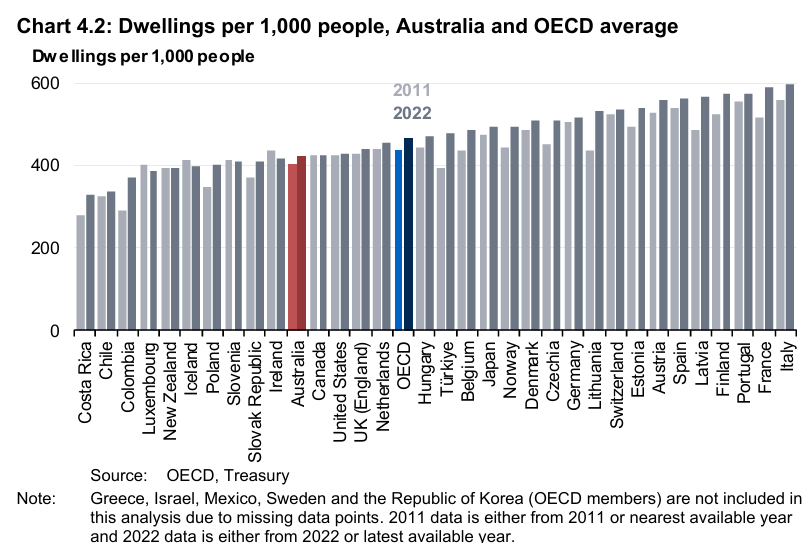
Whereas the federal budget created the following chart showing that “Australia has among the lowest number of homes as a proportion of the population in the OECD”:
Independent economist Tarric Brooker has challenged these views and shown that annual dwelling completions in Australia remain above our rivals, even at current depressed construction levels:
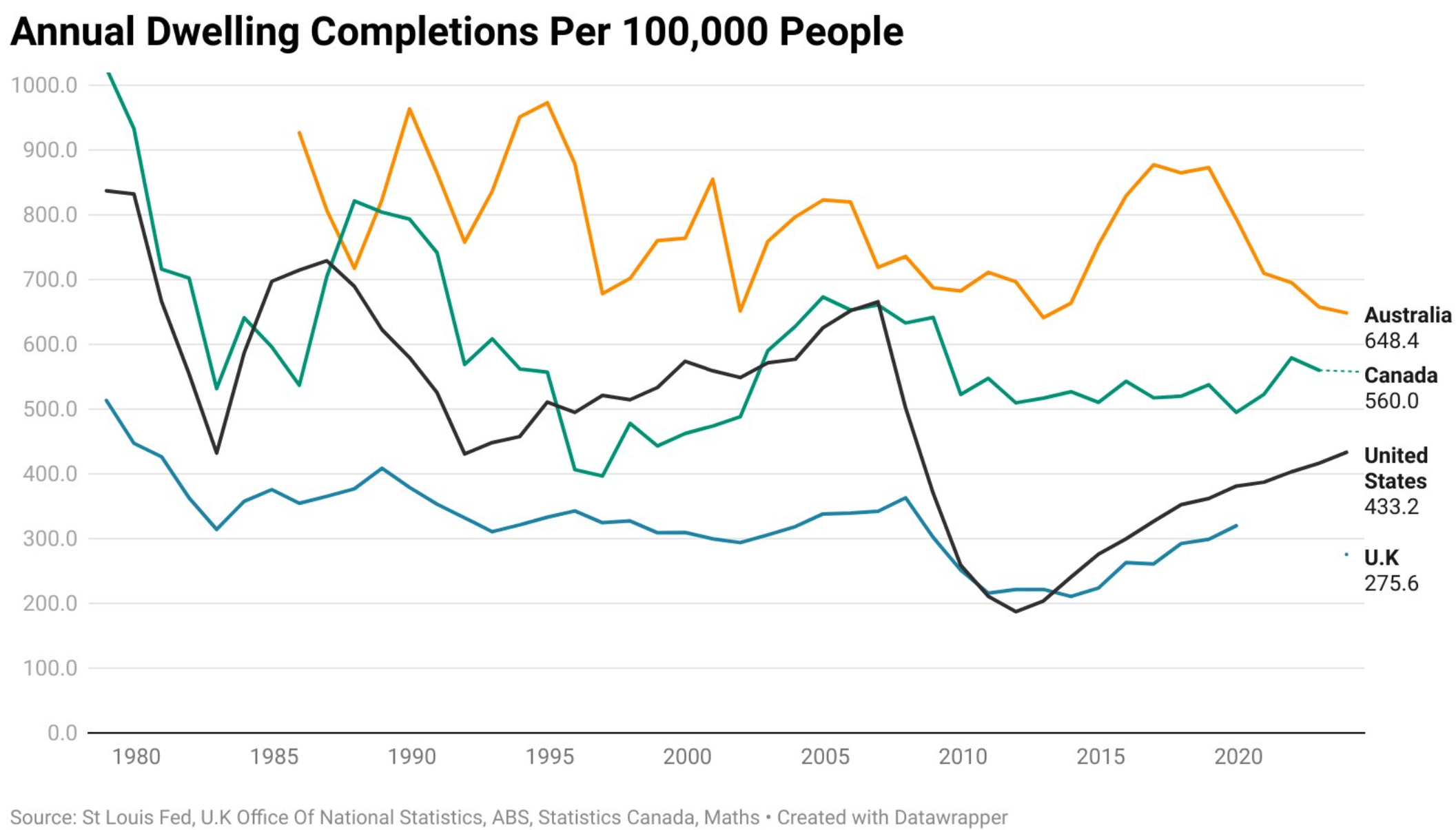
Source: Tarric Brooker
“We nearly build more than the U.S/U.K combined”, noted Brooker via Twitter (X).
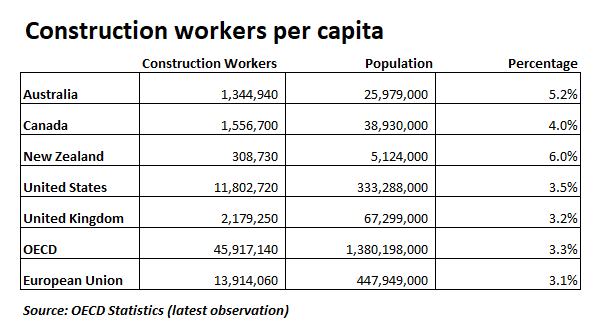
Brooker’s analysis makes sense given that Australia has one of the highest shares of construction workers in the OECD:
Research released last month by ANU summarised Australia’s housing supply issue as follows:
“The main pressure on house price increases is population growth, and this has been strong for most years due in large part to migration policy”.
That’s right. Australia’s population has grown much faster than peer nations this century, which explains why housing supply has failed to keep pace with demand:
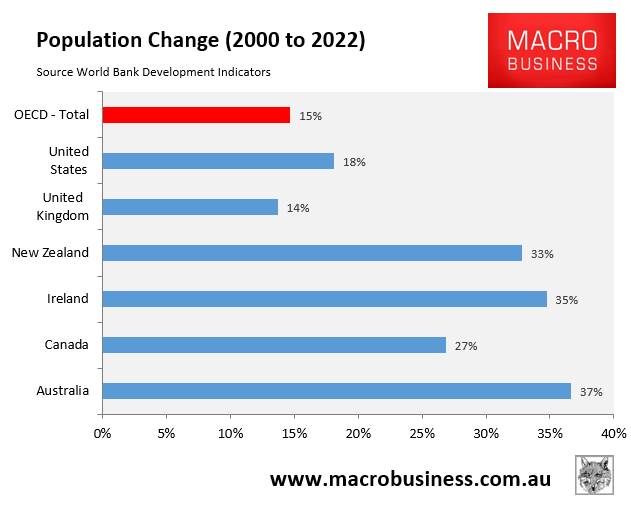
The quickest, easiest, least expensive, and optimal solution to Australia’s housing shortage is to reduce net overseas migration to a level well below the country’s ability to produce homes and infrastructure.
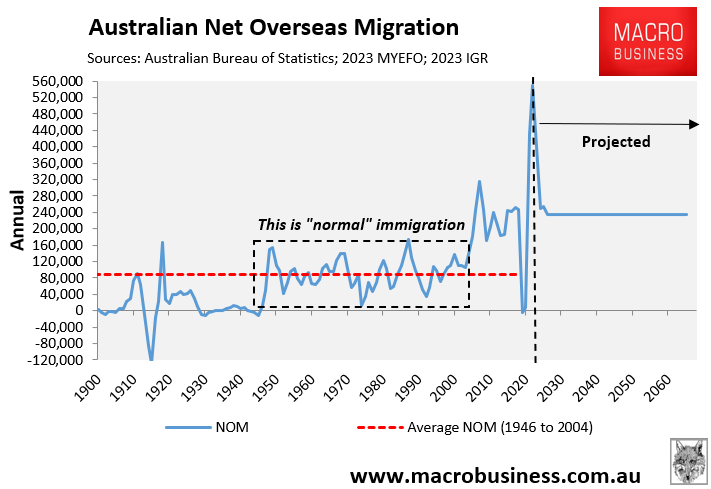
The latest Intergenerational Report (IGR) projected that Australia’s net overseas migration would remain permanently high:
According to the IGR’s projection, Australia’s population would balloon to 40.5 million people by 2062-63, a 13.5 million increase from the current level of 27 million:
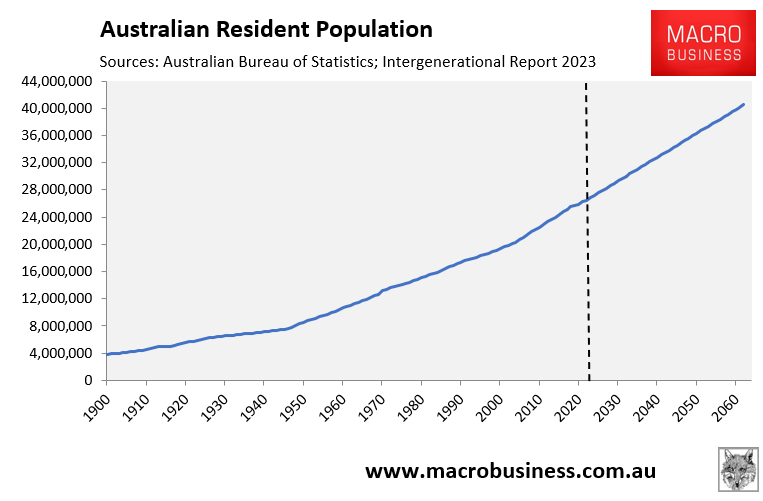
That 13.5 million population rise is the same as adding another Sydney, Melbourne, and Brisbane to Australia’s population in just 39 years.
Australia will never be able to build enough homes or infrastructure to support such a significant population rise.
Therefore, Australia’s net overseas migration should be reduced to historical levels of roughly 120,000 per year.
The last time Australia’s yearly net overseas migration was 120,000 was in early 2005, when the permanent migration program was also set at 120,000.
What’s wrong with returning to this level? Our renters and future home buyers will undoubtedly benefit, as will users of infrastructure, who will benefit from reduced congestion and improved overall liveability.
