
Last week, various housing data providers reported that Australia’s rental vacancy rate has begun to ease.
SQM Research reported that the national vacancy rate rose by 0.1% in June, driven by rising vacancies in Sydney and Melbourne.
PropTrack reported that the national vacancy rate had eased by 0.14% over the June quarter.
CoreLogic reported that “rental vacancy rates have generally ticked a little higher over recent months”, with regional vacancy rates rising from 1.3% in February 2022 to 1.5% in June and capital city vacancy rates rising from 1.0% earlier this year to 1.1%.
While the easing of rental vacancy rates is welcome news, it represents somewhat of a false dawn.
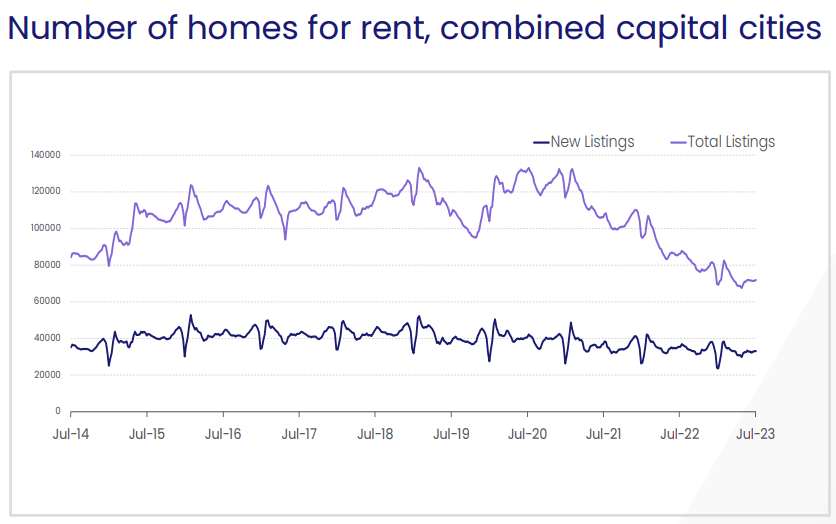
According to CoreLogic’s latest housing market indicators report, actual capital city rental listings are tracking near record lows, down by nearly half from their pre-pandemic levels:
Source: CoreLogic
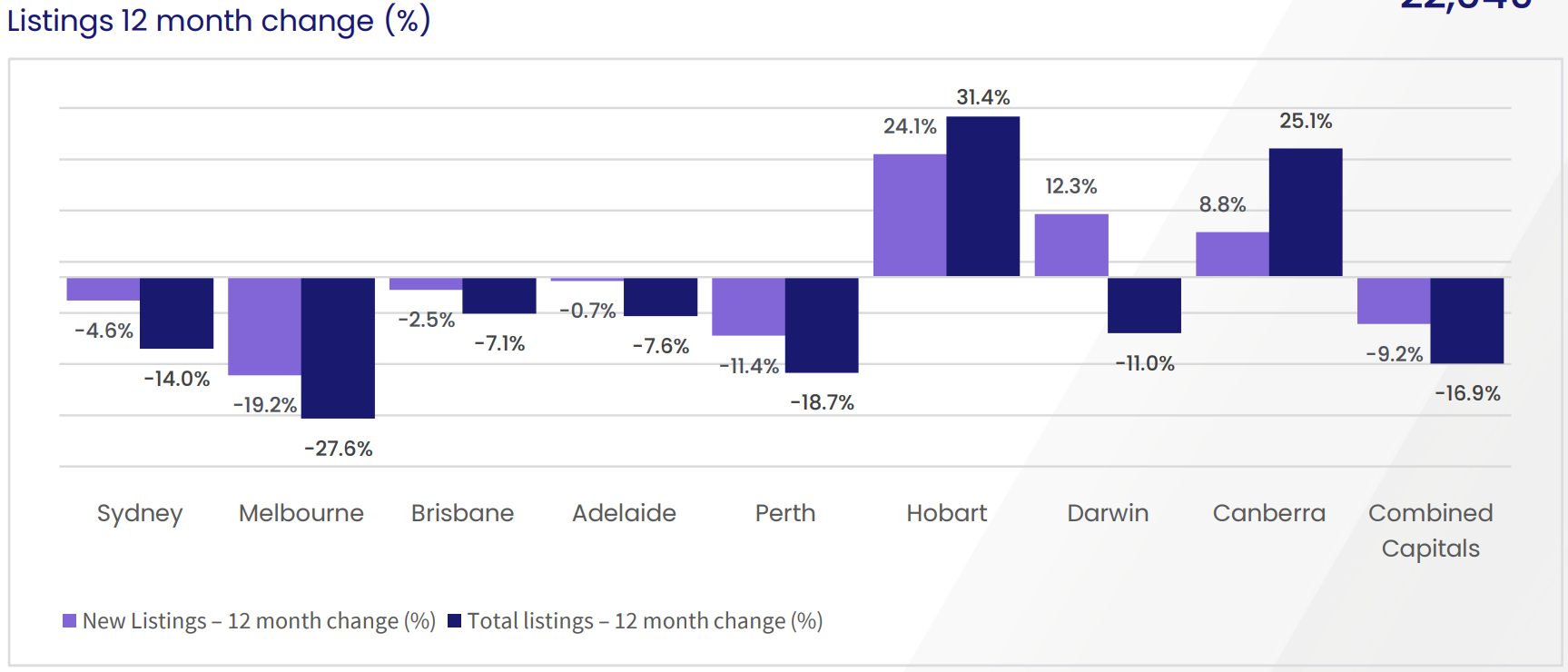
Looking at the capital cities, you can see that rental listings have falling over the past year across all of the major capital city markets, with Melbourne (-27.6%), Perth (-18.7%) and Sydney (-14.0%) most impacted:
Source: CoreLogic
It seems that the easing in rental vacancy rates has been driven by Australians grouping together in share housing, rather than an actual improvement in supply.
Flatmates.com.au, the nation’s largest home sharing website, registered a 70% year-on-year increase in sign-ups in May, smashing the record for the largest increase in new members with 70,000.
Moreover, any rental relief will only be temporary given Australia’s population is officially projected to grow by 2.18 million people over the five years to 2026-27, equivalent to adding five Canberras or one Perth.
This record population expansion will occur at a time when actual housing construction rates are declining due to widespread builder failures and rising financing (interest rate) costs:
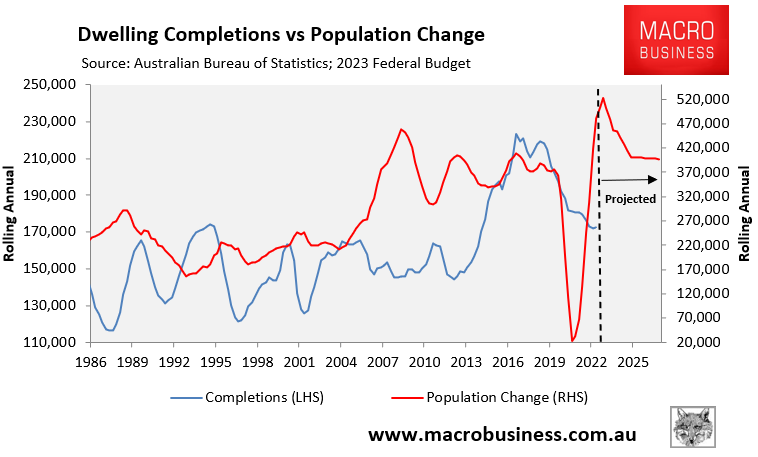
Treasury Secretary Steven Kennedy told May’s Senate Estimates hearing that the construction slump will persist until 2025, with new home investment forecast to decrease by 3.5% in 2023-24 and 1.5% in 2024-25.
Oxford Economics Australia also forecast a 21% decrease in overall housing construction over the three financial years to 2025.
In short, the Albanese Government’s extreme immigration policy will ensure that Australia’s rental shortage worsens, which will place lower income households into deep housing stress and force many into homelessness.
