
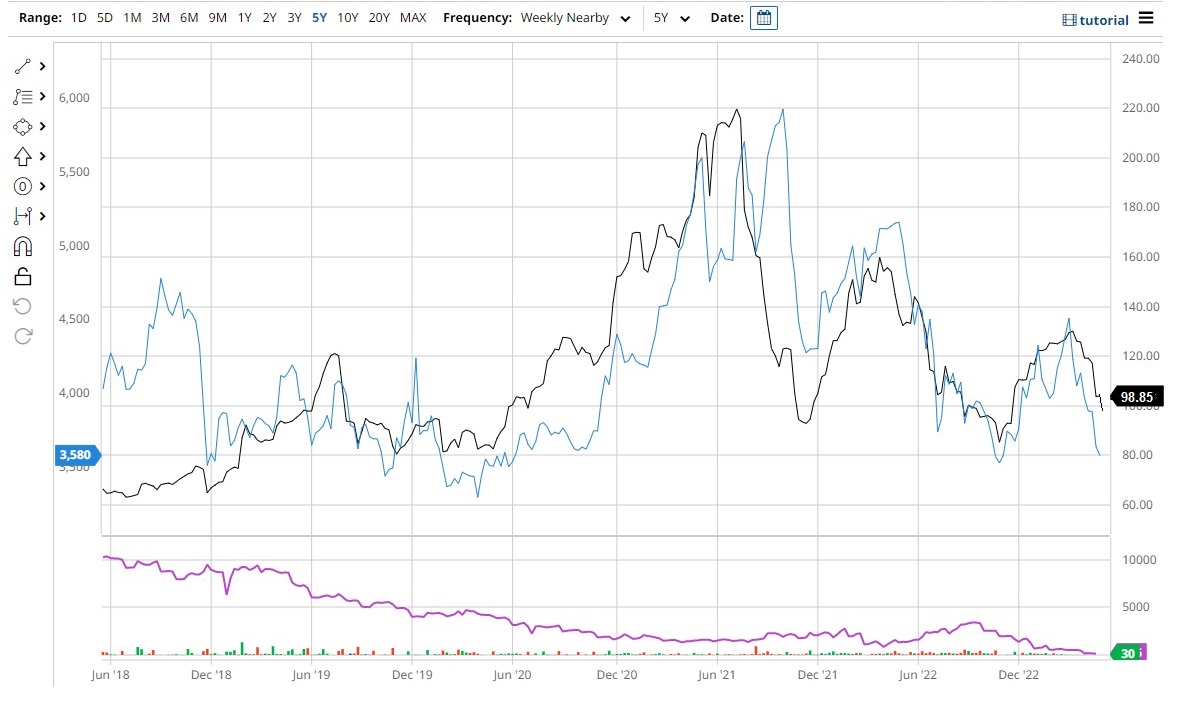
The trapdoor is opening under iron ore. It was down 2.4% yesterday to $98.85. Plummeting Chinese rebar is leading the way:
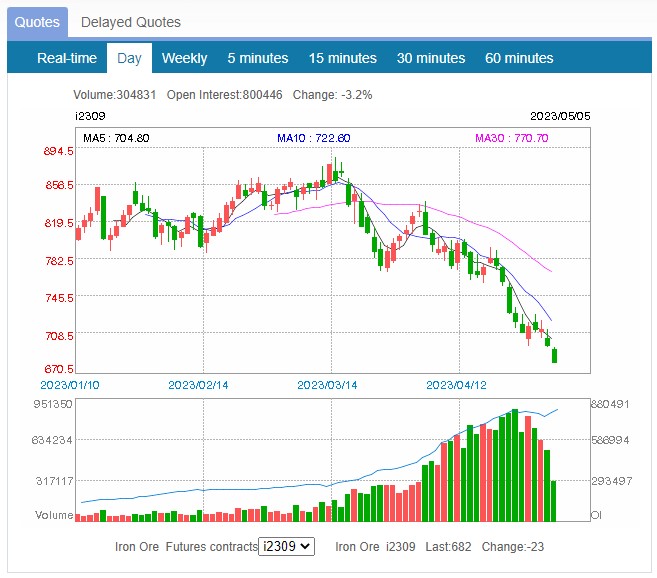
Dalian futures are giving way. From, last night:
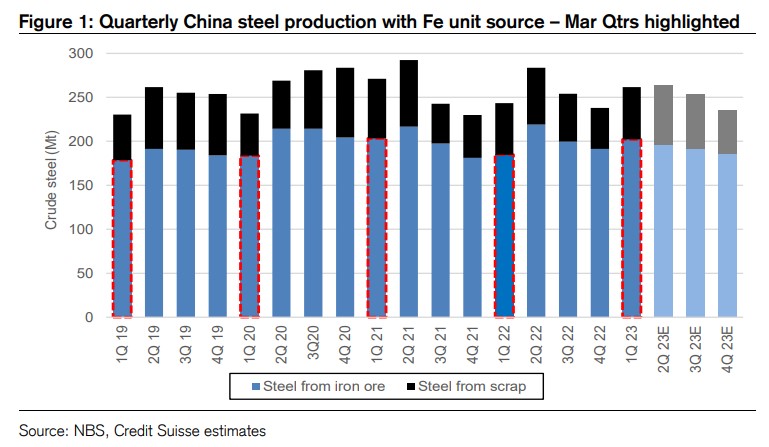
Steel output is far too high and the glut is crashing prices. Credit Suisse has more.
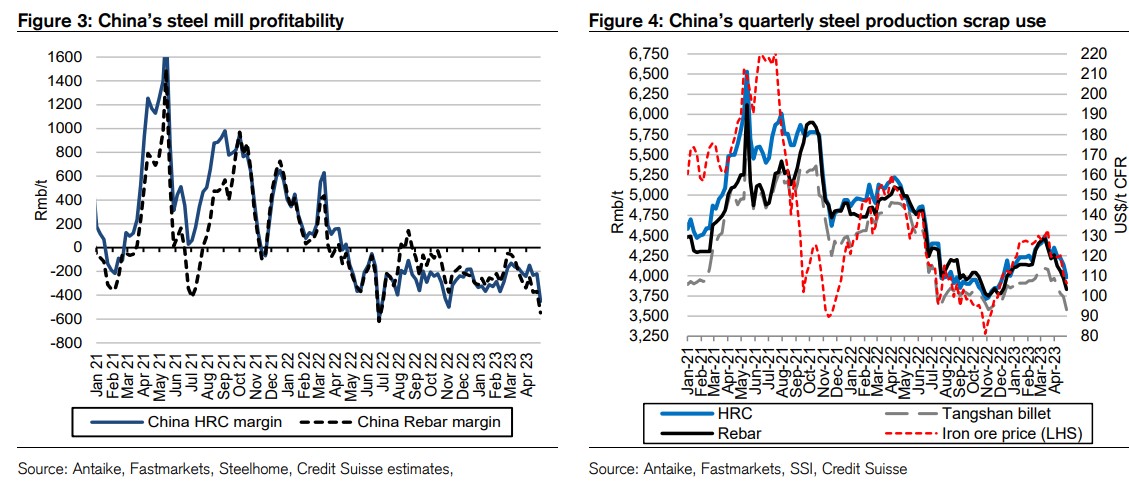
Iron ore prices began to unwind in April, in line with China steel prices as mill profitably worsened. The second highest MarQ steel output on record (Figure 1) was overdone as the start of construction season in April has not seen an expansion in steel demand. On the contrary, there was a worrying contraction in China’s manufacturing PMI in April, with weak demand in both exports and domestic demand. Steel output needs to reduce for steel and iron ore price recovery. CISA is urging rational steel production, but China’s steel sector is notoriously ill-disciplined, with high fixed costs hindering curtailments.
China’s 2016 steel capacity reduction is no longer sufficient. In 2016, the NDRC organised closures of steel mills following the heavy losses in 2015 which threatened to saddle the banking sector with bad debts. But now that steel production in China seems to have peaked, the fall in capacity utilisation and battle for market share is driving the sector back into protracted losses. The NDRC will probably need to organise another round of closures. But this is not positive for iron ore and we see lower prices after 2023.
There’s nothing to support the output. Pantheon has more.
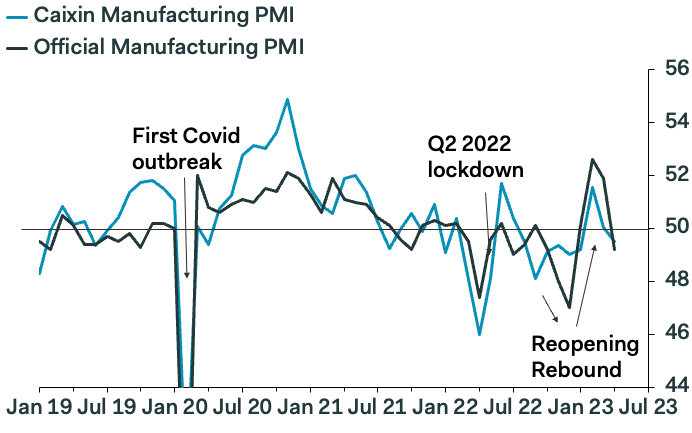
China’s recovery is an inflection point, with a robust services sector recovery but manufacturing losing momentum. The Caixin manufacturing PMI dropped 0.5 points to 49.5 in April, pulled down by ebbing domestic demand, while output is treading water. The Caixin index echoed the official PMI in pointing to a slowdown in manufacturing.
Caixin overall new orders dipped 1.3 points to 49.3, while output edged down 0.4 points. The consumption recovery is driving services, rather than manufacturing for now. But new export orders rose 1.1 points to 50.1. The rise in new export orders likely reflects firms catching up with order backlogs from earlier this year or even last year, during the period of strict Covid restrictions. We think that such short-term factors will prop up Chinese exports for only a month or two, before the reality of dismal global demand results in falling exports.
The China Caixin suppliers’ delivery times index posted a third straight month over 50, albeit dipping 0.4 points to 50.2. Supply chain issues have improved, with production resumption after China’s reopening and due to softer global demand. For example, the global electronics PMI reports that lead times for components to electronics manufacturers have improved to a degree not seen since 2001.
Price pressures have cooled, in line with the falling PPI figures. Input prices dropped 2.7 points to 47.1, while output prices fell 3.8 points to 46.1 in April. Production capacity has expanded as a result of strong manufacturing fixed asset investment over the last few years, while export demand is subdued and domestic domestic demand for manufactured goods is recovering only slowly. Steel prices have fallen, thanks to lower capacity utilisation in blast furnaces. China is likely to export disinflation, not inflation, to the world this year.
But Chinese manufacturers are bullish about the 12-month outlook. The Caixin future output reading inched up 0.5 points to an already high 60.5, while the official index shows a more cautiously optimistic 54.7 reading. The Caixin PMI reports that firms expect new products, supportive government measures and investment in Capex to underpin business expansion. The just-finished and crowded Shanghai Auto Show saw the launch of 100 new models, including 70 electric vehicles—and dominated by domestic brands.
We think China’s multi-speed recovery will continue in Q2, but initial indications are that overall economic growth momentum is likely to slow q/q from Q1—even though the y/y growth numbers will be flattered by base effects from the Q2 2022 lockdown. Top 100 developer housing sales slowed more m/m in April, after the strong March figures on the back of the release of pent-up demand.
By contrast, tomorrow’s Caixin services PMI is likely to dip 2.2 points to a still strong 55.6, after a similar slowing in the official services PMI. The reopening rebound is driving services, such as restaurants and tourism, rather than manufacturing, which is also hit by cooling global demand.
The State Council is seeking to promote consumption by bolstering jobs, including subsidising employers to create a million new internship positions this year, the same target as last year. China is likely to refrain from broad stimulus in Q2, while issuing further targeted policy support for consumption, private investment and foreign investment.
And this is before the US recession delivers a trade shock of unknown depth because the small bank crisis is metastasising.
Get out of the way.
