
For those that think Chinese steel prices (hello Gottiboff) aren’t the key input into iron ore prices, I have a chart for you. This is Sep futures for both:
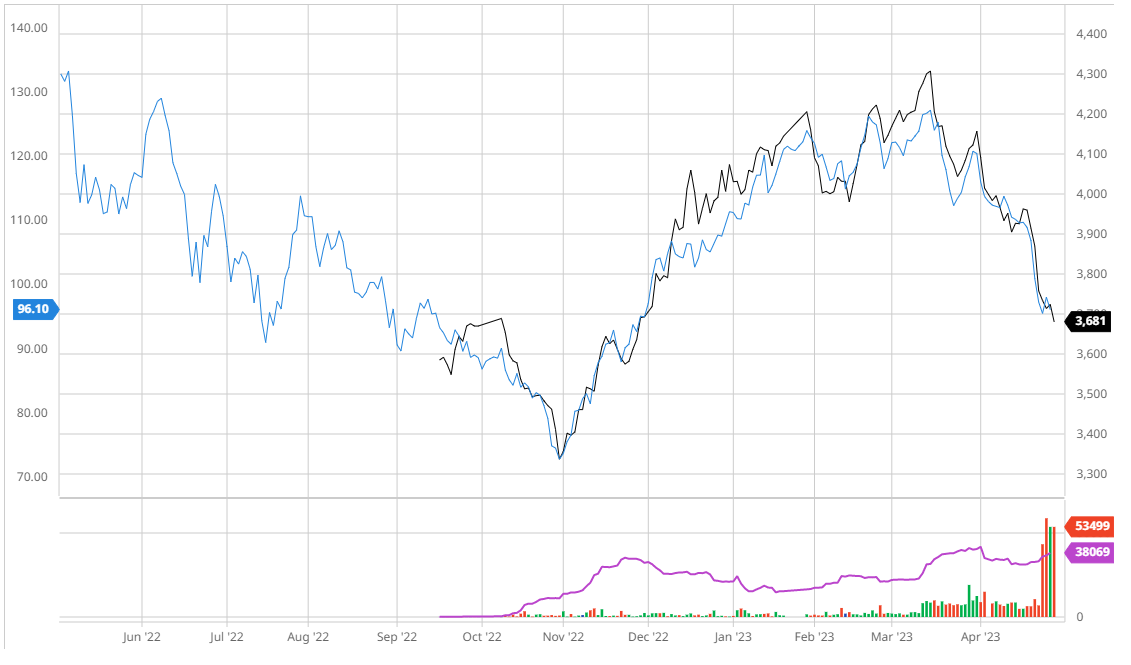
‘Nuff said.
The signals for the iron ore market this week are still poor.
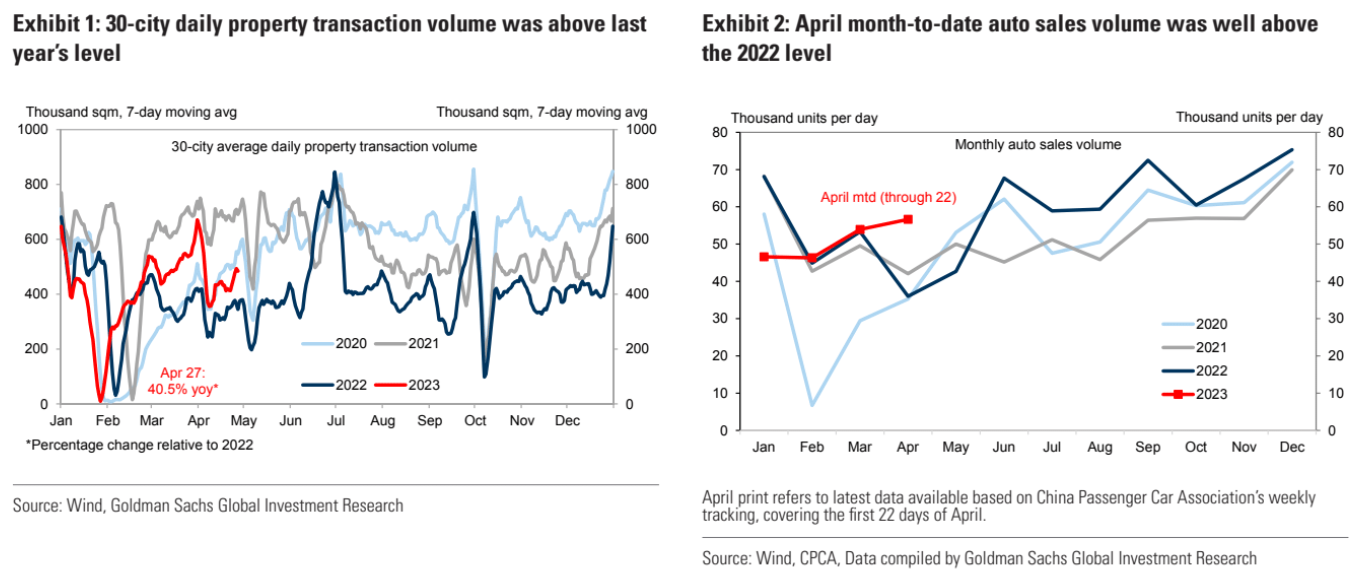
Chinese property and car sales are tracking better:
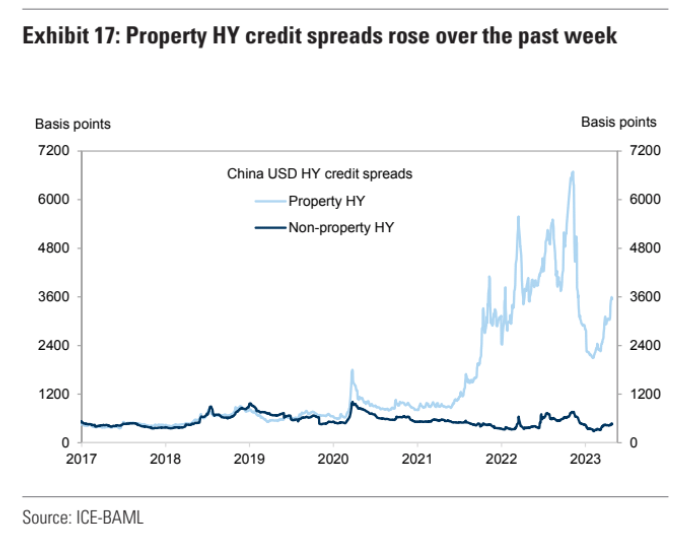
But the former transmission to starts is still inhibited by dollar bond spreads for developers:
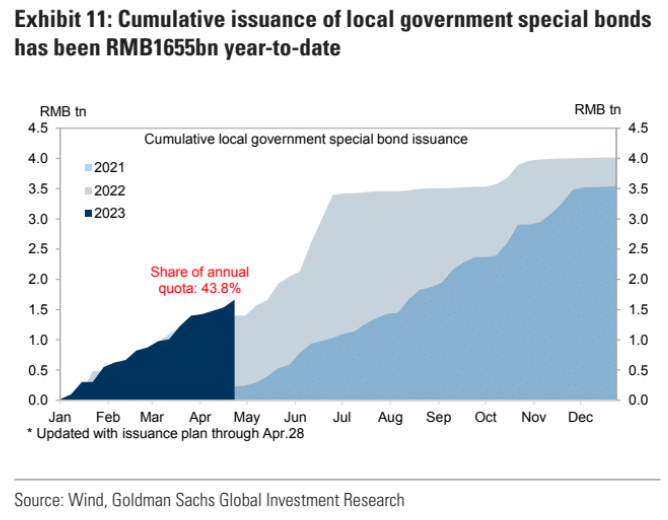
Infrastructure funding is trending lower than 2022 as well, bearing in mind that the quota is 5% lower:
While the broader economy is chugging along:
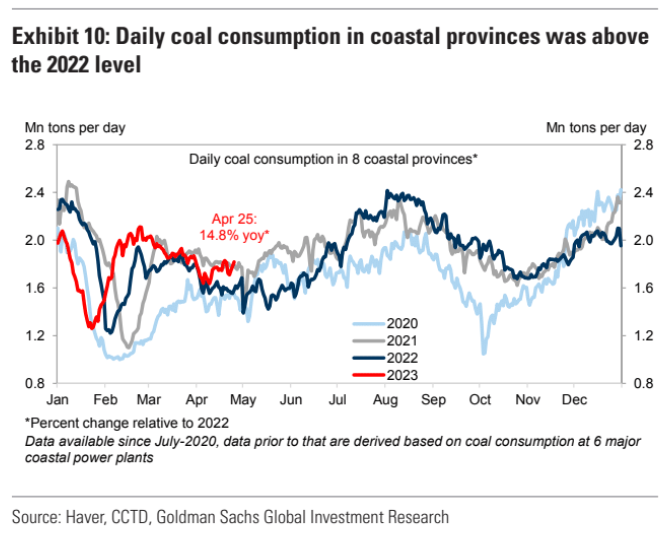
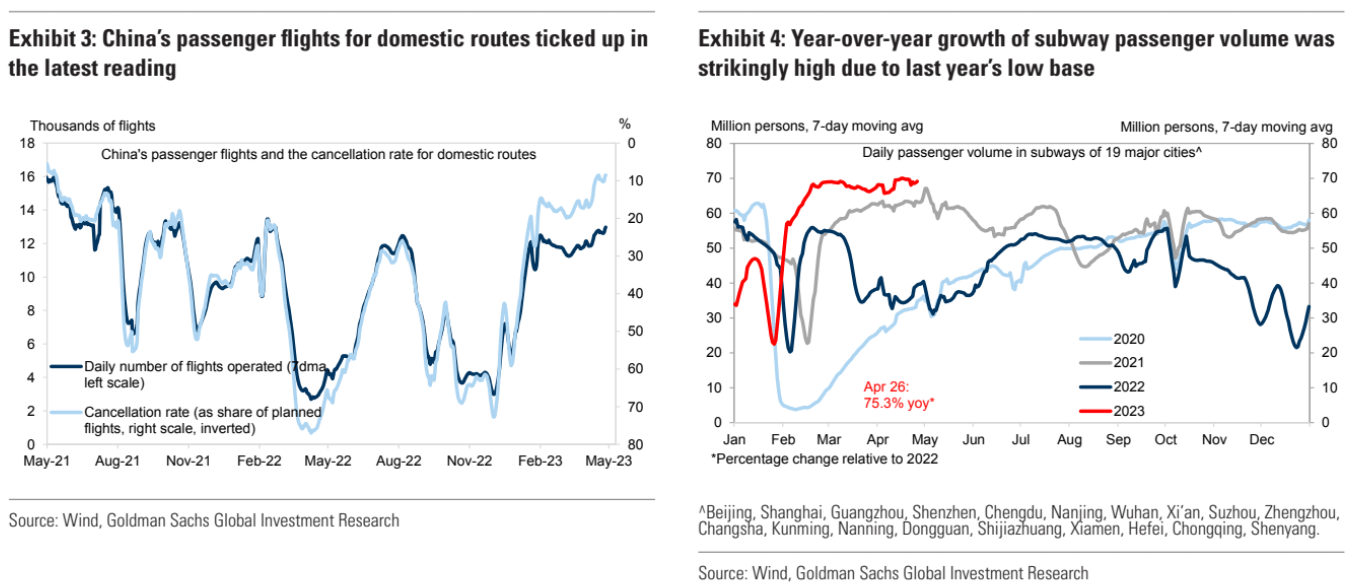
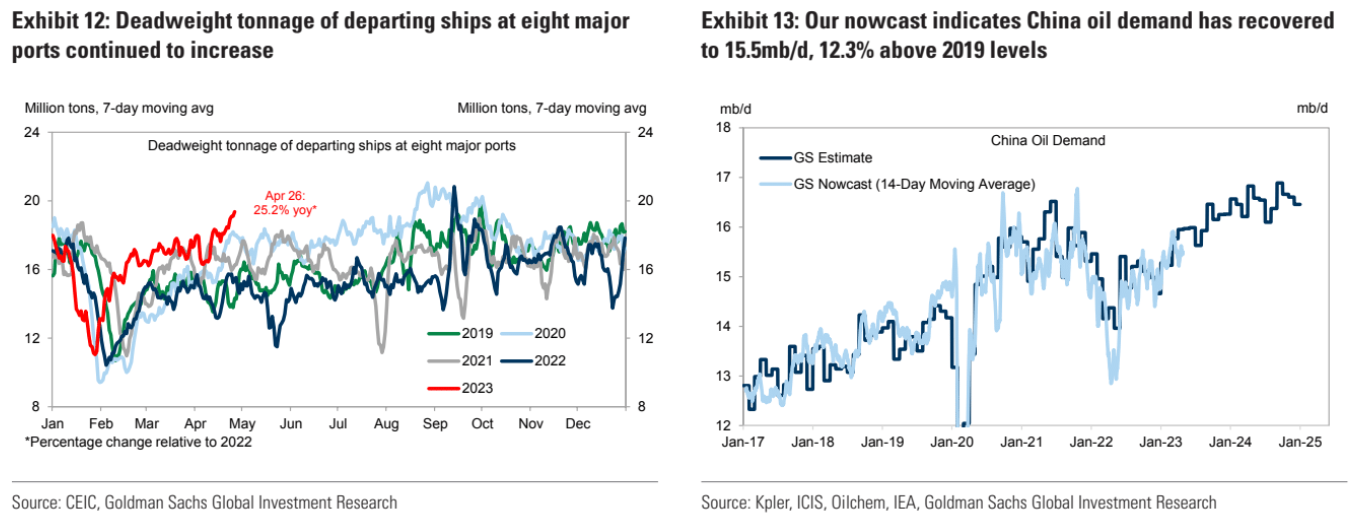
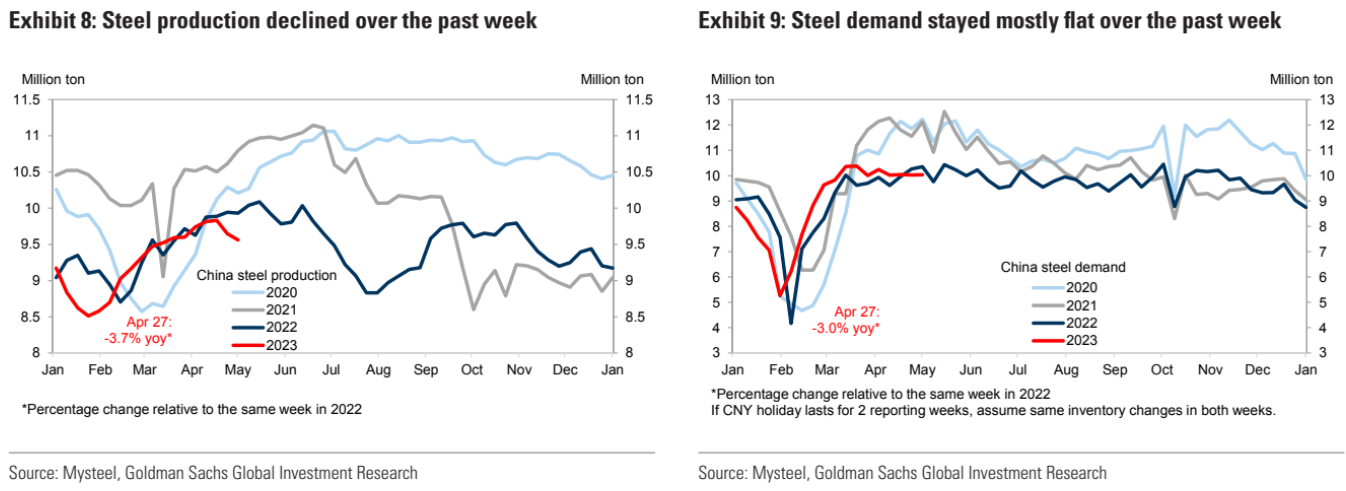
Steel output is falling away as mills address high inventories and weak end-user demand:
There is some supportive news from policy. Goldman:
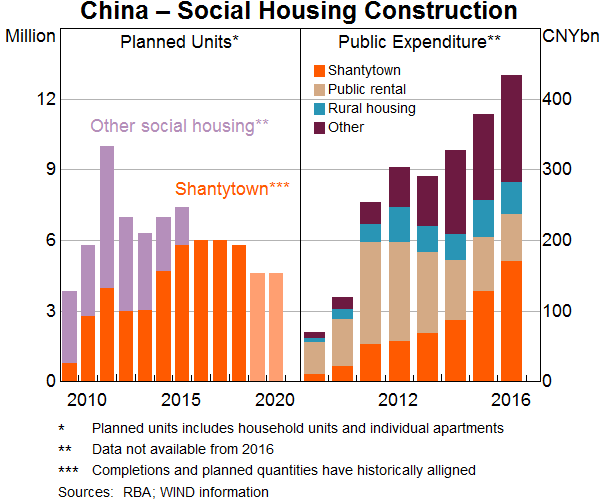
President Xi chaired the April Politburo meeting today (April 28) and discussed economic policies for the next few months. Compared with the Central EconomicWork Conference (CEWC) in December last year, in April’s meeting statement policymakers prioritized industrial policies and maintained their “pro-growth” policy stance. Policymakers vowed to accelerate “building a modern industrial system”, step up support for new-energy vehicles and artificial intelligence (AI), and enhance China’s “self-reliance” in science and technology. Meanwhile, policymakers’ assessment on the current economic situation appeared neutral – the statement acknowledged that Q1 data were better than expected, but concluded “demand remained insufficient” and “promoting high-quality growth remained challenging”.Property construction might gain more policy support as today’s statement highlighted social housing and shanty town redevelopment in large cities.
In addition, in the risk reduction section, today’s statement pointed out the necessity to lower risks in small to medium-sized banks, insurance companies and trust companies. This could be a subtle hint that the anti-corruption efforts could continue in the financial sector and policymakers might work on curbing financial leverage and regulating financial institutions’ off balance-sheet businesses in the next few months. Ministry of Housing and Urban-Rural Development targeted to start building 3.6m units of public rental and social housing in 2023 on a nationwide basis, vs a target of constructing 2.4m units of public rental housing in 2022.
It will help offset the downdraft in infrastructure but the extra 1.2m units are still a long way short of the glory days and is unlikely to arrive owing to dodgy transmision:
And when we degoldmanise the newsfeed, it is not so great. BofA:
Caution on property sector & government debt
That said, policy makers struck a slightly more cautioustone on the property sector and appear harsher on curbing local government borrowing.
Property: By bringing the crucial line of “housing is for living, not for speculation purposes” back into the meeting minutes (omitted in the GWR), the Politburo suggested a less accommodative stance on properties. Even though the property market recovery is still in an early stage, this implies potential concerns on property price increases leading to speculation. Meanwhile, the Politburo reiterated it will support both the basic and upgrading housing demand, and highlighted policy focus on ensuring home delivery and to facilitate a stable and healthy development of the property market.
Local government debt: Policymakers also warned against local government debt risks with a stern line-“adamantly curb any new hidden debts”. That’s one step harsher than the usual “curbing growth and resolving the existing” stance when it comes to the off-balance-sheet borrowing of the local governments. In addition, policy makers also cautioned against the risks in smaller banks, insurance firms and trusts, in the aftermath of the regional bank crisis in the US.
We can probably expect a mid-year firming in ferrous prices (barring a broader market shock), but I remain bearish on iron ore and coking coal for the balance of 2023.
