
The most recent statistics for Australia’s housing construction industry were dismal.
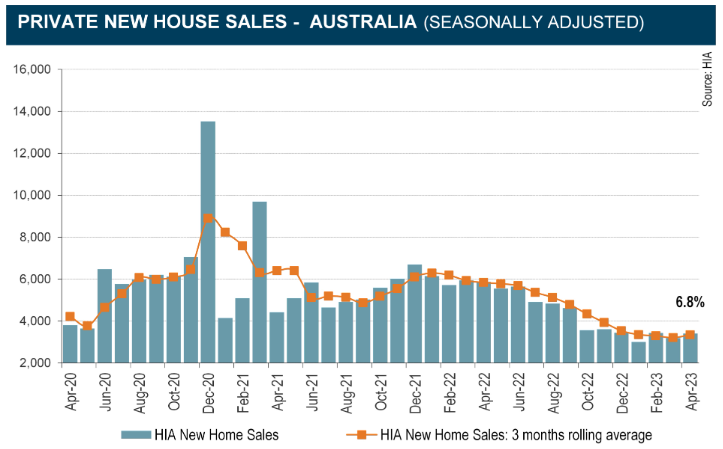
Private new house sales have approximately halved since their high in December 2021:
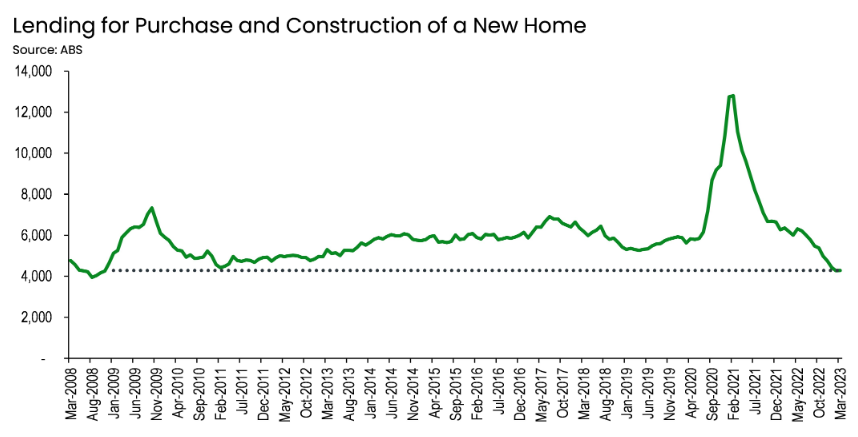
The Australian Bureau of Statistics (ABS) also revealed a 31% year-on-year fall in the number of loans provided to acquire or build a new home, which is currently at its lowest level in 15 years:
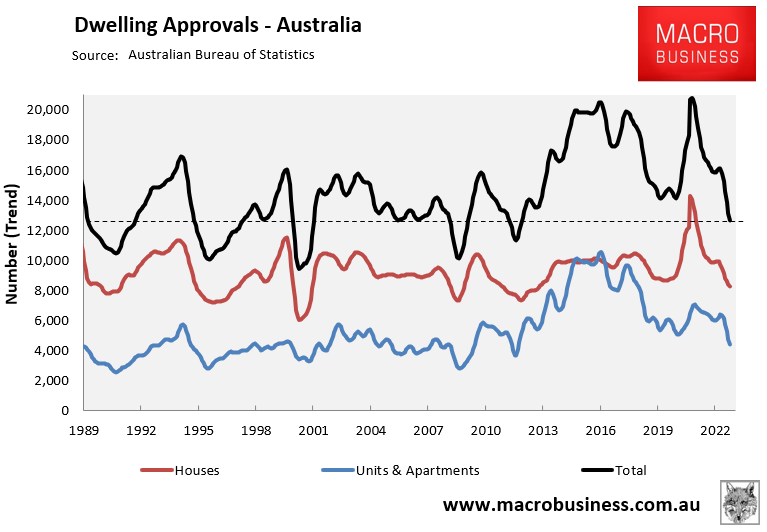
The ABS also reported that housing approvals had fallen to their lowest level since April 2012.
It was the sixth consecutive monthly drop in trend housing approvals, with house approvals plummeting to March 2013 lows and unit approvals plummeting to February 2012 lows:
Therefore, all forward-looking indicators for Australia’s home building industry are flashing red, at a time when thousands of builders have already gone bust.
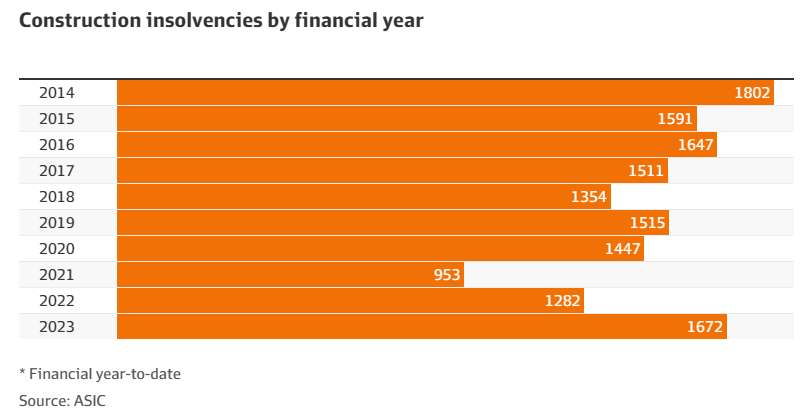
We revealed earlier this month that 1672 housing construction firms had gone insolvent in Australia so far this year, in what has been nicknamed an “insolvency Armageddon.”
That is the largest number of insolvencies since 2014, and it is likely to be surpassed with two months remaining this financial year:
Given the industry’s bleak prognosis, the Australian Construction Industry Forum this week reduced its projections of detached house building by $1.1 billion from its previous forecast in November, as well as forecast 61,000 job losses in the construction industry over the next three years.
The layoffs are expected to impact both skilled and unskilled positions, as well as trades.
The collapse in home building has occurred at the worst possible time, given housing demand is soaring in response to the Albanese Government’s record net overseas migration.
According to last week’s federal budget, 1.5 million net overseas migrants will arrive in Australia over the next five years, driving a 2.18 million increase in population.
That 2.18 million projected growth is equivalent to adding five Canberra’s or one Perth to Australia’s present population.
Accordingly, Australia’s rental crisis and homelessness will worsen as demand continues to outstrip the industry’s ability to build new homes.
On Tuesday, The AFR’s Simon Evans reported that “the cost of home building will continue to surge this year, materials manufacturers have warned, keeping the pace of housing construction subdued and exacerbating a tight rental market”.
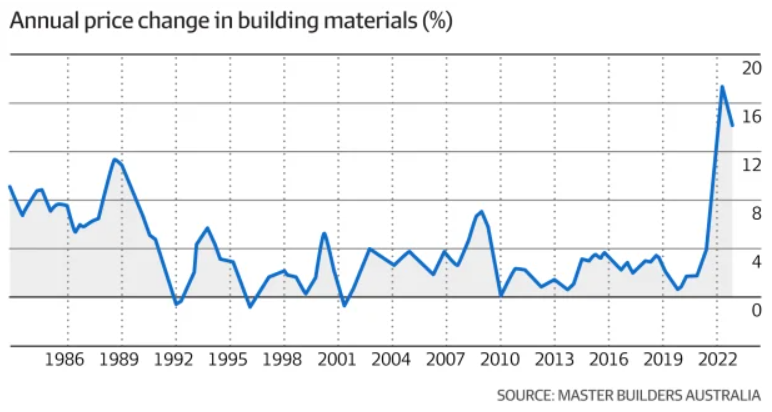
Fletcher Building chief executive Ross Taylor told The AFR that “the combination of a softening macro outlook, along with costs continuing to increase” will continue to pose “challenges for builders”.
HSBC chief economist, Paul Bloxham, likewise warned that “the shock to construction costs, other pandemic-related supply disruptions, and sharply higher interest rates have seen a sharp rise in construction company insolvencies”.
In turn, “sharply higher rents will likely mean an increase in average household size”, according to Bloxham.
Sadly, the Albanese Government’s extreme immigration settings have given zero thought to the consequences on liveability and infrastructure provision in our cities, nor where these migrants will live.
It is a ‘grow and hope’ strategy that will leave Australians desperately short of homes, driving rents into the stratosphere and forcing thousands of residents into cramped living conditions or homelessness.
