
In February, Reserve Bank of Australia (RBA) Governor Philip Lowe convinced the market there were several interest rate rises ahead.
The market quickly priced in an expected peak in the cash rate of 4.2%, suggesting between three and four more rate hikes at the time.
But that was three weeks ago, and the market has flipped, as illustrated by the below chart from Deloitte Access Economics:
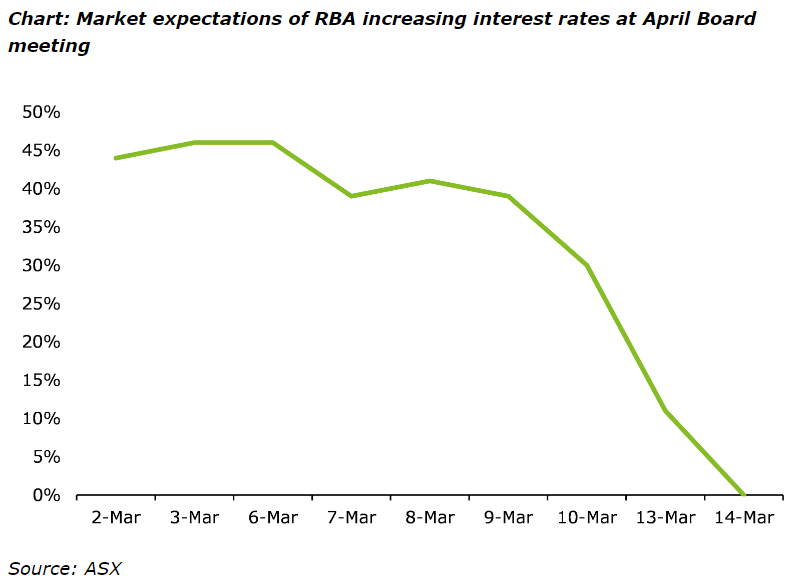
That’s right, the market is now tipping no further rate hike in April. In fact, cuts are now expected late in the year.
However, even if the RBA pauses, monetary conditions will continue to tighten owing to the fixed rate “mortgage cliff”.
According to Deloitte’s latest Weekly Economic Briefing, “the share of fixed rate mortgages in Australia rose from 20% in 2019 to almost 40% in 2021 as the RBA dropped the cash rate target to just 0.1% (with many borrowers locking in the record low)”.
“Fast forward to 2023 and almost two-thirds of fixed rate mortgages are set to expire this year and be reset to current variable rates which have increased significantly in response to a sharp rise in the cash rate. Fixed rates as low as 2% will reset to current variable rates that are above 6%”.
“The abrupt increase in monthly mortgage interest payments, which is likely to impact almost a million households through 2023”, according to Deloitte.
The next chart from Morgan Stanley tells the tale:
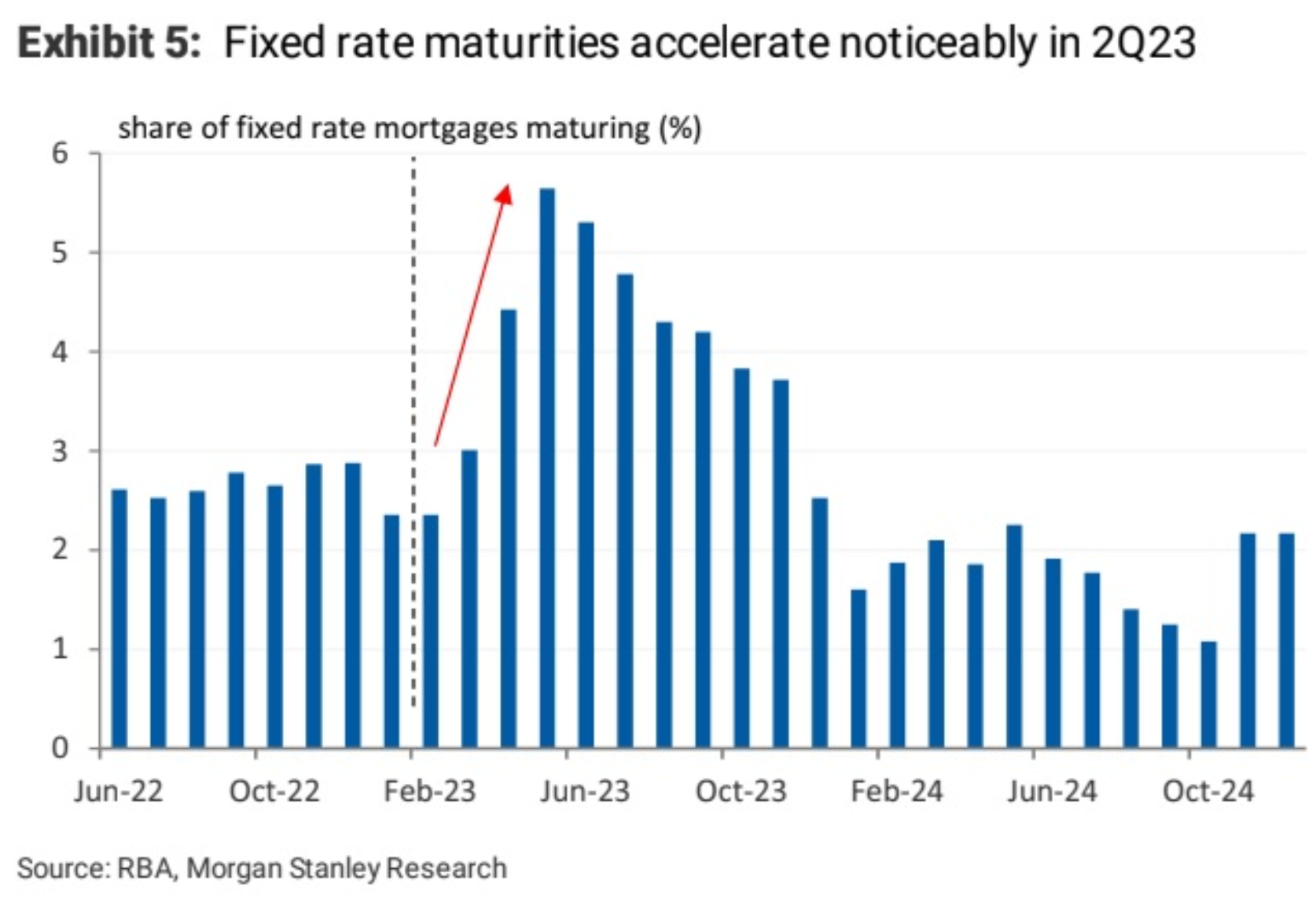
The volume of fixed rate mortgages expiring will rise precipitously from April, peaking in May, and then remaining at high levels through the remainder of this year, according to Morgan Stanley.
Mortgage rates have already risen beyond 3 percentage points for many borrowers, which was the minimum serviceability buffer they were assessed at when they took out their loan.
Therefore, many thousands of borrowers risk being pulled underwater as their fixed rate terms expire in the near future.
In turn, Australia’s housing market will likely see a significant increase in forced sales, which should place downward pressure on house prices.
Deloitte also warns that $21 billion, equivalent to 2% of household spending, could be sucked out of the Australian economy.
Therefore, “the lagged impact of rate rises put through to date will be more than trivial, and it will continue to play out in Australia over 2023”.
