CoreLogic’s November house price report shows that rents continued to grow at an extreme pace, fueled by the return of large-scale net overseas migration.
However, as shown below, there has been some substitution between houses and units, with rents for apartments now growing more strongly:
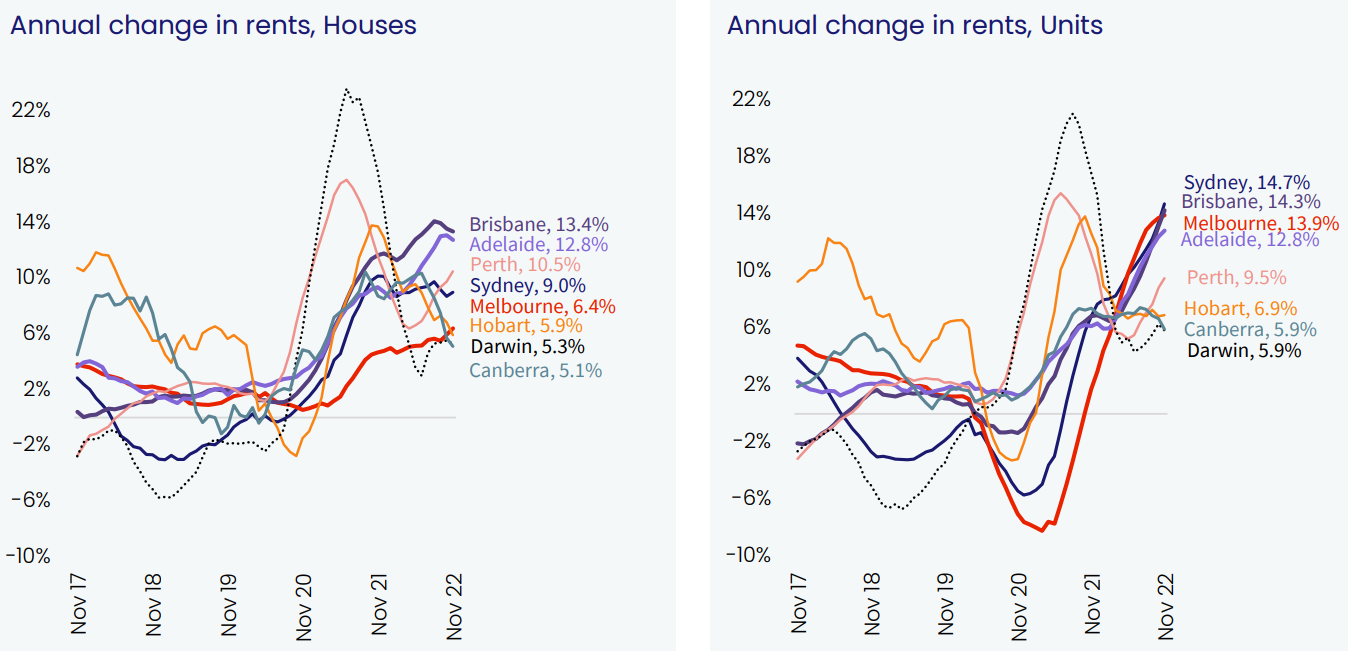
According to CoreLogic, vacancy rates are “holding around 1% or lower in most reasons” and this has been driven “by a combination of low rental supply against a backdrop of rising rental demand due to the strong rebound in net overseas migration”.
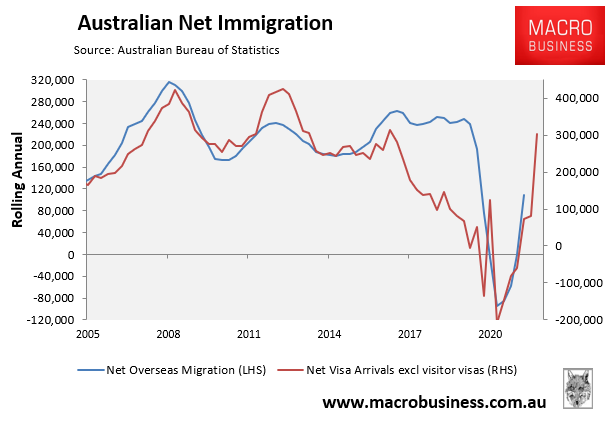
As a result, the “number of capital city homes advertised for rent reached a decade low through November and regional rental ads have not been this low since 2009”. And this has occurred as “net overseas migration has bounced back rapidly, reaching record highs in some states through the first quarter of the year (most recent data); a trend that has likely increased further since that time”.
However, despite rampant rental demand, house rents have eased somewhat, which “could be a sign that rental demand is transitioning towards more affordable rental options such as the higher density sector”.
CoreLogic also believes that the number of people per dwelling – which fell sharply over the pandemic (see next chart) – is beginning to rise amid declining rental affordability.
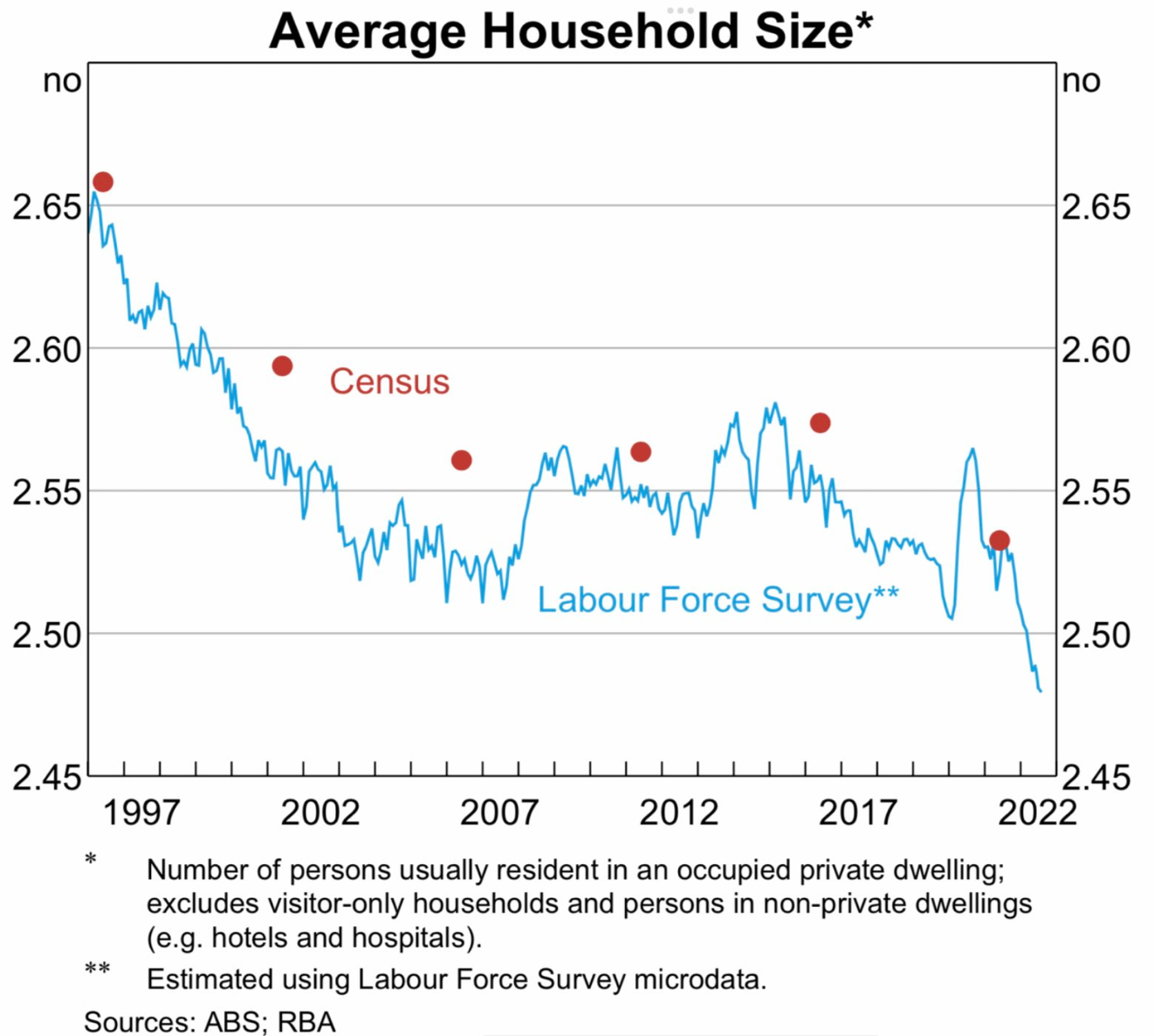
“As tenancy costs rise and renters struggle with affordability pressures, it’s logical that households would seek to maximise the occupancy of the dwelling in order to spread higher rental costs across a larger number of tenants”, CoreLogic’s head of research Tim Lawless said.
Regardless, upward pressure on rents will remain given net visa arrivals have already rebounded to pre-pandemic levels – a trend that is expected to worsen into 2023 as record number of international students arrive.
Indeed, last month Immigration Minister Andrew Giles boasted how the Albanese Government was remedying “a decade of cruelty and a decade of neglect” from the former Coalition Government and had processed 3.4 million visa applications since June.
Giles also promised that the contrived “one million visa backlog” would be reduced to 600,000 by the end of the year, and further reduced next year.
Where will these hundreds of thousands of new migrants live when there is already a disastrous shortfall of rental homes for the existing population?
The Albanese Government’s mass immigration policy is an inequality disaster in the making that will inevitably drive rents to the moon and push thousands of Australians into homelessness.