As the global recession approaches, metals demand is slip-sliding away. Citi has more.
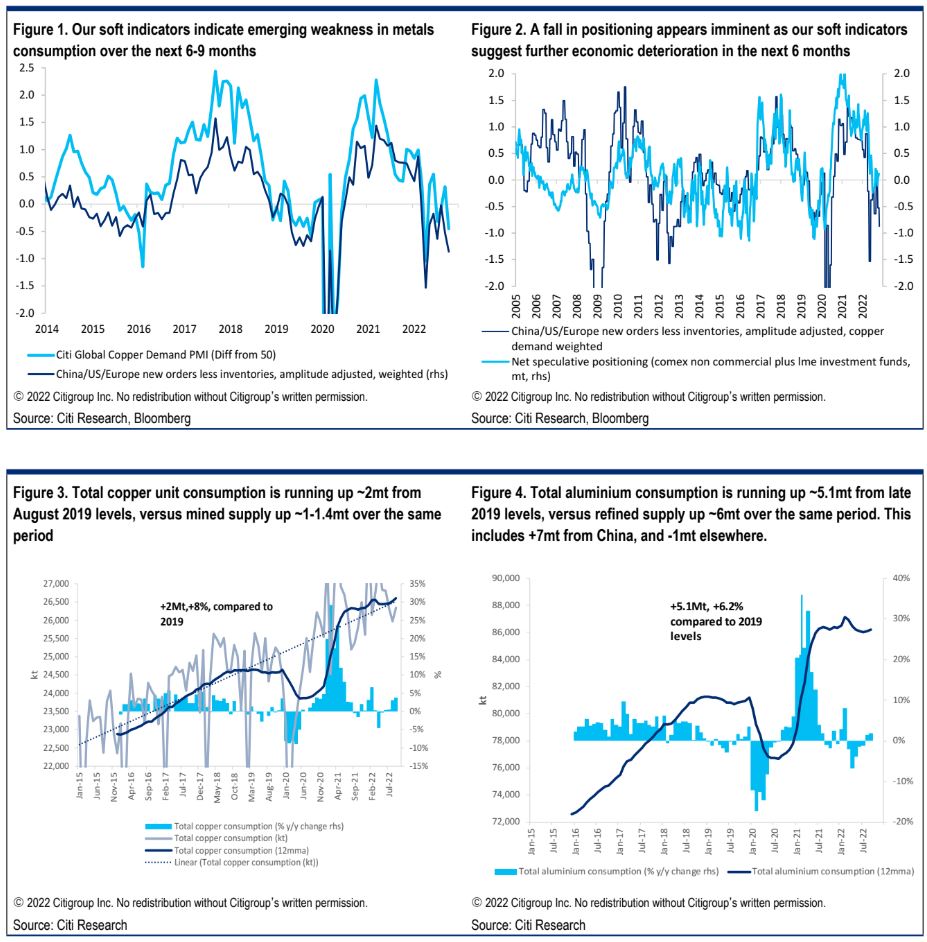
Our global manufacturing soft indicators point to metals consumption growth likely to soften after seeing modest growth in September. China’s new orders index fell notably in October, impacted by a fresh flare-up of Covid cases and subsequent restrictions on activity. Eurozone manufacturing PMI (S&P Global) fell to 46.6, marking the fourth consecutive month of decline amid high electricity prices and rampant inflationary pressures. We expect that macro-economic data for Europe and the US will continue to deteriorate over the next 6 months.
China’s recovery remains fragile. PMIs for October were much weaker than expected. China’s manufacturing PMI fell to 49.2, the lowest reading in 3 months. The driver was tighter Covid restrictions around the National Party Congress. Demand struggled with the new orders index weakening to 48.1, the lowest reading since April. The inventory index increased to 48. As per our economists, the diverging performance of different sectors of the Chinese economy worsened, weighing on the fragile recovery. A policy push to drive infrastructure activity continued to bear fruit, other parts of the economy are suffering amid zero-Covid headwinds. Citi economists are warning of downside risk to our GDP forecast of 4.6%YoY for Q4, with Covid constraints the top risk factor.
Soft manufacturing indicators imply a substantial further decline in copper positioning over the coming months (see Figure 2). We expect Europe to slide into recession and ex-China growth to slow sharply. This should drive speculative positioning across the metals complex down to the 2019 lows. We believe there is scope for a further ~1Mt of copper selling on the LME and COMEX (~4% of annual consumption).
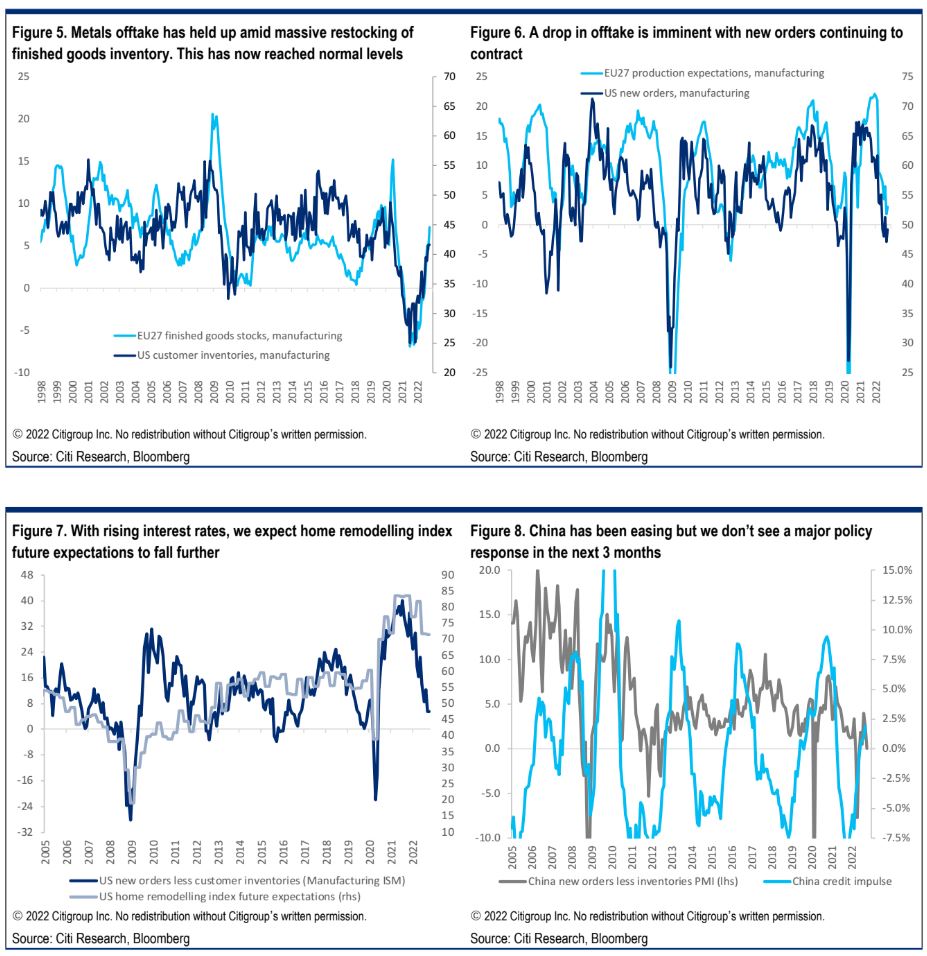
In our view, metals offtake has held up robustly, but we see an imminent collapse in the near term. Metals offtake has remained robust over the last 6 months. Finished goods inventories had been rising despite falling new orders (see Figure 5). This was as end users rebuilt inventories from the depleted levels of 2021. Inventory levels have now normalised while new orders are falling (see Figure 6). Hence, we see metals offtake collapsing in the next 6 months, weighing on prices.
We are increasingly bearish on the broader base metals complex and recommend selling rallies. With the October soft manufacturing indicator data, our conviction in a Europe-led global recession has increased. In our base case, we see base metals falling by another 10-20% from current levels over the next 6 months. In terms of our preference, we remain bearish on copper and expect prices to decline to $6,200/t by Q1’23. This reflects a particularly soft European demand outlook, and to a lesser degree strong anticipated mine supply growth in 2023.