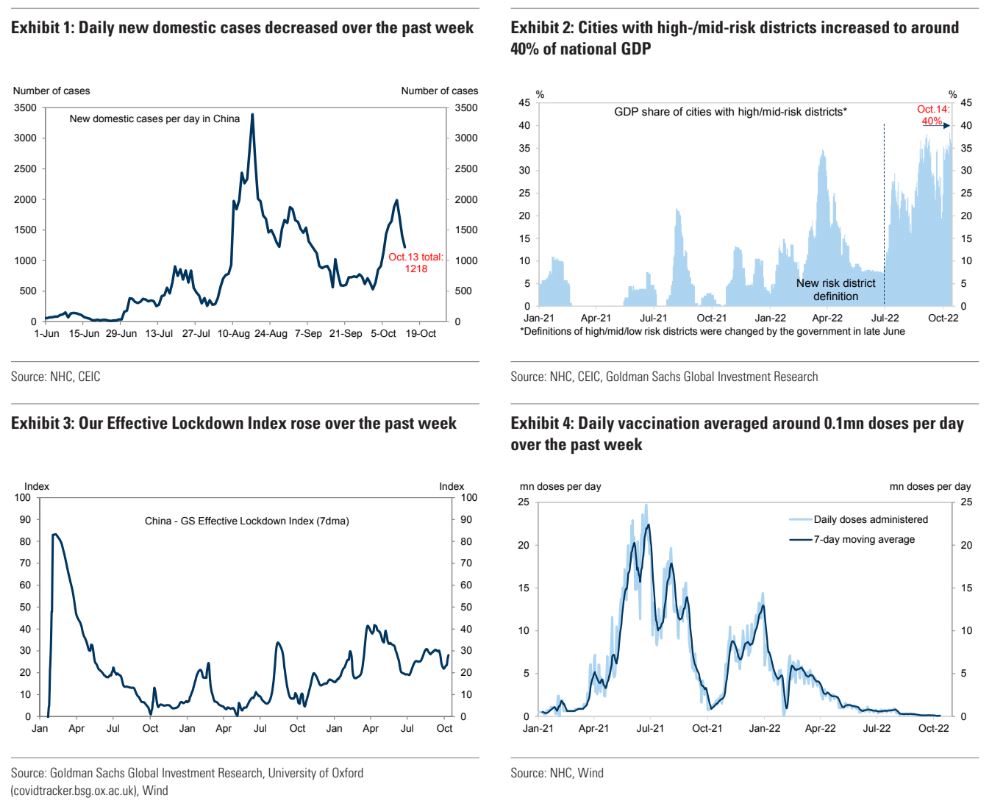
COVID cases are falling again but lockdowns aren’t:
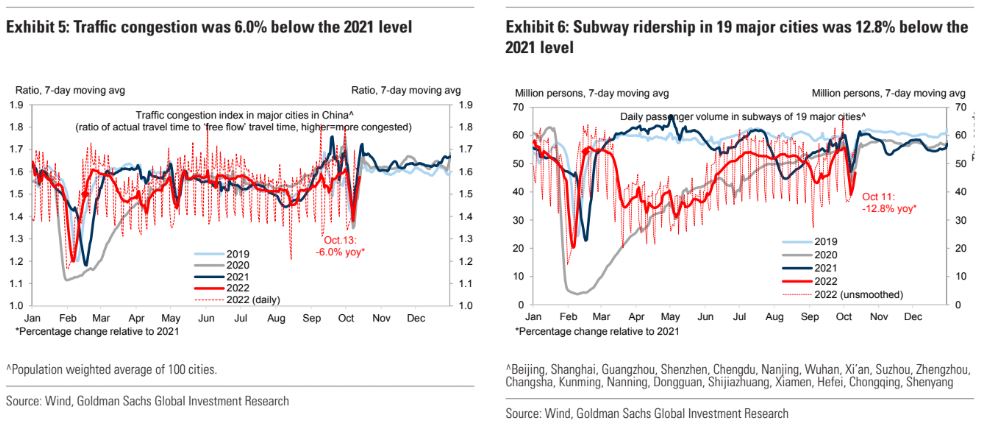
Mobility sucks:
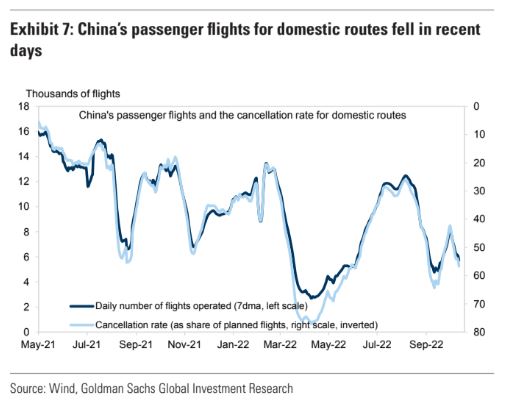
Coal and cars are OK but property isn’t, neither sales nor developers:
Advertisement
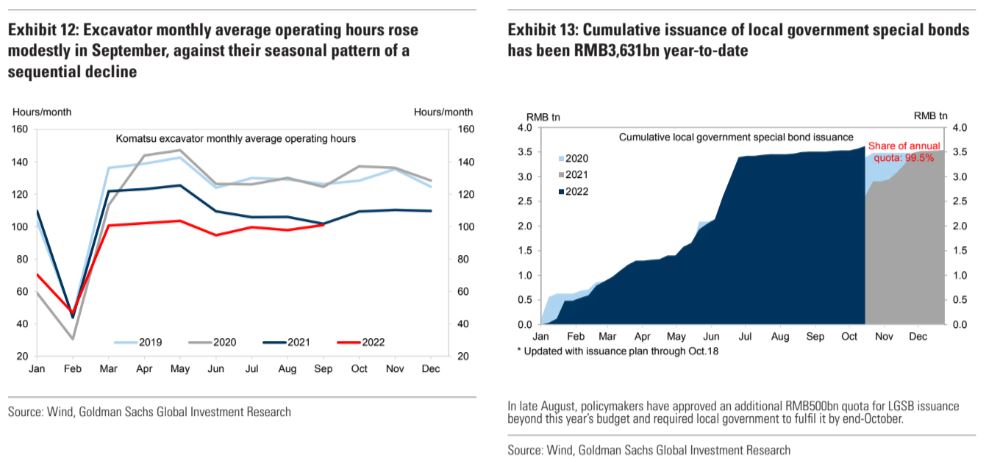
Infrastructure carries on:
I can’t see anything other than ongoing weak domestic demand. Confirmed by inflation data. Pantheon:
Food again pushes consumer price inflation higher
The rise in headline CPI inflation in September was driven by food inflation, which jumped to 8.8% y/y, from 6.1% in August. The key driver of this increase was a sharp rise in pork prices; pork inflation surged to 36.0% y/y in September, from 22.4% in August, thanks to falling slaughter rates and rising holiday demand. The authorities have started releases from the other SPR – the strategic pork reserve – in an effort to calm the situation. Vegetables also contributed to the overall food inflation increase, again partly linked to the holiday, but also an effect of weather conditions and zero-Covid; the latter often prompts a jump in demand for fresh food.
Consumer goods inflation also rose, to 4.3%, from 3.7%, which largely reflects historic energy price increases; our estimate of goods ex-food and energy inflation fell to 1.1%, from 1.3%. Energy inflation is now falling, however, with our estimate dropping to 10.9% in September, from 11.9% in August, so in time this should feed through to related basket items, particularly private transport. Services inflation was weaker in September, falling to 0.5%, from 0.7%, likely a result of the chilling effect of zero-Covid on demand, helping to drag overall core inflation down to 0.6%, from 0.8%. Domestic demand is still falling; the increase in headline inflation does not tell us that China’s economy is finally heating up.
We expect non-food inflation to fall next month, and the authorities’ ability to control pork inflation will be key in determining whether September marks the peak for headline inflation. For now, wholesale pork prices continue to climb, but we will need a much larger increase to sustain the September inflation rate. We expect inflation to pull back in October.
More falls to come for PPI
The sharp fall in PPI inflation was propelled by mining PPI, though producer goods broadly saw disinflation, or even deflation, in September. Mining PPI rose just 3.5% in September, plummeting from 10.1% in August, reflecting base effects and weaker global energy prices. Coal mining has now entered deflation, of -2.7% y/y, from 8.6% in August, and double digit inflation for the last 16 months. Raw materials inflation was also softer, and manufactured goods fell deeper into deflation, at -1.9% in September, from -0.7% in August. Only consumer goods saw inflation rise in September, to 1.8%, from 1.6%, and this was chiefly driven by food. Consumer durables have been in deflation territory since April.
We expect PPI inflation to trend lower as we head into year-end, and think outright deflation is likely by Q1 2023. Where PPI leads, Chinese export prices tend to follow, as we have noted before, so China will be helping the fight against inflation elsewhere.
David Llewellyn-Smith is Chief Strategist at the MB Fund and MB Super. David is the founding publisher and editor of MacroBusiness and was the founding publisher and global economy editor of The Diplomat, the Asia Pacific's leading geo-politics and economics portal.
He is also a former gold trader and economic commentator at The Sydney Morning Herald, The Age, the ABC and Business Spectator. He is the co-author of The Great Crash of 2008 with Ross Garnaut and was the editor of the second Garnaut Climate Change Review.