
PropTrack has released its June quarter rental report, which shows that median weekly rental prices rose 7% in the year to June 2022, making it the fastest pace of rental growth in seven years.
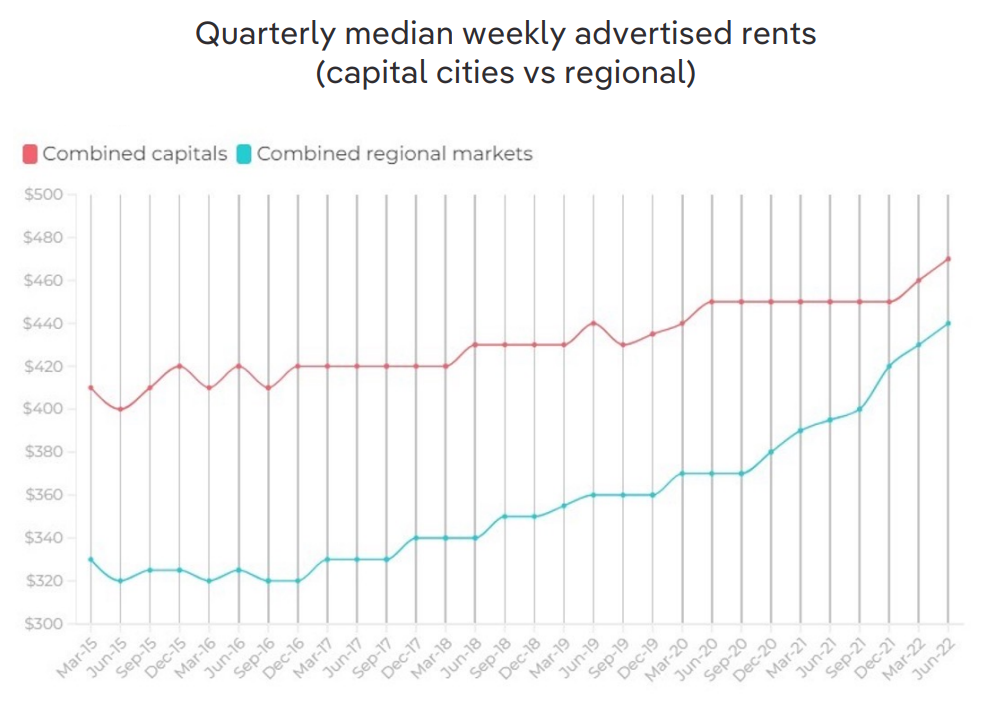
Over the June quarter, regional rents rose by 2.3%, whereas capital city rents rose by 2.2%. Over the year, regional rents surged 11.4%, compared to 4.4% growth across the capital cities:
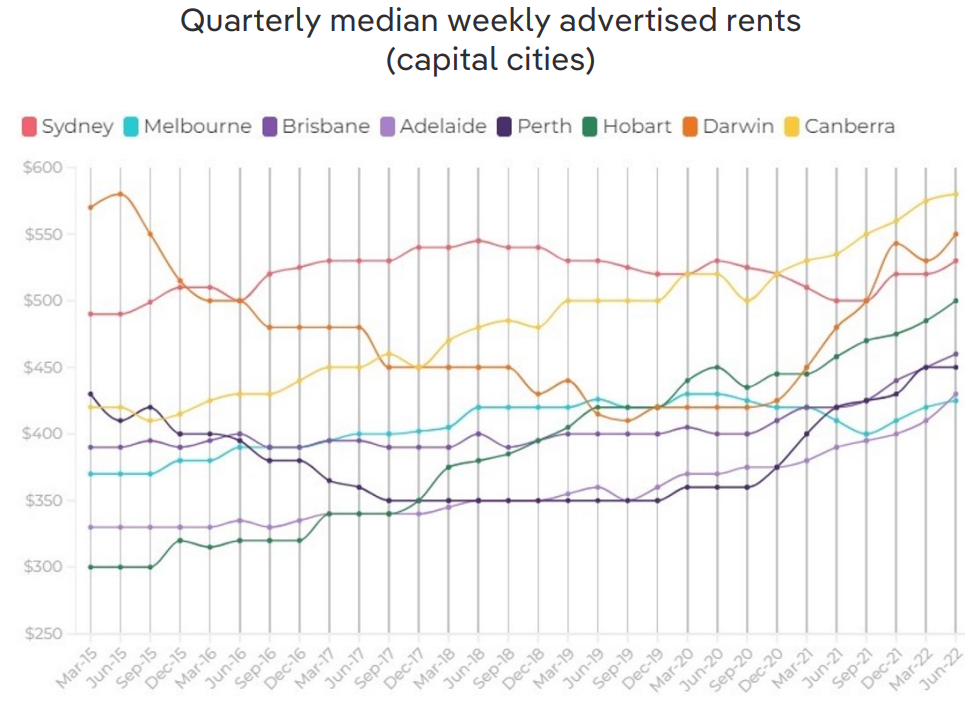
Looking at individual capital city and regional areas clearly highlights the insufficient supply and strong demand in most parts of the country. Rental growth has been in excess of 5% across almost every capital city and rest-of-state regions, reflecting strong demand for rentals and limited supply:
Speaking on supply, the volume of total rental listings fell by 1% in June 2022 and was 18.2% lower year -on-year. This brought the volume of rental properties down 27.7% from its decade average:
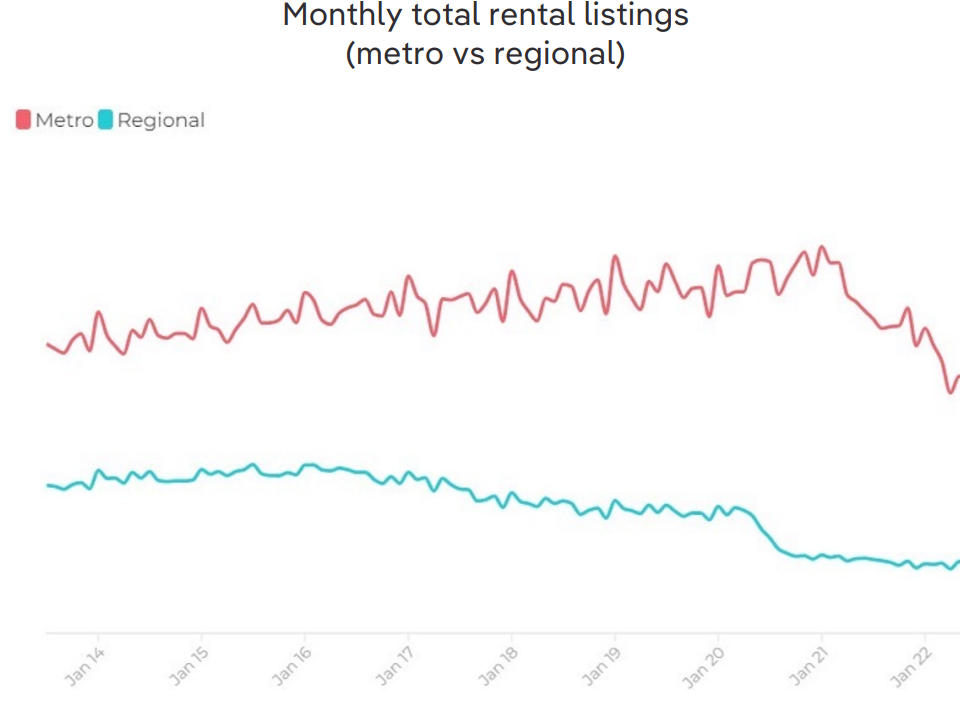
Across the combined capital cities, total rental listings fell 1.3% in June 2022 and were 21.4% lower year -on-year, making them 20.7% lower than their decade average. Across regional markets, total listings were 4.6% lower year -on-year and 44.8% lower than their decade average.
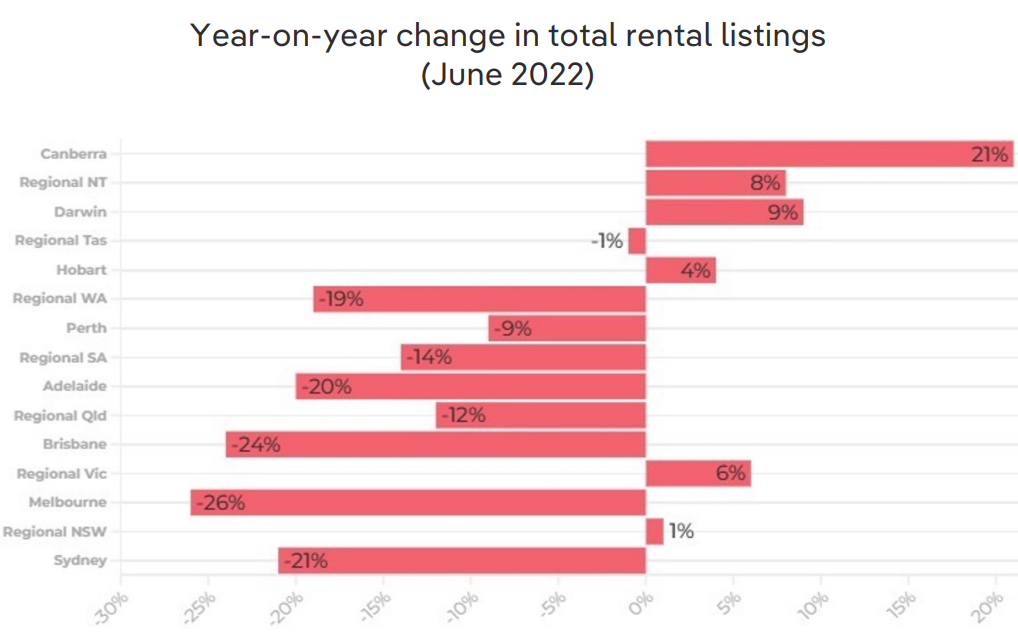
Listings have tightened sharply across the major capitals, with the largest year -on-year declines in rental listings recorded in Melbourne (-25.7%), Brisbane (-24%), and Sydney (-21.1%):
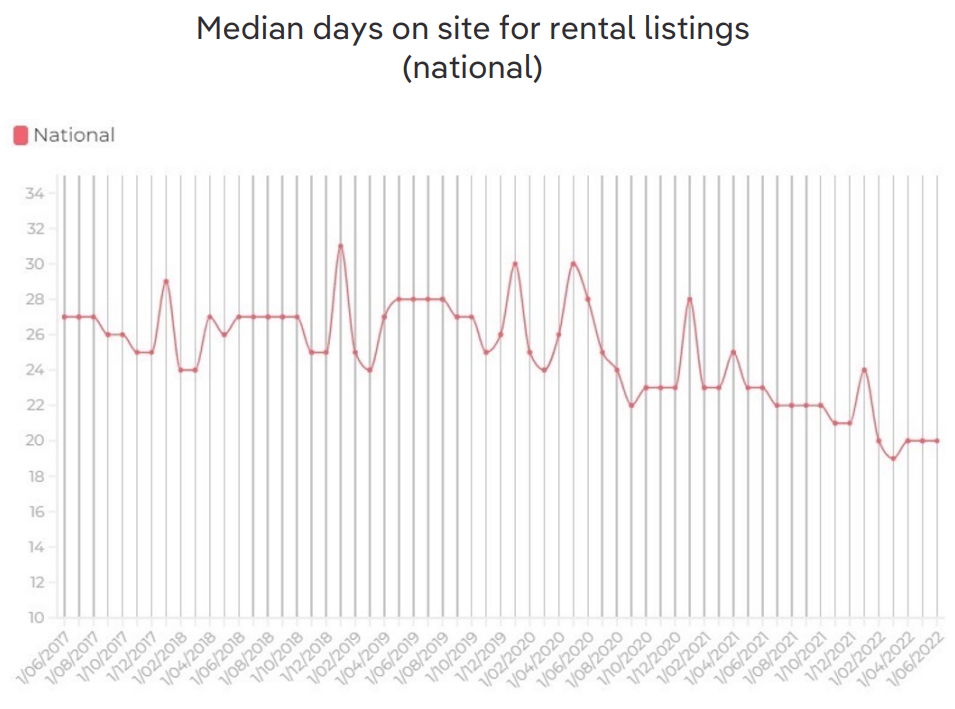
Due to the low volumes of stock for rent and ongoing strong demand for rentals, competition is high, and properties are leasing quickly. The median rental days on site nationally was recorded at 20 days in June 2022, down from 23 days a year earlier:
Commenting on the results, PropTrack noted that rental conditions are likely to worsen, especially across Sydney and Melbourne, as immigration is rebooted:
With overseas and interstate migration returning with borders now re-opened, it seems likely that rental conditions will tighten further over the coming months. This is likely to be most evident in Sydney and Melbourne, where rental demand and prices dropped throughout the pandemic but are now rebounding rapidly.
All indications from the Albanese Government suggests it will ramp-up immigration aggressively. It plans to use September’s jobs summit, which will be dominated by immigration lobbyists, as a Trojan Horse to gain ‘consensus’ for the biggest ever migrant intake.
Anybody lobbying to increase immigration needs to answer the following threshold question: where will the hundreds of thousands of new migrants live when there is already an extreme shortage of homes for the existing resident population?
As always, the costs of ‘Big Australia’ immigration are never considered by lobbyists, the media nor policy makers. It’s all upside and no downside in their eyes.
