
Via Platts:
Open interest in iron ore futures traded on China’s Dalian Commodity Exchange has fallen below 1 million lots in August, after peaking in April above 2.6 million lots.
Iron ore open interest stood at 975,722 lots last Thursday, a year-to-date low, and at 981,858 lots on Monday. One lot is 100 mt.
The year-to-date high was 2.68 million lots on April 16.
In contrast, open interest for iron ore futures on the Singapore Exchange SGX has been stable to date in 2018, as have other ferrous contracts such as rebar and HRC listed on the Shanghai Futures Exchange.
The DCE opened to international investors on May 4 and received a lot of attention around that time, but market sources said this has not resulted in a rise in liquidity for iron ore futures.
Exchange officials could not be reached for comment Tuesday.
“A reason why open interest has fallen more on DCE compared to SGX could be that volumes on DCE are more sensitive to volatility, as the exchange typically attracts more investors without exposure to physical iron ore trading — these investors look for other markets when volatility disappears,” a Shanghai trader said.
The Chinese government has also imposed restrictions on blast furnaces since May that have prompted many mills to curb consumption of iron ore fines in favor of scrap.
As a result, demand for iron ore fines has fallen over the past three months, while steel prices have risen significantly. Market sources said that as long as environmental controls remain strict, the big price fluctuations seen in previous years were unlikely, so fewer traders were willing to take speculative positions.
“It [futures] is only used as a hedging tool against other products or by some physical traders, which would not be enough,” a Beijing trader said.
An international trader said that as long as many cargoes in the market meet physical delivery requirements, there would not be many market participants interested in taking long positions.
“An example is RTX, which contains 60% Fe and 3.1% alumina. The specifications meet delivery requirements but I doubt anyone really wants to take the cargoes at the end,” the trader added.
No worries, Dalian is onto it:
* China’s Dalian Commodity Exchange said in a statement dated Monday that it would cut trading limit and margin requirements for coke, coking coal and iron ore futures contracts effective from Tuesday.
We could see Banana Man take another run at futures if Chinese stimulus gets traction next year. The big “if” being what the trade war will do in the mean time.
Until then, I expect bulk commodities futures to fall as Chinese data eases and the Winter shutdowns commence.
Beyond any stimulus impact, the picture is not very good, either. The rise of scrap is unstoppable:
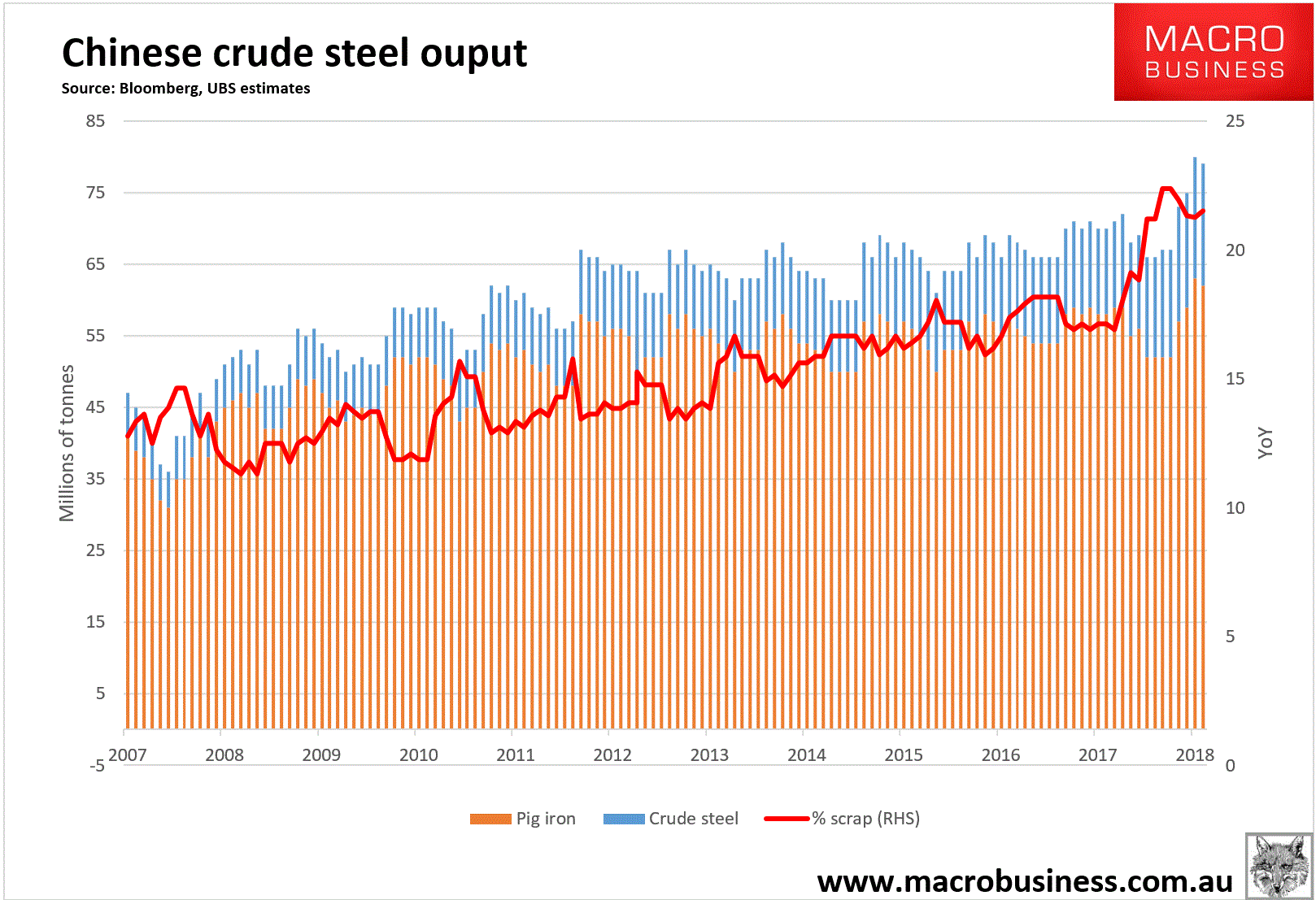
Add that steel production itself will fall over the next decade to 700mt as Chinese investment economy slows, assume the scrap component rises to one third of inputs and get some sense of why it is that we see iron ore falling back into the $20s before the super cycle correction is over.
China imported 1.07bt of iron ore last year. But if the above numbers are right then it will only need 600mt in ten years.
The margin for error in these numbers is so huge that we can be very, very wrong on this outlook and still be very, very right.
