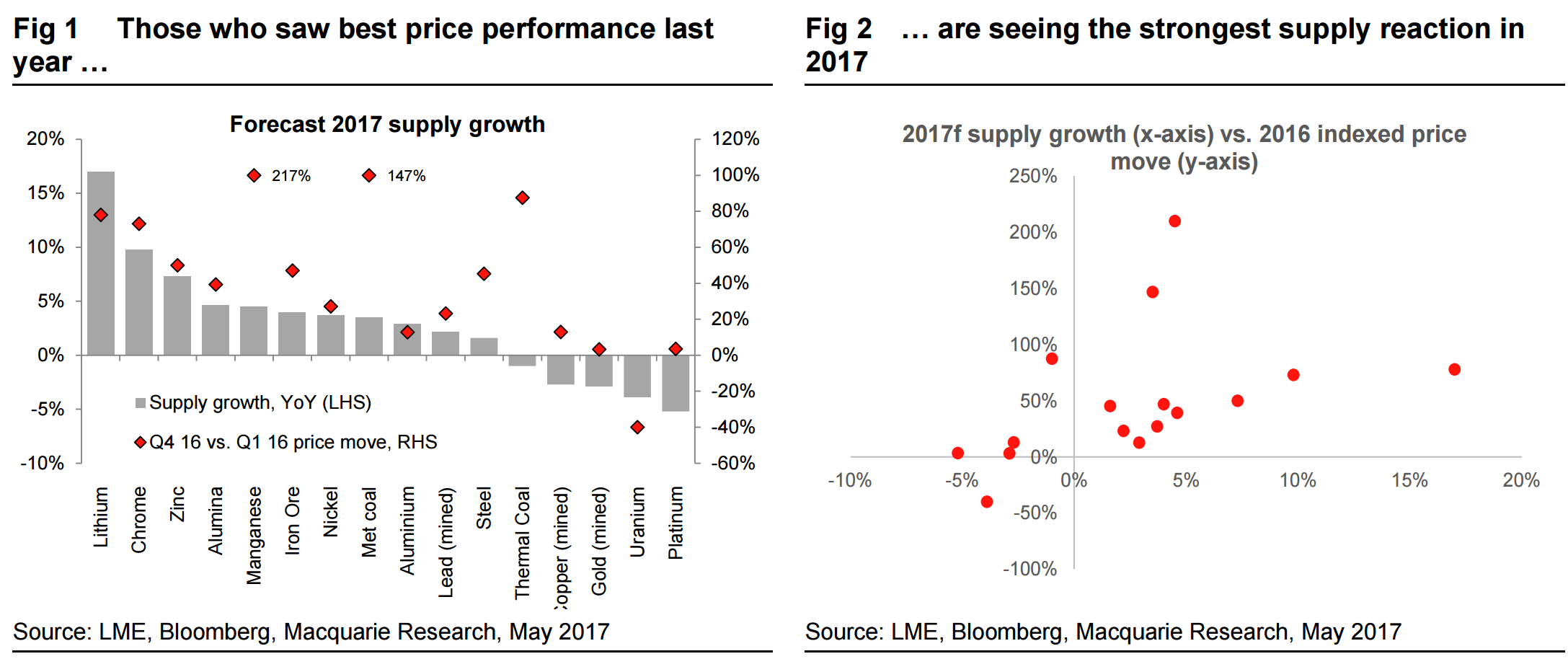
In commodity cycles, demand leads and supply reacts, with a lag. And the factor that facilitates this process is price. 2017 looks to be providing another classic example of this simple commodity rule, one we have seen played out again and again. While 2017 has reminded everyone that supply disruptions in mining still exist – which we feel is down to a lack of sustaining capital – there is also a wider cycle at play. Those commodities that traded out the cost curve in 2016 are seeing the strongest positive supply reaction and those that have consistently traded into the cost curve a supply decline in the main.
As we have noted before, in modern times this reaction perhaps occurs quicker (while you could also argue apparent demand swings are more amplified). This is a function of where commodity markets were five to ten years ago, with stronger market conditions needing every available commodity unit to be attracted in to balance the books. This brought about the new breed of lower-quality cyclical supply, which flexes in and out of markets based on a short-term operating horizon.
The full text of this article is available to MacroBusiness subscribers
David Llewellyn-Smith is Chief Strategist at the MB Fund and MB Super. David is the founding publisher and editor of MacroBusiness and was the founding publisher and global economy editor of The Diplomat, the Asia Pacific's leading geo-politics and economics portal.
He is also a former gold trader and economic commentator at The Sydney Morning Herald, The Age, the ABC and Business Spectator. He is the co-author of The Great Crash of 2008 with Ross Garnaut and was the editor of the second Garnaut Climate Change Review.