The regulatory pressure on interbank business is gradually emerging.
Securities Times reporter survey was informed that some of the peasant business with the current business temporarily shut down, the relevant personnel “painstaking research” regulatory measures; a northern agricultural firms in Shanghai, Beijing counterparts all recalled the head office to meet the local banking regulatory authorities approach survey.
Peer business pressure is also reflected in the bank’s earnings: the end of the quarter, 25 listed banks in the 21 same industry liabilities than the end of last year decline (not calculated Wujiang Bank). All listed banks total reduced 1.54 trillion in interbank liabilities.
“At this stage, ‘three three four (that is, three violations of the three sets of four improperly)’ self-examination is a combination of checks with the CBRC, self-examination process to ‘at any time check, at any time to adjust, at any time to report’ way the current banks in self- Correction phase, is expected after the end of the relevant work, there will be formal regulatory details landing. “Merchants Securities Finance Group researcher Ma Kunpeng said after the investigation.
It is understood that the Shanghai regulatory authorities are advancing faster. A stock executive in charge of the same industry told reporters that they and the inspection team “in the same roof has been for more than a week.” While another agricultural firm financial market department manager said, “three three four special group immediately approach.”
Strong supervisors have different effects on different types of different echelons of banks. The interviewed bankers told the Securities Times reporter that the supervisory department’s on-site inspection did not affect the normal rhythm of the business, they will be interbank deposit accounted for, with the industry financial investment to the list, the outsourcing of active management process data submitted to the regulatory Sector “benign communication”; but several agricultural / city firm business executives said the business is seriously affected.
“From the beginning of a series of documents from the regulatory authorities, our business is almost shut down because we carefully study the regulation of the ’empty’ definition, found that they actually became ‘idle’. That next step how to go? We are now very confused , In a careful study. “A bank financial market executives told reporters.
In this regard, the industry said that such a statement may represent a lot of the same in the same market than the more radical, but relatively large banks compared to the views of small and medium-sized banks, because they are on the regulatory policy, to some extent confused , Because it is necessary to figure out a series of strong regulatory initiatives point to the business core is indeed more difficult to find a way within the scope of regulatory tolerance, more difficult.
Reporters noted that the Guangzhou Bank head office of the financial sector in the latest recruitment notice, specifically set up a job called “innovation research posts”, the primary responsibility is “research market, economic environment, regulatory policies and other changes.”
“We also welcome this kind of talent, is the shortage of regulatory policy too much, we need someone to help us guide.” A city firm executives told reporters.
At the same time, there are banks to temporarily set the business shut down “to avoid the limelight.” A headquartered in the north of a large province of agricultural firms, will be stationed in Beijing, Shanghai, the two companies with the withdrawal of all the head office to learn and accept regulatory checks, the relevant funds, bills business all suspended.
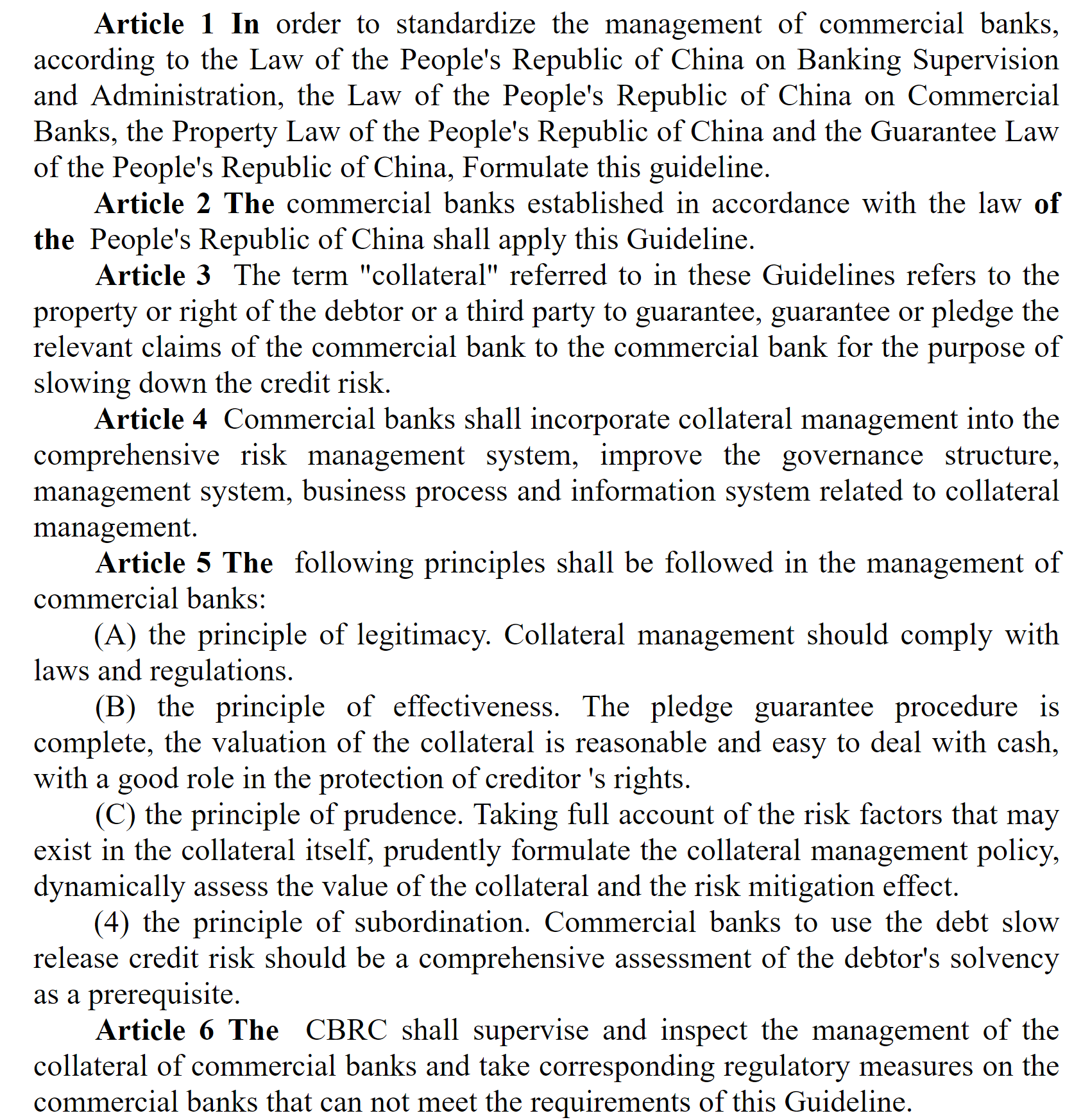
The suspensions are coming from inspections conducted by the CBRC on its new bank collateral guidelines:
Advertisement
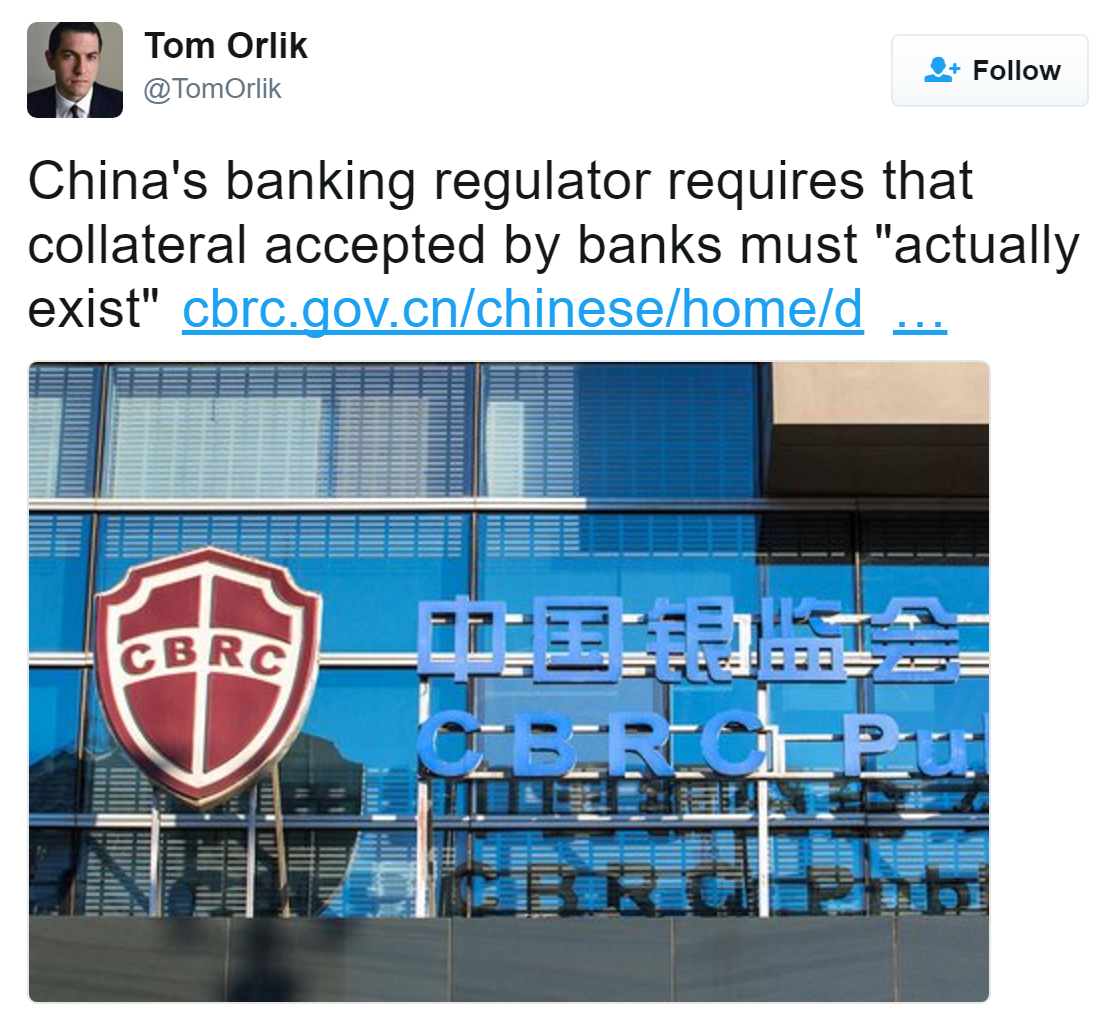
Bloomberg’s Tom Orlick has translated this a little differently to mean:
God only knows what scams they’re going to turn up here.
Advertisement
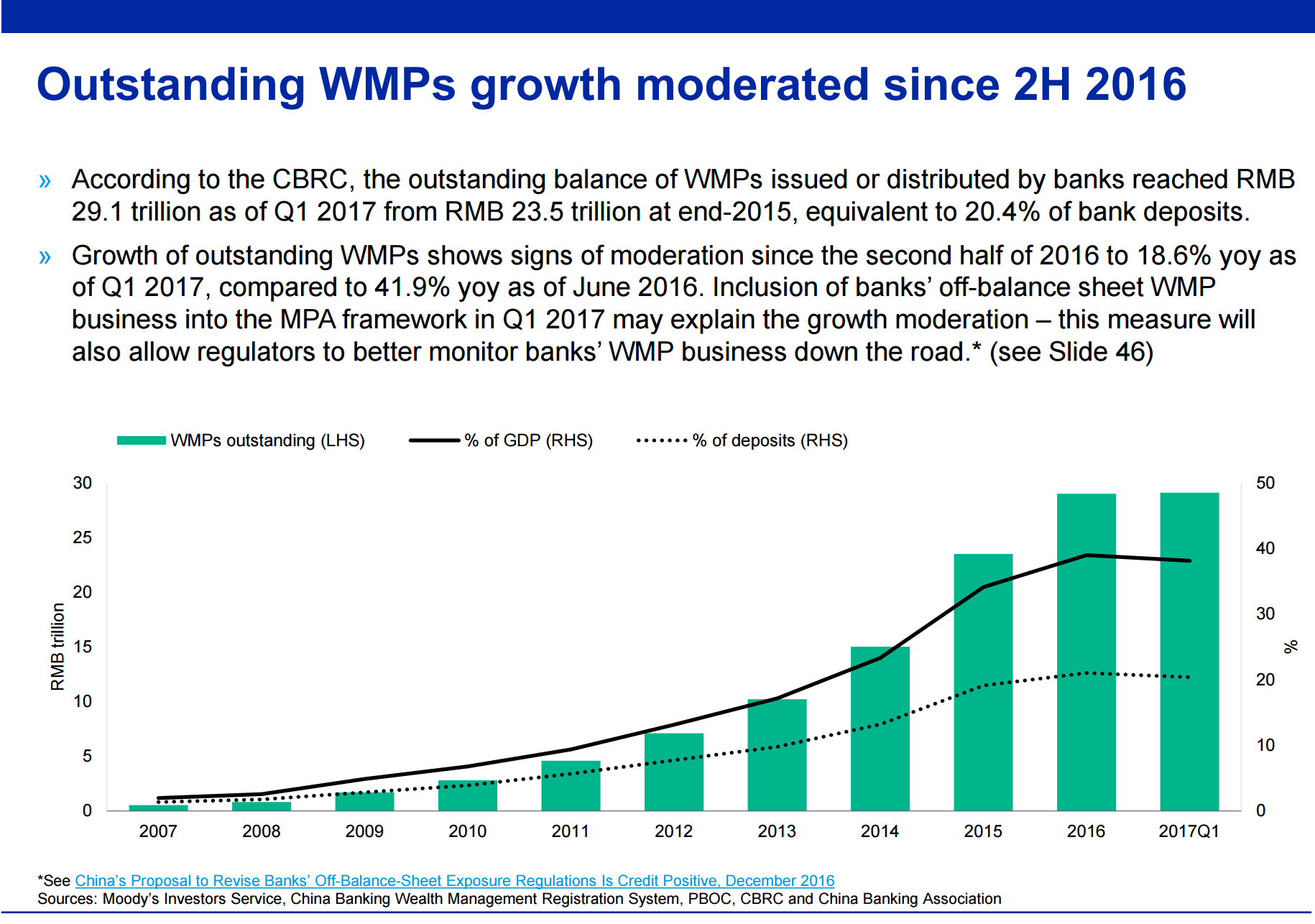
This is all slowing the issuance of off balance sheet lending and new wealth management products, recall from Moody’s:
» By contrast, the pace of growth of banks’ WMPs has begun to slow as regulatory oversight is enhanced. Having been the fastest growing shadow banking component for the past several years, the slowdown in the growth of banks’ outstanding WMPs became more apparent in Q1 2017. The slowdown followed the inclusion of the off-balance sheet WMP business into the MPA framework. However, there have been delays in publishing official data which would shed more light of the impact of increasingly stringent regulation on bond holdings by WMPs (40% of total WMP assets at end-1H 2016) and the share of interbank investors (15% at end-1H 2016) of banks’ WMP business. If this data remains unavailable the transparency of the shadow banking sector would be reduced.
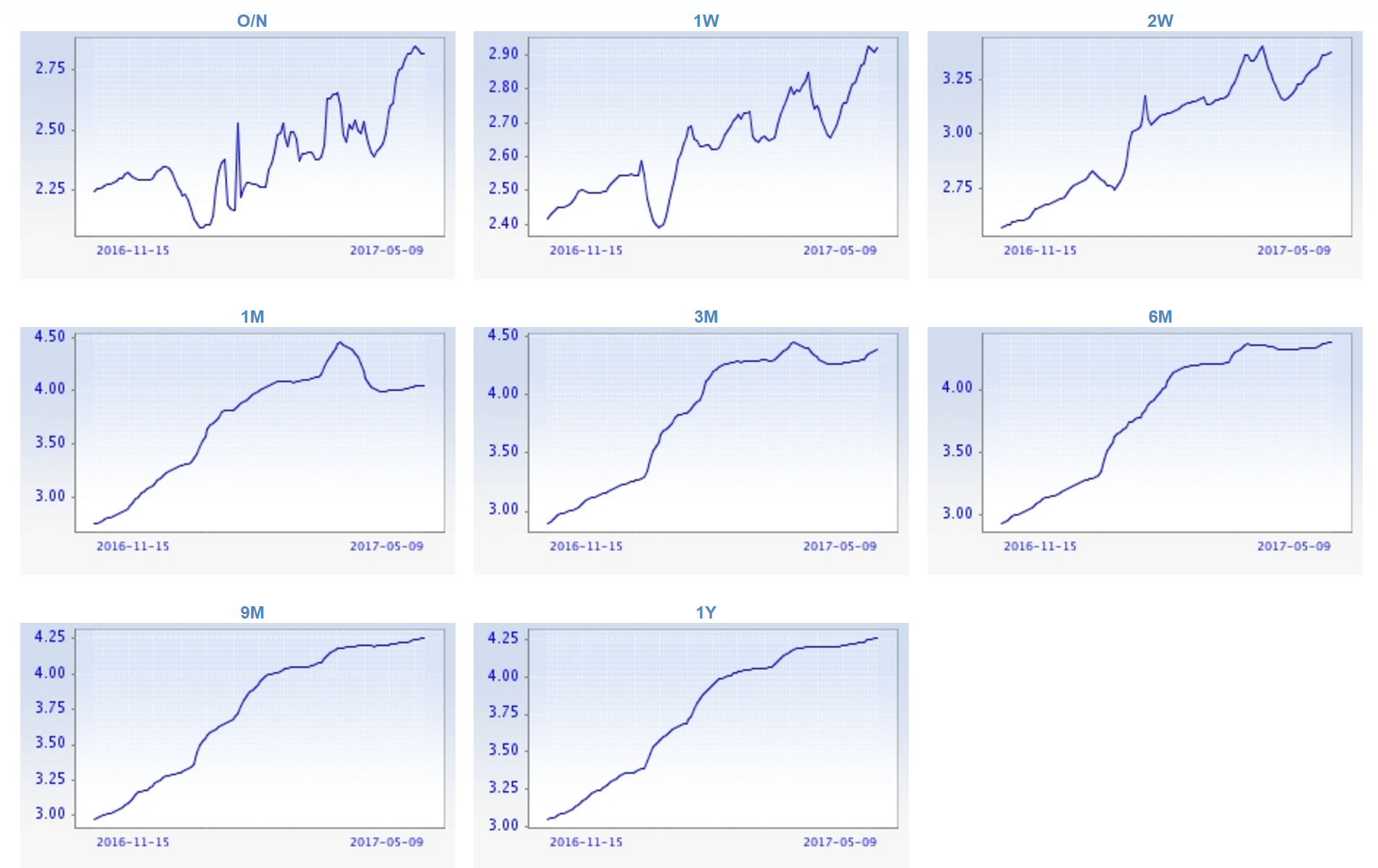
And hiking interest rates as short-term funding is squeezed by the PBOC plus counter-parties wonder whose collateral does “actually exist”. Interbank rates are still tight:
Advertisement
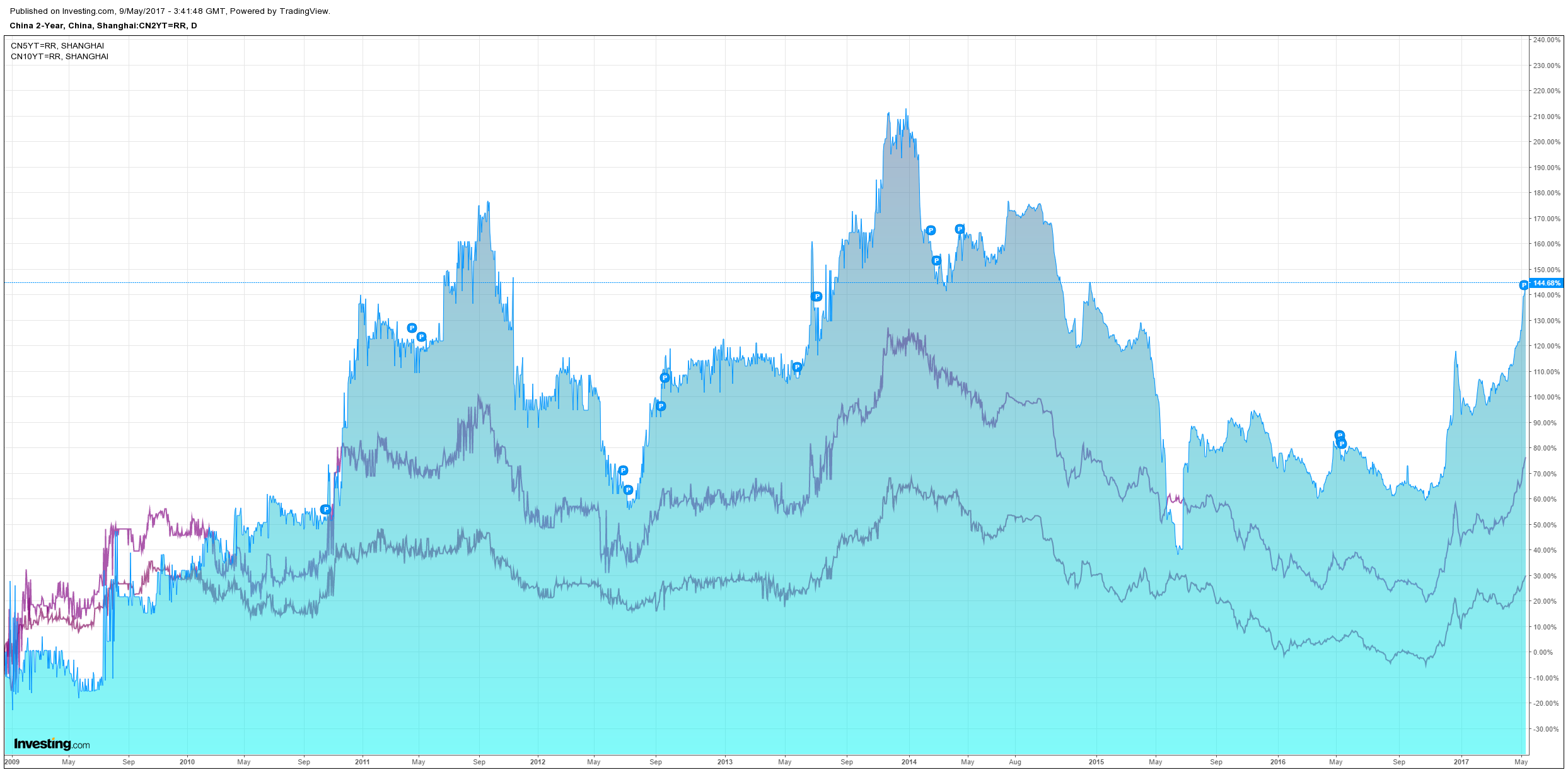
And bond yields are still melting up:
China to slow in H2. Either that or blow sky high as Chinese counter-parties run for the hills!
David Llewellyn-Smith is Chief Strategist at the MB Fund and MB Super. David is the founding publisher and editor of MacroBusiness and was the founding publisher and global economy editor of The Diplomat, the Asia Pacific's leading geo-politics and economics portal.
He is also a former gold trader and economic commentator at The Sydney Morning Herald, The Age, the ABC and Business Spectator. He is the co-author of The Great Crash of 2008 with Ross Garnaut and was the editor of the second Garnaut Climate Change Review.