
The tortured path of big mining sedition is on display today as RIO prints a solid result:
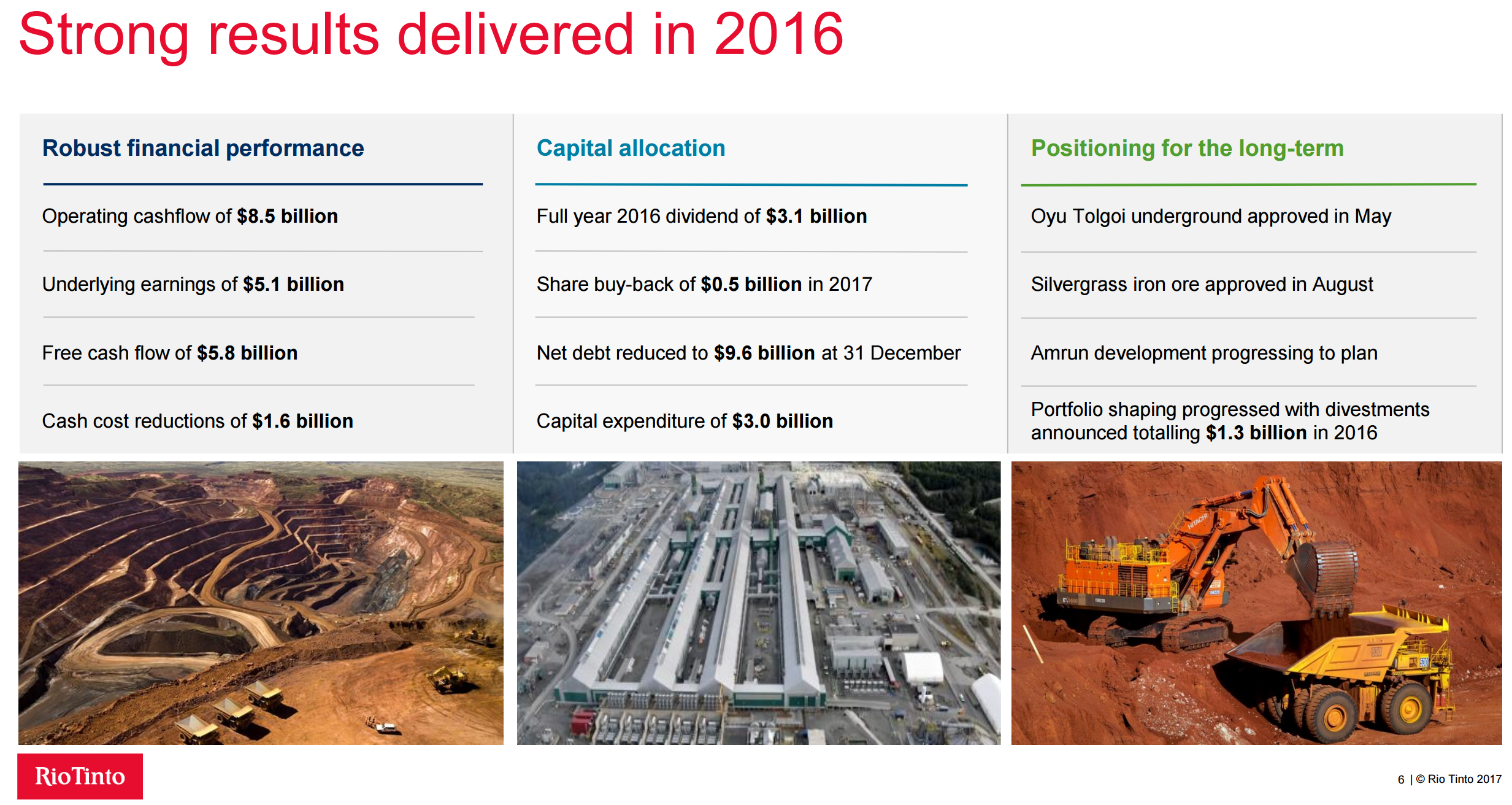
Good but not great. Shares fell -1.7% in London. Of course, at an average price of roughly $59 per tonne, this year could by much better if current prices are sustained at more like $8.5bn (which is unlikely in my view). RIO itself shows why:
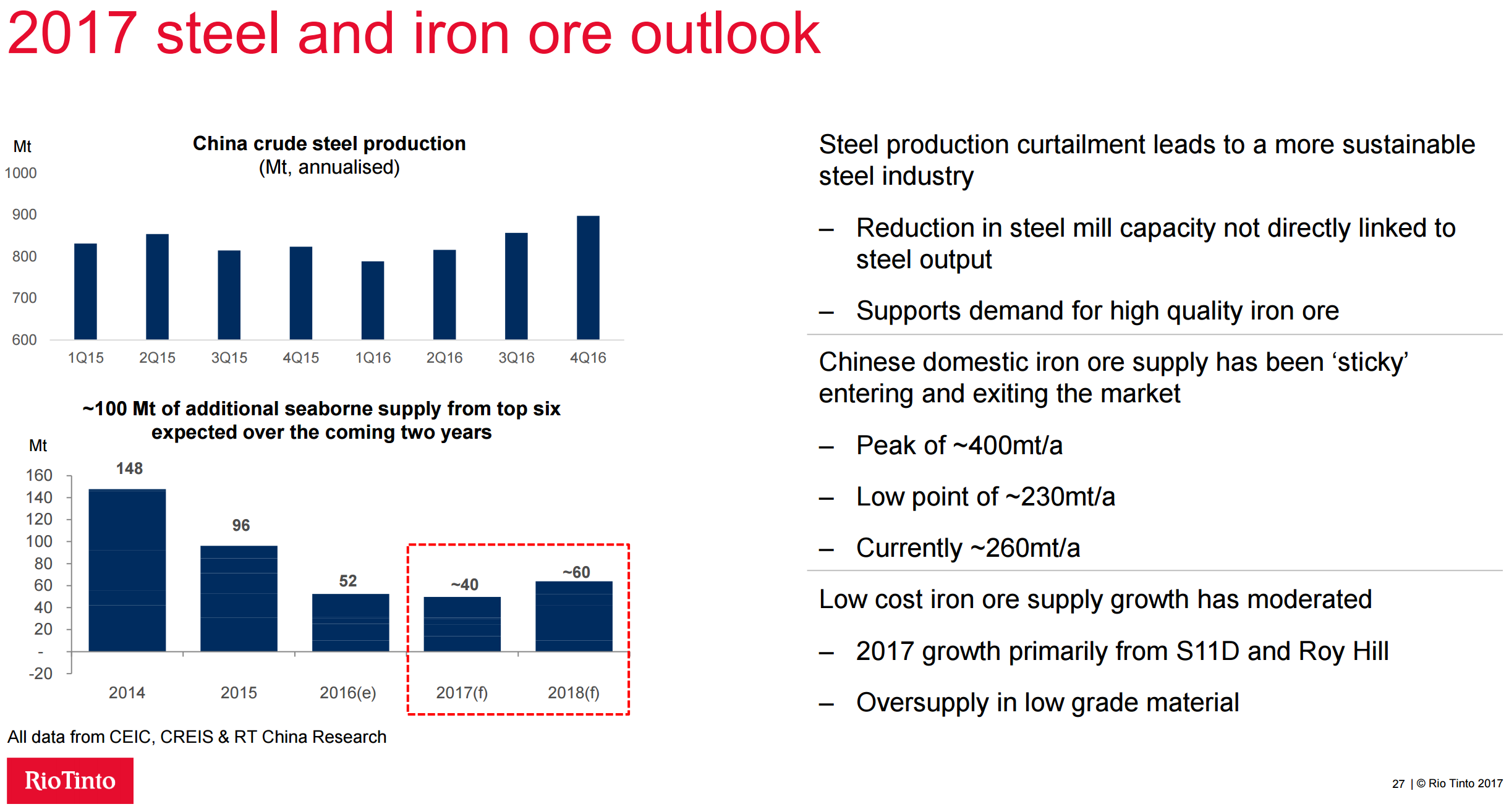
More supply and throw in a slowing China at the margin. We’re now back to where we were in 2015 with unsustainable payouts supporting equity as the context inexorably sours.
While RIO is happily showering shareholders with cash, poor old Australia is a very distant second. Though it is fighting back, via The Australian:
Rio Tinto could be facing an additional tax bill of almost $1 billion following the Australian Taxation Office’s crackdown on the controversial practice of transfer pricing.
Notes to the accounts released late on Wednesday said the company had made a $US380 million ($500m) provision on its balance sheet over a tax dispute with the ATO. Standard accounting practice for such matters is to set aside half of the funds in dispute, which suggests the ATO could be pursuing Rio for $US760m ($996m).
Asked if the $US380m provision indicated that the final bill could be much higher, Rio chief executive Jean-Sebastien Jacques told The Australian that it was “a bit more complicated than that”.
“We had some conversations with the ATO,” Mr Jacques said.
“There is nothing new in the discussions that are underway but we reached a point where we had more visibility on what provision could be and therefore we banked the provisions.”
Not all agree that we should, from The West:
The Chamber of Minerals and Energy says it has spent about $2 million on a media campaign fighting the WA Nationals proposed new mining tax and which could lead to its leader Brendon Grylls losing his Pilbara seat.
Mr Grylls wants to increase the 25 cent per tonne production rental fee on iron ore set for BHP Billiton and Rio Tinto in the 1960s and increase it to $5 a tonne, raising $7.2 billion over the next four years.
CME chief executive Reg Howard-Smith said he was justified spending money attacking the tax because it was a “serious policy issue” and would cost 3000 jobs in the Pilbara region over time, based on modelling by Deloitte financial analysts.
He said most of the money would end up going to the eastern states rather than WA.
“This is a real threat to sovereign risk,” he told ABC radio during a debate with Mr Grylls as part of the state election campaign.
And The Australian:
West Australian Treasurer Mike Nahan has promised to resign rather than be part of a Liberal-Nationals government that introduces any form of a contentious $7.2 billion mining tax being pushed by Nationals leader Brendon Grylls.
As debate over the planned tax on BHP Billiton and Rio Tinto ramped up on the election campaign trail yesterday, Dr Nahan said he would “guarantee” to quit as Treasurer if any deal was done to introduce it.
“That’s the bottom line, and I hope Brendon hears that,” he said.
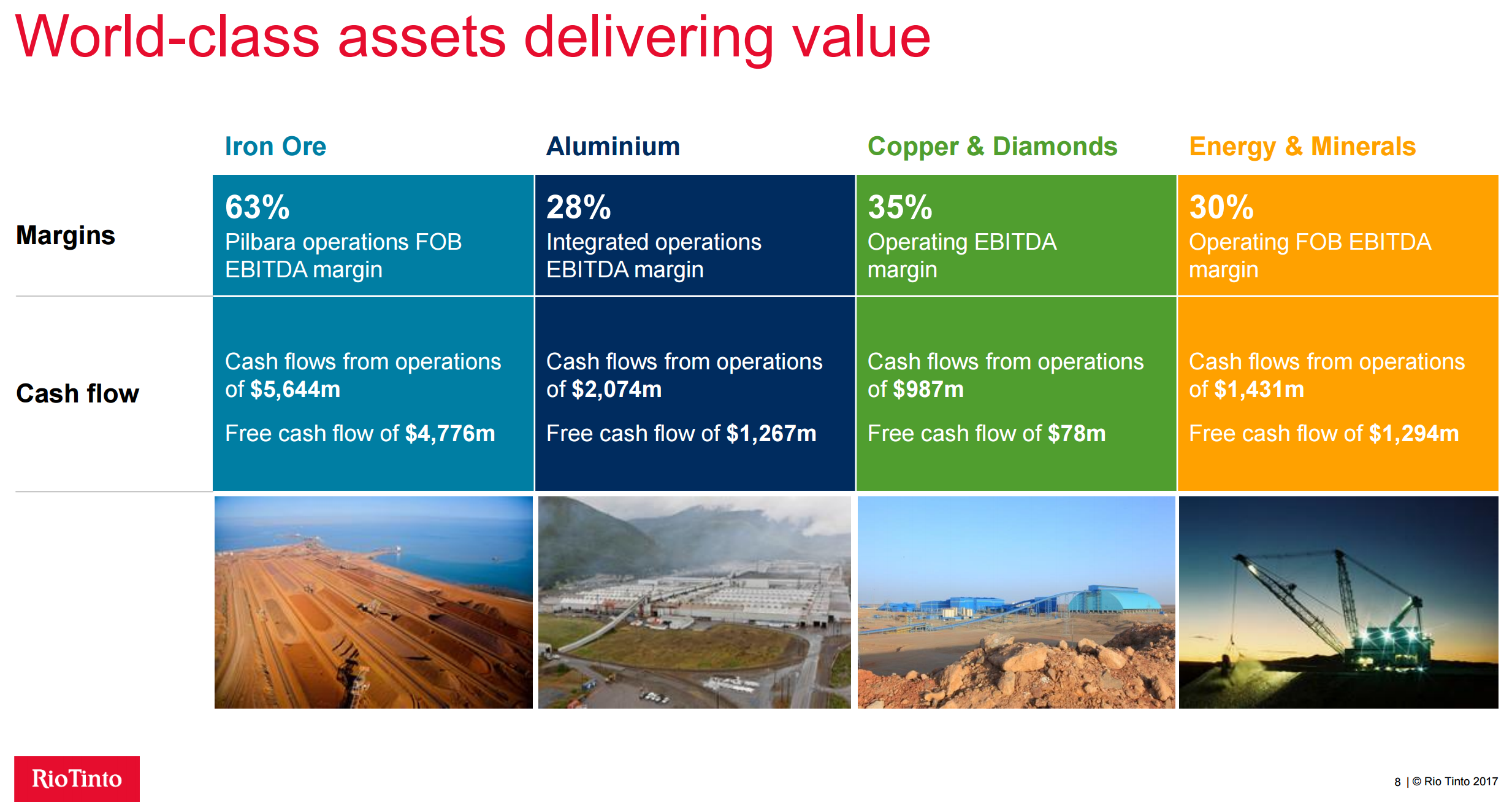
Dr Nahan should just resign, period. He’s the most singularly inept Treasurer since Victoria’s Barry Pullen, having guided WA into far worse circumstances than it needed to be today by pro-cyclical policy-making. It would be apt if he were to depart just as the tax were introduced. On RIO’s own numbers, it is operating at 63% EBITDA margins in the Pilbara:
These are pure economic rents that should be taxed as such, as well as saved given iron ore is a non-renewing resource owned by the people of Australia.
