
More on Chinese steel, coal and iron ore rationalisation
From Goldman:
Iron ore price performance had been surprisingly strong in 2016, especially given the high and increasing inventory at ports. We see two reasons for the iron ore price strength:
Coking coal/coke price strength.
Steel mills’ better profitability and search for yield.
Into 2017, we expect the steel mills to continue to enjoy high profitability, benefiting from substantial capacity curtailment. The government commented that its steel capacity curtailment target would be higher than 2016’s 45mt and will be announced around the Chinese New Year holiday. This, together with a shutdown of medium frequency furnaces (c.40mt annual production in 2016) by end-June, indicates further lift in industry utilization and profitability from 2016, supporting the premium for high grade iron ore.
We expect China will have to see a quite meaningful decline of steel export as a result of:
1) tighter domestic market and hence higher domestic steel prices;
2) the potential for trade barriers to be imposed by the new US administration. We also expect China will see further decline of coal imports due to the rapid rise of domestic supply, which should have quite significant adverse impact on seaborne coal suppliers.
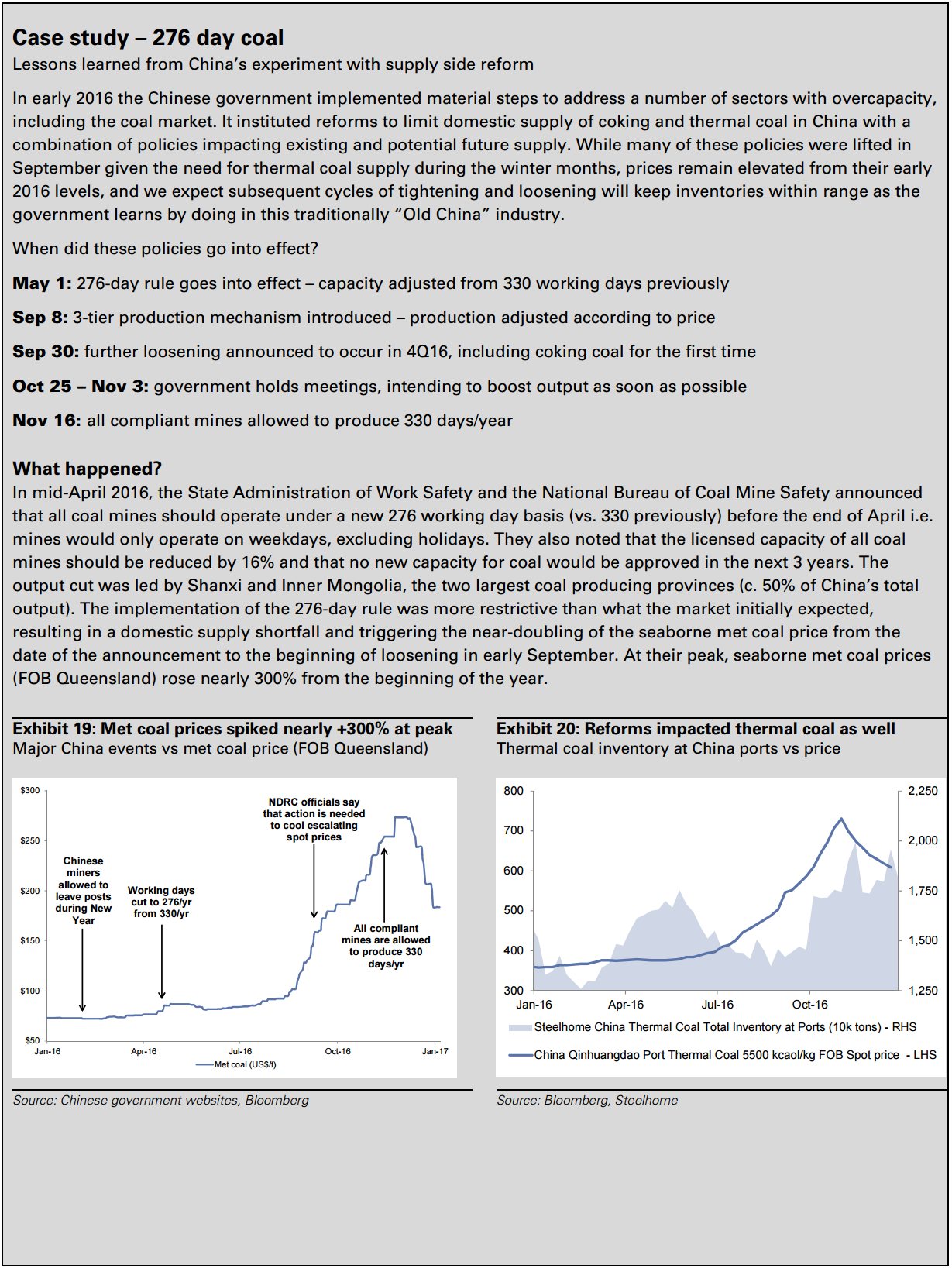
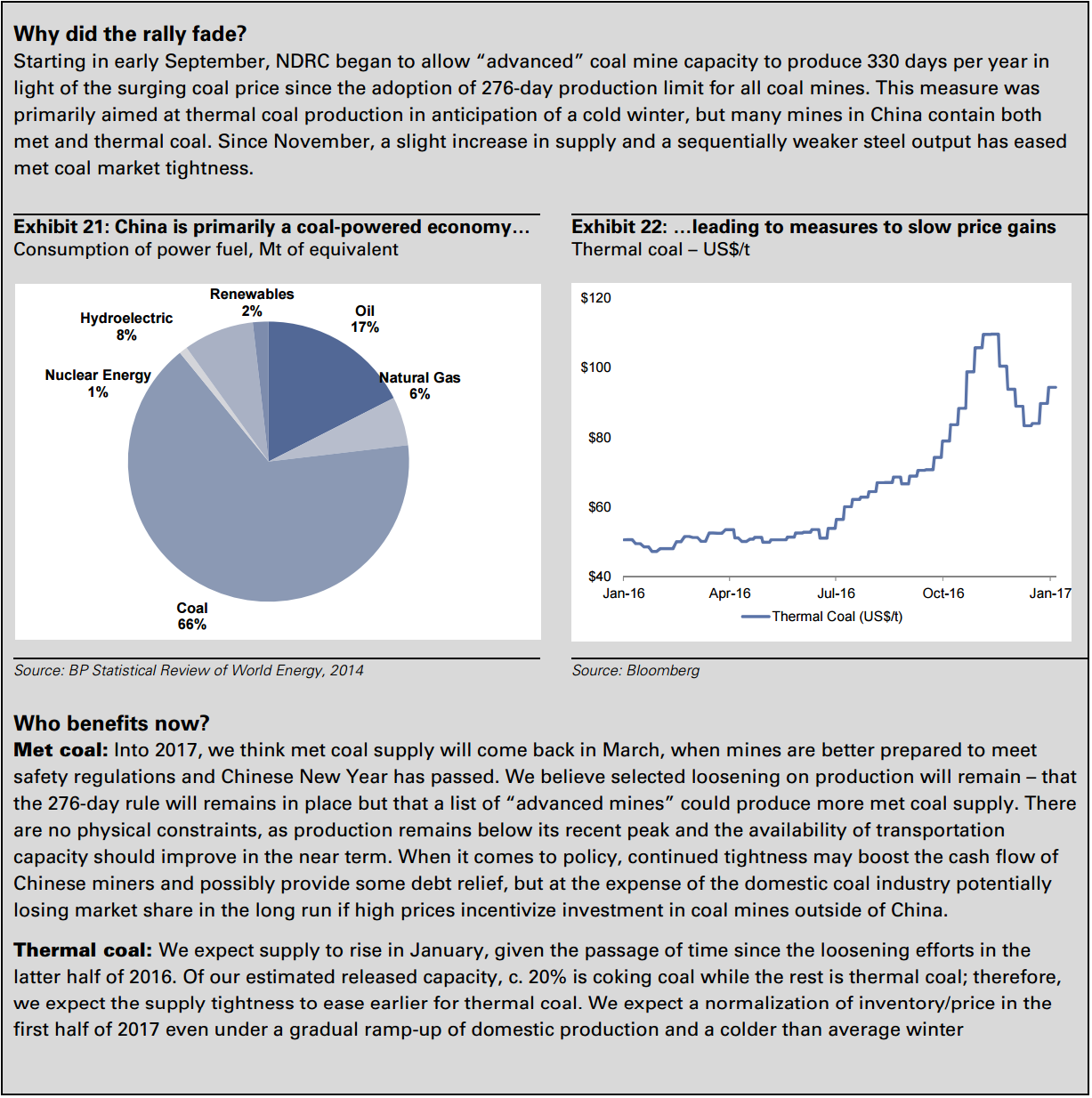
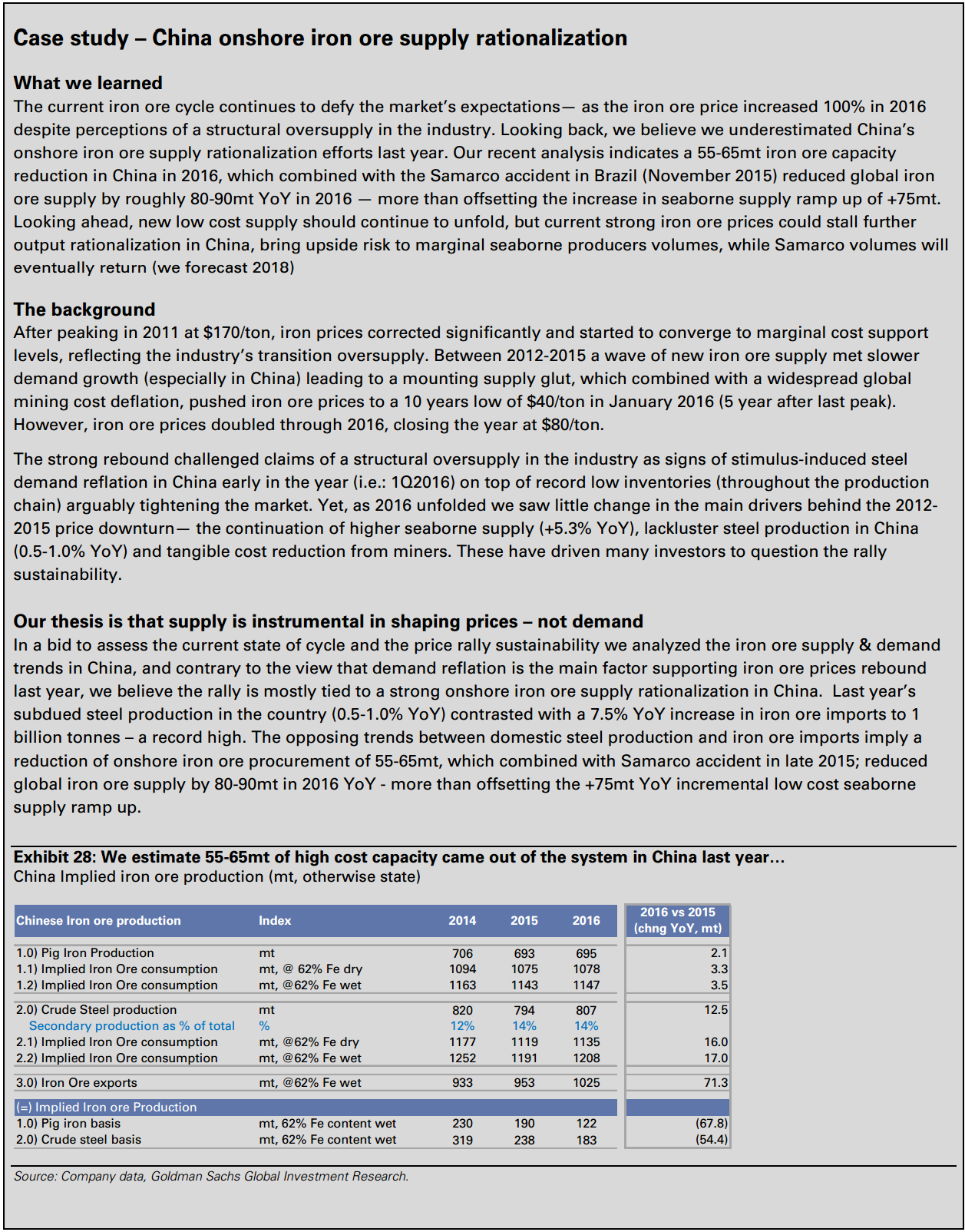
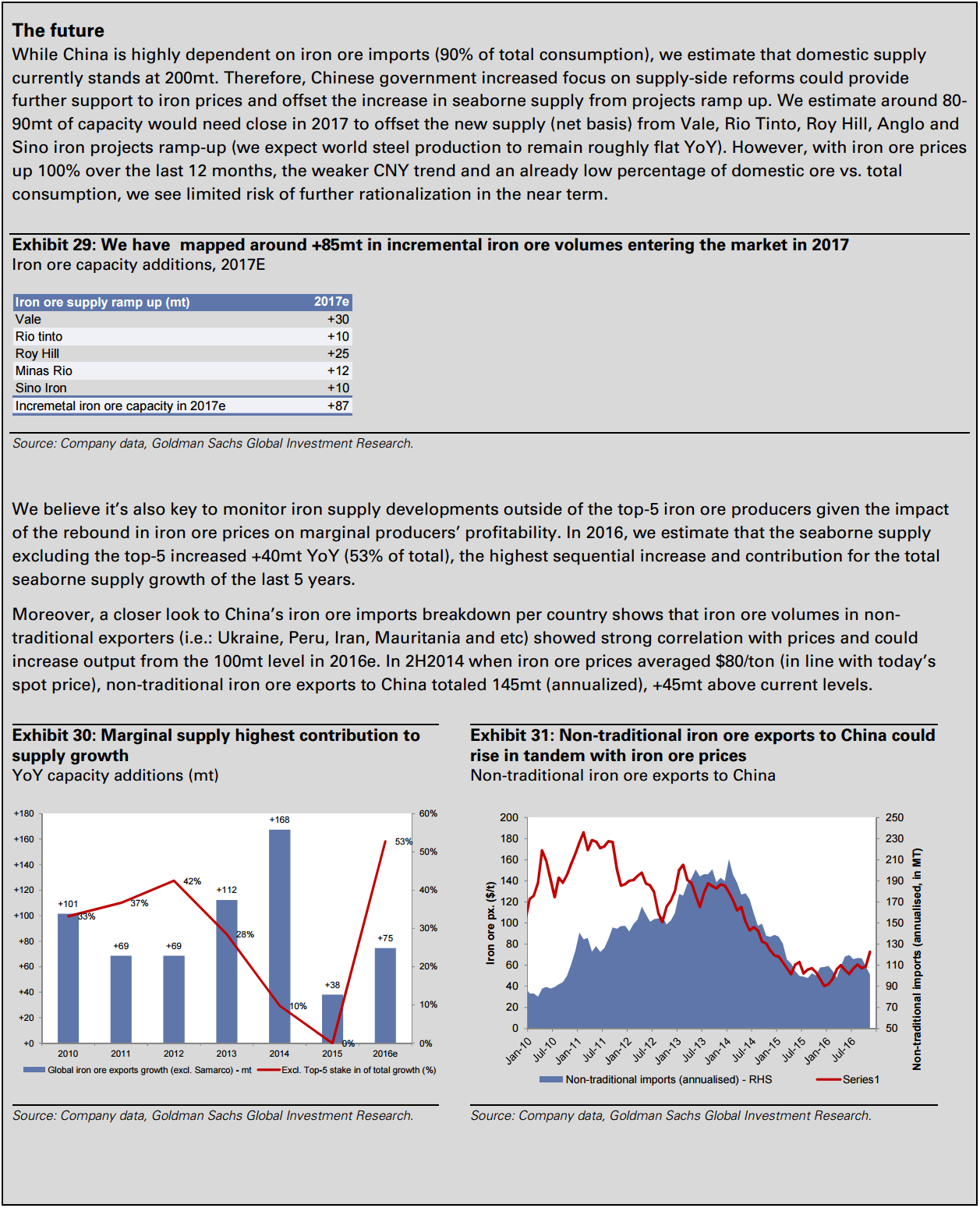
I see less rationalisation and less new supply in the year ahead but the end result is roughly the same with the seaborne iron ore market having to absorb 50mt net new tonnes. My price range is also now very similar to Goldies with iron ore deflating to $40 by year end (they see $47 in 2018), coking coal at $120 and thermal $60.
It’s a big reversion ahead for the Aussie terms of trade spike.
