Rio Tinto is suspending operations at one of its biggest iron ore mines in Australia over Christmas to cut costs amid growing industry-wide concern about a proposal to increase state taxes on Australia’s biggest iron ore producers.
The two-week closure of the Hope Downs 4 mine in the Pilbara — the world’s biggest iron ore producing region — is the first by Rio since the global financial crisis in 2008. In an email to 440 staff at the mine, Rio said the decision would “reduce operating costs and maximise cash to strengthen the business” in expectation of a tough year ahead.
Chris Salisbury, chief executive of Rio’s iron ore division, used the opportunity to attack a tax increase proposed by the National party, the junior coalition partner in Western Australia’s state government.
“There couldn’t be a worse time to tax our business an extra A$1.5bn every year. This will destroy jobs, hurt local businesses and damage Western Australia’s international competitiveness,” he said.
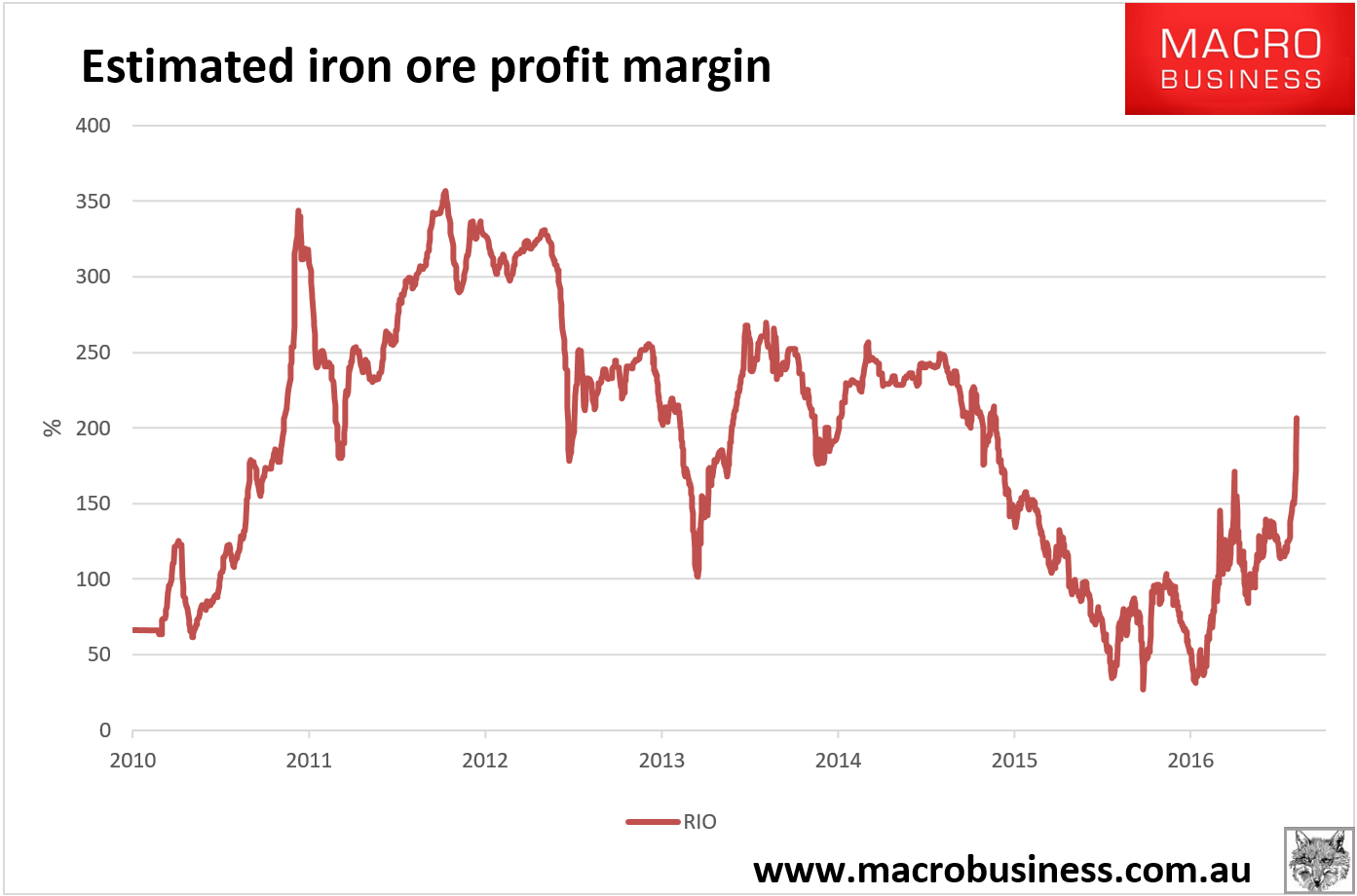
Rio has ordered the temporary mine closure despite surging iron ore prices, which have doubled to almost US$80 per tonne since the start of the year. The Anglo Australian miner has warned the price rally was unlikely to last as supply is expected to grow more quickly than demand in the near term — and is continuing to focus on cost cutting.
Clarke Wilkins, Citi analyst, said suspending operations when iron ore prices were US$80 a tonne did not make sense and may have more to do with limited rail capacity on Rio’s Pilbara network.
“That it also sends a signal to the state government at a time when the company is fighting hard against the tax proposal by the National party probably doesn’t hurt either,” said Mr Wilkins.
The mine closure has nothing to do with profitability:
David Llewellyn-Smith is Chief Strategist at the MB Fund and MB Super. David is the founding publisher and editor of MacroBusiness and was the founding publisher and global economy editor of The Diplomat, the Asia Pacific's leading geo-politics and economics portal.
He is also a former gold trader and economic commentator at The Sydney Morning Herald, The Age, the ABC and Business Spectator. He is the co-author of The Great Crash of 2008 with Ross Garnaut and was the editor of the second Garnaut Climate Change Review.