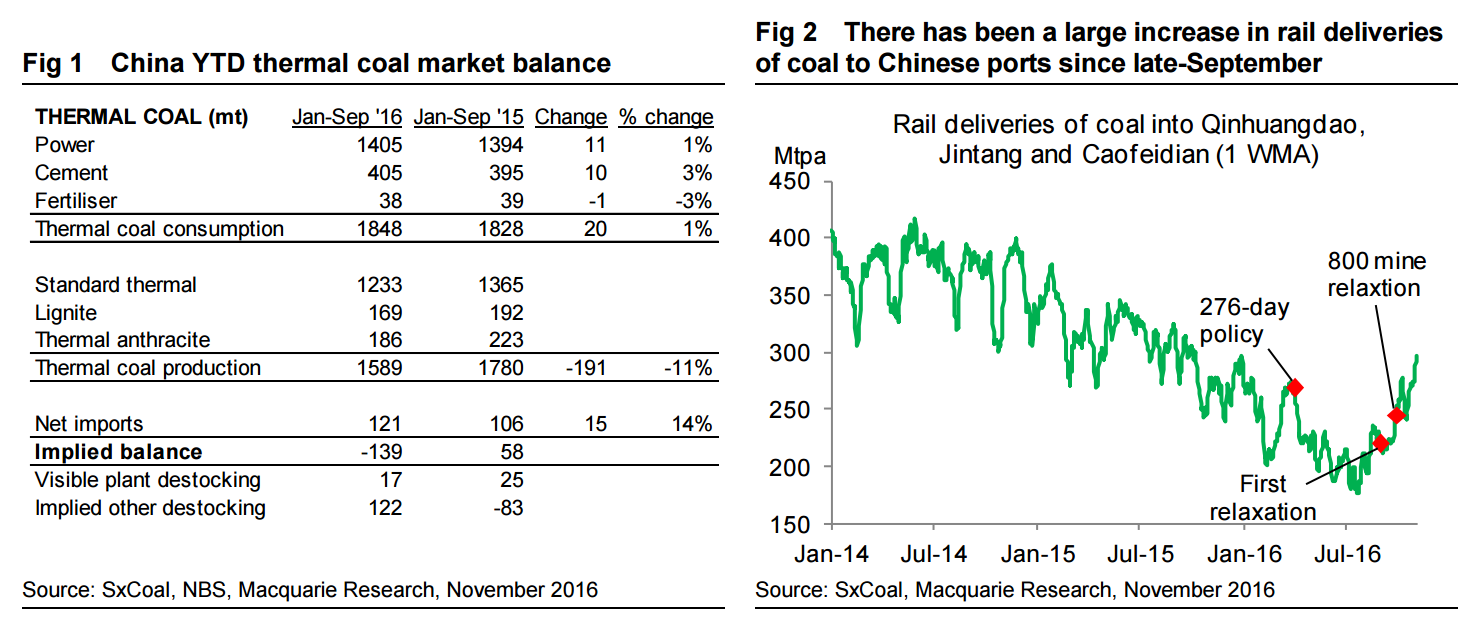
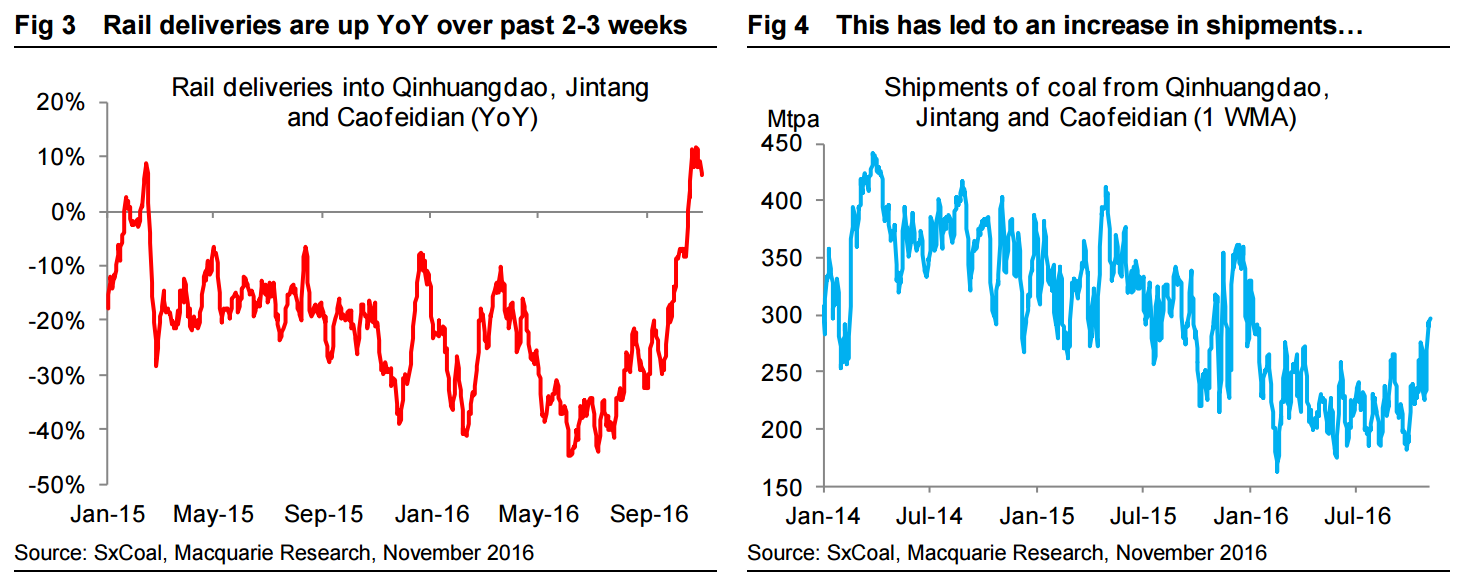
Coal price strength over the past month has been underpinned by scepticism that Chinese production loosening is actually happening, and even if it is, that the volume is large enough to fill the entire deficit. Although rising inventories suggest an increase in supply availability, official coal production data is only available up to September. However examination of high frequency port data provides another indication that thermal coal production run rates have increased materially. Rail deliveries of (thermal) coal into Northern Chinese ports are now running at rates higher than when the 276-day rule was first implemented.
In addition, we have seen three increases in thermal coal futures transaction fees in ten days on the Zhengzhou Commodity Exchange, in a bid to curb speculative buying, while the NDRC today issued a warning to producers not to raise prices further. All of these factors suggest thermal coal prices should start to roll over.
Although this railing data isn’t directly applicable to the met coal market, on a pair trade basis we continue to favour long met versus short thermal coal exposure. This is for two main reasons: The Chinese government seems more bothered by effects of rising thermal coal pricing on IPPs and related industries than it is about steelmaker margins. This is illustrated by the three ZCE fee increases on thermal coal futures and the NDRC’s announcements which have been heavily focused on thermal. As we previously mentioned, relative to market size much more thermal coal production is set to return to market. The seaborne thermal coal market has relatively more supply flexibility than the seaborne met coal market.
David Llewellyn-Smith is Chief Strategist at the MB Fund and MB Super. David is the founding publisher and editor of MacroBusiness and was the founding publisher and global economy editor of The Diplomat, the Asia Pacific’s leading geo-politics and economics portal.
He is also a former gold trader and economic commentator at The Sydney Morning Herald, The Age, the ABC and Business Spectator. He is the co-author of The Great Crash of 2008 with Ross Garnaut and was the editor of the second Garnaut Climate Change Review.