
In the wake of Brexit, the Tory Government has announced that it will significantly reduce the UK’s annual net migration intake from around 300,000 currently to the “tens-of-thousands”, primarily by cutting back on international students and foreign workers that are “taking jobs British people could do”. From The Canberra Times:
“There can be no question that recent levels of immigration motivated a large part of the [Brexit] vote,” [Home Secretary Amber Rudd] said.
She vowed to reduce net migration, which was 300,000 in 2016 and well over the government’s target of 100,000, to the “tens of thousands”…
“We have to look at all sources of immigration if we mean business,” she said.
Australian skilled workers and university students are potentially in the firing line with the government to examine whether it should “tighten the test” for companies who recruit from abroad.
“It’s become a tick box exercise, allowing some firms to get away with not training local people. We won’t win in the world if we don’t do more to upskill our own workforce,” she said.
She described as “generous” current rules allowing the families of international students working rights and bemoaned that foreign students studying English language degrees “don’t even have to be proficient in speaking English”.
The below chart shows the surge of net migration into the UK since it joined the EU:
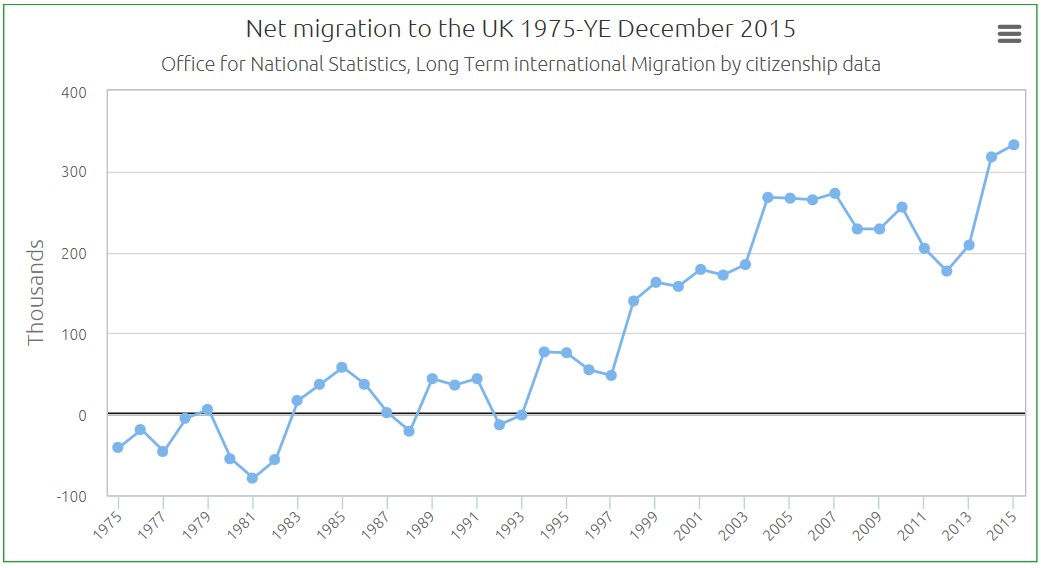
As you can see, immigration is running at an historically high level, with a roughly 50-50 split between Euro and non-Euro migration:

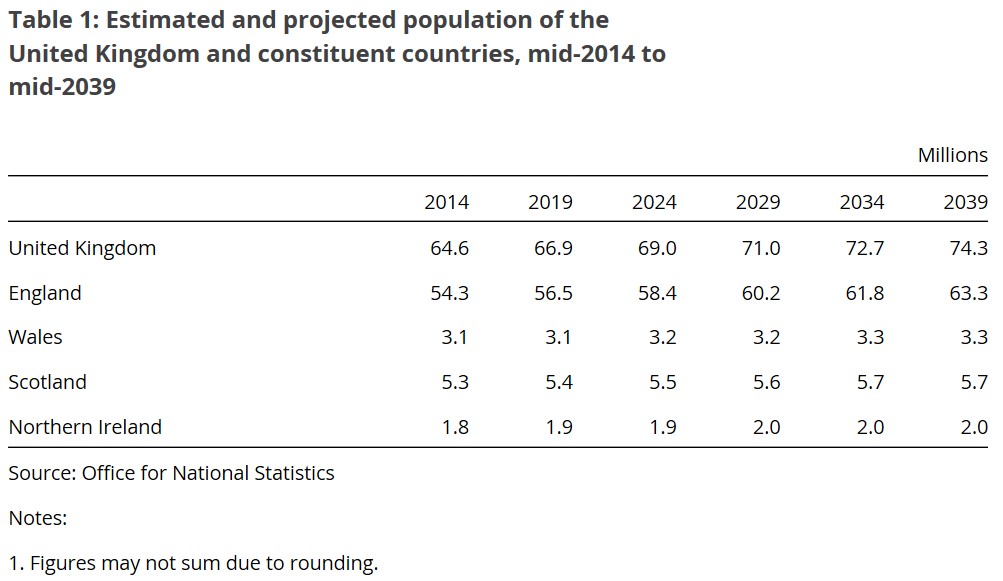
Moreover, the official population projections for the UK are for the population to grow by nearly 10 million people by 2039, with virtually all of this growth taking place in England:
Similar pressures are emerging in Australia where excessively high immigration over the past 12 years is placing immense pressure in our big cities, with traffic congestion, congestion on public transport, access to public services, housing affordability, and overall amenity badly degraded.
Politicians would be wise to get ahead of the issue and cut Australia’s immigration intake back to historical norms before we, too, have our own Brexit rupture.
