
From SBS:
The West Australian government is in talks with BHP Billiton and Rio Tinto about changing one of the payments the companies pay for mining iron ore in the state.
The Barnett government has repeatedly said it does not support the Nationals WA proposal to slug the mining giants with a $5 per tonne fee, replacing a 25 cent per tonne charge that hasn’t changed since it was introduced in the 1960s.
But Premier Colin Barnett told reporters on Tuesday the state government was in talks with the companies about replacing the charge with with an up-front sum.
“We are looking at that 25 cent fee because it is an anomaly,” Mr Barnett said.
Let’s hope that this is not just some ploy to pretend there is an increase. The case for higher royalties is there. WA is clearly not charging high enough royalties when BHP and RIO are operating their iron ore businesses on margins well north of 100%:
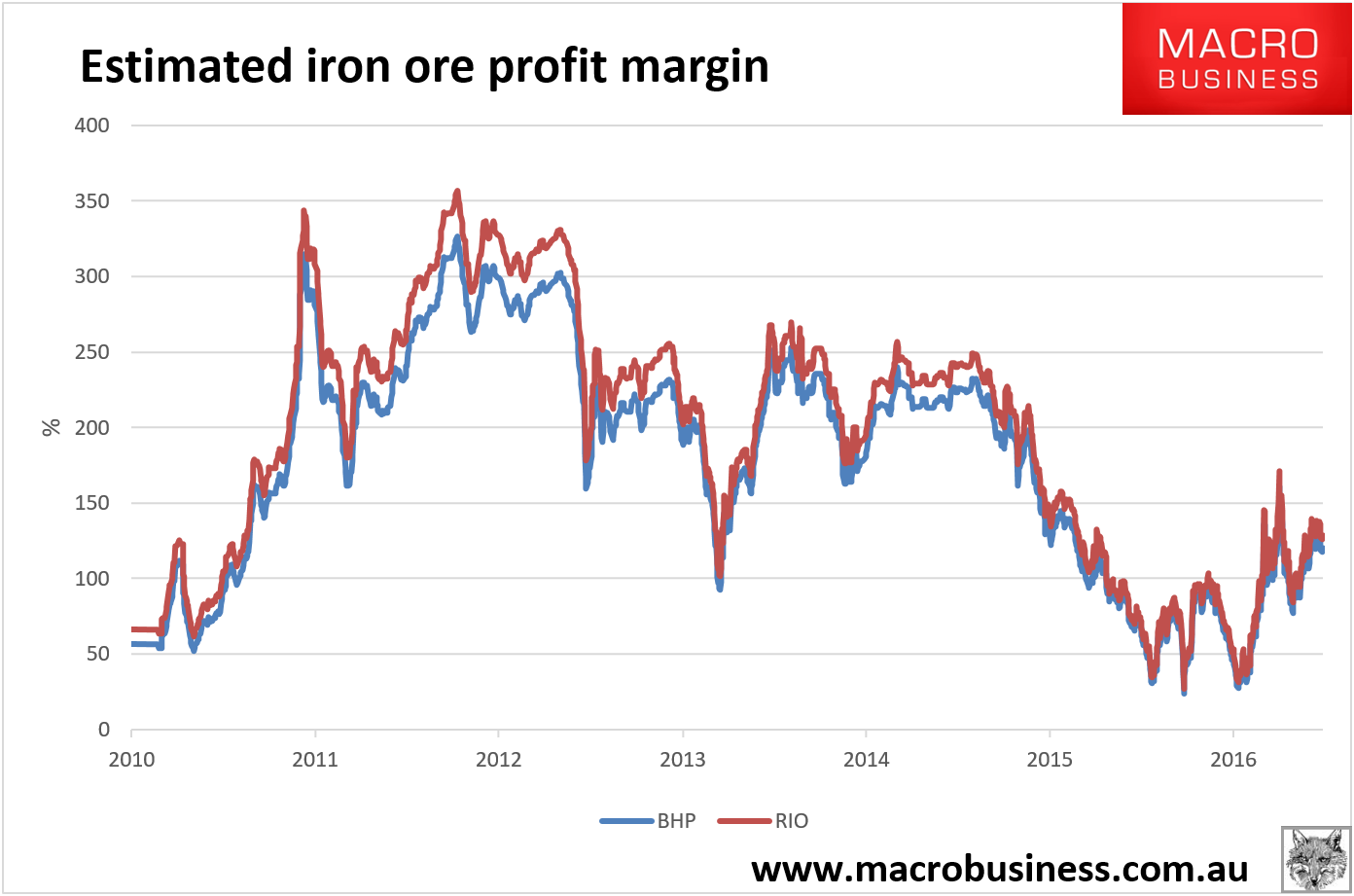
These are “economic rents” and the people of Australia are being reamed for the privilege of developing their dirt. Remember that this is a non-renewing natural resource owned by the people of WA and Australia. It’s depleting nature needs to be reflected in the revenue being received for their development.
I would like to see WA Nats also commit to paying down debt with the windfall (or to invest it strictly in infrastructure or an SWF). If the debate is about equity over generations then the revenue should be accordingly distributed over time.
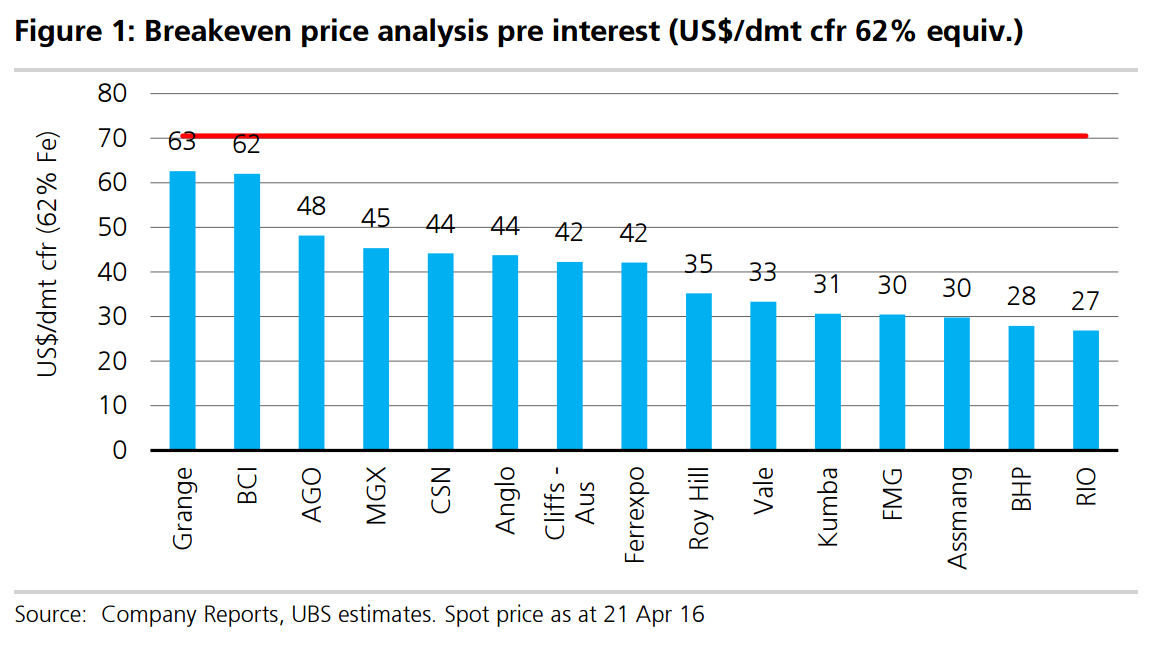
As it stands at $5 the levy is too high. The amount should be calibrated so that BHP’s and RIO’s competitiveness is not adversely impacted causing them to lose volumes (and therefore investment). That level is more like $2.50 per tonne than the proposed $5 which would put them on par with Vale, from UBS:
Then again, probably not, from Reuters:
A Rio Tinto spokesman said the firm would not take up the offer.
“Since 2006 the company has paid A$13 billion in royalties to the Western Australia government,” the spokesman said.
BHP would not accept the offer either, said a spokeswoman.
And from Matthew Stevens:
The offer was that an unquantified number of years of forward payments of a lease rental that generates maybe $185 million annually for the state might be lumped up into one big budget-hole-filling payment. And with that done, a current or future Barnett government would move to remove the rent mechanism from the 50-year-old state mining agreements that leave Rio and BHP free to mine the iron ore rich red soils of the state’s north-west.
To say the offer did not thrill the godfathers of Australian iron ore would be understatement. This was an offer very, very easy to refuse.
First, acceptance would create risky precedent. Both extractors work in environments once regarded as less stable that WA and the fear is that accepting Barnett’s proposal would trigger a gold rush of governments regional or national seeking to leverage long-dated state revenue measures into cash-flow sapping one-offs with no guarantee that any quid pro quo offered was deliverable or secure.
Although there is a good basis for this fee increase, the management of the process is pure ineptitude. Unsurprisingly therefore the pendulum is swinging against the pollies, from The West Australian:
Nippon Steel & Sumitomo Metals managing executive officer Kazuo Tanimizu told the Premier his company was watching developments “with utmost concern”.
…“It could even ultimately affect security of supply of iron ore from WA, which is a concern to us, as our company is also one of the largest buyers of iron ore from WA,” Mr Tanimizu wrote in the letter, obtained byTheWestAustralian .
“I understand you have publicly expressed your view against this proposal. I would sincerely appreciate your continued support on this matter.”
At $2.50 it would be harmless but with dills like the WA Coalition prosecuting the case who is going to know?
