
From Bloomie:
The largest U.S. iron ore producer says the bears are getting it wrong all over again. Prices will probably be sustained above $50 a metric ton as demand in China is stable and the impact of new supply won’t be as severe as forecast, according to Cliffs Natural Resources Inc.
“Those forecasts saying that prices will go to $40 or $30 or whatever, they haven’t materialized,” Chief Executive Officer Lourenco Goncalves said in a phone interview. “It’s not going to happen at the end of the year. Do you know what they’re going to say next? They’ll say it’ll be next year. That’s the reason I don’t believe them. They don’t know anything.”
Prices would probably hold between $50 and $60 a ton, said Goncalves, citing a recent outlook from Li Xinchuang, a vice chairman at the China Iron & Steel Association. Demand in China — the world’s largest buyer of seaborne ore — would be stable between 760 million and 800 million tons a year, according to Goncalves. “I do believe Mr Li,” he said.
“Vale’s trying to explain that S11D is a replacement mine, not addition of more tons,” Goncalves said. While Roy Hill will produce a little more, the tonnage going to Posco and Japan isn’t destined for the mainland China market, according to Goncalves.
Amusing as always. Yes, Vale’s S11D is replacement tonnes to some extent, about 15mt of the 90mt. Does it really matter if Roy Hill doesn’t ship to China? It’s all one market, right? Majors are sort of limiting output, by growing it more slowly, so long as you’re not talking about Anglo American, which is ramping like mad. I don’t believe Mr Li. Then there is this:
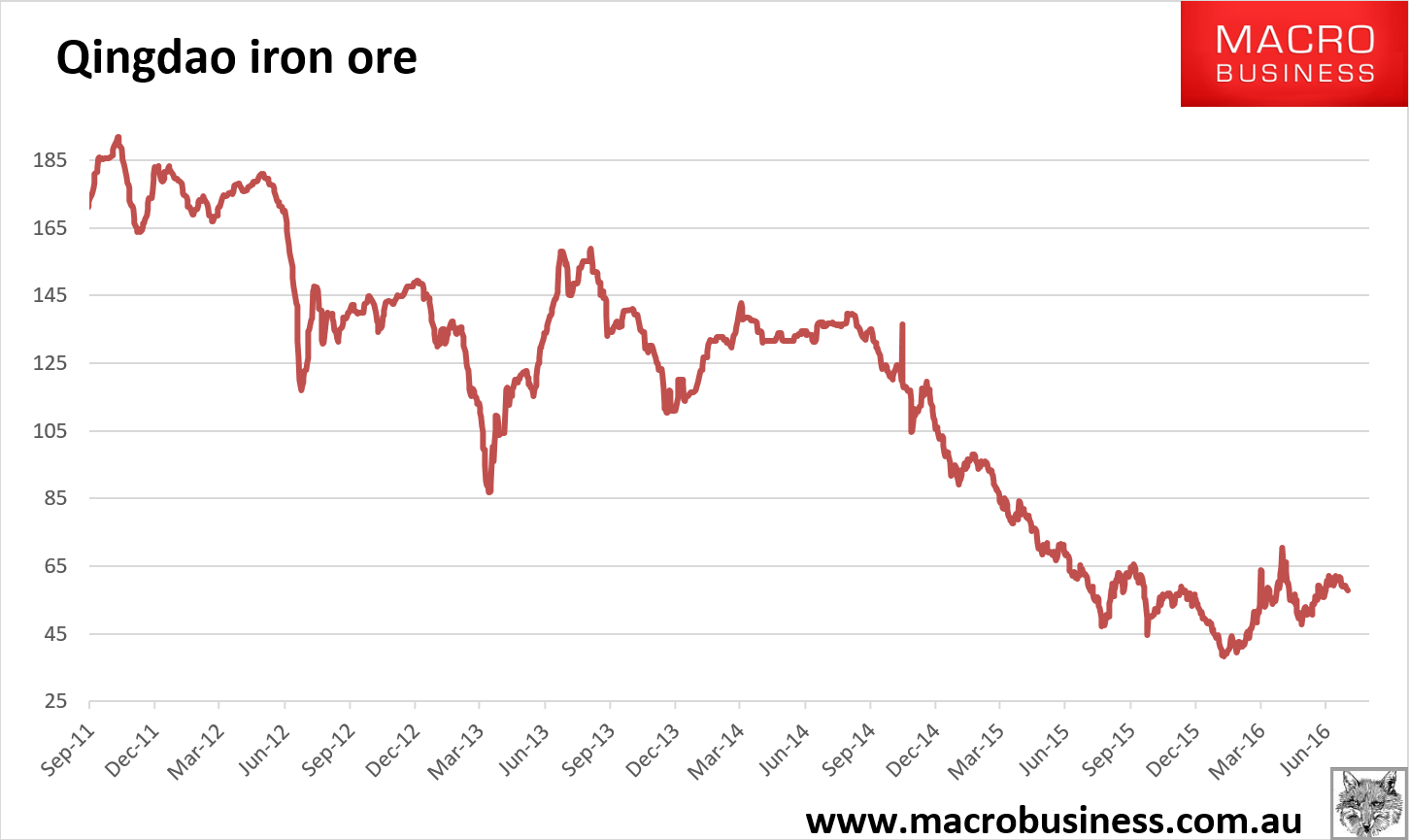
Trend is your friend.
