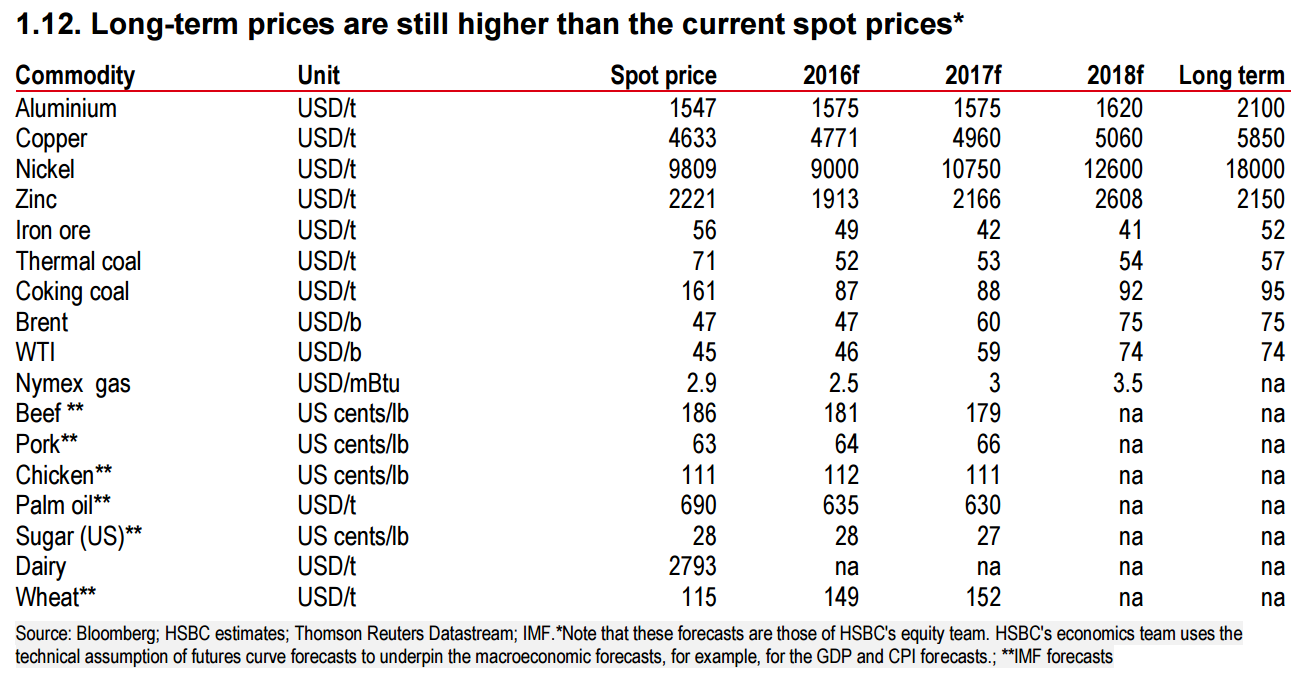
Past the trough For the resources sector, consolidation remains the focus. After the heady days of the super-cycle upswing, when rising prices supported profitability almost irrespective of costs, the past couple of years have seen a clear focus on cost reduction. Investment plans have been significantly curtailed and inefficient operations are starting to be closed. This supply pullback, combined with modest growth in demand, is a key driver of the 25% lift in global commodity prices since early 2016.
Of course, the story varies across the types of commodities. For oil, OPEC’s strategy to gain market share has squeezed out non-OPEC supply and investment. OPEC production has hit new record highs, while non-OPEC production has fallen. This has supported a modest rally in prices. Of course, the shale sector has become more nimble, with producers able to bring on new supply more quickly than conventional producers. Nonetheless, over time, we expect to see the oil price climb, as there has been a sharp cut-back in investment plans which should bite into medium-term supply.
For metals, supply has pulled back for zinc, aluminium, nickel, thermal and coking coal. Zinc and nickel supply has been cut by mine closures and falls in production, while China has put in place strict controls to cut coal production and has reduced aluminium production. There has also been a decline in high-cost Chinese supply of iron ore, although more low-cost supply is due to come to the market. The supply side pullback and solid growth in demand, particularly supported by Chinese infrastructure investment, should mean that most prices are past the trough.
For food, rising demand from Asia for higher-quality products, such as meat and sugar, has been the key theme. For sugar, prices have risen and underinvestment in capacity is also expected to lead to weak supply, lifting prices further in the medium term. By contrast, bumper crops have driven a significant fall in grain prices, particularly for wheat and corn. As a result, the prices of the ‘finer foods’ have outperformed grain prices, a medium-term trend which we expect to continue as rising Asian middle class incomes support demand.
My own view is that he is wrong on oil, copper, aluminium and nickel and, as such, that we are not passed the trough. Softs are very sensitive to oil so they’ve probably not bottomed either, though I’m not expert on those.
David Llewellyn-Smith is Chief Strategist at the MB Fund and MB Super. David is the founding publisher and editor of MacroBusiness and was the founding publisher and global economy editor of The Diplomat, the Asia Pacific's leading geo-politics and economics portal.
He is also a former gold trader and economic commentator at The Sydney Morning Herald, The Age, the ABC and Business Spectator. He is the co-author of The Great Crash of 2008 with Ross Garnaut and was the editor of the second Garnaut Climate Change Review.