From the so-called Australian:
Mining giant BHP Billiton has stepped up its opposition to a $5-per-tonne iron ore tax proposed by the West Australian Nationals, warning its employees that such an impost would affect investment and jobs across the company.
An internal letter sent to all staff by the company’s president of minerals Australia, Mike Henry, yesterday sought to torpedo the argument from Nationals leader Brendon Grylls that the miner was only paying a 25c-per-tonne royalty on its iron ore production.
The reality, Mr Henry said, was that the company’s WA iron ore division paid a total royalty and income-tax contribution of $17.50 per tonne of iron ore.
“Over the last decade we have paid $10.6 billion in royalties to the Western Australian government. To put this in perspective, this would fund over 100 new schools and 10 new hospitals,” Mr Henry said.
And so-called West Australian:
The mining companies will consider running advertisements opposing the WA Nationals’ plan and pressuring the State Government in an election year to ensure it is never enacted.
As a first step, the Minerals Council of Australia will today release a report that says lifting iron ore royalties from 25¢ to $5 a tonne would push the iron ore tax rate, including company tax and other levies, from 37 per cent to 45 per cent.
Even though Premier Colin Barnett has opposed Mr Grylls’ plan, BHP and Rio are concerned that he may not be in a position to block it after the State election in March or if his leadership comes under pressure before then.
Royalties and taxes are not the same thing. The first is the payment to the owners of the resource for the privilege of developing it. In the same way that a record label pays a fee to an artist. The tax take is after the company has made a profit.
The only reason that the higher levy would result in jobs losses is if BHP’s costs of production increased above other marginal cost miners and it was forced to reduce volumes as the iron ore market contracts. According to UBS, $5 would put BHP on an even footing with Vale:
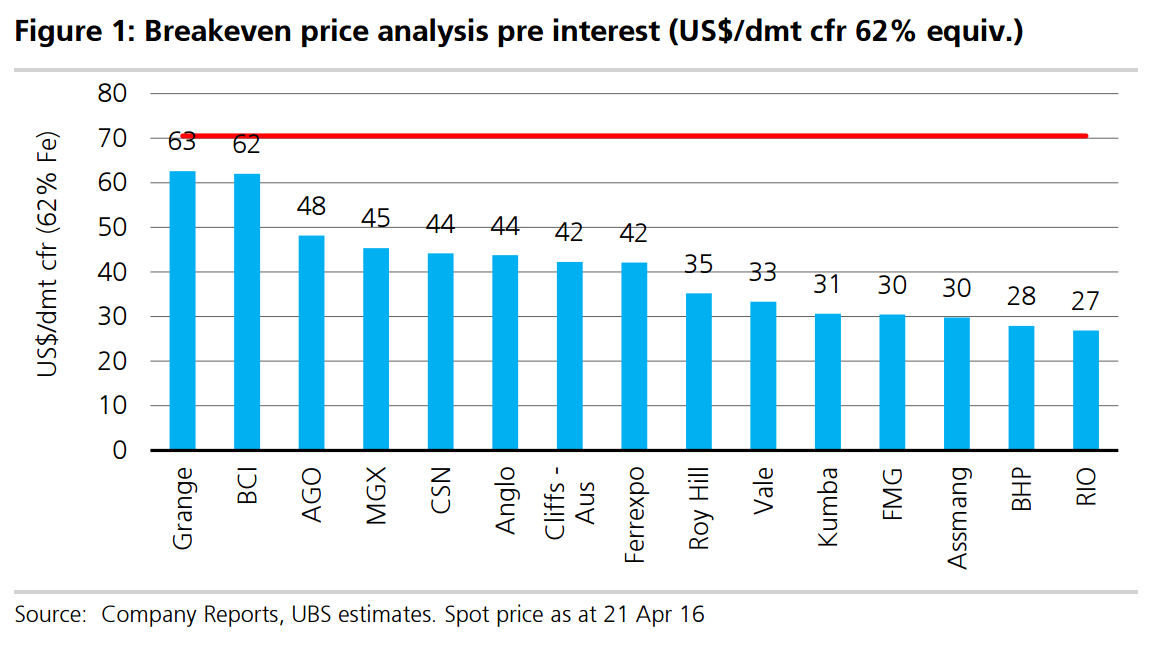
So BHP has a point that a $5 levy would jeopardise volumes over the long run (though not in the short as higher cost volumes go first). Being above FMG on the cost curve isn’t going to matter in the long run given its costs are unsustainable but Vale will keep the pressure on with S11D dropping its costs further.
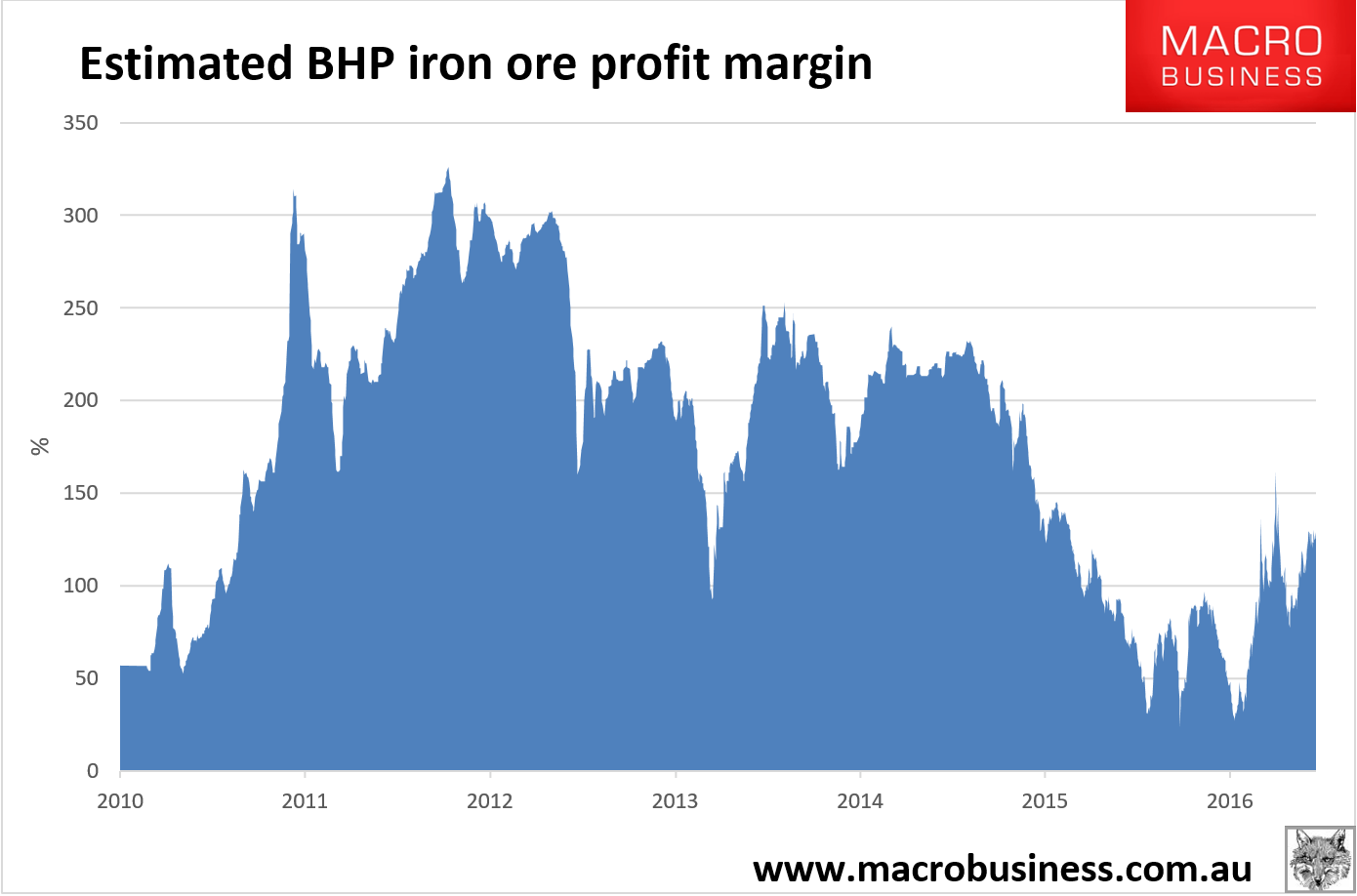
This is why the comprise levy of $2.50 is a good option. It preserves BHP cost competitiveness while boosting the WA take on dirt for which miners are still making absurd margins around 120%:
The levy will do zero harm to the economy while boosting WA revenues materially to the benefit of all states.