
From the FT:
Premium hard Australian coking coal delivered to China hit $180.9 a tonne on Friday, this highest level since price reporting agency Steel Index began publishing assessments in 2013. It has risen 131 per cent since the start of the year, outpacing gold, silver, iron ore and zinc — other top performing commodities.
The main driver of the rally — which has also roiled thermal coal — is Beijing’s decision to restrict the number of working days at domestic mines to 276 days per year from 330 previously.
This policy is aimed at the improving the profitability of producers so they can repay loans to local banks. But it has reduced output and forced traders and steel mills to buy imported material from what is known as the seaborne market.
Heavy rains across China’s northern coal fields in August have exacerbated the supply squeeze, forcing China to buy more overseas. Late on Thursday, traders said a cargo of coking coal had changed hands at $190 a tonne.
Industry watchers do not think the price surge can continue for much longer as rising costs will make it difficult for mills in China — the world’s biggest producers of steel — to make money. Higher prices might incentivise new seaborne production.
“Should coking coal prices keep rising while steel prices remain at current level, Chinese steelmakers risk returning to negative margins,” said Miriam Falk, senior analyst, S&P Global Platts.
She calculates that coking coal now accounts for about half of the raw material costs in pig iron production — an intermediate form of steel — up from an average of 40 per cent over the past year.
…“The $70 a tonne move in coking coal prices in since the beginning of July has added $3bn to BHP’s mark-to-market earnings,” said analysts at Liberum, who reckon the sustainability of the rally depends on how long Beijing maintains its restricted working days policy.
“The government will be questioning whether subsiding the coal industry at the expense of the steel industry is a desired outcome.”
It’s not going to in the immediate future without policy intervention given this:
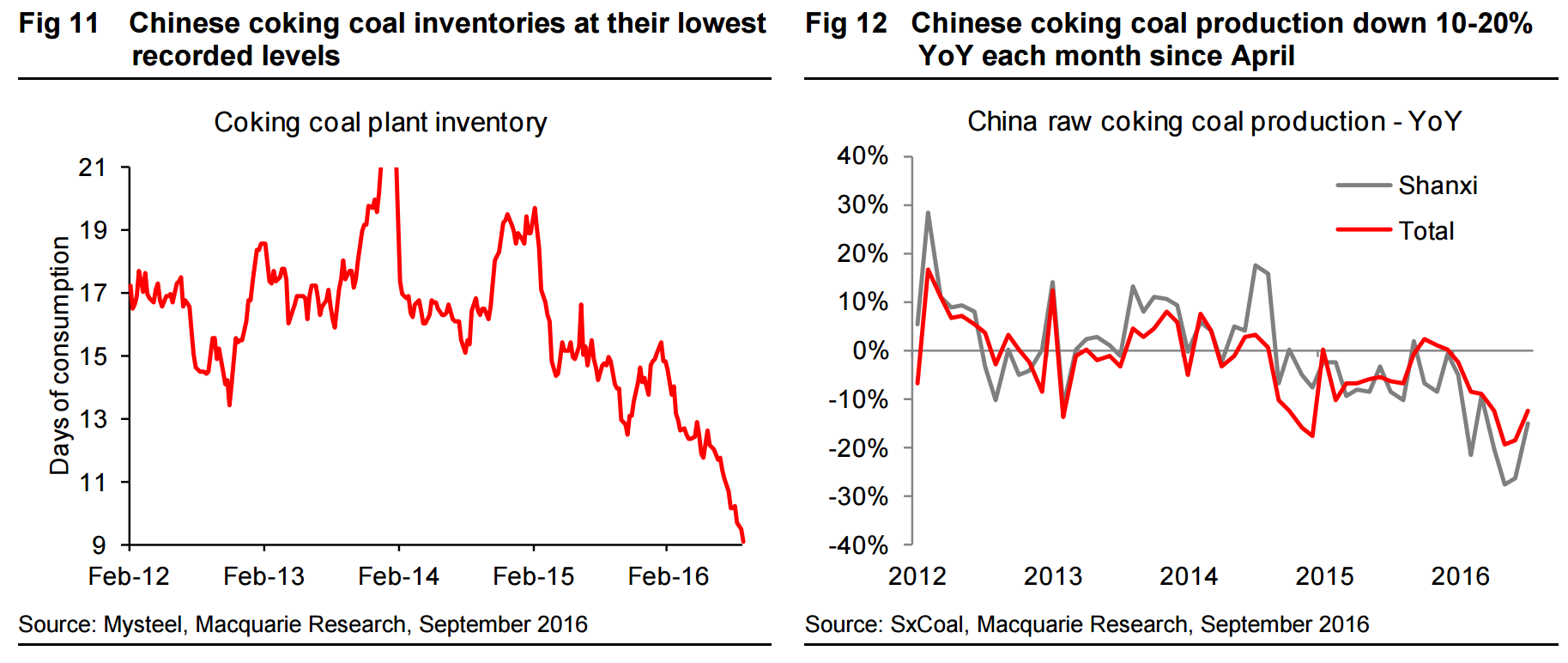
Restocking will take at least a quarter if not two, though it may have begun if the Baltic Dry is any guide with capesize rates rocketing to their highest in a year, though some of this will also be the new iron ore flood:
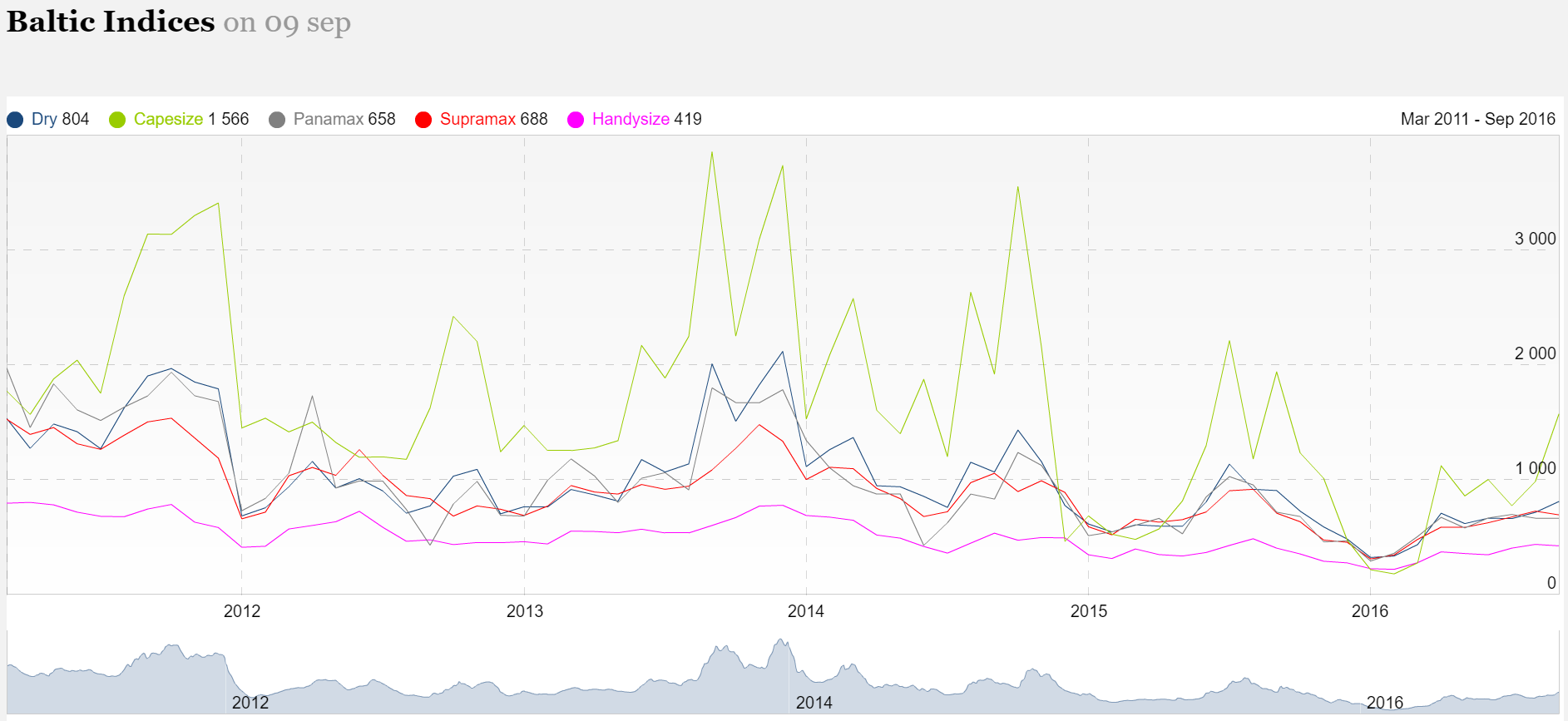
As I said Friday, it’s probably too late to play the boomlet, the market tensions will persist a while but when they end it’ll come down just as fast. There are good reasons for China to adjust the policy. Using a blanket limit on production hours hits efficient producers as hard as it does inefficient and makes bugger all economic sense.
In the meantime, it is a little budget windfall for Australia via BHP (not so much others which are stuck on contract sales). Coking coal is roughly 10% of the terms of trade.
