
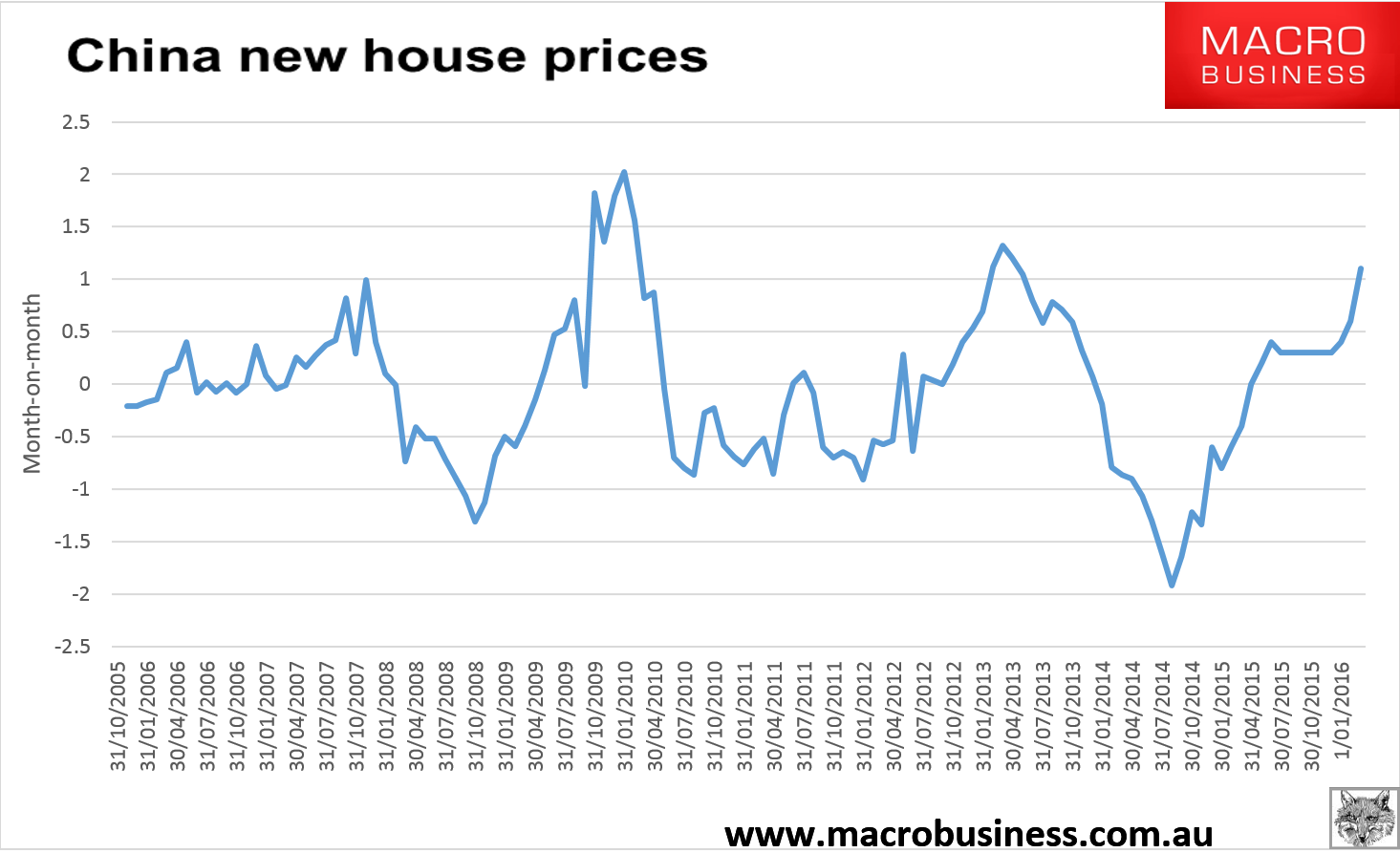
It’s on like Donkey Kong in Chinese property. March new home prices surged 1.1%:
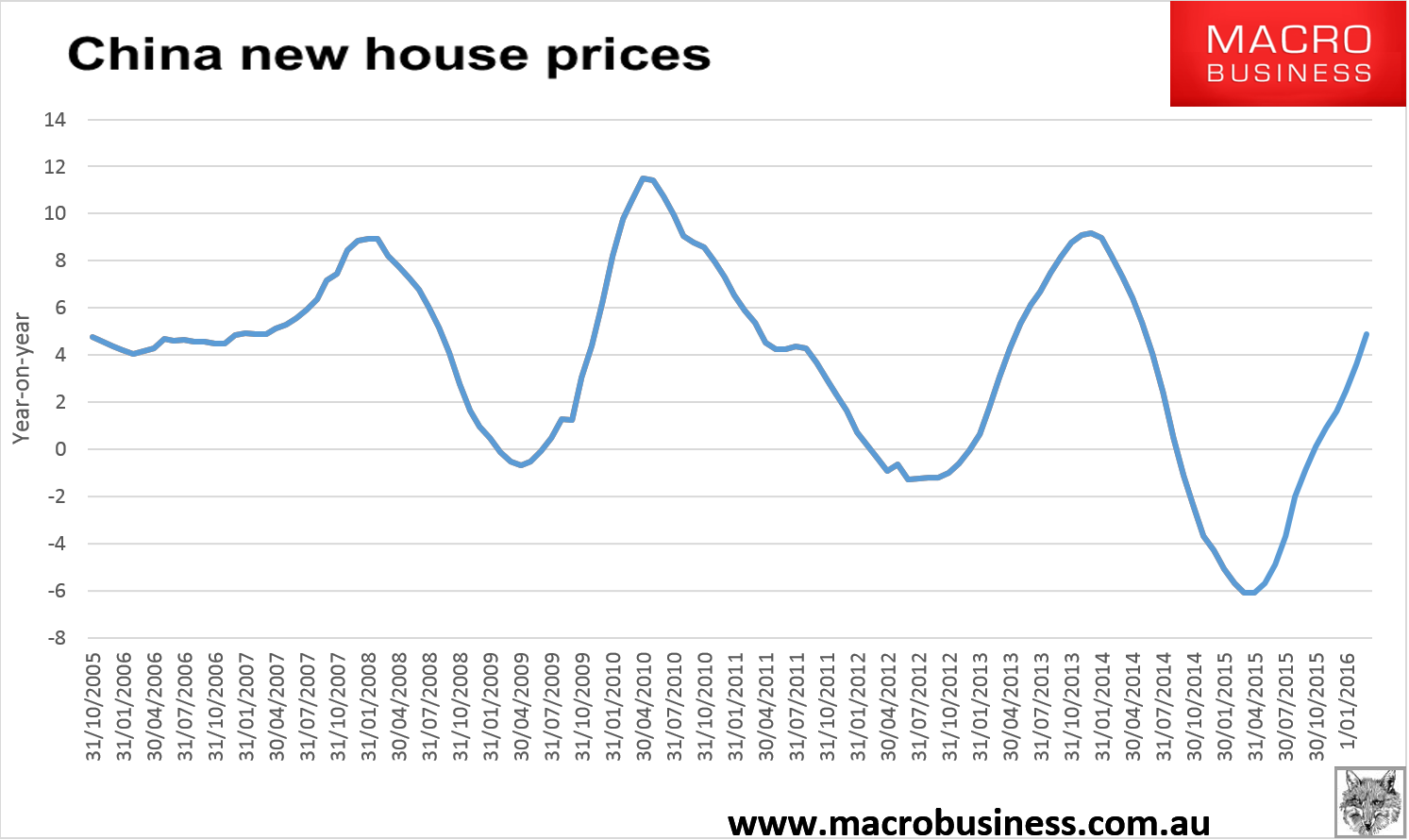
And 4.9% year on year:
The number of rising cities fell back to 40 year on year:
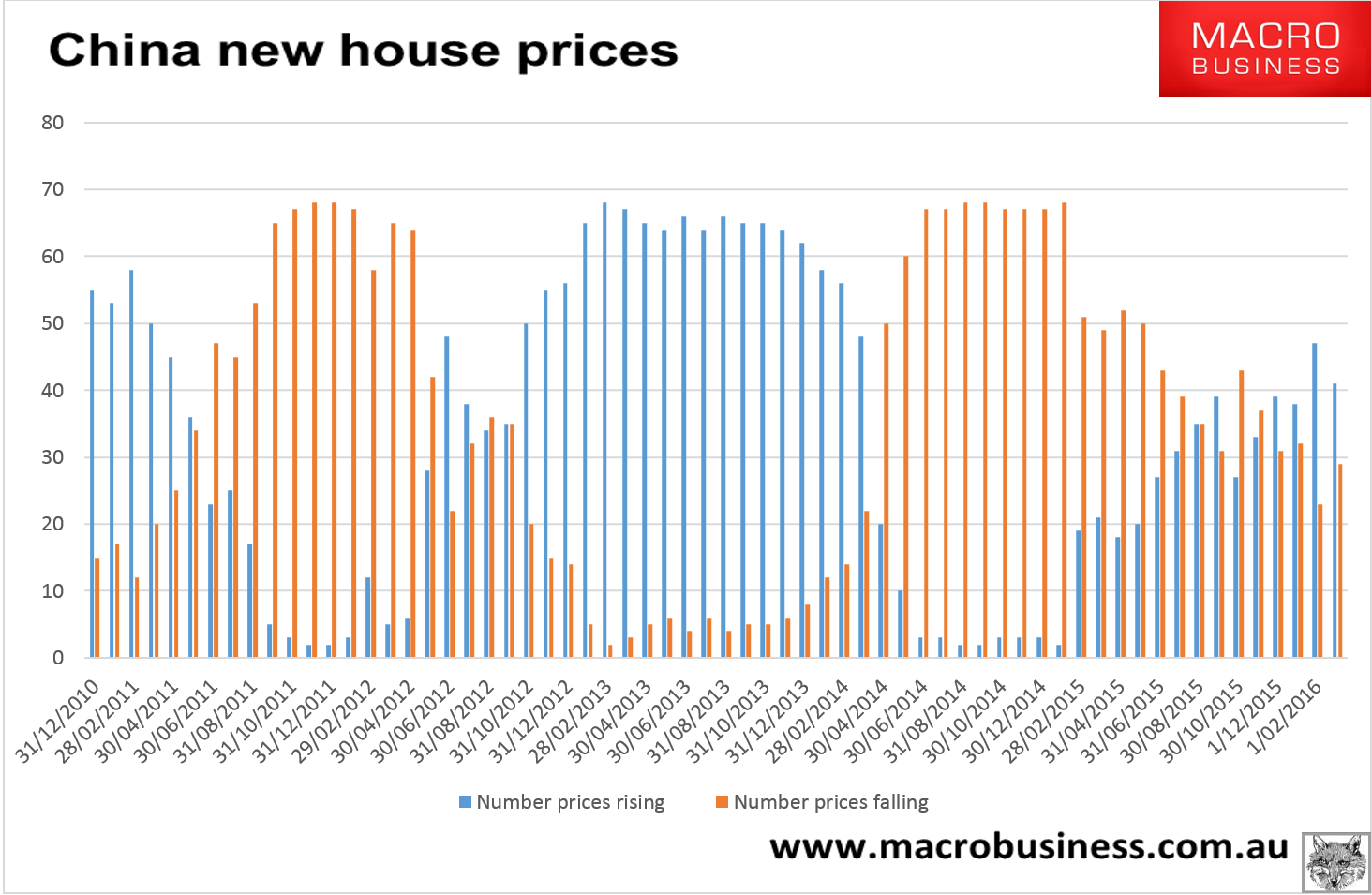
But it’s at 65 month on month.
Even so, bifurcation continues, from Westpac:
Where Tier 1 new build prices have risen 29%yr, Tier 2 and Tier 3 are respectively up 4%yr and 1%yr. Even within Tier 1 there is a marked divergence: Shenzhen prices have reportedly risen 62%yr and Shanghai is up 26%yr; in contrast, Guangzhou and Beijing have gained a comparatively modest 15%yr.
A similar theme can also be seen in the secondary market, with prices up: 36%yr in Tier 1; 4%yr in Tier 2; and 1%yr in Tier 3. Again, within Tier 1, Shenzhen is well ahead of the rest; however, growth amongst the rest of the top tier is broader based than for new builds.
While there are some outliers in Tier 2 and 3, for the most part price gains in those cities are relatively close to the tier averages, indicating the soft conditions in these jurisdictions are broad based.
The consequence for the aggregate economy is that, while momentum is strengthening and broadening within each of the tiers, conditions are not yet strong enough to warrant a material acceleration in aggregate new project activity.
For policy makers, the state of the aggregate property market arguably calls for further accommodation. Yet authorities have to be cautious of exuberance in Tier 1. This balancing act will likely keep a lid on secondary sector activity through mid-2016, as authorities take a cautious and measured approach to accommodation.
And the chart:
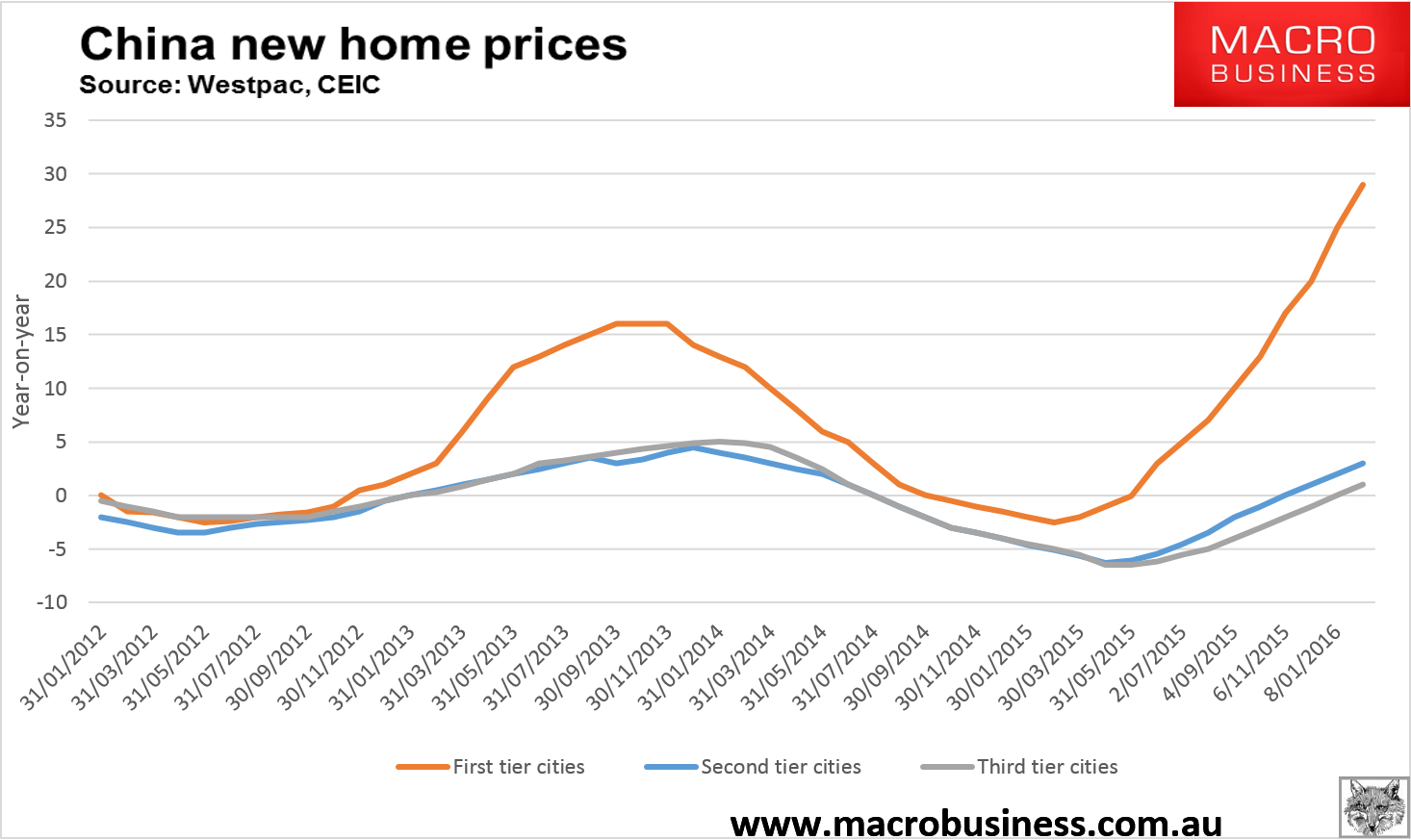
The bubble is inflating before our eyes once more. It’s too early to judge if macroprudential policies have had any impact yet.
